
Table of contents
Semaglutide (Wegovy) and tirzepatide (Mounjaro) reduce appetite, and some patients taking them forget to eat. Eating less makes it easy to get too little protein, and you lose muscle along with fat. In the STEP 1 trial, fat-free mass, meaning muscle and other tissues that are not fat, made up almost 40% of the tissue lost by patients treated with semaglutide (1, 2). The Polish guidelines do not set out a single diet for everyone with obesity. Taken together with recommendations from US societies for people on these medicines, however, they point to four practical rules: eat protein at every meal, eat small portions regularly even when you are not hungry, drink enough fluids and do strength exercises at least twice a week (3, 4). If you have kidney disease or are aged 65 or over, the amount of protein you should eat is set by your doctor, because the recommendations for these groups are different (3, 5).
In brief
- In the STEP 1 trial, people treated with semaglutide whose body composition was measured lost an average of 8.4 kg of fat and 5.3 kg of fat-free mass. In the SURMOUNT-1 trial of tirzepatide, fat-free mass made up roughly a quarter of the weight lost, the same as in the placebo group, which received injections without the medicine and the same diet and physical activity advice.
- Four American scientific societies suggest 1.2-1.6 g of protein per kilogram of body weight a day for people who are losing weight, or a simpler target of 80-120 g a day. The Polish Society for the Treatment of Obesity (PTLO) recommends at least 1.5 g per kilogram for people with sarcopenic obesity, meaning obesity combined with low muscle mass and strength.
- Protein alone will not protect your muscles. You also need strength training at least 2 times a week, covering all the major muscle groups.
- Eating too little is also harmful: losing more than 1.5 kg a week raises the risk of gallstones, and a diet that provides less energy than the body uses at rest risks nutrient deficiencies.
Why do you lose muscle on obesity medication?
The medicine reduces your appetite, so your body gets less energy and protein. With rapid weight loss, you lose not only fat but also fat-free mass, meaning muscle and other tissues that are not fat. How much you lose depends on how little you eat, how quickly you lose weight and whether you do strength training.
In the STEP 1 trial, body composition was measured in 140 participants with DXA (dual-energy X-ray absorptiometry), a whole-body scan that measures fat, bone and lean tissue separately. After 68 weeks, people treated with semaglutide weighed an average of 14.7 kg less on the scales, and the DXA scan showed a loss of 8.4 kg of fat and 5.3 kg of fat-free mass. Fat-free mass therefore made up almost 40% of the tissue lost as measured by DXA (2). The authors of a position statement from four American societies working in nutrition and obesity treatment assume that muscle makes up roughly half of fat-free mass, and on this basis they estimate that muscle accounted for about 20% of the weight lost (4).
In the SURMOUNT-1 trial, body composition was measured in 160 people. After 72 weeks of taking tirzepatide, body weight fell by an average of 21.3%, fat mass by 33.9% and fat-free mass by 10.9%. About 75% of the weight lost was fat and 25% was fat-free mass. The same proportions were seen in the placebo group, in which participants received injections without the medicine and the same diet and physical activity advice as those on treatment (7).
A similar loss of fat-free mass has been described with other methods that produce large weight loss, such as bariatric surgery and very low-calorie diets (4). A meta-analysis of 7 randomised trials (821 patients, 5 trials with liraglutide) compared GLP-1 medicines at the doses used for obesity with placebo. Compared with placebo, the proportion of fat-free mass in total body weight increased in people taking the medicine, meaning that their body composition improved, even though fat-free mass itself in kilograms decreased (8). Eating too little protein also contributes to muscle loss, especially in older people, people who are not very active and people who do not do strength training.
How much protein should you eat on obesity medication?
There is no single figure for everyone. The authors of the 2025 position statement from four American societies suggest 1.2-1.6 g of protein per kilogram of body weight a day for people who are losing weight, or a simpler target of 80-120 g a day (4). The Polish Society for the Treatment of Obesity (PTLO) recommends at least 1.5 g of protein per kilogram for people with sarcopenic obesity, meaning obesity combined with low muscle mass and strength (3).
With a high body weight, calculating per kilogram gives very high results. For someone weighing 130 kg, it would come to 156-208 g of protein a day. The authors of the American position statement point out that in people with obesity, a calculation based on current body weight may greatly overestimate requirements, and there is no agreement on which weight to base it on. Hence their second, simpler target in grams per day. Protein intake should not fall below 0.4-0.5 g per kilogram, because this risks muscle wasting, and you should not eat 2 g of protein per kilogram or more over the long term (4).
Eating more protein while losing weight brings a moderate benefit. In a meta-analysis of 24 studies (1,063 people, diets lasting an average of 12 weeks), a higher-protein diet reduced the loss of fat-free mass by an average of 0.43 kg compared with a diet with the same calorie content and a standard amount of protein (9).
How much protein should one meal contain?
The Polish guidelines give an amount of protein per meal in their recommendations for people with sarcopenic obesity: an additional 20-30 g of protein at each meal gives the strongest boost to muscle protein synthesis, the building of new muscle protein (3). It is also better to spread protein across the day than to eat most of it in the evening meal. In a small study of 8 healthy adults, muscle protein synthesis over the course of a day was 25% higher when participants ate about 30 g of protein at each of three meals for a week than when they ate the same amount of protein mainly in the evening (10).
How much protein is in common foods?
Example portions from the PTLO guidelines (3):
| Food | Portion | Protein |
|---|---|---|
| Chicken breast, boiled | 85 g | 27.9 g |
| Smoked trout | 100 g | 19.4 g |
| Half-fat curd cheese (twaróg) | 100 g | 18.3 g |
| Halibut, steamed | 110 g | 17.5 g |
| Natural yoghurt | 250 ml | 13 g |
When should your doctor set your protein intake?
The recommendations are different for chronic kidney disease. The 2024 international KDIGO kidney guidelines suggest 0.8 g of protein per kilogram of body weight a day for adults with stage G3-G5 kidney disease who are not on dialysis. In these stages, eGFR, a measure of kidney function calculated from a blood test, is below 60 ml/min/1.73 m². The guidelines also advise against more than 1.3 g per kilogram in people whose kidney disease is at risk of progressing (5). For people aged 65 and over, PTLO recommends 1-1.2 g of protein per kilogram a day, together with physical activity (3). In both situations, the amount of protein is set by your doctor.
How can you get enough protein when the medicine reduces your appetite?
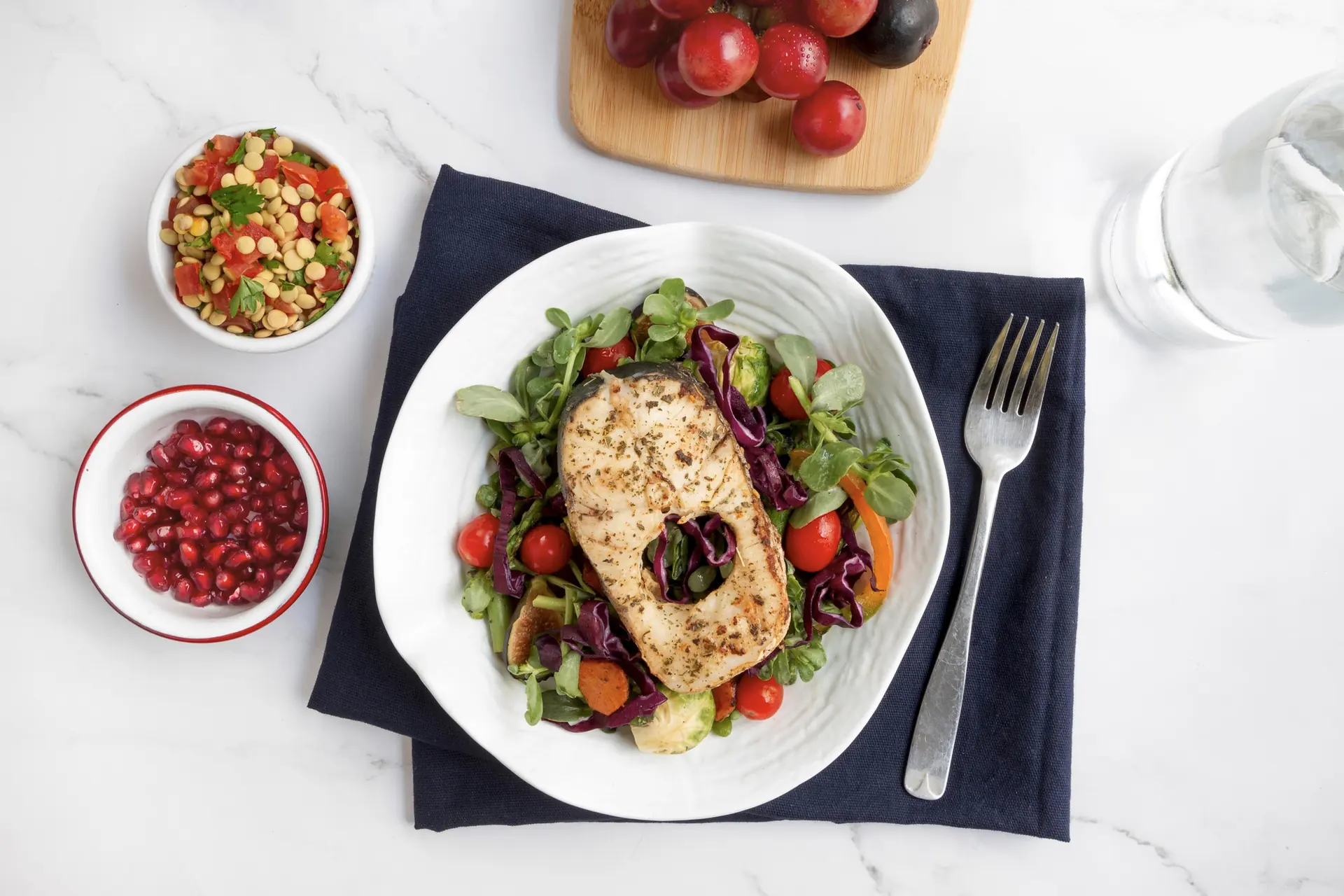
The simplest approach is to start each meal with a protein food, before you begin to feel full, and to choose foods that contain a lot of protein in a small volume.
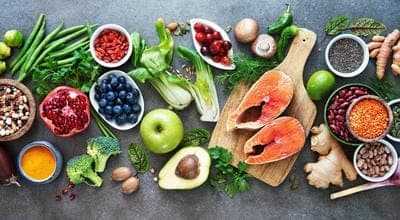
The authors of the American position statement list fish, eggs, Greek-style yoghurt, cottage cheese, nuts, seeds and nut or seed butters, and pulses such as beans, peas and lentils. They advise eating red and processed meat in moderation, because in population studies people who eat more of it are more likely to develop type 2 diabetes, heart disease and bowel cancer. When you do not feel like heavier meals, it is easier to drink a smoothie made with yoghurt or milk and fruit and vegetables, or to have soup or cottage cheese, than to eat red meat, cold meats or hard cheese (4).
On the medicine, hunger is weaker and it is easy to go several hours without eating, so you need to plan your meals. PTLO recommends 3-5 meals a day, without snacking between them and with a break overnight (3). If you have no appetite, the authors of the American position statement advise eating small portions more often and, if that is not enough, setting a meal reminder. Long gaps between meals have another drawback: in some people they end in intense hunger and cravings for sweets and white flour products (4).
What should you eat on days when the medicine makes you feel sick?
It is better to eat something small than nothing. The authors of the American position statement advise eating a small breakfast, then more small meals every 3-4 hours, and drinking throughout the day. Some people skip meals because of nausea, which makes the nausea worse and eating even harder (4).
Nausea is most common at the start of treatment and after a dose increase, often in the morning or after a longer gap without food. For the first few days of treatment, it is a good idea to avoid fatty and high-fibre foods. Vomiting is more likely after a large meal. Some people find ginger or mint tea helps. Alcohol can make nausea and reflux worse (4). How alcohol interacts with treatment is covered in our article on obesity medication and alcohol.
Constipation is common on the medicine. Fluids help, as does fibre from food, such as prunes, introduced into your diet gradually. Foods rich in protein or fat also slow down stomach emptying and can make constipation worse. If constipation persists, you may sometimes need to cut down on these foods for a while (4).
If symptoms are severe, the doctor may delay a dose increase or go back to the previous dose until the symptoms ease (6). We describe the dose increase schedule in our article on the first months of obesity treatment with medication, and what helps with specific side effects and how long they last in our article on side effects of obesity medicines.
How much fluid should you drink on obesity medication?
The Polish nutrition standards consider 2 litres of water a day sufficient for women and 2.5 litres for men. This amount includes drinking water, other drinks and the water contained in food, and applies to a moderately active person at a moderate ambient temperature (11).
On the medicine, staying hydrated matters more than usual. Nausea, vomiting and diarrhoea can lead to dehydration, which can impair kidney function. That is why the patient leaflets for semaglutide and tirzepatide advise drinking plenty of fluids, and the semaglutide leaflet adds that this is particularly important if you have kidney disease (6, 12). If you eat less, you also get less water from food, so you need to remember to drink on days without symptoms too. PTLO recommends drinking still water regularly, and low-sodium water except in hot weather (3). The authors of the American position statement advise avoiding sweetened drinks (4).
Why shouldn't you cut your food intake drastically during obesity treatment?
A diet that is too restrictive can lead to nutrient deficiencies. PTLO recommends that a diet for obesity treatment should provide at least as much energy as the body needs at rest. This requirement is known as the basal metabolic rate. The calorie content of the diet is set individually, and in obesity treatment it is usually 1,200-1,500 kcal a day for women and 1,500-1,800 kcal for men (3).
Losing weight too quickly also raises the risk of gallstones. According to PTLO, the risk is increased by weight loss of more than 1.5 kg a week caused by a restrictive diet below 800 kcal a day, by medicines, especially GLP-1 medicines, or by bariatric surgery (3). In studies of semaglutide, gallstones were found in 1.6% of people treated and 1.1% of those on placebo (6).
A low-calorie diet can lead to deficiencies. PTLO lists vitamins B1, B12 and D, as well as calcium, iron, zinc, copper and selenium, especially in people who have had bariatric surgery. Missing nutrients are made up through food choices or targeted supplementation, meaning supplementing only what is actually lacking (3). Your doctor decides on testing for deficiencies and on any supplement; which tests are ordered for obesity is described in our article on tests before obesity treatment.
If you have been losing more than 1.5 kg a week for several weeks, or for several days you have been eating so little that none of your meals contains protein, tell your doctor. In the obesity treatment programme at Nasz Gabinet, you weigh yourself once a week and record the result in the app, and you take your body measurements once a month. At the monthly medical check-up, the doctor uses this data to assess how quickly you are losing weight and decides on the dose of your medicine.
How should you exercise to limit muscle loss during obesity treatment?
Muscle is protected above all by strength training: at least 2 sessions a week, with exercises for all the major muscle groups, at moderate or higher intensity. On top of that, 150-300 minutes a week of moderate aerobic exercise, such as brisk walking, cycling or swimming, or 75-150 minutes of vigorous exercise, is recommended (3, 13).
PTLO notes that strength training during weight loss prevents the loss of muscle tissue (3). The authors of the American position statement write that without strength training, eating more protein alone will probably not protect muscle, and aerobic exercise alone protects it less well. For people on medication, they suggest strength training at least 3 times a week and at least 150 minutes of aerobic exercise a week (4). A review of 6 studies looked at older people with obesity who were losing weight through diet. Strength training 3 times a week for 12-24 weeks reduced their loss of fat-free mass by an average of 93.5% (14). These studies concerned weight loss through diet, not medication.
You can do strength exercises at a gym or at home, with weights, resistance bands or on machines. PTLO advises people who have not been active to start with low-intensity exercise, without lifting heavy weights, and to increase the effort gradually, by no more than 10% a week. With a BMI above 35, activity that puts less strain on the joints is better, such as exercising in water or on an exercise bike (3).
When do eating problems on obesity medication need a doctor?
Straight away if vomiting means you cannot keep down the fluids you drink, because this risks dehydration and worsening kidney function. If you have severe, persistent abdominal pain, including pain spreading to your back, contact a doctor immediately. This can be a symptom of acute pancreatitis (6).
Also talk to your doctor if:
- You have been losing more than 1.5 kg a week for several weeks, or you have eaten almost nothing for several days
- You have kidney disease or are 65 or older and do not know how much protein to eat
- You have diabetes treated with insulin or a sulfonylurea, because these medicines combined with semaglutide or tirzepatide increase the risk of hypoglycaemia (blood sugar that is too low), and the doctor may reduce their dose (6, 12)
Frequently asked questions
What should you eat for breakfast on obesity medication?
A small meal with protein, even if you do not feel like eating in the morning. Nausea on the medicine often comes in the morning and after a longer gap without food, and a small breakfast followed by small meals every few hours can help reduce it. Foods with a lot of protein in a small volume work well, such as eggs, Greek-style yoghurt, cottage cheese or bread with nut butter.
Should muscle loss put you off starting obesity medication?
The authors of a meta-analysis of studies of GLP-1 medicines suggested that loss of fat-free mass should not be a reason to avoid these medicines, because body composition improves after treatment. However, they stressed that treatment should go hand in hand with changes to eating and with exercise. They also noted that the studies mainly included relatively young people without diabetes (8). Low muscle mass impairs physical function and increases the risk of falls and fractures. In older people, PTLO recommends considering medication only in specific cases, after weighing up the benefits and risks (3).
Do you need to switch to a ketogenic or high-protein diet on obesity medication?
No. PTLO does not recommend the ketogenic diet or other unbalanced diets, including high-protein diets, because in the long term they appear to be ineffective and sometimes even harmful. Nor does it recommend low-carbohydrate diets (below 130 g a day), because there are no long-term data on their safety and effectiveness. Balanced diets, such as the Mediterranean diet, are recommended. For people with sarcopenic obesity, PTLO suggests a Mediterranean diet with more protein (3).
Do the same eating rules apply to semaglutide for diabetes?
Ozempic contains semaglutide, but it is licensed for treating type 2 diabetes, not obesity (15). It also reduces appetite, so it is easy to eat too little protein during diabetes treatment too. However, dietary recommendations for diabetes are set by your doctor, especially if you also take insulin or a sulfonylurea, because this combination increases the risk of hypoglycaemia.
Sources
- Wilding JPH, Batterham RL, Calanna S et al. Once-Weekly Semaglutide in Adults with Overweight or Obesity (STEP 1). N Engl J Med. 2021;384(11):989-1002. PMID 33567185, DOI
- U.S. Food and Drug Administration. Wegovy (semaglutide), NDA 215256 - Clinical Review, 2021, table 15: results of the DEXA subgroup in the STEP 1 trial. accessdata.fda.gov
- Bąk-Sosnowska M, Białkowska M, Bogdański P et al. Zalecenia kliniczne dotyczące postępowania u chorych na otyłość 2024 - stanowisko Polskiego Towarzystwa Leczenia Otyłości (Clinical guidelines for the management of patients with obesity - position statement of the Polish Society for the Treatment of Obesity). Medycyna Praktyczna, special edition, September 2024. ptlo.org.pl
- Mozaffarian D, Agarwal M, Aggarwal M et al. Nutritional priorities to support GLP-1 therapy for obesity: a joint Advisory from the American College of Lifestyle Medicine, the American Society for Nutrition, the Obesity Medicine Association, and The Obesity Society. Am J Clin Nutr. 2025;122(1):344-367. PMID 40450457, DOI
- Kidney Disease: Improving Global Outcomes (KDIGO) CKD Work Group. KDIGO 2024 Clinical Practice Guideline for the Evaluation and Management of Chronic Kidney Disease. Kidney Int. 2024;105(4S):S117-S314. PMID 38490803, DOI
- Europejska Agencja Leków (European Medicines Agency). Wegovy (semaglutyd) - charakterystyka produktu leczniczego i ulotka dla pacjenta (Polish summary of product characteristics and patient leaflet). ema.europa.eu
- Look M, Dunn JP, Kushner RF et al. Body composition changes during weight reduction with tirzepatide in the SURMOUNT-1 study of adults with obesity or overweight. Diabetes Obes Metab. 2025;27(5):2720-2729. PMID 39996356, DOI
- Laverde LP, Muñoz-Velandia OM, Alfonso D et al. Effect of GLP-1 receptor agonists at doses for obesity management on muscle health: systematic review and meta-analysis of randomized controlled trials. Int J Obes (Lond). 2026;50(8):1638-1646. PMID 42321502, DOI
- Wycherley TP, Moran LJ, Clifton PM et al. Effects of energy-restricted high-protein, low-fat compared with standard-protein, low-fat diets: a meta-analysis of randomized controlled trials. Am J Clin Nutr. 2012;96(6):1281-1298. PMID 23097268, DOI
- Mamerow MM, Mettler JA, English KL et al. Dietary protein distribution positively influences 24-h muscle protein synthesis in healthy adults. J Nutr. 2014;144(6):876-880. PMID 24477298, DOI
- Jarosz M, Rychlik E, Stoś K, Charzewska J (eds). Normy żywienia dla populacji Polski i ich zastosowanie (Nutrition standards for the Polish population and their application), chapter Woda i elektrolity (Water and electrolytes). Narodowy Instytut Zdrowia Publicznego - Państwowy Zakład Higieny (National Institute of Public Health), Warsaw 2020. pzh.gov.pl
- Europejska Agencja Leków (European Medicines Agency). Mounjaro (tirzepatyd) - charakterystyka produktu leczniczego i ulotka dla pacjenta (Polish summary of product characteristics and patient leaflet). ema.europa.eu
- Bull FC, Al-Ansari SS, Biddle S et al. World Health Organization 2020 guidelines on physical activity and sedentary behaviour. Br J Sports Med. 2020;54(24):1451-1462. PMID 33239350, DOI
- Sardeli AV, Komatsu TR, Mori MA et al. Resistance Training Prevents Muscle Loss Induced by Caloric Restriction in Obese Elderly Individuals: A Systematic Review and Meta-Analysis. Nutrients. 2018;10(4):423. PMID 29596307, DOI
- Europejska Agencja Leków (European Medicines Agency). Ozempic (semaglutyd) - charakterystyka produktu leczniczego (Polish summary of product characteristics). ema.europa.eu
Would you like obesity treatment under a doctor's care?
In the 6-month Nasz Gabinet programme, the doctor assesses whether medication is suitable for you, and then checks your weight and body measurements recorded in the app every month. The programme also includes video consultations with a doctor and with a psychologist.