

How alcohol changes the brain and why it is so hard to stop drinking
Alcohol addiction has a designation of its own in medical classifications: F10.2 in ICD-10 and 6C40.2 in ICD-11. A doctor makes the diagnosis from the symptoms and the history of drinking, just as with any other chronic illness.
Addiction entered the classification of diseases because alcohol alters how the brain works. Regular drinking disturbs the reward system and the response to stress, so in time alcohol stops giving pleasure and becomes something the patient needs simply to feel halfway normal. That change produces alcohol craving, and control over when and how much they drink starts to slip.
The diagnosis is made once several symptoms are present: a compulsion to drink, tolerance, that is having to drink more and more to obtain the same effect, drinking despite the damage it does to health, to work and to life at home, and withdrawal symptoms after a break in drinking. Each further symptom points to a deeper stage of the illness. Alcoholism is chronic and it recurs, so a decision to give up alcohol is rarely enough by itself, and we measure treatment in months.
When risky drinking turns into harmful drinking
The first damage shows long before addiction: worse sleep, rising blood pressure, absences from work, rows that nobody wants to talk about the next day. This is already harmful drinking, which has a separate category in ICD-10, F10.1.
Risky drinking comes before that: it has done no damage to health so far, though it steadily makes such damage more likely. Addiction starts later still, once alcohol craving appears, tolerance rises and a break in drinking produces withdrawal symptoms. Each of these stages is treated differently, so the first thing we establish at the consultation is which of them we are dealing with.
The starting point for an assessment is AUDIT, the questionnaire developed by the WHO: ten questions about how much and how often the patient drinks and what the drinking has already cost them; AUDIT-C, the short form, comes down to three. A high score does not amount to a diagnosis, but it is reason enough to book a consultation. There is also no amount of alcohol that counts as safe: the WHO stated in 2023 that no level of drinking is safe for health.
How long alcoholism treatment in Olsztyn takes and what its stages are
Treating alcoholism takes months and cannot be shortened to a few appointments. It begins with a medical consultation at which we assess the patient's health, take a history of the drinking and decide whether stopping drinking is safe without medical supervision. Only after that assessment do we draw up the treatment plan.
The order of the stages is always the same. Stabilisation comes first: if the patient is in the middle of a binge, we start with detox. Then we choose the medication or place the Esperal implant, which guards the first weeks without alcohol. Addiction psychotherapy takes the most time, because it is psychotherapy that teaches the patient to handle difficult situations without alcohol. The last stage is maintenance care. At Nasz Gabinet Olsztyn we run treatment plans lasting from one month to a year, and we match their length to the patient's health and family situation.
We work privately, so the date of the appointment depends on the patient and not on a queue. Private treatment gives discretion, but not anonymity. Every facility has to keep medical documentation, ours included, and the patient decides who else may look into it.
What decides the choice between outpatient treatment and a stay in a centre
We choose the setting of treatment by answering three questions: how deep the addiction runs, what illnesses come with it and whether abstinence can be kept in the patient's home.
Appointments at the practice without interrupting work and family life
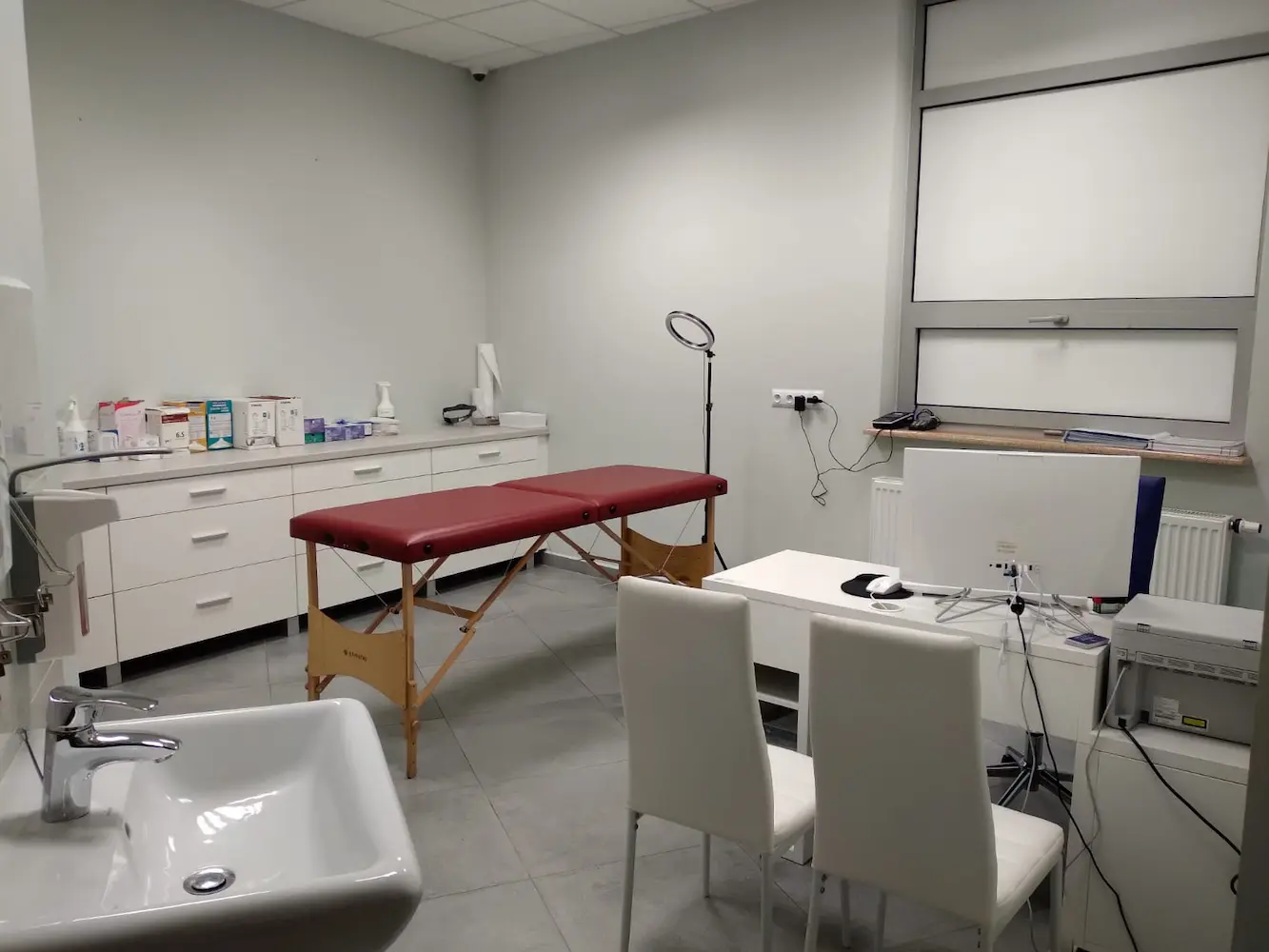
We propose outpatient treatment to patients in a stable situation, with support from those close to them and without severe health complications. Treatment then runs alongside work: no sick note, no need to leave Olsztyn. Tests and procedures take place at Kopernika 44, and we fit the remaining appointments to the patient's timetable.
A stay in a centre when alcoholism is advanced
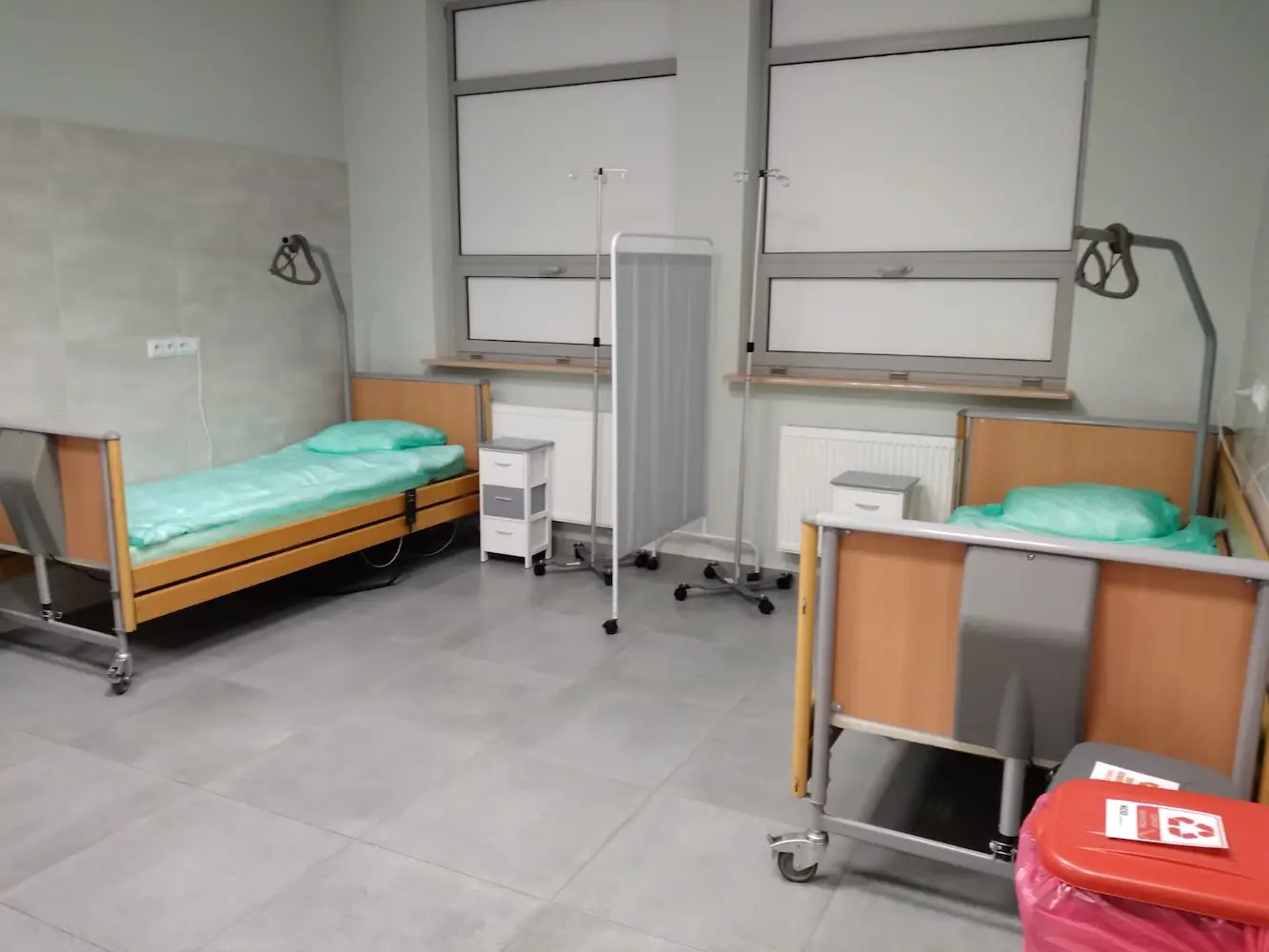
Round-the-clock treatment works better once earlier outpatient attempts have failed, the addiction is advanced or alcohol is present in the patient's home every day. A few weeks away from the home where the patient drank gives time to begin therapy; we describe the conditions of the stay on the page about the addiction treatment centre in Olsztyn.
Consultations and prescriptions over the internet
Online we handle check-up appointments and part of addiction therapy in Olsztyn, and we issue e-prescriptions. This suits patients from outside the city and those whose work keeps them on the road. An online appointment replaces neither an examination nor a procedure, and in acute withdrawal it is ruled out.
Which medicines support abstinence and which reduce drinking
We do not treat alcohol addiction with one medicine. The medicines differ in what they are meant to do, so the doctor chooses between them after examining the patient and taking a history, with coexisting illnesses taken into account.
Disulfiram, given as the Esperal implant or as tablets, stops alcohol from being broken down past acetaldehyde. A drink then ends in an unpleasant reaction that discourages reaching for the next glass, but it does not change the mechanism of the illness; we describe the assessment and the course of the procedure on the page about the Esperal implant in Olsztyn. Naltrexone blunts the pleasure that drinking used to bring and eases alcohol craving. Acamprosate settles a nervous system left overexcited by years of drinking, so the first months without alcohol are easier to get through. Nalmefene the patient takes as needed, on days when drinking is likely, and the aim is then to cut down the amount of alcohol.
None of these medicines treats alcoholism on its own. Each buys the patient the time and the calm that the work done in therapy requires, and a lasting result comes only when pharmacotherapy and psychotherapy run together.
When stopping alcohol calls for medical supervision
Alcohol detox is not a way of cleansing the body of toxins, even though that is what advertising keeps promising. What it does is get the patient safely through withdrawal, that is through the days when the body reacts to the sudden absence of alcohol. Along the way we rehydrate the patient and make up the deficiencies that built up during the drinking.
Medical supervision is needed after a binge lasting several days, after earlier withdrawals complicated by seizures or by alcoholic delirium, and in older patients and those with chronic illnesses. Stopping alcohol can be life-threatening and it is the one stage of treatment that we do not run remotely. We describe how the detox goes, how long it lasts and what goes into the infusion on the page about alcohol detox in Olsztyn.
Detoxification takes away withdrawal symptoms, but it does not treat the addiction. A patient who does not begin therapy after detox goes back to drinking, because detoxification clears alcohol from the blood and leaves untouched the reasons for drinking. That is why we fix the date of the first therapy session and decide about pharmacotherapy before the detox rather than after it, when feeling better makes it easy to conclude that no further help is needed.
Why a return to drinking does not mean starting from scratch
A return to drinking happens in the course of treatment for alcohol addiction. It does not wipe out the months of work or what the patient learned in them, though after a drink patients usually conclude that they have lost everything and drop out of contact.
Whether it stops there is decided by the days that follow. A single break in abstinence can usually be brought under control if the patient gets in touch straight away. After two weeks without contact with us the patient most often returns to a binge, and then detoxification is needed again. So we agree on this in advance: a phone call to us after drinking alcohol is part of the treatment plan, not an admission of failure.
After a relapse we go back to the plan at the point where it broke off: we establish what came before the drink, we correct the pharmacotherapy and for the following weeks we set appointments more often.
What keeps abstinence in place once therapy comes to an end
The months right after the last drink carry most of the risk of a return to alcohol, and the durability of the whole treatment rests on them.
At this stage we work above all on preventing relapse. The patient learns to recognise their own trigger situations, such as payday, a name day or a lonely evening after a row, and has a rehearsed plan for each of them rather than a general resolution. Alongside that we keep the medication going for as long as the doctor advises, and we encourage taking part in self-help groups, because regular contact with people who have been through therapy helps the patient stay sober between appointments. We space check-ups further apart, but we do not stop them overnight.
This stage also covers matters that recede into the background during intensive treatment: a return to full-time work, sorting out debts, rebuilding relationships at home. Each of them produces the same kind of tension that used to end in a drink, so we go through them with the patient before they arise.
Codependency, or why relatives need therapy as well
It is not only people who drink who come for help in Olsztyn. At an addiction treatment clinic in the city, 663 adults with an addiction problem and 467 codependent people received support in 2021; in 2024 the figures were 743 and 463. For every three patients, roughly two relatives come for help on their own account.
Codependency is a fixed pattern of family life: control, hiding the drinking, paying off debts, explaining away the rows. It keeps the consequences of drinking away from the person who drinks, and in that way keeps the drinking going. Therapy for relatives teaches how to stop cushioning those consequences and how to get one's own life back; we work with adult children of alcoholics separately. The family also has a legal route that is not available with other addictions: it can file an application with the municipal commission for solving alcohol problems (gminna komisja rozwiązywania problemów alkoholowych).
Relatives most often come to us with the question of how to persuade the person who drinks to start treatment. Change, though, begins with what the family stops doing: it stops explaining absences at work, making up the shortfall on the bills and clearing up after a binge. We advise on how to prepare for the conversation about treatment and what not to promise in it, and we arrange consultations for children if they have witnessed rows at home.
When depression or anxiety keeps the drinking going
Some patients drink to quieten the symptoms of another illness. We ask about depression, anxiety disorders and PTSD at the first consultation, because they come together with alcohol addiction far too often to be left until later. Alcohol brings short-lived relief and in time makes the symptoms worse.
Deal with one of these problems and leave the other, and the result does not hold. A patient returns to drinking after addiction therapy once untreated depression drains their strength, and psychiatric treatment gets nowhere for as long as the drinking continues. So we treat both illnesses in parallel within one plan, the psychiatrist together with the addiction therapist. The psychiatrist settles the order and the choice of medication after assessing the patient's condition.
In practice the patient has one schedule of appointments instead of two separate courses of therapy in two places. The psychiatrist supervises the medication and responds to a change of mood or to rising anxiety, the therapist works with the patient on maintaining abstinence, and the two of them exchange information about the patient's condition. With severe psychiatric symptoms we start by bringing them under control, because addiction therapy demands an effort that a patient in deep depression does not have the strength for.
How many adults are treated for addiction in Olsztyn
At the regional psychiatric facility in Olsztyn the number of adults treated for an addiction problem rose from 885 in 2021 to 1,526 in 2024 (1,376 in 2022 and 1,469 in 2023). These are figures from a facility that admits patients from the whole region and treats substance addictions as well as behavioural ones, so they are not a count of how many people in Olsztyn are ill. The municipal prevention programme notes at the same time that the scale of the alcohol problem in Olsztyn is incomparably larger than that of the drug problem.
For the patient, however, it matters more where treatment begins. Free therapy at the municipal therapy centre is open to someone addicted to alcohol only after completing a basic programme at a health care facility, and the number of adults using it fell from 233 in 2021 to 85 in 2024. Treatment therefore starts at a medical facility, public or private, and municipal help is its continuation.