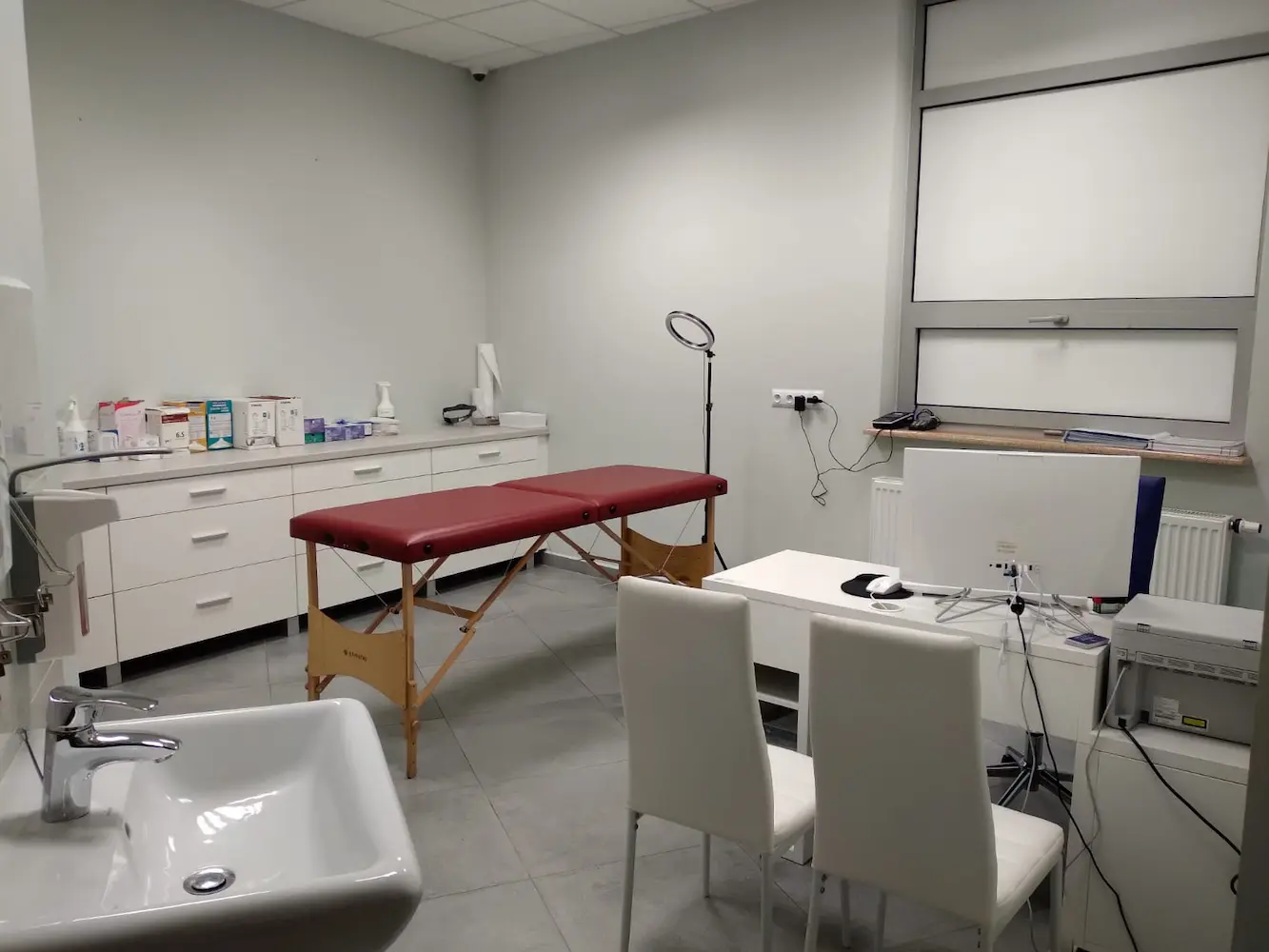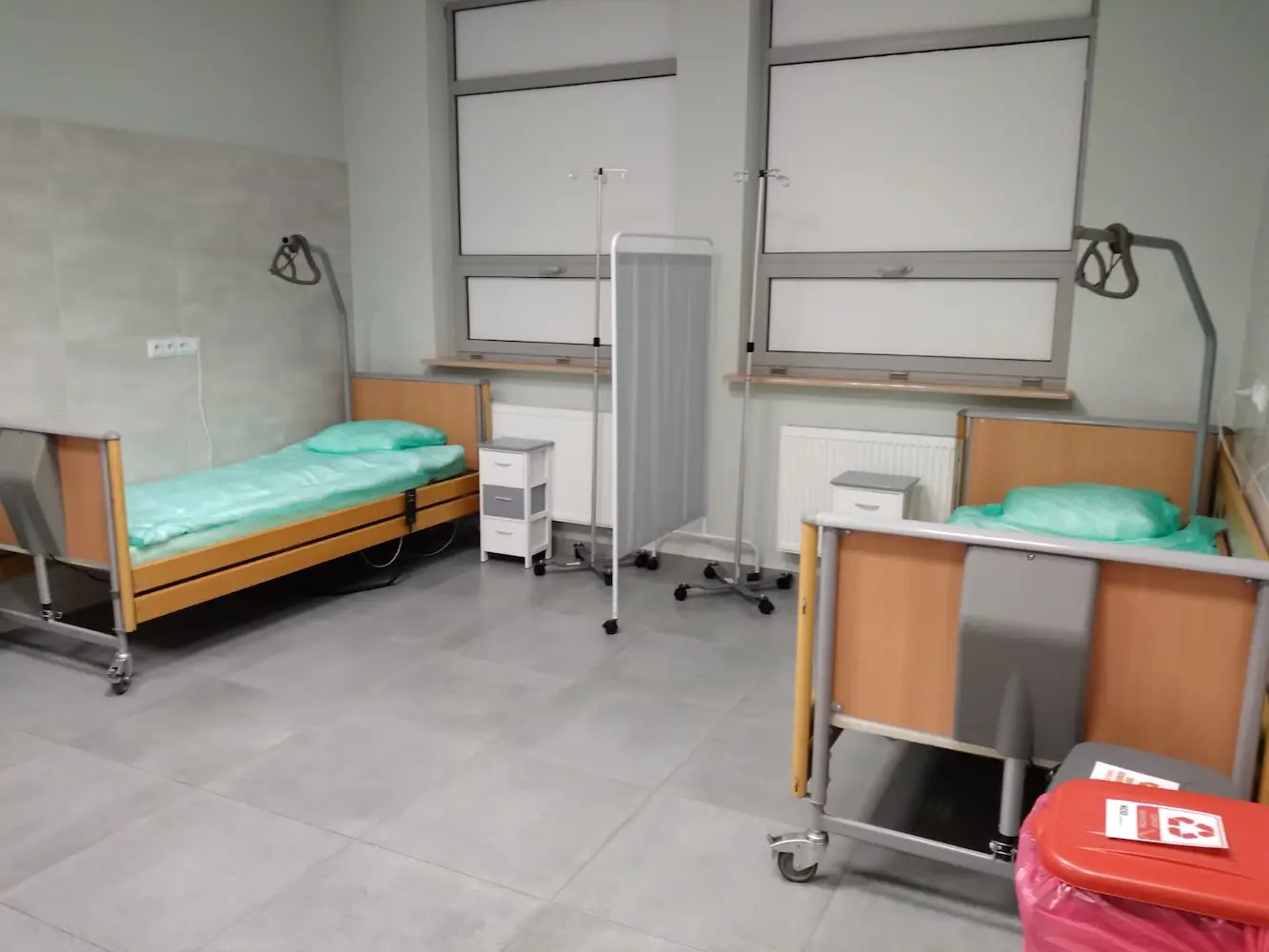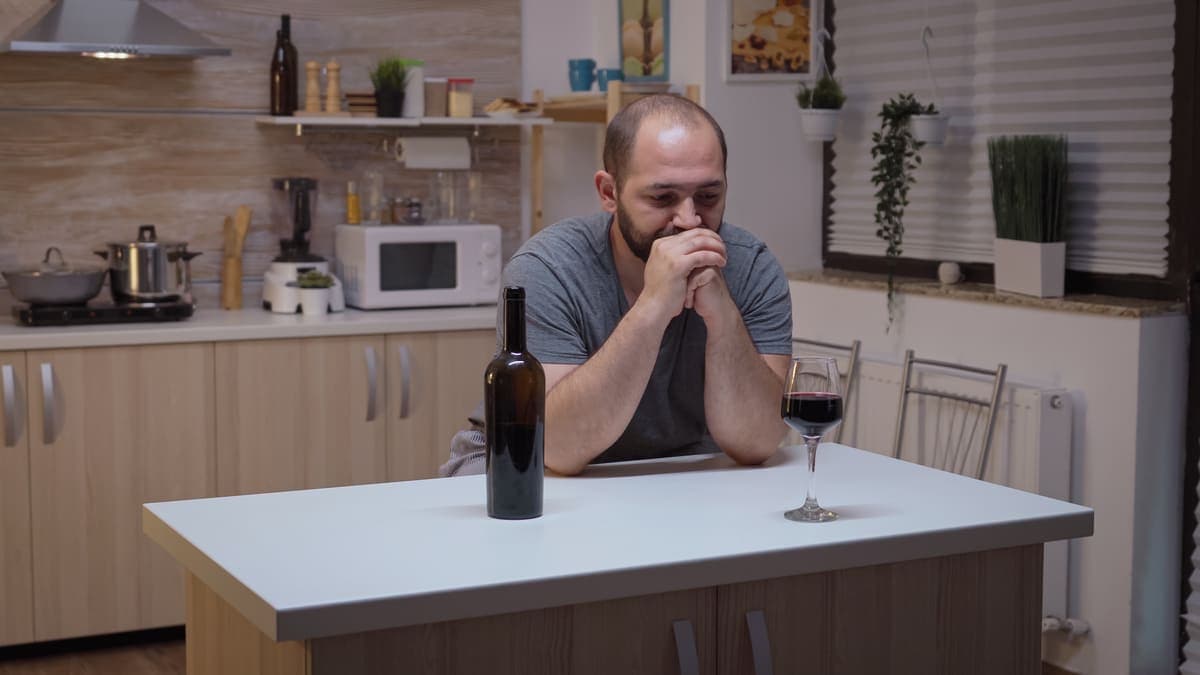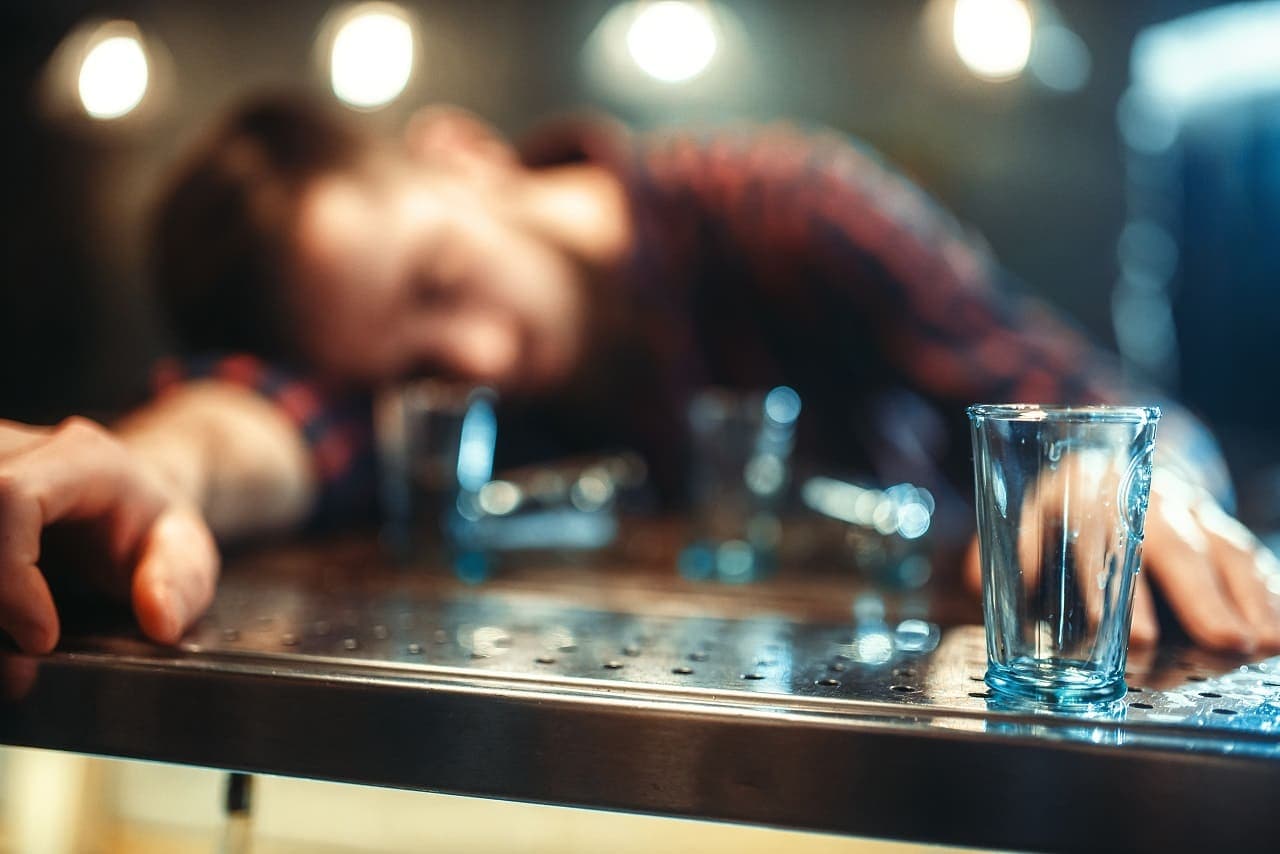


What an addiction treatment centre in Olsztyn is
An addiction treatment centre is a place where the patient lives for the duration of therapy and has a team beside them around the clock. That is what sets it apart from an outpatient clinic, where you come in for single sessions and go home. In Olsztyn, at Kopernika 44, we run inpatient treatment for people addicted to alcohol and medication, to drugs, as well as to gambling and other behaviours that have slipped out of control. We describe drug addiction treatment in Olsztyn and gambling addiction treatment separately, but in the centre they come together into a single stay.
A round-the-clock stay gives two things outpatient care cannot: intensity and a break from the environment. The patient has up to 8 hours of therapy a day and spends a few weeks away from home, work and the friends who have kept the addiction going. That time goes into what cannot be done between one appointment and the next - real work on the mechanisms of addiction. For many people it is also the first moment in a long while when they do not have to fight temptation alone every single day.
Addiction is not a matter of weak will - it is an ingrained mechanism that works more strongly than one-off resolutions. That is why appeals to willpower fail, and attempts to quit repeated at home end the same way. In the centre we work not with guilt but with that mechanism: we break it down into factors that can be recognised and changed step by step. The same holds for behavioural addictions such as gambling - there is no substance to withdraw from, but the pattern of losing control and going back despite the losses is similar, so the therapeutic work follows a similar track.
Outpatient clinic, day ward, round-the-clock centre - what sets them apart
Addiction treatment in Poland comes at several levels of intensity. An outpatient clinic means visits once or a few times a week - the patient still lives at home. A day ward means therapy for most of the day, with a return home for the night. A round-the-clock, inpatient centre is a full stay: the patient remains on site for the whole treatment period. The deeper the problem, the higher the level usually needed.
Olsztyn has several centres funded by the national health service, but most of them work on an outpatient or day basis. Full round-the-clock treatment under the national health service means a referral, a place on a waiting list and a limited number of beds - a single regional inpatient centre serves the whole of Warmia and Masuria. We work privately: no referral, no queue, with a date set right after the call. We describe outpatient alcohol addiction treatment in Olsztyn separately - here the subject is a round-the-clock stay.
What a stay at the centre looks like - from admission to discharge
The decision to start treatment usually comes faster than it seems. The first contact is a phone call on 880 808 880 - we ask about the history of drinking or using, the state of health and the situation the patient is in. We ask about the whole picture, not just one symptom, because that shapes how the stay is put together. On that basis we set a date and an initial plan. There is no panel here and no weeks of waiting.
The stay begins with an initial assessment. A doctor and a therapist check the state of health, earlier attempts at treatment and whether the body is already clear of substances or first needs a detox in Olsztyn. You enter the therapy proper while sober - this is a condition, not a formality, because work on addiction cannot be done while the body is still fighting withdrawal. The first days are therefore about safety first, and only then about the mind.
During the initial assessment we also settle the practical things: what medication the patient takes, whether they have chronic illnesses, what earlier attempts at treatment looked like and what cut them short. This is not bureaucracy - those answers decide whether the stay begins with a detox, how to pace the therapy and what the team should pay particular attention to in the first days. The more we know at the start, the fewer surprises later, and the more calmly the patient can focus on the therapy itself rather than on arranging the stay.
What a day at the centre looks like
Once the patient settles into the rhythm, the day has a fixed frame. Waking, meals, individual and group sessions, educational classes, time for personal assignments and rest - all at set hours, up to 8 hours of therapy a day in total. This predictability is no accident: an ordered day rebuilds the sense of control that fell apart long ago in active addiction, and it teaches a way of functioning in which the substance no longer organises the whole day.
A stay lasts four or eight weeks. The shorter package is condensed work on the foundation - recognising the problem, the first tools, a plan for the return home. The longer one gives the time that deep, long-standing addiction usually needs: consolidating the changes, working on relapses and what triggers them, a calmer preparation for leaving. Which option makes sense is something we discuss at the qualifying stage, rather than leaving it for the patient to guess.
The treatment programme - individual and group therapy
Treatment at the centre stands on two legs: individual and group work. In one-on-one conversation with the lead therapist the patient gets at what specifically sets off their drinking or using - which emotions, situations and thoughts. The group shows the other side: that the problem is not an exception, that others are going through the same thing, and that relapse can be talked about without shame, as something to understand rather than hide.
On top of that comes psychoeducation - concrete knowledge about how addiction works in the brain, what craving is, how to recognise the signs of an approaching relapse and what to do with them. The patient is not simply meant to stop; they are meant to understand why they could not until now, and to get tools that work once the oversight of the team and the centre is gone.
The therapy group meets every day and works on specifics: one member talks through a situation in which they came close to relapse, the rest relate it to themselves, and the therapist helps draw a lesson from it for the future. These are not lectures or confession - they are practice in skills meant to work in real life after leaving. Individual work runs in parallel: there the patient touches on matters that are hard to raise in front of others, and sets their own goals with the therapist for the coming weeks of the stay.
Each patient has one lead therapist who knows their history and is responsible for the course of the whole stay. They draw up the plan, adjust it along the way and are a constant point of reference. Because of this the therapy does not scatter into loose sessions with random people - it has one direction and someone answerable for that direction.
Why the team needs supervision
Once a month the whole team goes through supervision - it discusses ongoing cases with an experienced supervisor from outside the centre. This is the standard in sound addiction therapy, one the patient never sees yet which genuinely guards quality. The point is that therapeutic decisions should not rest on the routine of one person but be checked regularly from the outside. We write more about the method of work under addiction therapy in Olsztyn.
Who inpatient treatment is for - indications and eligibility
Not everyone who drinks too much needs a centre straight away. For some people an outpatient clinic or a day ward is enough, and a full stay would be a step beyond the need. A round-the-clock centre makes sense when the addiction is advanced enough, or grown into daily life enough, that treatment without leaving home simply cannot keep up. That is why we run a qualifying assessment at the start - to settle this honestly, not towards a conclusion fixed in advance.
Signs that outpatient treatment is no longer enough
In practice, people turn to an inpatient stay when several things come together at once. This is not a test to pass - it is enough for a few of the points below to sound familiar to make it worth calling and talking it through:
- Relapses despite therapy at a clinic. The outpatient visits happen, the resolutions are sincere, and yet the drinking or using comes back time after time.
- No abstinence at home. In the current surroundings staying sober fails even for a few days - the alcohol, the occasion, the routine are all too close.
- Severe withdrawal symptoms. Attempts to stop bring on shaking, anxiety, insomnia, sweating - the body reacts so strongly that getting through it safely on your own is not possible.
- An environment that keeps the addiction going. Home, friends or work are so tied to drinking or using that, without a physical break, every attempt ends where it usually does.
- Something beyond the addiction. Low mood, anxiety, insomnia that cannot be handled in a few visits a week and that call for constant care.
- The addiction is already reaching health and relationships. Work, family, finances, safety - one area of life after another starts to fall apart, and the pace of that decline is speeding up.
The more of these signs there are, the stronger the case for a round-the-clock stay rather than another outpatient attempt. Inpatient care gives exactly what is missing in such situations: intensity, round-the-clock care during withdrawal symptoms, and a few weeks away from the environment that pulls you back. We admit adults; whether inpatient care is the right level in a given case is something we settle in a qualifying conversation, not by phone on autopilot.
It also happens the other way round - that after the conversation we advise against a round-the-clock stay, because outpatient treatment or a day ward will do. We would rather say so plainly than admit someone to a full stay they do not need. Assessment works both ways: it is meant to find the level of treatment that fits the problem, not the most expensive one available. If inpatient care is not needed right now, we will point you to where to start in an outpatient setting.
Safety, the team and discretion
Around the clock the patient has a team beside them: addiction therapists and, when needed, access to a doctor and nursing care. The hardest time is usually the first days - just after withdrawal, when the body is settling and craving is at its strongest. That is why someone is on hand whatever the hour: the daily schedule, the shifts and access to a therapist are arranged so that on every shift someone is actually there, not just listed on the rota. The therapy is led by specialists and addiction therapy instructors - they, not random staff, are responsible for the daily work with the patient.
Round-the-clock care is not a slogan - it means someone is always watching at the centre, including at night, when anxiety and craving most often return. If the patient's condition calls for it, we contact a doctor and respond at once rather than waiting until morning. It is precisely this difference - someone present at any hour - that makes the first, hardest days after withdrawal possible to get through safely, without risking your health alone at home.
Who will find out about the treatment
The short answer: no one the patient does not let in. Without their consent we do not contact an employer, family or friends, and what is said in sessions does not leave the team. Discretion has to be kept apart from documentation, though - the latter we must keep, like any medical facility, because without it therapy and medication cannot be matched safely. This is not broadcasting anything: access to those records belongs to the patient and the team treating them, and that is all.
Honestly about the limits of treatment
The centre provides addiction therapy - and that is all we honestly promise. A stay is no guarantee that the addiction will never return; addiction is a relapsing illness, and the outcome also depends on what the patient does after leaving. Inpatient treatment is also not a replacement for treating physical illnesses or for urgent help in an acute medical condition - that is what doctors and hospitals are for. What we genuinely give is a safe, intensive few weeks and concrete tools for a life without the substance.
Packages, prices and how to begin treatment
We have two stay packages, and what mainly sets them apart is time, because it is time - not the fee itself - that decides how much can be worked through. Which of them makes sense follows from the same thing as the qualifying assessment: from the severity of the problem, not from the calendar.
The four-week package, "Intensive Start", costs 13 000 PLN. This is the option for someone who reacts early - the history of addiction is shorter, there are no serious complications, and the point is a strong, condensed entry into treatment. The eight-week package, "Full Process of Transformation", costs 25 000 PLN and is designed for the situations from the previous section: a years-long addiction, relapses, co-occurring difficulties - everything that needs more time than four weeks.
Both amounts cover the full stay: accommodation, meals, up to 8 hours of therapy a day, round-the-clock care from the team and a lead therapist. The price is at the upper end of the market and we do not hide it - except that the difference does not go into hotel extras, but into the number of hours of work with a therapist and into the fact that what watches over the patient is a team, not hotel staff.
The price has no hidden surcharges for a standard course of treatment - the amount for the chosen package is known up front, with no further items added during the stay. Sometimes the patient pays for the stay, sometimes the family does; the details, the available dates and which package makes sense in a particular situation are best talked through by phone before a decision is made.
How to arrange a stay
The first step is a conversation, not a commitment. You call 880 808 880 - you can simply describe the situation, find out whether a round-the-clock stay is right in your case, and only then decide. If treatment is to begin, we set a date at once, with no referrals and no queue. We also answer the phone when it is someone close who calls - many conversations are started by a family that does not know where to begin.