
Table of contents
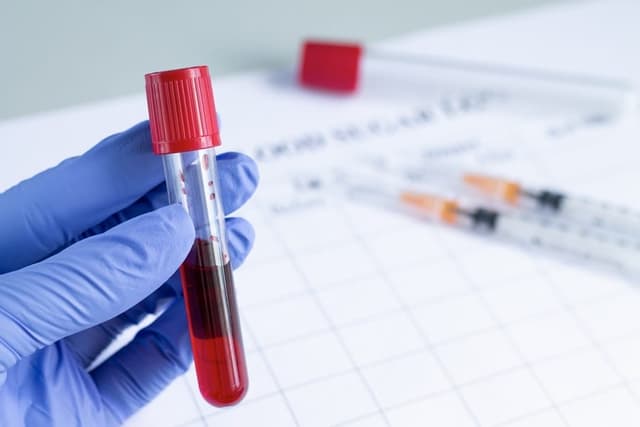
Before obesity treatment, the doctor orders a few basic blood and urine tests. The results show whether excess weight has already caused conditions that need treating at the same time, such as prediabetes, lipid disorders or fatty liver, and whether there is any reason not to use the chosen treatment. The 2024 guidelines of the Polish Society for the Treatment of Obesity (PTLO) list eight such tests: fasting blood glucose, a glucose tolerance test or glycated haemoglobin, a lipid profile, uric acid, TSH, ALT and AST, creatinine with eGFR, a full blood count and urinalysis (PTLO 2024). At the clinic, the doctor also measures your blood pressure with a cuff sized to your arm. Insulin, cortisol and other hormones are not tested routinely in every patient; the doctor orders them when symptoms or earlier results point to them.
In brief
- Polish guidelines recommend eight tests for everyone with obesity: blood glucose or HbA1c, a lipid profile, uric acid, TSH, ALT and AST, creatinine with eGFR, a full blood count and urinalysis.
- The tests are used to detect complications of obesity, such as diabetes, lipid disorders or fatty liver, and to check whether the chosen medicine is safe for you.
- You do not need to have the full set done before your first appointment. It helps to bring results from the last few months, and the doctor will order any missing tests.
- The doctor orders cortisol or testosterone tests, or a sleep study, only when there are specific symptoms. There is no one-size-fits-all test package.
Do you need to have tests done before your first appointment?
No. At the first appointment, the doctor takes your medical history, measures your weight, waist and blood pressure, and then orders the tests that are missing. If you have results from the last few months, the doctor will usually use them rather than asking you to repeat everything from the start.
All eight basic tests can be ordered free of charge by a GP (family doctor) under the NFZ (Poland's National Health Fund), because they are on the list of tests available in primary care (POZ). It also helps to bring hospital discharge summaries, imaging reports if you have had any imaging, and a list of the medicines you take with their doses. We describe what else to prepare and what the doctor will ask in our guide on how to get started with obesity treatment.
Which test results should you bring to your first appointment at Nasz Gabinet?
For your first obesity treatment appointment at Nasz Gabinet, results from your POZ practice are enough, if you have them. The doctor checks which basic tests are missing and orders only those. The first appointment costs PLN 250, the same at the clinic and online. We see patients in person in Wrocław, Warsaw, Łódź, Kraków and Katowice. If you live elsewhere, send us your test results and your home weight and blood pressure readings before the online appointment. The doctor will then decide whether you also need an in-person examination to confirm the treatment is suitable for you.
Which tests does a doctor order before obesity treatment?
The starting point is the eight laboratory tests that PTLO recommends for everyone with overweight or obesity, plus a blood pressure measurement at the clinic. The doctor orders additional tests when your medical history, physical examination or results point to a specific condition.
| Test | Why it is done | What the doctor looks for in the result | Who needs it |
|---|---|---|---|
| Fasting blood glucose, HbA1c or OGTT | To detect prediabetes and type 2 diabetes | Glucose of 100-125 mg/dL or HbA1c of 5.7-6.4% means prediabetes; 126 mg/dL or more on two separate occasions or HbA1c of 6.5% or more means diabetes | Everyone |
| Lipid profile (total cholesterol, LDL, HDL, non-HDL, triglycerides) | To assess the risk of atherosclerosis, heart attack and stroke | Non-fasting triglycerides above 440 mg/dL: repeat the test fasting; above 880 mg/dL: risk of pancreatitis | Everyone |
| Uric acid | To detect hyperuricaemia, which accompanies metabolic disorders | A raised level increases the risk of gout and kidney stones | Everyone |
| TSH | To detect an underactive thyroid (hypothyroidism) | If TSH is raised, FT4 and anti-TPO are also tested | Everyone |
| ALT and AST | To detect fatty liver and other liver diseases | If fatty liver is present: FIB-4 score; 1.3 or higher means elastography is needed | Everyone |
| Creatinine with eGFR | To assess kidney function before starting a medicine | eGFR below 30: semaglutide and liraglutide not recommended | Everyone |
| Full blood count | To detect anaemia | Platelet count, needed to calculate FIB-4 | Everyone |
| Urinalysis | To assess the kidneys and blood sugar control | Protein or glucose in the urine | Everyone |
| 1 mg dexamethasone suppression test | To rule out Cushing's syndrome | A result that does not rule out the disease: referral to an endocrinologist | People with symptoms of excess cortisol; everyone before bariatric surgery |
| Total testosterone | To detect testosterone deficiency in men | An abnormal result or one close to the lower limit of normal: further hormone tests | Men with symptoms, type 2 diabetes or metabolic syndrome |
| Polysomnography | To diagnose obstructive sleep apnoea | The number of pauses in breathing (apnoeas) during sleep | When sleep apnoea is suspected |
How are glucose, HbA1c and OGTT used to test for diabetes?
Type 2 diabetes is the most common complication of obesity and often causes no symptoms for years. Prediabetes is diagnosed with a fasting blood glucose of 100 to 125 mg/dL or HbA1c of 5.7 to 6.4%, and diabetes with a fasting blood glucose of at least 126 mg/dL on two separate occasions or HbA1c of at least 6.5% (Polish Diabetes Association, PTD 2025). Glycated haemoglobin shows your average blood glucose over the last 2-3 months, so you do not need to fast for it. The 75 g oral glucose tolerance test (OGTT) takes 2 hours, and the doctor usually orders it when earlier results are borderline. The USPSTF, an American expert panel, recommends screening for diabetes in all adults aged 35-70 with overweight or obesity (USPSTF, JAMA 2021).
How does diabetes change obesity treatment?
If you have diabetes, the doctor treats both conditions at the same time. If you take insulin or a sulfonylurea, the doctor lowers the dose of these medicines before starting an obesity medicine and asks you to check your blood sugar more often, because combining these medicines increases the risk of hypoglycaemia. If you have diabetic eye disease, you also need an eye check-up with an ophthalmologist before starting semaglutide.
What do a lipid profile and a uric acid test show?
With abdominal obesity, a typical pattern is high triglycerides, low HDL cholesterol and raised non-HDL cholesterol. A lipid profile like this indicates a higher risk of atherosclerosis. Lipid disorders are treated alongside weight reduction, which is why everyone with obesity should have a lipid profile checked. You do not need to fast for a lipid profile. The European Atherosclerosis Society and the European Federation of Clinical Chemistry and Laboratory Medicine concluded that after a normal meal the results change only slightly, not enough to matter clinically, and they recommend repeating the test fasting only when triglycerides are above 440 mg/dL (Nordestgaard et al., Eur Heart J 2016). Triglycerides above 880 mg/dL mean a risk of acute pancreatitis and need urgent medical review.
Uric acid is also on the list of basic tests. A raised level, known as hyperuricaemia, often occurs together with obesity, high blood pressure and blood sugar disorders. Untreated hyperuricaemia increases the risk of gout and kidney stones.
Why does the doctor order a TSH test for everyone with obesity?
TSH is tested in everyone diagnosed with obesity, whether or not they have symptoms of an underactive thyroid. According to the Polish guidelines, subclinical hypothyroidism is found in 14.6% of people with obesity, and overt hypothyroidism in 14% (PTLO 2024). Untreated overt hypothyroidism leaves you feeling unwell, increases the risk of heart disease and makes effective obesity treatment impossible. If TSH is raised, the doctor orders FT4 and anti-TPO antibodies. A moderately raised TSH can itself be caused by obesity, so the doctor decides whether to start thyroid medication only after these tests.
What do ALT and AST tell you about your liver?
Metabolic dysfunction-associated steatotic liver disease (MASLD), a form of fatty liver, occurs in 70-80% of people with obesity and causes no symptoms for years. Raised ALT and AST are often the first sign of liver disease. If you have fatty liver, the doctor calculates the FIB-4 score from your age, ALT, AST and platelet count. A result below 1.3 means a low risk of fibrosis, and a result of 1.3 or higher is an indication for elastography, a test that measures liver stiffness. Raised liver enzymes also have other causes, including regular drinking, viral hepatitis and some medicines. We describe which results point to alcohol in our article on which blood tests indicate alcoholism.
Why are creatinine, eGFR and urinalysis checked before treatment?
Creatinine with eGFR shows how well your kidneys are working. GLP-1 receptor agonists used to treat obesity often cause nausea, vomiting and diarrhoea, and dehydration worsens kidney function, especially if it was already reduced. In severe renal impairment (eGFR below 30), the manufacturers of semaglutide and liraglutide do not recommend using them. Urinalysis completes the kidney assessment: obesity puts extra strain on the kidney's filtering units (glomeruli), and a sign of this overload is protein in the urine. Glucose in the urine, on the other hand, points to high blood glucose.
Why is a full blood count done before obesity treatment?
A full blood count detects anaemia, for example due to iron or vitamin B12 deficiency. People with obesity are more prone to these deficiencies, and very restrictive diets and bariatric surgery make them worse. The full blood count also provides the platelet count needed to calculate FIB-4.
When does the doctor order additional tests for obesity?
The doctor orders additional tests when symptoms or results point to a condition that the basic set does not detect. The guidelines list these situations: menstrual disorders in women, erectile problems in men, suspected hormonal disorders, swelling (oedema), depression, heart disease, gallstones, obstructive sleep apnoea and secondary obesity. The doctor asks women whether their periods are regular, because irregular cycles may point to polycystic ovary syndrome.
Do you need a cortisol test if you have obesity?
Not everyone does. Excess cortisol is found in about 0.9% of people with obesity, so not everyone is tested for Cushing's syndrome. The doctor orders testing if you have symptoms such as wide, red stretch marks, easy bruising or weakness of the thigh and upper arm muscles, and also if you have abdominal obesity together with type 2 diabetes, high blood pressure or osteoporosis. The US Endocrine Society recommends the same: tests for Cushing's syndrome are done in patients with multiple, progressive symptoms of the disease (Nieman et al., J Clin Endocrinol Metab 2008). The screening test is the 1 mg dexamethasone suppression test. The Polish Society for the Treatment of Obesity advises against using a morning blood cortisol test for this purpose, even though it is often included in commercial test packages. Hypercortisolism is also ruled out in every patient before planned bariatric surgery.
When is testosterone tested in obesity?
Testosterone deficiency occurs in 32.7-45% of men with obesity, but the guidelines do not recommend testing all of them. The doctor asks about symptoms such as reduced libido, erectile problems, infertility, reduced muscle strength or enlarged breast tissue. Total testosterone is measured when these symptoms are present and in men with type 2 diabetes or metabolic syndrome. Losing 5-10% of body weight can raise testosterone levels.
When do you need a sleep study, an echocardiogram or an exercise test?
Loud snoring with pauses in breathing, morning headaches and daytime sleepiness are symptoms of obstructive sleep apnoea. If it is suspected, you have polysomnography, an overnight sleep study. If needed, the doctor also orders an exercise stress test and an echocardiogram (heart ultrasound).
How does the doctor assess your mood and eating habits?
If depression is suspected, the doctor carries out an initial assessment, for example with the Beck Depression Inventory. Low mood and binge eating affect the choice of treatment, so the doctor asks about them at the first appointment.
Do you need insulin, vitamin D or HOMA-IR tests?
Insulin, HOMA-IR and vitamin D are not on the list of tests recommended for everyone with obesity. However, many laboratories sell obesity test packages in which fasting insulin, HOMA-IR, morning cortisol and vitamin D are presented as standard. Prediabetes and diabetes are diagnosed on the basis of blood glucose, HbA1c and OGTT, and an insulin result does not change whether you are eligible for obesity treatment. The doctor orders vitamin D, ferritin or vitamin B12 when symptoms, your diet or planned bariatric surgery point to a risk of deficiency.
Do you need a calcitonin test or thyroid ultrasound before treatment?
Not routinely. Patients ask about these tests because the patient leaflets for GLP-1 medicines mention medullary thyroid cancer. This cancer was seen in studies in rodents, and the US prescribing information for these medicines does not recommend routine calcitonin testing or thyroid ultrasound before treatment. The doctor will, however, ask whether anyone in your family has had this cancer or MEN2 (multiple endocrine neoplasia type 2). Pancreatic enzymes are not tested routinely either.
Which tests are repeated during obesity treatment?
At every follow-up appointment, the doctor checks your weight, waist circumference, blood pressure and heart rate. According to the Polish guidelines, medication is considered effective if, after 3 months on a therapeutic dose, body weight has fallen by at least 5% (PTLO 2024). Blood tests, mainly glucose or HbA1c, a lipid profile, ALT, AST and creatinine, are repeated every few months. They show whether treatment is reversing the complications of obesity. An improvement in blood pressure, blood glucose or lipids justifies continuing treatment even if body weight has fallen by less than 5%. Your doctor decides how often you have tests, depending on your initial results and the medicine you take.
Patients with diabetes treated with insulin check their blood glucose more often than usual, and people taking anticoagulants such as warfarin or acenocoumarol have their INR checked more often at the start of treatment.
Which symptoms during obesity treatment need urgent help?
Sudden swelling of the lips, tongue or throat, severe breathlessness or loss of consciousness may mean a severe allergic reaction and need immediate medical help; do not wait to contact the clinic first. Palpitations with chest pain, breathlessness or fainting are just as urgent.
The following also need immediate medical assessment:
- Severe, persistent abdominal pain, which may spread to the back
- Pain under the right side of the ribcage with fever or yellowing of the skin and eyes
- Sudden loss of vision or rapidly worsening eyesight
- Sudden swelling of the face
- Persistent palpitations
If you have any of these symptoms, contact a doctor straight away. If you cannot get help quickly, go to a hospital emergency department (SOR). Do not wait until the end of the day or for your scheduled follow-up appointment.
Repeated vomiting that stops you keeping down fluids also needs urgent contact with a doctor. It can lead to dehydration, especially in people with kidney disease.
Frequently asked questions
Do you need to fast before tests for obesity treatment?
Blood glucose and the OGTT require fasting (no food for at least 8 hours). Glycated haemoglobin, TSH and the lipid profile do not need to be done fasting, but if all the tests are taken on the same day, the simplest option is to come in the morning before breakfast. You can drink water.
Can you use earlier test results?
There is no single time limit for all tests. The doctor usually uses results from the last few months if your weight, medicines and general well-being have not changed in that time. It also helps to bring older results, because they show how your blood glucose, lipids or liver enzymes have changed. The doctor decides at the appointment which tests to repeat.
Can you have tests before obesity treatment under the NFZ?
Yes. Blood glucose, HbA1c, a lipid profile, uric acid, TSH, ALT, AST, creatinine, a full blood count and urinalysis are ordered free of charge by a GP if they consider them necessary. You can also bring results from your POZ practice to a private appointment with an obesity doctor.
Will a doctor prescribe obesity medication without tests?
No. Before starting a medicine, the doctor assesses your health. Eligibility is based on BMI, waist circumference and coexisting conditions, and blood and urine test results show whether the medicine is safe and whether the doses of other medicines, such as diabetes medicines, need to be changed.
Sources
- Bąk-Sosnowska M, Białkowska M, Bogdański P et al. Zalecenia kliniczne dotyczące postępowania u chorych na otyłość 2024 - stanowisko Polskiego Towarzystwa Leczenia Otyłości (Clinical guidelines for the management of patients with obesity - position statement of the Polish Society for the Treatment of Obesity). Medycyna Praktyczna, special edition, September 2024. ptlo.org.pl
- Polskie Towarzystwo Diabetologiczne (Polish Diabetes Association). Zalecenia kliniczne dotyczące postępowania u chorych z cukrzycą 2025 (Clinical guidelines for the management of patients with diabetes). ptdiab.pl
- US Preventive Services Task Force, Davidson KW, Barry MJ et al. Screening for Prediabetes and Type 2 Diabetes: US Preventive Services Task Force Recommendation Statement. JAMA. 2021;326(8):736-743. PMID 34427594, DOI
- Nordestgaard BG, Langsted A, Mora S et al. Fasting is not routinely required for determination of a lipid profile. Eur Heart J. 2016;37(25):1944-1958. PMID 27122601, DOI
- Nieman LK, Biller BMK, Findling JW et al. The diagnosis of Cushing's syndrome: an Endocrine Society Clinical Practice Guideline. J Clin Endocrinol Metab. 2008;93(5):1526-1540. PMID 18334580, DOI
- European Medicines Agency. Wegovy (semaglutide) - summary of product characteristics. ema.europa.eu
Would you like to start obesity treatment?
At your first appointment, the doctor will assess your measurements and test results, order any missing tests and draw up a treatment plan with you. Call us or book an appointment at the clinic or online.