Where obesity comes from and why it does not go away on its own
Obesity is a disease in which body fat builds up to the point where it starts to damage health, and the system that regulates appetite stops holding it in check. In the ICD-10 classification it has its own code, E66. In its 2024 clinical guidelines the Polish Society for the Treatment of Obesity (PTLO) described it as a chronic disease that does not resolve on its own. It is treated the way high blood pressure is treated: for years, with regular checks, and when a drug stops working the doctor changes it.
In a healthy body, body weight is regulated by hormones. As fat stores grow, adipose tissue sends leptin to the brain, and after a meal the gut releases GLP-1; both signals reduce appetite. In obesity the brain stops responding to leptin, so the message that the stores are full never reaches it and the patient still feels hungry. When they try to lose weight, the empty stomach releases more ghrelin, the hunger hormone, and the metabolism slows down. A third or fourth diet therefore ends the same way as the first: the weight returns within a year or two, often with more on top.
In Kielce we treat this disease in adults of every age, and a large proportion of our patients are over sixty. In them obesity is layered on top of the natural loss of muscle, on heart and joint disease and on diabetes, so we plan their treatment differently than we would for someone in their forties.
When BMI is misleading and what we measure alongside it
BMI is most often misleading in people over sixty and in people with a lot of muscle. The index itself is simple: body weight in kilograms divided by height in metres squared. A woman 164 cm tall who weighs 86 kg has a BMI of 32, that is, class I obesity. PTLO uses the WHO thresholds: overweight from 25, and the three classes of obesity from 30, 35 and 40. BMI, though, counts muscle, bone, water and fat together. In an older person muscle is lost, height falls by a few centimetres and fat gathers around the abdomen, so a BMI of 27 can hide abdominal obesity along with its complications. The PTLO guidelines cite an American study in which BMI picked up obesity in only one in three older men and in just under 40 percent of older women.
That is why we measure waist circumference in every patient. Following the criteria of the International Diabetes Federation, we diagnose abdominal obesity from 80 cm in women and from 94 cm in men. Fat inside the abdomen wraps around the liver, the pancreas and the bowel, releases substances that keep the body in a state of inflammation, and does more harm than fat under the skin of the thighs or hips. In patients over 65 we add a third measurement: muscle strength. In 2022 the European societies for clinical nutrition and for the study of obesity agreed that sarcopenic obesity, that is, obesity with loss of muscle, is diagnosed when excess fat goes together with weak muscles. At the practice we ask the patient to stand up from a chair five times without using their hands, and we time it.
The BMI and waist circumference at which we start treatment on ul. Wspólna
We treat every adult with a BMI of 30 or more, and people with a BMI from 27 in whom obesity has already brought on high blood pressure, prediabetes, type 2 diabetes, lipid disorders, fatty liver disease, sleep apnoea or pain in the joints that carry the extra weight. We also see patients with a BMI below 27 if their waist circumference is above the threshold and their blood tests show insulin resistance. Obesity medicine is not a separate medical specialty; an obesity specialist is a doctor certified by PTLO. At Nasz Gabinet Kielce obesity is treated by doctors with a background in internal medicine.
What happens at the first appointment in Kielce and what the months that follow look like
The first medical appointment costs PLN 250, both at the practice and online. The doctor starts with the medical history: how long the patient has been gaining weight, what they weighed at twenty, how their earlier diets ended, what medicines they take regularly, what their parents and siblings are treated for, how they sleep and whether they wake up tired. The doctor then weighs the patient on scales built for a high body weight, measures height, waist circumference and blood pressure, checks muscle strength in patients over 65, looks through the results the patient has brought and orders the ones that are missing. Anyone with a full set of tests who meets the criteria leaves with an e-prescription (Poland's electronic prescription) for the lowest dose of the drug and an appointment with the dietitian.
Follow-up appointments are held every 4 weeks, because that is how often we raise the dose of semaglutide and tirzepatide. At each one the doctor asks about nausea, constipation, how much the patient is drinking and what they have eaten over the past week, checks how fast body weight is falling and issues a prescription for the next month. After 3 months the patient repeats the blood tests and comes to the practice to be measured; that is when we compare the results from before treatment with the new ones. After six months we assess whether the patient has lost at least 5 percent of their starting body weight, because PTLO treats that as a successful result; after a year we decide whether the drug stays or whether we start reducing the dose in steps, because treatment does not end the moment the scales stop moving.
What we do not do at Nasz Gabinet Kielce when treating obesity
- We do not prescribe a GLP-1 analogue without a diagnosis. Someone with a normal body weight and a normal waist circumference who wants to lose weight before a wedding does not have obesity and will not be given the drug, even if they ask for it.
- We do not stop or change medicines prescribed by other doctors. If the weight gain is caused by a drug from a psychiatrist, a cardiologist or a neurologist, our doctor writes to that specialist to ask about an alternative and leaves the decision to whoever issued the prescription.
- We do not see anyone under 18. Obesity in children and adolescents is treated by paediatric clinics, with different criteria and different drugs.
The blood tests we order before prescribing a drug and what else we check in a patient over 65
Before the first prescription we need fasting glucose and glycated haemoglobin, a lipid profile, the liver enzymes ALT and AST, creatinine with the calculated eGFR, TSH, uric acid and a full blood count. Glycated haemoglobin shows what the patient's blood glucose has averaged over the past 3 months, so it separates prediabetes from diabetes better than a single glucose reading. The eGFR shows how well the kidneys filter the blood, and that figure decides which drug we can give. TSH rules out an underactive thyroid, the liver enzymes show whether fat has already damaged the liver, and the lipid profile shows what is happening with cholesterol and triglycerides.
In patients over 65 we add sodium and potassium, because a drug that dampens thirst and can cause diarrhoea will leave them dehydrated and short of electrolytes within a few days; PTLO names this as the main danger of drug treatment in this group. If the patient is being treated for osteoporosis or takes steroids, we ask for a bone density scan result, because a reducing diet in an older person raises the risk of fractures. Results from a GP surgery or from an occupational health check are accepted without repeating them, as long as they are no more than six months old. The patient has any missing tests done at any laboratory in Kielce or in their own town and sends us a photograph of the results.
Three causes of weight gain that we check before diagnosing obesity
Before we accept that obesity is not the result of another illness, we rule out three groups of causes. The first is an underactive thyroid: a raised TSH is confirmed with an FT4 measurement, and we correct the hormones first, because an untreated underactive thyroid adds a few kilograms of retained water and distorts any assessment of treatment. The second, which is rare, is an excess of cortisol in Cushing's syndrome, recognisable by a rounded face, wide purple stretch marks and high blood pressure in a young person. The third, and the most common, is medication: some antidepressants and antipsychotics, anti-epileptic drugs, steroids, insulin and sulfonylureas, the older tablets for diabetes. An older patient usually brings in five or six medicines, and it is these we go through most carefully, because PTLO warns that every further drug in someone who already takes a lot of them raises the risk of mistakes and falls.
How we treat obesity in patients over 65 in Kielce so that they do not lose muscle and mobility
We treat such a patient differently from younger ones: more slowly, with more protein, with strength training from the first week, and with a drug only where the benefit outweighs the risk. From the third decade of life a person loses 0.5 to 1 percent of their lean body mass every year, and by the age of seventy has lost 10 to 20 percent of their muscle. If a patient of that age loses 15 kg on diet alone, without exercise and without watching their protein, some of those kilograms are muscle, thigh muscle included, and according to PTLO, of all the metabolic factors studied it is the loss of thigh muscle that carries the highest risk of death in older people. A patient who is lighter but weaker falls more often and loses their independence. The PTLO 2024 guidelines devote a separate chapter to treating obesity in old age. At this age the goal is mobility, quality of life and a lower risk of heart attack and stroke, not a low number on the scales.
We diagnose sarcopenic obesity in two steps, following the 2022 ESPEN and EASO criteria: muscle strength first, then body composition, that is, the proportion of fat and muscle measured on scales with bioimpedance analysis. A patient whose BMI or waist circumference is above the threshold and who struggles to get up from a chair is given a different plan from a patient of the same weight who climbs to the third floor without getting out of breath.
| Part of treatment | A younger patient | A patient over 65 |
|---|---|---|
| Diagnosis | BMI and waist circumference | waist circumference matters more than BMI, plus muscle strength and hydration |
| Goal for the first six months | a fall in body weight of 5 to 10 percent | mobility, less joint pain, lower blood pressure and blood glucose; slower weight loss, about 0.5 kg a week |
| Calorie deficit | 500 to 750 kcal a day | 500 to 750 kcal a day, with no very low calorie diets and no fasting |
| Protein | 1 to 1.5 g per kilogram of ideal body weight, that is, the weight the patient ought to be | 1 to 1.2 g per kilogram of body weight, and no less; 1.5 g in sarcopenic obesity; 20 to 30 g in every meal |
| Exercise | 150 to 300 minutes of aerobic exercise a week and two strength sessions | strength training 2 to 3 times a week starting from light resistance, walking or cycling instead of running, balance exercises |
| Drug | a GLP-1 analogue if the patient meets the criteria | only in selected cases; liraglutide and naltrexone with bupropion are not used after the age of 75, semaglutide and tirzepatide after assessing the kidneys and hydration |
| Bariatric surgery | in class II and class III obesity | the Polish guidelines allow surgery up to the age of 65, and only exceptionally after that |
We choose the drug from the summaries of product characteristics, and each of them treats the patient's age differently. Liraglutide is not recommended after the age of 75, and in patients over 65 it more often causes stomach upsets. With semaglutide the dose is not changed on account of age, but there is little data on patients over 75 and the manufacturer advises caution. Tirzepatide works in older people just as it does in younger ones, and there is very little data on patients over 85. We do not give naltrexone with bupropion after the age of 75, and we use it cautiously after 65, because it more often causes dizziness. Orlistat has not been studied in older people at all. In patients over 65 we therefore raise the dose more slowly and ask about fluids at every follow-up, because someone with a poor sense of thirst drinks even less on a drug that suppresses appetite.
What weight loss does for osteoarthritis of the knee and when a surgeon asks a patient to lose weight before a joint replacement
The IDEA trial divided 454 people over 55 who were overweight or obese and had osteoarthritis of the knee into three groups: diet with exercise, diet alone, exercise alone. After 18 months the group combining diet with exercise had lost an average of 10.6 kg, or 11.4 percent, and reported less pain and better function than either of the others; the load on the knee during walking was about 200 newtons lower in the diet-only group than in the people who only exercised. In the STEP 9 trial from 2024, 407 people with obesity, on average with a BMI of 40, and with knee pain took semaglutide 2.4 mg or placebo for 68 weeks. Body weight fell by 13.7 percent against 3.2 percent, and pain on a scale from 0 to 100 fell by 41.7 points against 27.5 points. For a patient with painful knees whom an orthopaedic surgeon has sent away with instructions to lose weight, that is a concrete pointer to where to start.
In 2013 the American Association of Hip and Knee Surgeons recommended that patients with a BMI of 40 or more should lose weight before a joint replacement, because at that body weight the risk of infection around the implant and of the implant loosening goes up. More recent publications look not at the BMI threshold itself but at whether the patient lost 5 to 10 percent before the operation. In Polish orthopaedic departments the threshold varies and is set by the operating surgeon. If a patient is waiting for a joint replacement, we agree with their orthopaedic surgeon how much weight they are to lose and by when, and we make sure that in the meantime they do not lose the muscle they will need for rehabilitation after the operation.
What is known about semaglutide in patients who have had a heart attack or a stroke
The SELECT trial enrolled 17,604 people aged at least 45 with a BMI of 27 or more who had had a heart attack or a stroke or had peripheral arterial disease but did not have diabetes; they received semaglutide 2.4 mg or placebo and were followed for an average of 40 months. Death from cardiovascular causes, heart attack or stroke occurred in 6.5 percent of those treated and in 8.0 percent of the placebo group, so the risk fell by a fifth. Side effects led 16.6 percent of those treated to stop the drug, against 8.2 percent on placebo, mostly because of stomach upsets. In a patient who has had a heart attack we agree the obesity treatment with the cardiologist, because it is the cardiologist who sets the antiplatelet drugs and the statins, and in heart failure with breathlessness at rest, that is, NYHA class IV, we do not start a GLP-1 analogue.
Who we prescribe a GLP-1 analogue to and what the trials of semaglutide and tirzepatide showed
The drug goes to a patient who meets the criteria set out above, and also to a patient whose body weight has not fallen by 5 percent even though for 3 to 6 months they have been eating differently and moving more; PTLO then advises adding a drug rather than another, stricter diet. Five substances are licensed in Poland for the treatment of obesity: semaglutide, tirzepatide, liraglutide, the combination of naltrexone with bupropion, and orlistat. The first three are GLP-1 analogues, or GLP-1 receptor agonists.
A GLP-1 analogue acts in the stomach and in the brain. The stomach empties more slowly, so the feeling of fullness after a meal lasts longer. The satiety centre in the brain receives a stronger signal, so the patient is no longer drawn to the fridge between meals. Tirzepatide additionally stimulates the receptor for a second gut hormone, GIP, which is why it produces a greater fall in body weight. Semaglutide and tirzepatide are injected once a week, liraglutide daily. We raise the dose every 4 weeks, because the stomach has to get used to working more slowly; a patient given the target dose straight away usually vomits and gives up.
How much body weight comes off and when the fall stops
In the STEP 1 trial patients taking semaglutide 2.4 mg lost an average of 14.9 percent after 68 weeks, against 2.4 percent in the placebo group. Tirzepatide at a dose of 15 mg produced a fall of 20.9 percent after 72 weeks in SURMOUNT-1, against 3.1 percent. After 56 weeks on liraglutide 3 mg, in the SCALE trial, body weight fell by 8.4 kg against 2.8 kg on placebo. A woman weighing 86 kg can therefore expect to be about 13 kg lighter on semaglutide, and about 18 kg lighter on tirzepatide. These are averages: in every trial there were participants who lost twice as much and others who lost almost nothing. After 3 months at the target dose we check whether 5 percent has come off; if it has not, we change the product, usually semaglutide to tirzepatide. The fall stops at around week 60, when the smaller portions supply as much energy as the body burns during the day. The drug goes on working, but instead of bringing the weight down it holds it at the new level.
What we do when a patient wants to stop taking the drug
Participants in STEP 1 who had the drug and the dietetic care withdrawn at the end of the trial regained two thirds of the weight they had lost within a year, and with it came higher blood pressure and higher blood glucose. We therefore treat stopping the drug as a separate stage of treatment: we reduce the dose in steps, with the weight stable, with a meal plan and a training plan in place, and the patient stays under our care for several months after the last injection. Anyone who starts to gain weight after stopping, despite watching what they eat, goes back to the lowest effective dose; in some patients the drug stays for years, just as a blood pressure drug does.
How to tell an obesity drug from a diabetes drug by the name on the box
By the indication written in the summary of product characteristics, not by the active substance. Wegovy, Mounjaro, Saxenda, Mysimba and Xenical hold a marketing authorisation for the treatment of obesity. Ozempic, Rybelsus and Victoza are authorised in type 2 diabetes only, even though they contain the same active substances as Wegovy and Saxenda. The brand name tells you the manufacturer, the dose and the group of patients the drug was studied in.
What happens when a patient without diabetes is given a prescription for Ozempic
Semaglutide at doses up to 2 mg is Ozempic, and in tablet form Rybelsus; both were studied and authorised for the treatment of type 2 diabetes. The same semaglutide at doses up to 2.4 mg is Wegovy, studied in obesity in the STEP 1 trial. Liraglutide 3 mg is Saxenda, authorised in obesity; the same drug at doses up to 1.8 mg is Victoza, for diabetes. Tirzepatide, as Mounjaro, is authorised in both conditions. A patient without diabetes who is given Ozempic is taking the drug outside its authorised indication and at a dose that has not been studied in obesity. If the prescription carried a reimbursement, the National Health Fund (NFZ) can require the doctor to pay that reimbursement back, because it is due only to patients with diabetes who meet the criteria on the reimbursement list. Ozempic has also been on the list of medicines at risk of running short in Poland, so every pack dispensed to someone without diabetes was a pack missing for someone who cannot keep their blood glucose in range without it. To a patient without diabetes we prescribe a product authorised for the treatment of obesity.
What a month of treatment costs with each of the five drugs
None of the five drugs is reimbursed in the treatment of obesity. At pharmacy prices from September 2026, a month of treatment costs from about PLN 160 to 350 with Xenical, from about PLN 370 to 600 with Mysimba, from about PLN 550 to 890 with Wegovy, from about PLN 500 to 1250 with Saxenda, and from about PLN 800 to 1900 with Mounjaro. The lower figure is the starting dose of the first weeks, the higher one the target dose. The spread in the price of Saxenda comes from cheaper liraglutide alternatives already being on the market. The same pack costs different amounts in different pharmacies, so it pays to check the price in a few places before having the prescription dispensed.
Which tablets are left when an injection is not an option
Naltrexone with bupropion, sold as Mysimba, acts on the reward centre in the brain, so it helps above all patients who eat not out of hunger but to lift their mood. In the COR-I trial participants lost 6.1 percent after 56 weeks, against 1.3 percent on placebo. We do not give the drug in epilepsy or in uncontrolled high blood pressure, because bupropion raises the risk of a seizure and pushes blood pressure up. Nor do people treated with opioids receive it, since naltrexone would bring on withdrawal. Orlistat, sold as Xenical, binds about one third of the fat from a meal in the bowel and over a year gives a fall in body weight 2 to 3 kg greater than placebo; its side effect is oily stools after a fatty meal, hard to hold back. Tablets are not the first choice; we suggest them when a GLP-1 analogue is contraindicated or the patient cannot tolerate it.
The side effects GLP-1 analogues cause and what we do about them
The most troublesome effects come from the digestive tract: nausea, vomiting, diarrhoea and constipation affect more than one patient in ten, usually in the week after a dose increase, and they ease off as the body gets used to the drug. In the STEP 1 trial they led 4.5 percent of participants to stop treatment. It helps to eat smaller portions, to avoid fatty food on the day of the injection and to drink a glass of water between meals; anyone who cannot tolerate a new dose stays on the previous one for longer. In older people the greater danger is not the nausea but how little the patient drinks, because dehydration follows; we therefore ask them to drink at least one and a half litres a day and to ring us if they have not opened their bowels for three days.
Pregnancy, pancreatitis, damaged kidneys and other contraindications
A woman who is pregnant or breastfeeding does not receive the drug. A woman planning a pregnancy stops semaglutide at least 2 months before she plans to conceive, and tirzepatide at least a month before. We do not start a GLP-1 analogue after an episode of pancreatitis, or in heart failure of NYHA class IV, that is, with breathlessness already at rest. We do not give liraglutide when the kidneys filter below 30 ml/min, that is, with an eGFR below that figure in the blood results, or after the age of 75; with semaglutide and tirzepatide there is little data in either situation, so we decide only after assessing the patient and going through their medicines. A woman on the contraceptive pill who starts tirzepatide uses a condom as well for 4 weeks from the first dose and after every dose increase, because the pill is absorbed less well at that time. In a patient on insulin or on sulfonylurea tablets we reduce the doses of those drugs from the very first injection, because otherwise they risk hypoglycaemia.
Which symptoms to report straight away
Severe pain in the upper abdomen that spreads to the back and comes with vomiting can mean acute pancreatitis; with pain like that the patient has to see a doctor the same day. Pain under the right ribs with a fever or yellowing of the skin can mean gallstones; in the semaglutide trials 1.6 percent of those treated developed them, more often the ones who lost weight quickly. Sudden loss of vision in one eye needs an urgent appointment with an ophthalmologist: in 2025 the European Medicines Agency added ischaemic damage to the optic nerve, that is, sudden loss of sight in one eye, to the semaglutide summary of product characteristics as a very rare effect. If vomiting or diarrhoea lasts more than a day despite drinking, an older person rings us the same day. A patient on insulin who develops shaking hands and cold sweats and grows weak has low blood sugar: first they eat something sweet, then they ring us so that we can reduce the doses.
Why a pen bought from an advert is not a medicine
Nobody has checked a pen bought from an advert. In October 2023 Poland's Chief Pharmaceutical Inspectorate withdrew a falsified batch of a semaglutide product from the Polish market, and in Austria that same month several people were admitted to hospital with severe hypoglycaemia after injecting from a counterfeit pen that contained insulin instead of semaglutide. Vials sold online as a research peptide, a supposed reagent rather than a medicine, are checked by nobody: neither for what is inside them nor for whether they are sterile. Our patients buy the drug only at a pharmacy on an e-prescription, and only a doctor changes the dose.
How the dietitian plans meals when the drug takes the appetite away
The dietitian starts with protein and with the number of meals. On the drug the patient eats small portions, so if every one of them is bread and fruit, over the day they will not gather the protein they need and will lose muscle along with the fat. The dietitian works out 1 to 1.5 g of protein per kilogram of ideal body weight, that is, the weight the patient ought to be, splits that amount across three or four meals and gives examples in grams: 85 g of cooked chicken breast is 28 g of protein, 100 g of medium-fat curd cheese is 18 g, 250 ml of natural yoghurt is 13 g. The deficit, that is, how much less the patient is to eat than they burn, is set at 500 to 750 kcal a day, in line with the PTLO recommendation. The dietitian also asks who does the shopping and the cooking at home, because a patient in their seventies who eats what their daughter prepares needs different advice from someone who cooks for themselves. The order in which the patient eats matters too: vegetables and protein first, bread or potatoes last.
We recommend exercise to protect muscle, not to burn calories: 150 to 300 minutes of aerobic exercise a week, following the WHO guideline, and two or three strength sessions, with at least a day of rest between them. Anyone with painful knees starts with the swimming pool, a stationary bike or Nordic walking; anyone who has not exercised for years starts with light resistance bands and with standing up from a chair in sets of 8 to 12 repetitions, which is what PTLO recommends for older people to begin with.
When a specialist in the psychology of eating joins the treatment
We bring in work on eating behaviour when the patient describes eating that the drug has not touched: picking at food in front of the television in the evening, reaching for sweets after an argument, eating out of boredom in retirement, when the day has lost its fixed rhythm. A GLP-1 analogue reduces physical hunger, but the habit of eating under the influence of emotion, or at a fixed hour, stays. The specialist in the psychology of eating helps the patient recognise the moment the habit speaks up and work out what to do instead of opening the cupboard. If the patient talks about binge eating with a loss of control, we check whether this is an eating disorder, because then changing the meal plan alone is not enough and psychotherapy is needed.
Alcohol during obesity treatment and after the injection
Alcohol supplies 7 kcal in every gram, more than sugar does, and it does not satisfy hunger. Two large beers come to about 450 kcal, almost the whole of the smallest daily deficit the dietitian sets; one such evening wipes out the entire effect of that day. The liver burns the alcohol first and only starts on fat several hours later. After alcohol it is also harder to keep to the plan at the table, and salty, fatty food becomes more tempting.
On a GLP-1 analogue the stomach empties more slowly, so alcohol is absorbed with a delay and the patient cannot feel how much they have already drunk. Nausea gets worse, and in someone on insulin the risk of hypoglycaemia rises, which after alcohol is easily mistaken for being drunk. In the weeks when the dose is going up we ask patients not to drink at all, and after that not to go over a single drink in a day, that is, about 250 ml of beer or 100 ml of wine.
Some patients report that on the drug they are less drawn to alcohol. In a phase two trial published in 2025 in JAMA Psychiatry, 48 people with a diagnosed alcohol use disorder, that is, drinking harmfully or dependent, were randomly assigned for 9 weeks to semaglutide or placebo; those treated felt cravings less often and drank less on the days when they did drink. That is a small group and a short time, so we do not prescribe semaglutide for addiction. To a patient who drinks every day or cannot stop we offer alcoholism treatment in Kielce at the same practice, and for other substances addiction therapy. We run either of these alongside obesity treatment.
Which appointments take place at the practice in Kielce and which by video call
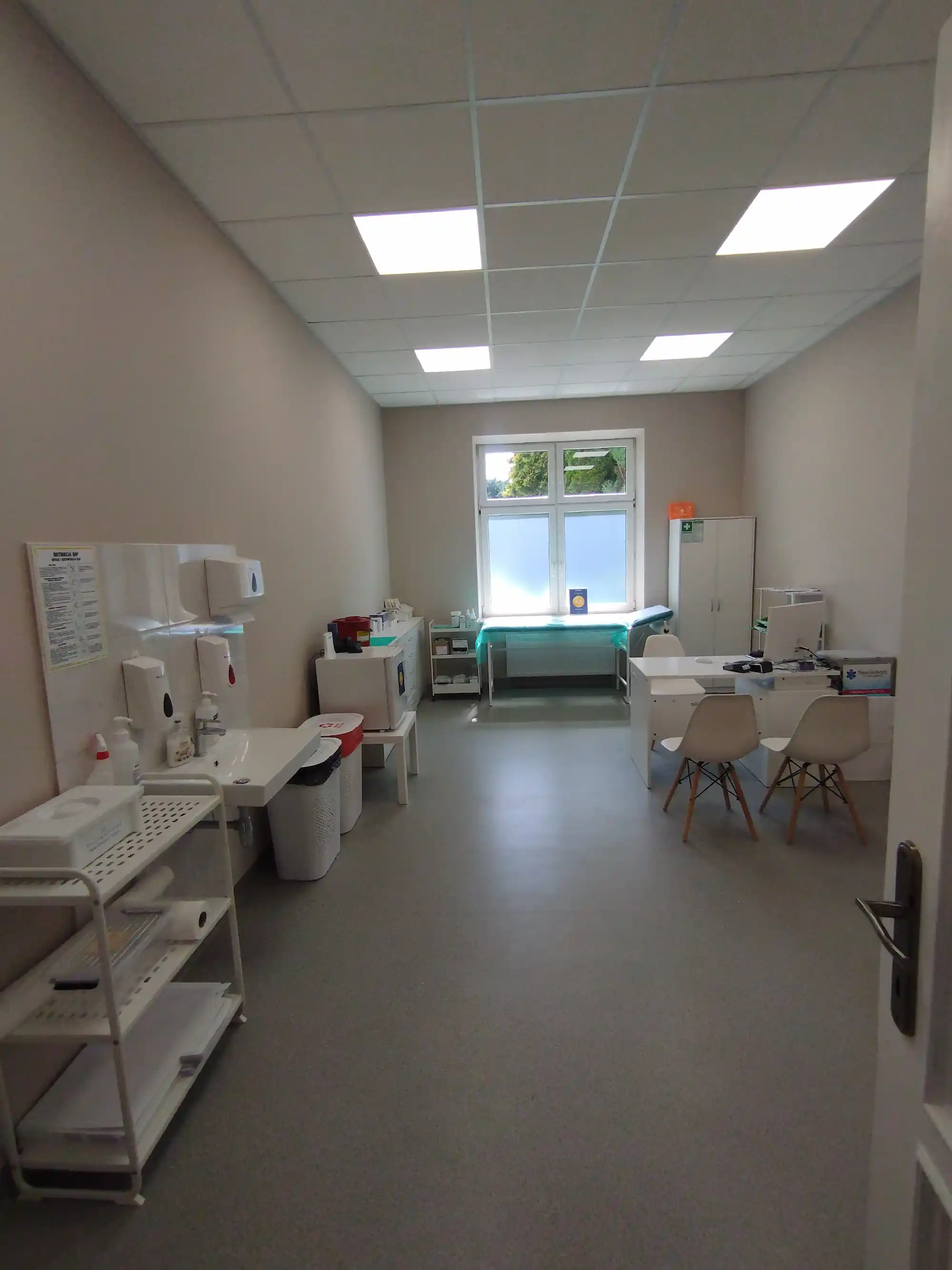
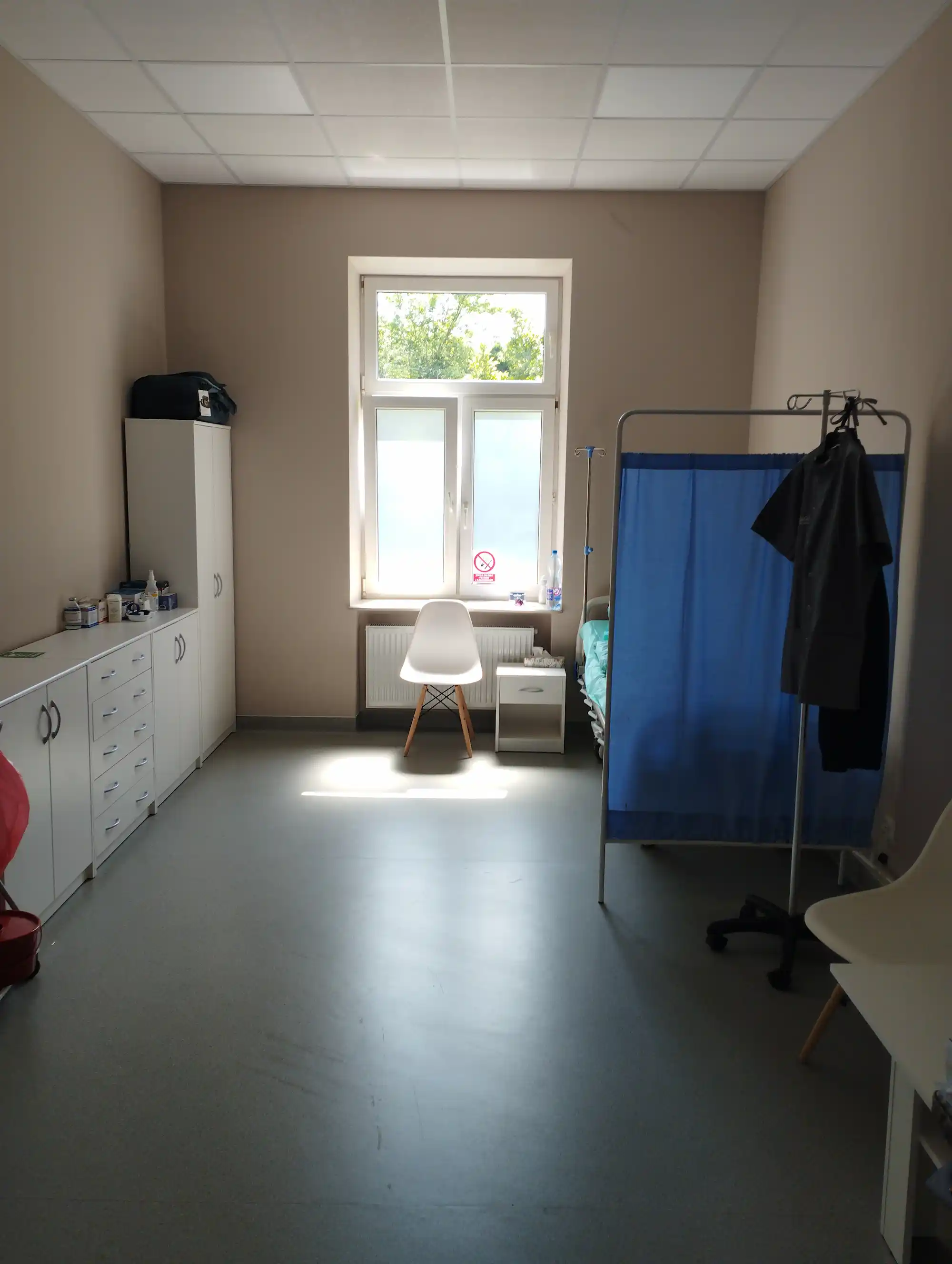
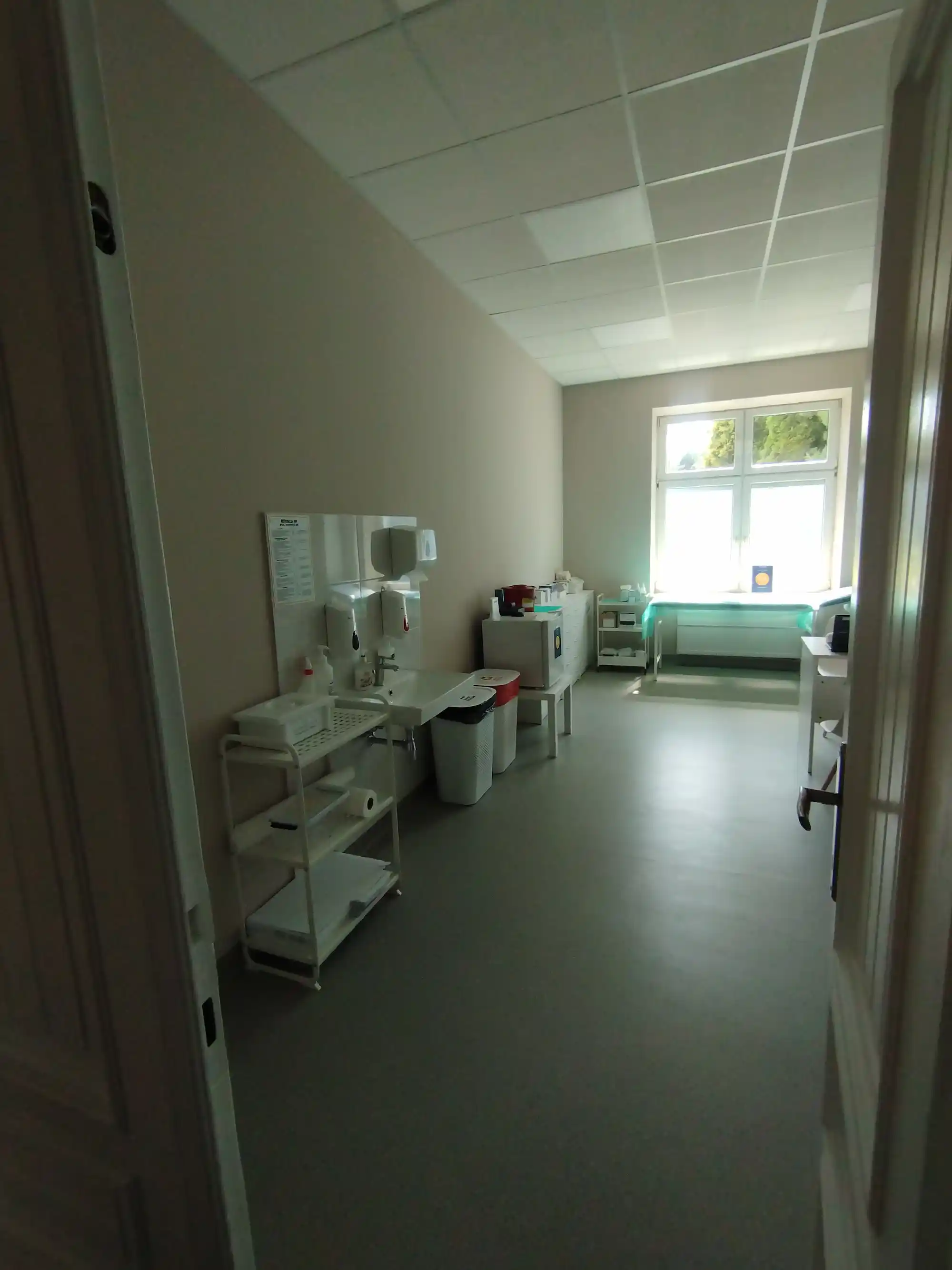
The first appointment takes place at our practice at ul. Wspólna 7. The doctor weighs the patient, measures waist circumference and blood pressure, checks muscle strength in older people with the chair stand test, examines the abdomen and looks at the skin in the folds, where soreness and the dark, velvety patches typical of insulin resistance show up. Anyone who cannot travel books the first appointment online, sends their results and their own measurements of body weight, waist circumference and blood pressure beforehand, and the doctor decides whether the patient still needs to be examined at the practice before treatment starts.
The monthly follow-up is a video call: the patient has their weight readings and blood pressure measurements from recent weeks written down in front of them, says how they are tolerating the drug and how much they are drinking, and on that basis the doctor decides on the dose and sends the e-prescription code by text message. We repeat the examination at the practice every 3 months, once the new blood results are in. Whatever the schedule, we ask patients to ring, and then to come in, if they are vomiting persistently, have severe abdominal pain or show signs of dehydration. A patient who finds a video call difficult comes to the follow-ups in person or connects with help from a family member; appointments with the dietitian and the specialist in the psychology of eating take place at the practice or online, as the patient prefers.
How many NFZ clinics treat obesity in the Świętokrzyskie province and what a patient will not get there
Under the NFZ the patient pays nothing for an appointment with a GP, for basic blood tests, for an appointment at a metabolic clinic with a referral, or for bariatric surgery if they meet the criteria. In the Świętokrzyskie province seven metabolic clinics work under the NFZ, three of them in Kielce, all of them requiring a referral from a GP.
The NFZ does not reimburse obesity drugs. Semaglutide is reimbursed only in type 2 diabetes and only for patients who meet the conditions on the reimbursement list; someone without diabetes pays the full pharmacy price, whoever issued the prescription. Free dietetic advice is available at a surgery running coordinated care, the NFZ programme for people with chronic conditions, but only for the conditions on its list, which includes diabetes, high blood pressure and an underactive thyroid, among others, and does not include obesity itself.
Privately the first medical appointment with us costs PLN 250, at the practice and online; the patient pays for appointments with the dietitian and the specialist in the psychology of eating according to the price list, and buys the drug at a pharmacy. They need no referral, wait for no appointment date and speak to the same doctor throughout the treatment.
Bariatric surgery in Kielce, who is eligible and what age changes
We refer a patient for surgery at a BMI of 40 or more, or from 35 if obesity has already brought on type 2 diabetes, high blood pressure, sleep apnoea or another condition, and only after documented non-surgical treatment, that is, diet, exercise and drugs. In 2022 the international societies of metabolic surgery lowered the thresholds to 35 without complications and to 30 in diabetes, but the Polish criteria stay where they were. The Polish guidelines allow the operation in patients up to the age of 65; in older patients the surgeon considers surgery only exceptionally, after assessing their general condition and life expectancy, because age raises the risk of complications after the operation and of nutritional deficiencies. In a region where nearly one in three residents is 60 or over, that age threshold rules out surgery for many patients, who are then left with drug treatment and diet alone.
One bariatric centre from the list of the Association of Polish Surgeons works in the Świętokrzyskie province, in Kielce. The KOS-BAR pilot, the programme of comprehensive bariatric care, was never run in our province at all; it ended on 30 June 2026 and has not become a permanent NFZ service. The operation itself is reimbursed by the NFZ under the general rules, and after it the patient returns to the care of their GP and of the doctor who treated them before surgery.
Up to the day of surgery the patient is under our care: we document the non-surgical treatment, complete the tests and make sure the patient loses weight, because a smaller liver makes the operation easier. After a sleeve gastrectomy, that is, the reduction of the stomach, it holds only a few dozen millilitres of food at first. After an operation that bypasses part of the bowel, iron, vitamin B12, vitamin D and calcium are absorbed less well. After surgery the patient takes supplements for the rest of their life and has their levels checked every year, and when body weight starts to rise after two or three years they come back to us, because drug treatment makes sense after the operation too.
How we treat patients in Kielce from Skarżysko, Starachowice, Ostrowiec and the rest of the province
Patients travel to the practice at ul. Wspólna 7 from Skarżysko-Kamienna, Starachowice, Ostrowiec Świętokrzyski, Końskie, Jędrzejów, Busko-Zdrój, Pińczów, Staszów, Sandomierz and Włoszczowa, and from the districts around Kielce: Morawica, Chęciny, Masłów and Daleszyce. The first appointment takes place in Kielce, and after that the pattern is the same as for people who live in the city: blood tests in their own town, follow-ups by video call, and a trip to the practice every 3 months to be measured and to go through the fresh results.
For older patients without a car we fit appointment times to the bus and train timetables. Outside Kielce, metabolic clinics under the NFZ work in Jędrzejów, Ostrowiec, Starachowice and Staszów, all of them with a referral.
Obesity in Poland's oldest province, in figures for Kielce and the region
The Świętokrzyskie province is demographically the oldest in the country: according to Statistics Poland (GUS), residents aged 60 and over make up 29.8 percent of the population here, the highest share in Poland, and the average resident of Kielce is 45.
In practice a patient with obesity in Kielce is usually older than one in Kraków or Wrocław and more often has several conditions at once. The PTLO guidelines report that in Europe 42.4 percent of older people are overweight and 20.9 percent have obesity, more than in younger age groups. Abdominal obesity develops at a lower BMI at this age. The province does nothing specific about it, and Kielce runs no municipal obesity prevention programme for adults.
Nasz Gabinet Kielce is no substitute for a geriatric clinic or a hospital. We look after adult patients with obesity at any age: we measure, we diagnose, we choose the drug, we change how they eat with them and we make sure the result holds, in consultation with the doctors treating their heart, their joints and their diabetes.