

How alcohol addiction develops and how it is recognised
Alcoholism is an illness listed in the international classification of diseases under the code 6C40.2 in ICD-11 and F10.2 in the older ICD-10. A doctor makes the diagnosis after talking through the last few months of drinking; neither one episode of getting drunk nor the number of glasses on its own settles it.
Alcohol addiction develops in the brain, which is why a decision to stop drinking does not make it go away. Years of drinking alter two systems in the brain: the one responsible for feeling pleasure and the one regulating the response to stress. After that change the patient no longer drinks for pleasure but in order to feel bearable, because without alcohol the tension and irritability return.
The diagnosis rests on several features present together over a longer period. Tolerance rises, so the patient needs ever larger amounts of alcohol to reach the same effect. After a break in drinking, withdrawal symptoms appear: trembling hands, sweating, restlessness, insomnia. There is also alcohol craving, the urge to drink that comes back in waves for many weeks after the patient stops drinking. The patient goes on drinking although their health is failing, while conflicts at home and at work mount up. The more of these features occur together, the more severe the course of the addiction. Alcoholism runs a chronic, relapsing course, so we set out the treatment over months and account for the risk of a return to drinking from the very beginning.
When alcohol starts to cause harm before addiction sets in
The classification of diseases places one more category before alcoholism: harmful drinking, marked with the code F10.1. A doctor recognises it once alcohol has already damaged health, family life or work while the patient still decides when and how much they drink. Risky drinking comes earlier: there is no damage yet, but the risk of it developing is growing. That is the daily beer with dinner, the weekend arranged around alcohol or the glass taken to fall asleep.
Screening uses the AUDIT questionnaire developed by the World Health Organisation. The questionnaire will not examine the liver, will not measure blood pressure and will not assess the risk of complications after the patient stops drinking, so we treat its score as a reason for a consultation rather than as a diagnosis. At the consultation we go through the patient's answers question by question and supplement them with a medical history and an examination.
In 2023 the World Health Organisation stated that no amount of alcohol can be identified as safe for health. In conversation with the patient we therefore ask not only about the number of glasses, but also about how much sleep, money and family time alcohol takes from them, and whether they stop drinking at the moment they had planned to.
How we treat alcohol addiction in Kielce from the first consultation
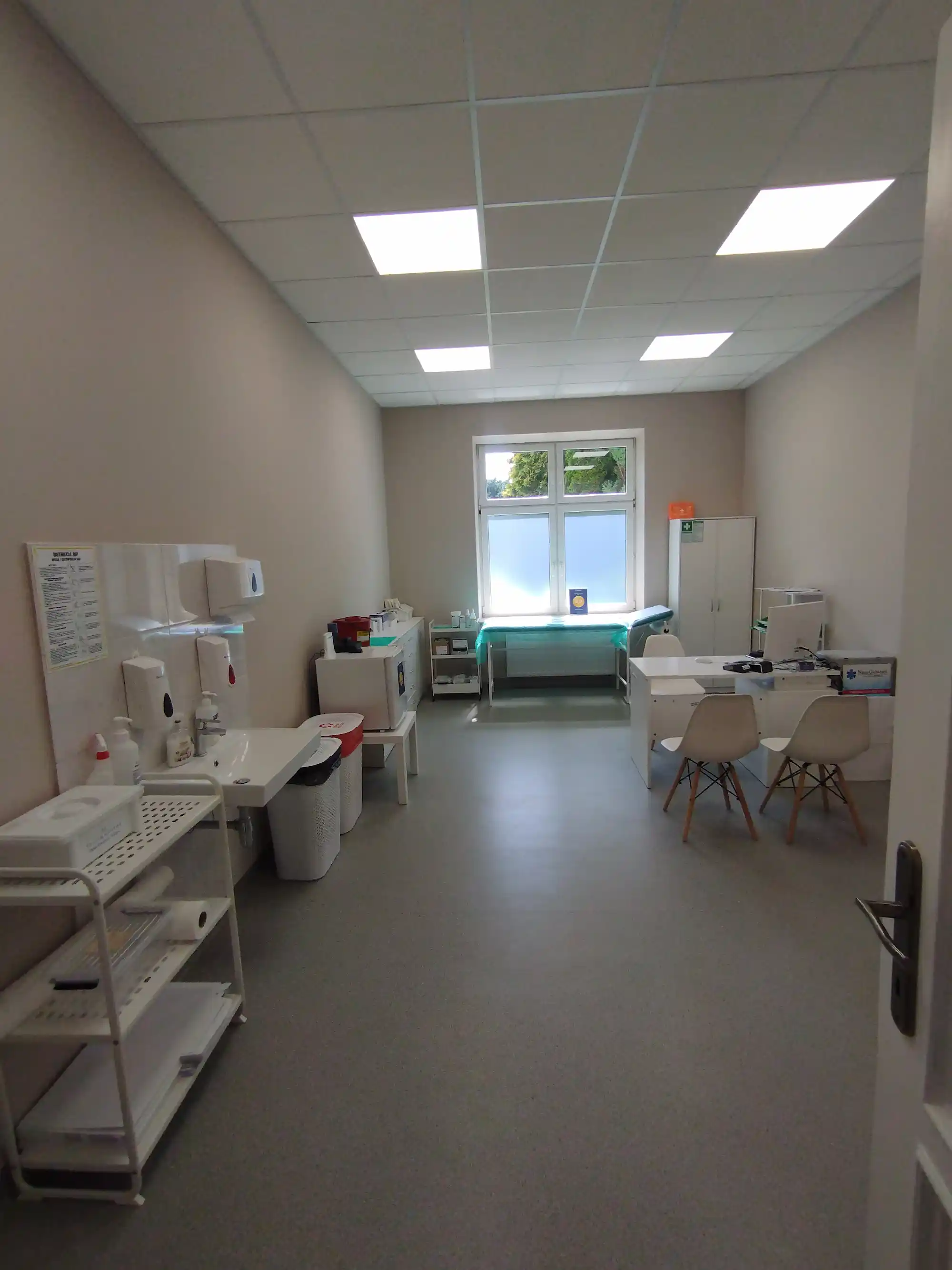
Treatment starts with a medical consultation at the practice on Wspólna 7. We take a history of the drinking and of earlier attempts at treatment, assess the patient's physical condition and the risk of complications after they stop drinking, and only then decide where we begin.
The alcoholism treatment plan covers four elements. We carry out alcohol detox when the patient is breaking a binge of several days. We prescribe oral medication and place the Esperal implant so that in the first weeks without alcohol the patient does not have to rely on willpower alone. Addiction psychotherapy takes the most time, because it teaches the patient to cope without alcohol in the same situations in which they used to drink; we describe how it runs on the page about addiction therapy in Kielce. The fourth element is supportive care after the intensive stage of treatment.
We run the plans in monthly, three-month, six-month and yearly variants. The shortest plan is enough to stop drinking, run the tests and select the medication. The longer ones add psychotherapy spread over the following months and follow-up visits that keep the patient in treatment once the first burst of motivation passes. Patients ask us about anonymity: no medical facility provides anonymous treatment, because the regulations require medical records to be kept. We provide discretion, meaning that we inform neither the employer nor the family about the appointments, and we release the records to the patient and to the people they have authorised.
Who is treated as an outpatient, who in a centre and who online
We propose where treatment takes place after the medical consultation. We ask then how the patient's earlier withdrawals from alcohol went, what illnesses they have alongside the addiction and whether there is alcohol at home.
Outpatient alcoholism treatment in Kielce
We treat patients as outpatients when withdrawal from alcohol runs a mild course and there are no severe coexisting illnesses. We carry out the tests and the procedures on site, at the practice in Kielce, so treatment fits around work, without sick leave and without leaving the city.
Alcoholism treatment in a residential centre in Kielce
We propose a round-the-clock stay when the alcohol addiction is advanced, when serious physical illnesses accompany it or when somebody else at the patient's home also drinks. We choose the same setting if outpatient treatment has failed once or twice. A few weeks away from the patient's usual surroundings give time to start psychotherapy, and we describe the conditions of the stay on the page about the addiction treatment centre in Kielce.
Online alcoholism treatment and e-prescriptions in Kielce
Remotely we hold follow-up visits and part of the therapy sessions, and we issue e-prescriptions. Patients from Kielce who find it hard to get away from work choose this route, as do those travelling in from the surrounding district or working on the road. A screen will not let us assess the risk of complications after the patient stops drinking, so with someone who has been drinking daily for weeks we do not begin treatment with an online appointment.
What disulfiram, naltrexone, acamprosate and nalmefene each do
In alcoholism treatment we use four medicines and each of them plays a different role. Disulfiram, given as the Esperal implant or as a tablet, changes the body's reaction to alcohol. For as long as the medicine works, a drink ends in flushing of the skin, palpitations, a drop in blood pressure and vomiting. Awareness of that reaction holds the patient back from drinking, but disulfiram removes none of the causes of drinking and does not treat the addiction. We describe who qualifies for the procedure and how it proceeds on the page about the Esperal implant in Kielce.
Naltrexone blocks the receptors in the brain through which alcohol delivers pleasure. A patient who has a drink during treatment does not feel the expected effect and more often stops at one glass, and over the following weeks the alcohol craving weakens. Acamprosate works differently: after years of drinking the nervous system stays overexcited for many weeks after the patient stops drinking, which they experience as tension, irritability and insomnia. Acamprosate quietens these symptoms and makes the first months of abstinence easier to get through. Nalmefene is the only one of these four medicines not intended to maintain abstinence: the patient takes a tablet on a day when they expect to reach for alcohol in the evening, and the goal of the treatment is to reduce the amount of alcohol drunk.
The doctor decides which medicine to start only after blood tests and an assessment of coexisting illnesses and of the other medicines the patient takes, and after establishing with the patient whether the goal is full abstinence or a reduction in drinking first. Pharmacotherapy on its own will not cure alcoholism. The medicines give the patient a few calmer weeks in which to start psychotherapy.
Which patients in Kielce we offer alcohol detox at the start of treatment
Alcohol detox means guiding the patient through withdrawal under medical supervision: we give fluids and medicines that ease the symptoms, replenish deficiencies of vitamins and electrolytes, and monitor blood pressure and pulse. Detox advertisements promise to cleanse the body of toxins, but the procedure rests on something else: the body removes the alcohol by itself, while we treat the nervous system's reaction to its sudden absence.
We offer detox under medical supervision to a patient who is breaking a binge of several days, who has been drinking daily for weeks, who has already been through a withdrawal complicated by seizures or alcohol-related delirium, who has chronic heart or liver disease, or who is elderly. Breaking a long binge without medication risks seizures and alcohol-related delirium, and both of these states require immediate medical care. This is the one stage of treatment that we do not run remotely.
Detox on its own does not complete the treatment of alcohol addiction. Once the withdrawal symptoms subside the patient feels well, and some patients stop at that and go back to drinking after a while, because detox removes neither the alcohol craving nor the reasons for reaching for alcohol. This is why we book the detox together with a consultation at which we set the rest of the treatment plan, and we describe the course of the procedure itself on the page about alcohol detox in Kielce.
What we do when a patient drinks alcohol during treatment
A return to drinking is part of the course of the addiction and is no proof of failure. We allow for it in the plan from the first appointment, so after one episode of drinking we neither restart the plan nor end the treatment.
We ask the patient to call us the same day. First we check whether the patient needs detoxification: after a single evening, bringing the appointment forward and adjusting the medication are enough; after several days of drinking, a detox is needed. Then we establish what preceded the return to alcohol and shorten the intervals between appointments.
We tell patients plainly what not to do after drinking: not to cancel their next appointment and not to stop their medication on their own. A patient who says nothing for two weeks comes back to us already in another binge, and treatment then starts again with detoxification.
Follow-up visits and preventing a return to drinking
After the intensive stage of treatment the appointments become less frequent, but the care continues. We usually schedule follow-up visits once a month, and more often in the first months after the patient stops drinking, because that is when the risk of a return to alcohol is highest.
Relapse prevention comes down to two skills. The patient can name the situations in which they used to reach for alcohol, for example a family wedding, a business trip, a row at home or the first free evening after a night shift. For each of them they have a rehearsed course of action, including who they will call and at what hour they will leave the gathering.
Some patients take naltrexone or acamprosate during this period, and the doctor decides how long the pharmacotherapy lasts at the successive follow-up visits. Self-help groups help many patients, because regular meetings fill the time that drinking used to take. We also agree on the signs by which the patient will know they should come back for more frequent appointments: two sleepless nights in a row, returning thoughts about alcohol, a medicine left untaken.
What happens in a family when one household member drinks
The addiction and codependency treatment clinic in Kielce supported 805 people in 2025. The report for the same year shows 2,534 individual therapy sessions, 1,032 group therapy sessions and 411 psychoeducation sessions, with three services recorded as family therapy. Only the figure of 805 counts people; the remaining entries are counts of services provided. They show what work with relatives looks like in the public health service: relatives come separately, for psychoeducation and individual conversations, less often for joint sessions of the whole family. The clinic serves the whole voivodeship, so it admits more than the residents of Kielce alone.
Codependency is the ingrained pattern in which relatives adapt to drinking at home: counting the bottles, hiding the alcohol, paying off the debts, explaining the drinker's absences at work. Such behaviour shields the person who drinks from the consequences of drinking and by doing so puts off the moment when they decide on treatment. We run therapy for relatives regardless of whether the person who drinks has taken up treatment, and we see adult children of alcoholics separately, because the effects of growing up in such a home show years later. If the person who drinks refuses treatment, the family files a notification with the gminna komisja rozwiązywania problemów alkoholowych (the municipal commission for solving alcohol problems), and if the motivational conversation leads nowhere the commission refers the application to the district court.
When depression or an anxiety disorder accompanies alcoholism
We ask every patient about depression, anxiety disorders and post-traumatic stress disorder at the first consultation, including the patient who comes solely for the Esperal implant procedure. Among people who drink harmfully these diagnoses are more frequent than in the rest of the population. Some patients already have a diagnosis made years ago and medication prescribed by a psychiatrist, yet they say nothing about it until we ask.
Alcohol suppresses anxiety for a few hours, and once the patient stops drinking the symptoms return intensified, so they drink to quieten them again. The relationship works the other way round as well: as long as the patient drinks, psychiatric treatment does not give the expected effect. This is why we treat both illnesses within one plan. The psychiatrist is responsible for the diagnosis and the pharmacotherapy, the addiction therapist for the work on drinking, and each of them knows what happens at the other's appointments.
The psychiatrist can only tell which illness came first after several weeks without alcohol: some anxiety and depressive symptoms subside on their own during that time, and those that remain call for psychiatric treatment.
Who alcoholism in Kielce affects besides the patient
In 2025 social assistance was granted in Kielce on grounds of alcoholism to 527 families, in which 609 people lived. A year earlier it was 507 families and 565 people, two years earlier 593 families and 772 people. The statistics for emergencies look different: in 2025 the Punkt Pomocy Doraźnej (emergency care unit for intoxicated people) on Żniwna street in Kielce recorded 3,361 stays by people whose condition after drinking put their health or life at risk, and a year earlier more than 2,300 intoxicated people were brought to emergency departments in the city.
Social assistance counts the households for which alcoholism was entered as the statutory reason for their difficult situation, so families that never applied for support fall outside that figure. The proportion of 527 families to 609 people shows the same thing we hear at consultations: one person's drinking spreads across the whole home, and relatives come forward with symptoms of their own. At Nasz Gabinet Kielce a patient can bring a relative to the first appointment, and that relative can also book separately, for a consultation of their own.