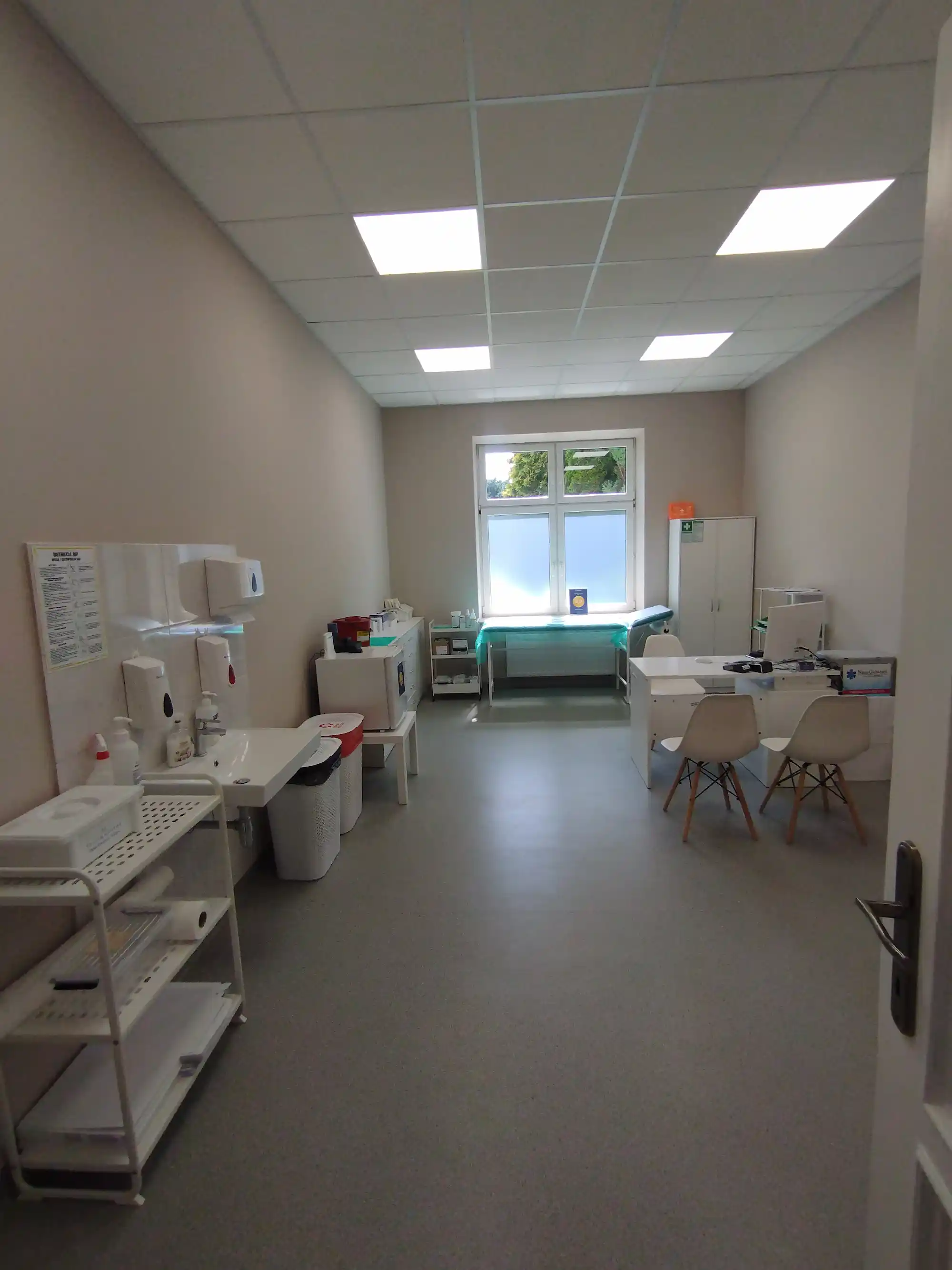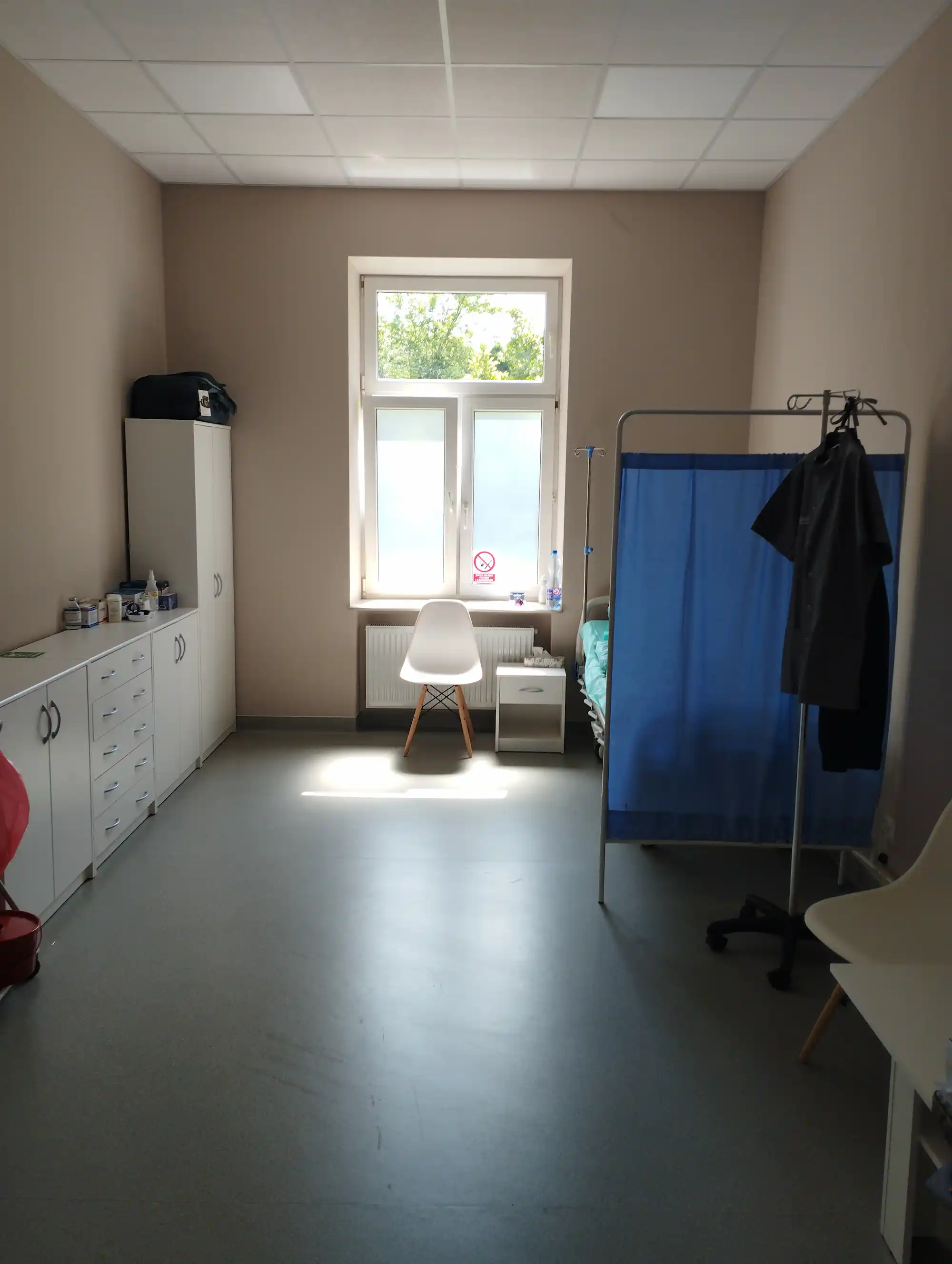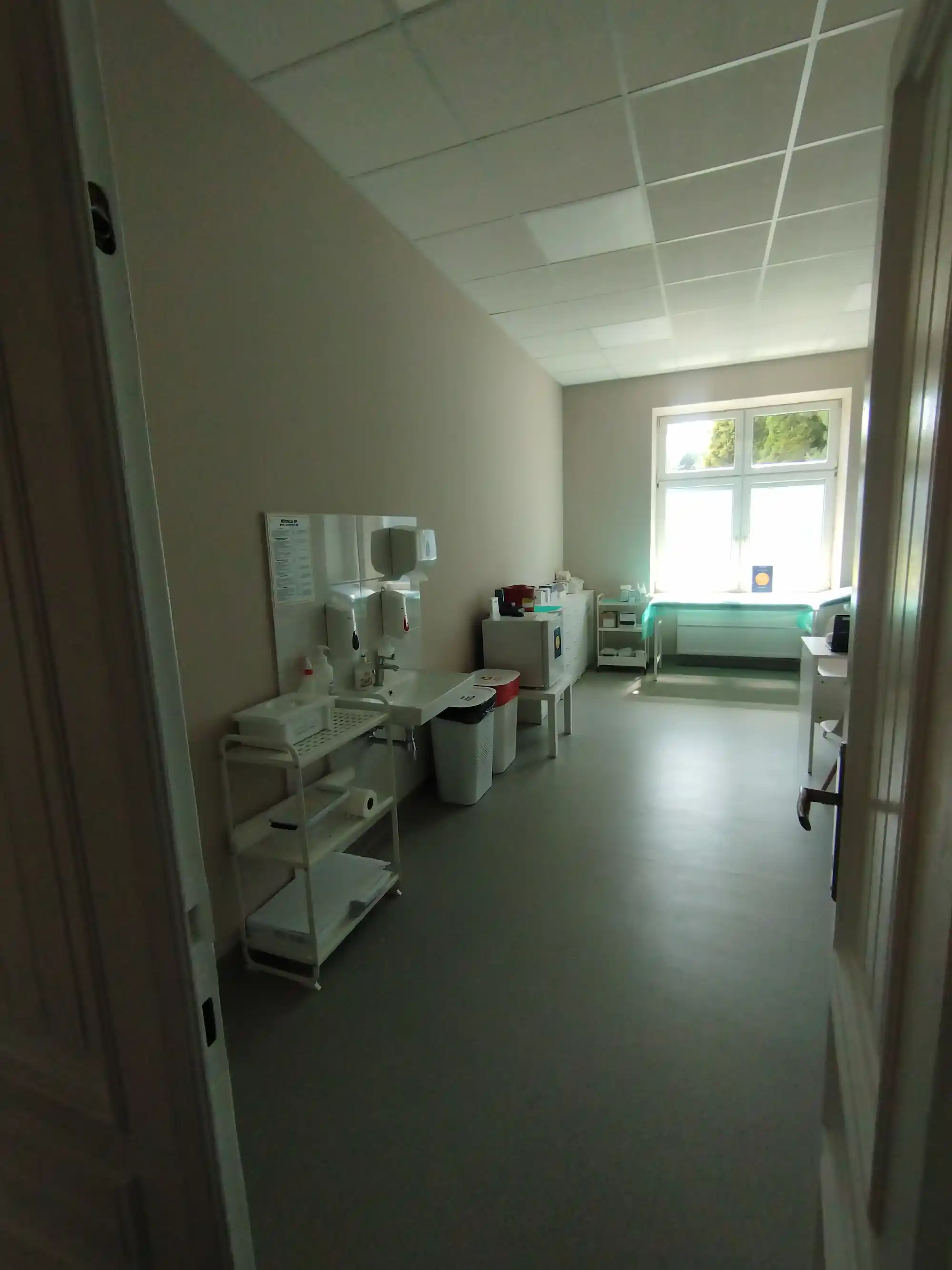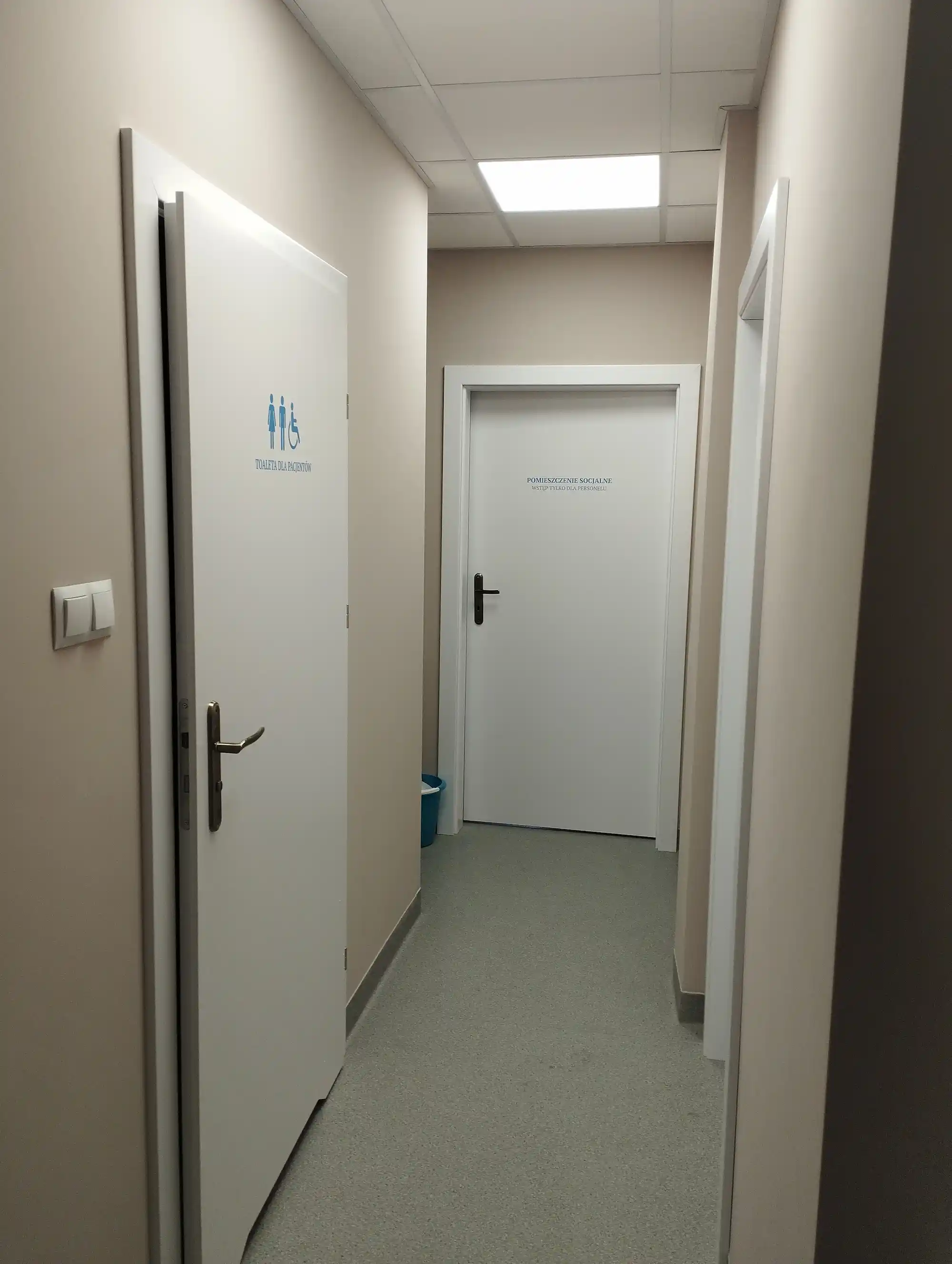


What an addiction treatment centre in Kielce is
An addiction treatment centre is a facility where therapy takes place on an inpatient basis - the patient lives there for the duration of treatment and stays under round-the-clock care of the team for several weeks. This is what sets it apart from outpatient treatment, which you attend from home: at the centre the whole day is built around recovery, and the patient is cut off from the people, places and tensions that kept the addiction going. It is exactly this distance - from the substance and from daily chances to use it - that tends to be hardest to keep up at home.
At the Nasz Gabinet centre at Wspólna 7 in Kielce we treat addiction to alcohol, to sleeping pills and sedatives, to drugs and novel psychoactive substances, as well as behavioural addictions, gambling above all. If the problem concerns one specific substance or behaviour, you can start with a narrower path - drug addiction treatment in Kielce or gambling addiction treatment in Kielce.
We admit people of different ages and at different stages: both those who lost control relatively recently and those with years of addiction behind them and several failed attempts at treatment. Where someone comes from makes no difference - our patients include residents of Kielce and the whole Świętokrzyskie region, as well as people from outside the province, for whom distance from their usual surroundings is sometimes even helpful.
Outpatient clinic, day ward or round-the-clock stay
Addiction treatment in Kielce can be started in several ways, and it is worth telling them apart. At an outpatient clinic therapy is run on an ambulatory basis, without a referral, with sessions usually once a week - this works when the addiction is not yet deeply set and home offers support. On a day ward the programme can be more intensive, but after the sessions the patient goes home for the night, so in the evenings they still face the same surroundings; it also requires a referral, and places are few. A round-the-clock stay at the centre answers harder situations: it gives several weeks with no access to the substance and away from everyday triggers. Inpatient alcohol addiction treatment in Kielce at our centre is private and voluntary, so it involves no referral and no queue. The choice of path is not forever either - many people start at an outpatient clinic and return to it after their stay, now as continued care.
What a stay at the centre looks like
It all begins with a phone call. During the assessment we establish what the addiction concerns, how long it has lasted and what state the patient is in - on this basis we propose the length of stay and an admission date. We admit people to the centre sober, so if there is still alcohol or another substance in the body, detox comes first.
Detox before therapy
Detoxifying the body comes before the actual therapy - as long as withdrawal symptoms persist, it is hard to focus and to work on oneself. We carry it out as part of alcohol detox in Kielce, and the therapeutic programme starts only once the body is clear and the patient is stable. Sometimes detox takes a few days, sometimes it is not needed at all - this is decided by the condition we assess at the start.
An ordinary day for a patient
After a short period of adjustment the day takes on a steady rhythm. The patient takes part in therapy for up to 8 hours a day - a mix of individual sessions with the lead therapist and group work. The rest of the time is filled with meals at regular hours, therapeutic tasks, rest and sleep on an even schedule. This ordered plan is not a backdrop to treatment but part of it: for someone whose life has revolved for months around obtaining a substance, simply returning to regular meals and sleep is often the first step towards balance. The weekend has a quieter plan than weekdays, but the rhythm of waking, meals and sleep at fixed times stays, because that is exactly what teaches the body to live without the substance.
Contact with loved ones is possible, but within set limits, so that it protects focus on therapy rather than distracting from it. For the duration of the stay the centre provides full board - a place to sleep, meals and daily care - so that the patient can attend to nothing but themselves.
Four or eight weeks
We have two lengths of stay. Four weeks are enough to get through the hardest beginning, stabilise and master the basics of coping with craving. Eight weeks give time for deeper work on what drove the addiction and for cementing new habits - we reach for this longer path more often with years-long addiction or after earlier relapses. Which one to choose we decide together at the assessment, adjusting it during the stay if needed.
The therapeutic programme - individual and group work
The core of treatment is steady work with a lead therapist. This is one person who knows the patient's situation from the assessment through to discharge, guides them individually and watches over the whole course of therapy. Because of this the patient does not retell their story over and over to new people, and the lead therapist sees what is really changing and responds as it happens.
Individual sessions
One-on-one sessions are the place for matters that are hard to say in front of a group. The patient looks at their own history - how the addiction began, what purpose it served and what keeps it going. The therapist matches the pace and topics to the particular person, and the conclusions from these talks come back later in group work.
Why group therapy
The other half of the programme takes place in a group. Meetings with people who have been through similar experiences give what a conversation with loved ones cannot: the mechanism of addiction is easier to spot in someone else than in yourself, and the honesty of others takes away the sense of being alone with it. Some sessions are psychoeducation - concrete knowledge about how addiction affects the brain and behaviour; other groups are thematic and deal with emotions, relationships or coping with craving. The groups are small, so everyone gets to speak and no one is an anonymous participant at the back of the room.
The aim of this work is practical. The patient learns to recognise their own signals of craving and the situations that trigger it, and practises ways to release tension without reaching for a substance. These are skills meant to work above all later - in ordinary life, when neither the therapist nor the group is there anymore.
Monthly supervision
The whole team watches over the quality of therapy. Once a month the therapists meet for supervision - together, with an experienced specialist, they discuss the cases they are running. This is a standard that keeps treatment at a high level and stops important decisions from resting on one person. From the patient's point of view it means that more than one mind is thinking about their therapy.
Whom a closed centre is for
An inpatient stay is not the first step for everyone. It most often helps those whose earlier treatment at an outpatient clinic gave no lasting effect, those whose craving is too strong to withstand without constant support, and those whom home or their immediate surroundings pull back into addiction. It also works when the addiction comes with other difficulties - low mood, anxiety or insomnia - which we address alongside the therapy.
Who most often comes to the centre
It is hard to point to a single type of patient. Sometimes the person seeking help is young, with an addiction that developed quickly, on novel psychoactive substances or medication; sometimes it is someone past fifty who drank for years and has only now admitted they lost control of it. Some people come to us after several attempts at an outpatient clinic, some after an earlier stay elsewhere that ended in relapse.
The first move is often made not by the addicted person but by someone in the family - a partner, an adult child, a parent - who has run out of ways to help at home. All these stories share one moment: the one in which the previous solutions stopped working and the problem turned out to be stronger than willpower alone.
What we establish at the assessment
The assessment is a conversation, not a formality, and it works both ways. In it we establish a realistic picture of the situation: what the addiction is to and how long it has lasted, whether detox is needed, what length of stay makes sense. If someone will manage with outpatient treatment or first needs a medical consultation, we say so plainly - we do not push a stay that is not necessary. The conversation itself commits you to nothing, and there is no need to prepare for it or bring any documents - it is enough to describe honestly what is going on.
Closed centre versus open
In private treatment, a stay in a closed centre means that the patient remains at the facility throughout and does not leave during therapy, while contact with the outside world is limited to protect the recovery process. This is not treatment under compulsion - admission and the stay are entirely voluntary, and the decision to start and to stop rests with the patient. In an open or day model you go home for the night; that is more convenient, but also closer to old temptations, which is why with severe addiction we more often choose a round-the-clock stay.
Safety, team and discretion
Round-the-clock care means in practice that at any hour someone from the staff is on site. The first days after stopping a substance are often the hardest physically, which is why the team's presence matters most then - no one is left alone with a bad night or a sudden turn for the worse. Therapy is run by addiction therapists, and when the situation calls for it we draw on the support of a doctor and a psychiatric consultation.
Who is responsible for treatment
The lead therapist is responsible for the course of therapy, but the patient is not left to one person - the whole team watches over it, and once a month the cases are discussed at supervision with an experienced specialist. Importantly, the patient knows at every point what stage they are at and why we propose a particular step - they do not learn of changes to the plan after the fact.
Can you be treated anonymously
Many people ask about anonymity, and here two things need to be told apart. The stay is discreet - without the patient's consent we tell neither their employer, nor their family, nor anyone outside about it. This does not mean, however, that we treat without records: as a medical facility we keep them as the law requires and protect them on the same terms as any health information. The patient has full access to them, and they do not leave the centre without the patient's knowledge.
What the stay does not replace
Treating addiction is a process, not a sudden intervention, and it is more honest to say so plainly. A stay at the centre does not replace urgent medical help - when health or life is directly at risk, immediate help comes first and therapy comes later. Nor does it replace a psychiatric diagnosis where one is needed; in such cases we combine therapy with a doctor's care. We also do not promise that one stay will close the matter once and for all - it gives a strong start, but the durability of sobriety has to be cared for after discharge too.
Packages, prices and life after the stay
The cost depends on the length of stay. The four-week package, Intensive Start, costs 13 000 PLN, and the eight-week one, Full Process of Transformation - 25 000 PLN. This amount covers everything that makes up the stay: accommodation, meals, all individual and group therapy, round-the-clock care from the team and the supervision that watches over the quality of treatment. We add no separate charges for particular sessions and no extras on site. Among private centres these are upper-tier rates - they match the intensity of the programme, that is up to 8 hours of therapy a day and work with a single lead therapist throughout the stay.
How to start treatment in Kielce
Getting started comes down to three steps:
- you call 880 808 880 - the phone is answered by someone who knows the realities of treatment, not a call centre;
- we arrange an assessment interview, during which we set the length of stay and whether detox is needed beforehand;
- we set an admission date - usually within a few days, with no queue and no referral.
Most often it is not the patient who calls but someone close to them - that is normal and just as good a start. The conversation is discreet and commits you to nothing; in it you can ask about anything that raises doubts before any decision is made.
After the stay - and how a slip differs from a relapse
Leaving the centre is not the end of treatment, only a change in its form. The patient draws up a plan for this time together with their therapist before discharge: it usually includes continued therapy from home (addiction therapy in Kielce), taking part in support groups and a concrete idea of what to do in situations known in advance to be hard. The first weeks after returning are the hardest, because the old places, people and tensions come back.
It is worth understanding in advance what a relapse is. It is not a single moment when someone reaches for a drink - it is a process that begins much earlier, in thoughts and behaviours: in cutting oneself off from support, returning to old acquaintances, in the belief that this time drinking or using under control will work. Breaking abstinence is only the last link in that chain. That is why at the centre we teach the patient to recognise the early signals before they grow.
A distinction that is easy to miss at first glance helps here: a slip is not the same as a relapse. A single break in abstinence does not undo all the work done so far - more dangerous is the thought that since it happened once, everything is now lost, because it is that thought which turns one slip into a days-long binge. What matters, then, is not whether a slip happens at all but how quickly someone stops it and comes back for support. This reaction - recognise it, do not pretend, make the call - can also be learned, and we devote part of the stay to it.