

Which symptoms lead a doctor to diagnose alcoholism
In the international classification of diseases alcoholism carries the code F10.2, and in the newer ICD-11 it is 6C40.2. The diagnosis comes from the patient's history and an examination: the doctor checks whether the patient meets the criteria set out in that classification, because a count of drinks proves nothing on its own.
The doctor looks for five symptoms. They ask whether the patient gets an urge to drink that is hard to resist, whether they drink more than they meant to, and whether they now need more alcohol than a few years ago for the same effect, which is what rising tolerance means. They also ask whether the patient carries on drinking although they know what it is doing to their health, their family and their work, and whether a break from drinking brings on shaking hands, sweating and restlessness. The more of these symptoms come together, the deeper the alcohol addiction.
The symptoms come from changes in the way the brain works. Regular drinking alters the reward system and the response to stress, so alcohol becomes the quickest way to take the edge off tension. That is where alcohol craving comes from, and it returns however firmly the patient has resolved never to drink again.
Alcoholism is a chronic condition that flares up from time to time. A few weeks without alcohol therefore do not mark the end of treatment, and if the patient goes back to drinking, we adjust the plan and carry on.
How much does someone have to drink for a doctor to diagnose alcoholism
The diagnosis does not come from a count of beers. What decides it is the harm the drinking has already done and whether the patient still controls how much they drink. That is why the classification distinguishes three categories of drinking.
Risky drinking has not yet harmed the patient's health, but the odds of that harm rise every year. Harmful drinking has its own code in the ICD classification, F10.1: the harm is already there, such as liver damage, high blood pressure or a breakdown in family life, and the patient still decides how much to drink and when. The doctor diagnoses alcohol addiction, F10.2, only once alcohol craving, tolerance and withdrawal symptoms appear alongside that harm.
We assess a patient's drinking pattern with the World Health Organisation's AUDIT questionnaire. A score of eight or more means drinking that already threatens health, and a score of twenty or more calls for a full assessment for alcohol addiction. The score by itself is not a diagnosis: it shows how urgently the patient needs a medical consultation, while the diagnosis rests on the history and the examination.
Patients also ask how much alcohol is safe to drink. The WHO position from 2023 is that no such amount exists, so at the consultation we ask what the patient drinks for, not only how many drinks they average in a week.
From the first consultation to aftercare in Bydgoszcz
At the first appointment the doctor establishes how long the patient's current drinking bout has lasted, which illnesses the patient has alongside the addiction, and whether stopping alcohol is likely to bring on severe withdrawal symptoms. Only after that assessment do we plan the treatment for the coming weeks.
The stages follow a fixed order. For a patient in the middle of a drinking bout we start with medical stabilisation, which means detox. Then we add oral medication or fit the Esperal implant, so that the first weeks of abstinence do not rest on willpower alone. The longest stage is addiction psychotherapy in Bydgoszcz, which teaches the patient to handle tension, conflict and sleepless nights without alcohol. Aftercare comes last. We draw up the treatment plan for one month, three months, six months or a year, and set its length to match the patient's health and family situation.
Patients ask us about anonymity. Treatment here is discreet, but it is not anonymous: appointments, procedures and prescriptions go into the medical records, which we keep and store as the law requires. Without the patient's written authorisation nobody outside the practice, family and employers included, has access to those records.
Who we treat as an outpatient, who in a residential centre and who online
Outpatient care, the residential centre and online appointments are not alternatives that rule one another out: some patients start with a few days under round-the-clock care and then carry on in the practice and online.
Outpatient alcoholism treatment in Bydgoszcz
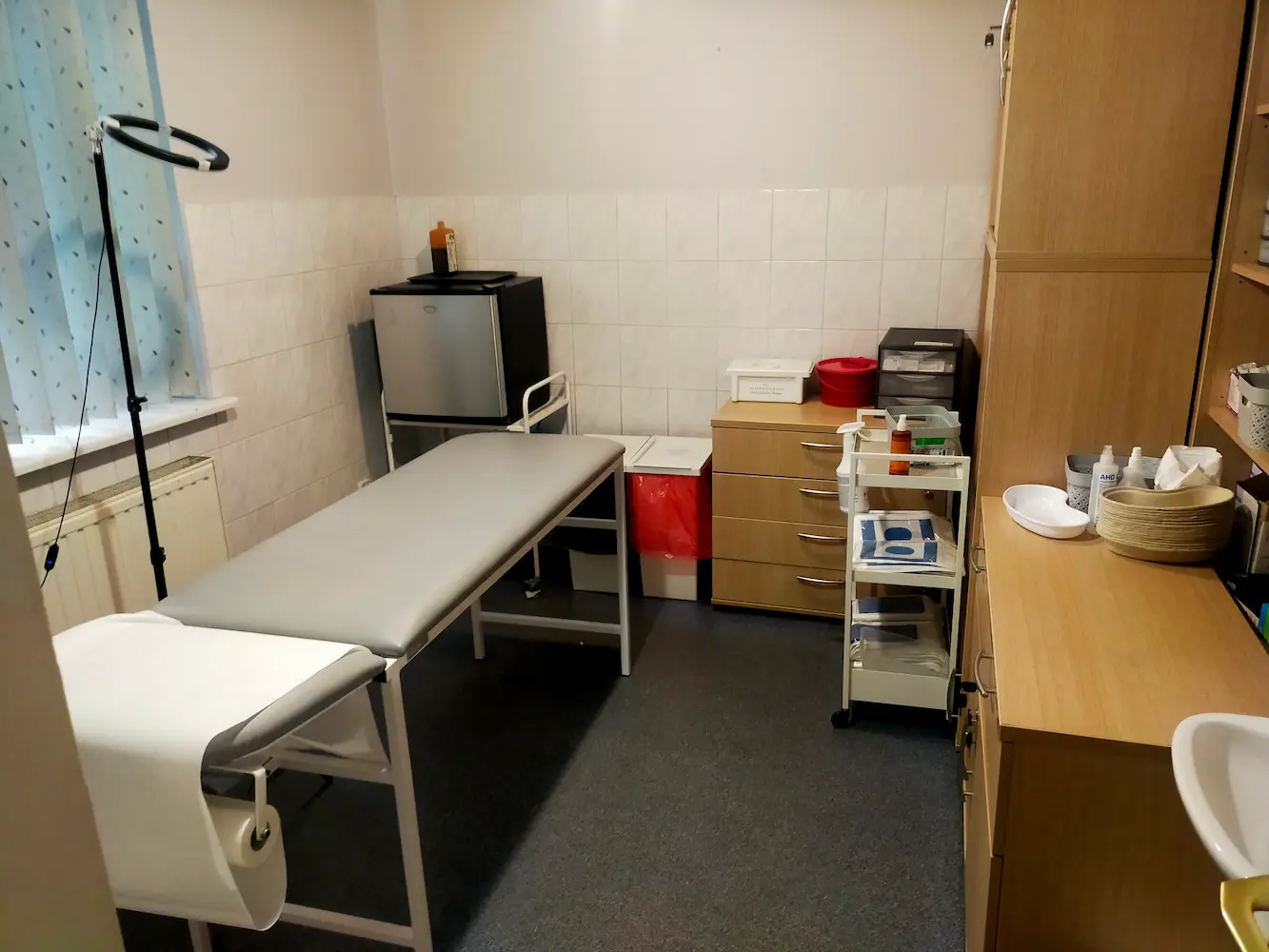
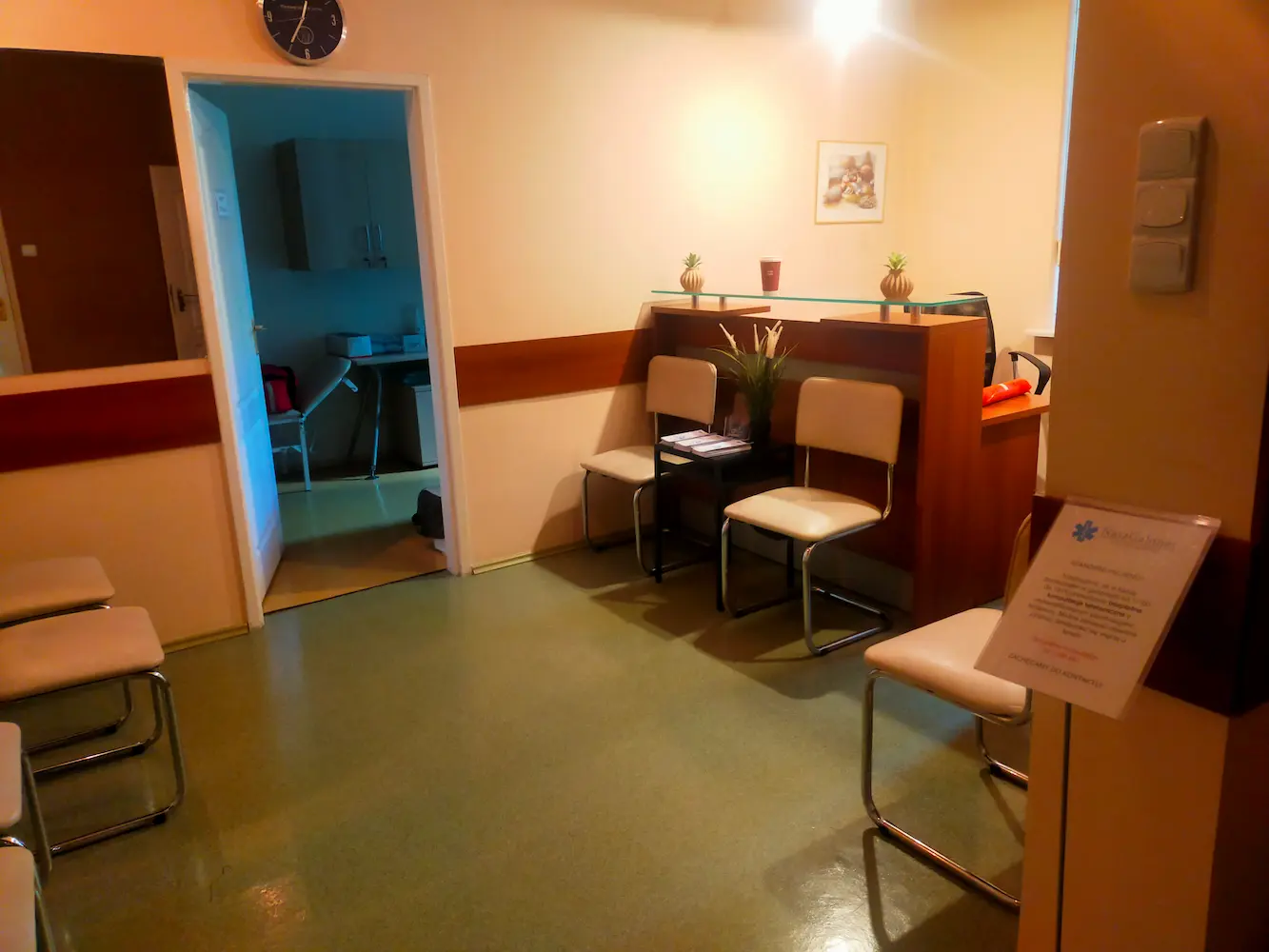
We treat patients as outpatients when they have no severe physical complications and can come in at agreed intervals. Consultations, tests and procedures take place at Augusta Cieszkowskiego 5, and we fit appointment times around the patient's work. Outpatient care lets the patient stay in treatment without taking sick leave and without leaving Bydgoszcz.
Alcoholism treatment in a residential centre in Bydgoszcz
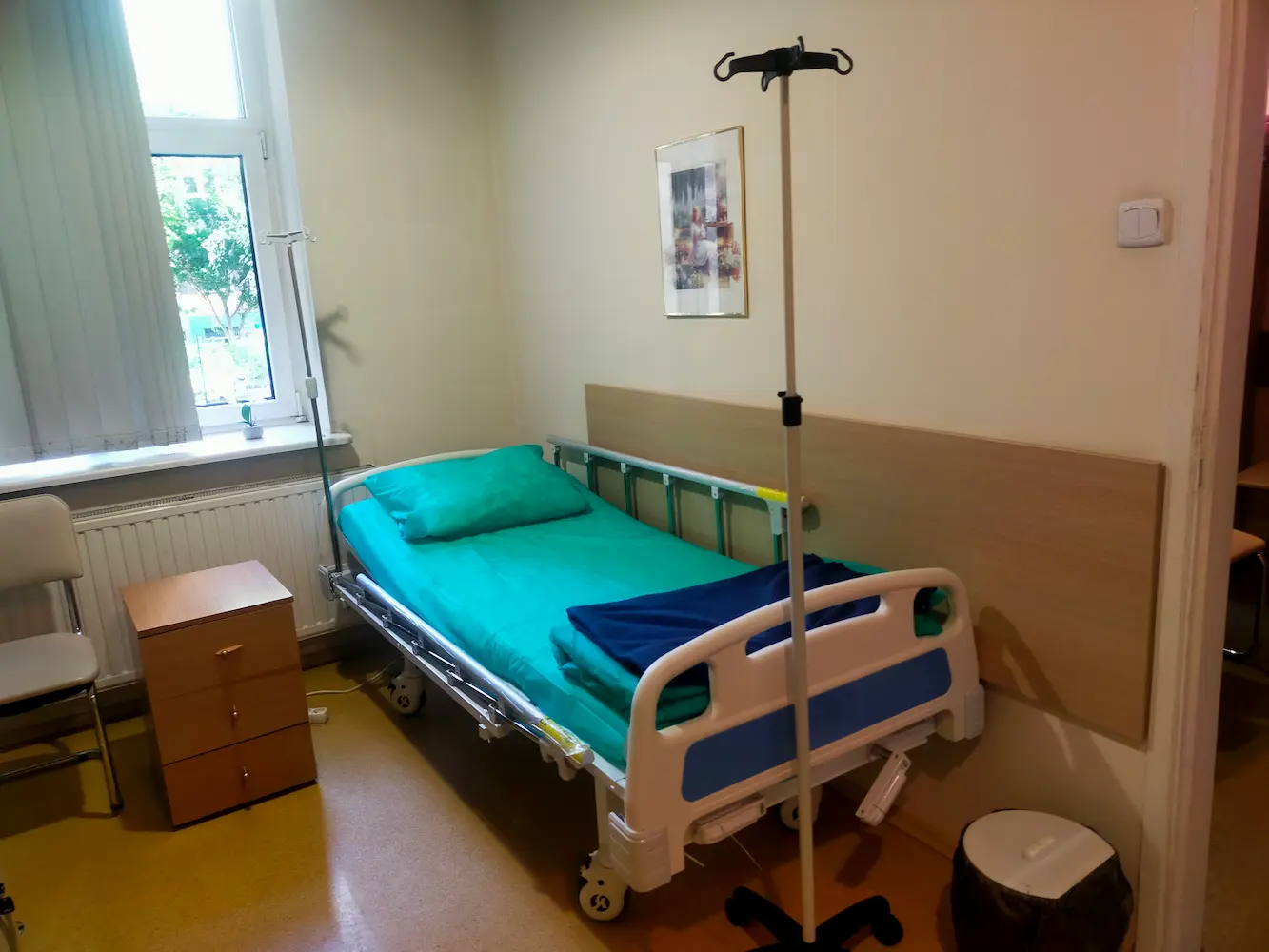
We suggest an inpatient stay when the addiction comes with serious physical illness, when there is alcohol within arm's reach at home every day, or when earlier outpatient treatment ended in a return to drinking after a few weeks. A few weeks in the centre, away from the drink kept at home, give the patient room to start psychotherapy; the rules of the stay are on the page about the addiction treatment centre in Bydgoszcz.
Online alcoholism treatment and e-prescriptions in Bydgoszcz
We arrange video consultations above all for patients from outside Bydgoszcz and for those whose work keeps them on the road. Online we hold follow-up appointments and some therapy sessions, and we issue e-prescriptions. A screen does not let us judge how severe withdrawal symptoms are, and no procedure can be done that way, so we ask a patient in acute withdrawal to come in, or refer them for detox.
How the Esperal implant works and how the tablets work
The Esperal implant contains disulfiram and goes under the skin. For as long as the medicine stays in the body, a drink ends in a violent reaction: flushed skin, palpitations, a drop in blood pressure and vomiting. That reaction is what holds the patient back from alcohol, but disulfiram does not remove the reasons they drank and does not treat alcoholism. The same substance also comes as tablets taken every day. How to prepare for the procedure, how it goes and who cannot have it are set out on the page about the Esperal implant in Bydgoszcz.
The other three oral medicines cause no reaction to alcohol, and each of them does a different job. The patient takes nalmefene as needed, on a day when they expect an occasion that usually ends in drinking; the aim then is to cut down how much they drink rather than to stop altogether. Acamprosate calms the nervous system's heightened arousal that lingers after the last drink, easing the anxiety and poor sleep that come with early abstinence. Naltrexone blunts the pleasure alcohol gives, so a drink brings less relief than the patient expects and the craving weakens over time; it suits patients aiming for abstinence and patients cutting down alike.
The doctor chooses the medicine at the consultation: they check liver and kidney function tests, ask about heart disease, about epilepsy and about painkillers the patient cannot stop taking, and finally about the goal for the coming months, whether that is full abstinence or, for now, drinking less. Medication on its own will not cure alcoholism. It lowers the risk of a drink during the months when the patient is learning to live without one, and psychotherapy running alongside is what makes the change last.
Alcohol detox in Bydgoszcz and the risk of stopping drinking without medical care
Detox means that through the first days without alcohol the patient stays under the care of medical staff: they give medication and fluids, replenish vitamins and electrolytes, and step in as withdrawal symptoms build. Advertising that promises to cleanse the body of toxins misses what detox actually does. The body breaks alcohol down and clears it without any procedure; what needs treating is the withdrawal that follows.
We admit for detox patients who have been drinking every day for days on end, and patients whose earlier attempt to stop ended in seizures or delirium tremens. Elderly patients and patients with heart or liver disease also need medical supervision. Seizures and delirium tremens come on after a long drinking bout is broken off suddenly, and both need immediate medical care, which is why we advise against stopping alcohol without medical supervision. A patient with these symptoms sees a doctor first, and we book the first therapy session once the withdrawal has passed.
The tests before admission, the course of the first twenty-four hours and what goes into the infusions are described on the page about alcohol detox in Bydgoszcz. Detox ends the withdrawal symptoms, but it removes neither the alcohol craving nor the habit of the evening drink. It is where treatment starts, and on its own it rarely holds abstinence for long, so psychotherapy has to follow.
How we treat a patient after a return to drinking
Alcohol addiction is a chronic, relapsing illness, so patients who have been in psychotherapy for months also have a drink at times. That does not wipe out those months, and what happens next depends on whether the patient calls us the same day or only after a week of drinking.
We ask for that call the same day or the next; the patient does not have to explain themselves or promise that it will not happen again. At the appointment we assess the patient's health and work out what came before the drinking: a medicine stopped, sessions missed, sleepless nights, a business trip or a row at home. On that basis we adjust the treatment plan: sometimes we change the medicine, sometimes we book sessions more often for a few weeks.
The longer the patient puts off that call, the more often a single drink turns into another drinking bout. We then start again with stabilising the patient's health instead of carrying on with the earlier plan.
What aftercare looks like in the first year of abstinence
After the intensive stage of treatment appointments become less frequent, but they do not stop, because the risk of relapse is at its highest in the first months after the last drink.
This is when we work on relapse prevention. The patient and the therapist list the situations that have led to drinking so far: payday, a match with friends, a row at home, a business trip. For each one the patient works out a response in advance and rehearses it in the session, before the situation comes round again.
The second part of aftercare is medication, which carries on beyond the intensive stage of treatment. The patient takes naltrexone or acamprosate for as long as the doctor advises, including after the last psychotherapy session. On top of that there are self-help groups meeting in Bydgoszcz and the surrounding area: they do not replace treatment, but they keep the patient in regular contact with people in the same position.
Where to look for help when someone close to you drinks
Living with someone who drinks changes the rhythm of the whole household. Relatives take over the drinker's duties, cover for their absences at work, pay off their debts and hide the situation from the wider family. This entrenched pattern is what we call codependency. Adult children of alcoholics, known in Poland by the abbreviation DDA, often reach a therapist years later, with anxiety, a need to control everything and trouble in close relationships.
Outside the consulting room there are self-help groups, though relatives have a narrower choice than the people who drink. In their reports for 2024 the municipalities of the Kuyavian-Pomeranian Voivodeship listed 109 groups for people with an alcohol problem, along with 15 Al-Anon groups for adult relatives, 4 DDA groups and 2 groups for teenagers from families with an alcohol problem. Al-Anon groups grow fewer year by year: 28 in 2020, 22 in 2021, 17 in 2022 and 15 in 2024; for comparison, in 2016 the municipalities listed 37 of them, although that figure comes from an earlier edition of the reporting. These are figures reported by municipalities across the whole voivodeship, not a register of fellowships and not a count of participants.
Relatives do not have to wait for the person who drinks to decide on treatment. They can come for a consultation of their own, set boundaries they are able to hold, and stop shielding the person who drinks from the consequences of drinking. If someone refuses treatment, their family can file a notification with the municipal commission for solving alcohol problems, the gminna komisja rozwiązywania problemów alkoholowych; the court route that follows is described in the questions at the bottom of this page.
How we treat alcoholism alongside depression or anxiety
For many patients alcohol damps down symptoms that were there first: low mood, anxiety, sleepless nights or memories that keep coming back after a traumatic experience. In others, depression and anxiety disorders appear only after years of drinking. At the first appointment we can rarely tell which came first, and it makes no difference to the plan, because we treat both conditions at the same time.
If we treat the drinking and leave the depression alone, the results of addiction therapy usually do not hold: the symptoms come back, and alcohol is the fastest way the patient has to damp them down again. That is why we ask about mental health as early as the consultation, and refer the patient to a psychiatrist when we suspect a second diagnosis.
In dual diagnosis a psychiatrist and an addiction therapist run the treatment together, on one plan and towards one agreed goal. The psychiatrist diagnoses the mental disorder and treats it with medication, the therapist works with the patient on the drinking, and each of them knows what the other is doing. Neither condition comes under control in a few weeks, so the plan runs for months.
How many residents of Bydgoszcz drink to the point of needing help from outside
The municipal guard in Bydgoszcz, the Straż Miejska, helps intoxicated people in public places more than five hundred times a year: 662 times in 2022, 639 in 2023, 602 in 2024 and 520 in 2025. The police keep their own figures, because Bydgoszcz has no sobering-up centre and intoxicated people are taken to the police detention room instead; in 2024, 528 people were held there for that reason, and 622 the year before. Both sets of figures count call-outs and admissions rather than people, so the same person can appear in them more than once.
Another figure shows how many of those situations end in treatment. In 2024 the municipal social welfare centre, the miejski ośrodek pomocy społecznej, referred 22 people experiencing homelessness for addiction treatment, and 12 of them started. Most people drop out between the referral and the first appointment: several weeks usually pass, and a decision to stop drinking rarely survives that long. This is why a patient at Nasz Gabinet Bydgoszcz needs no referral, and we book the first consultation within a few days.