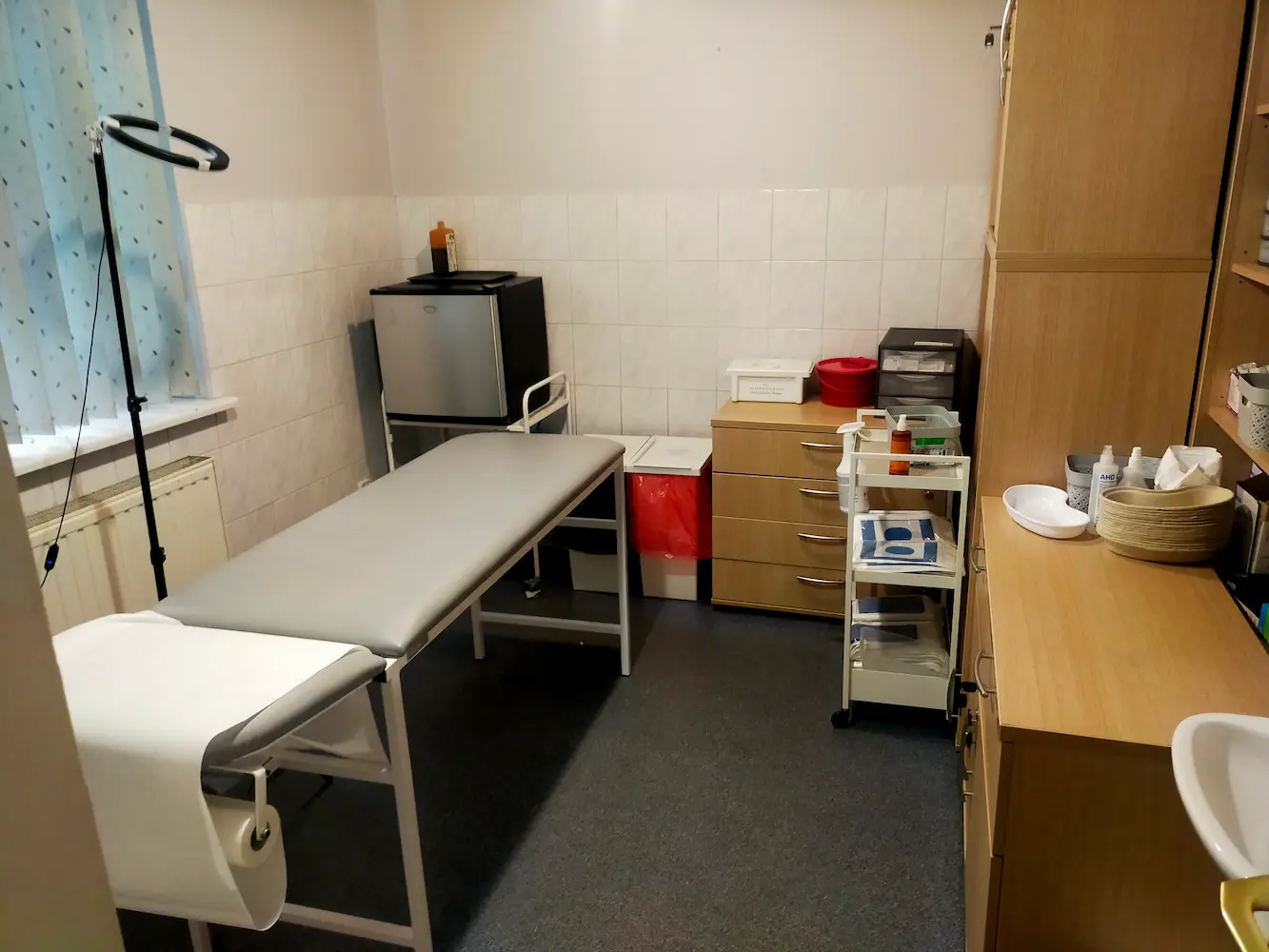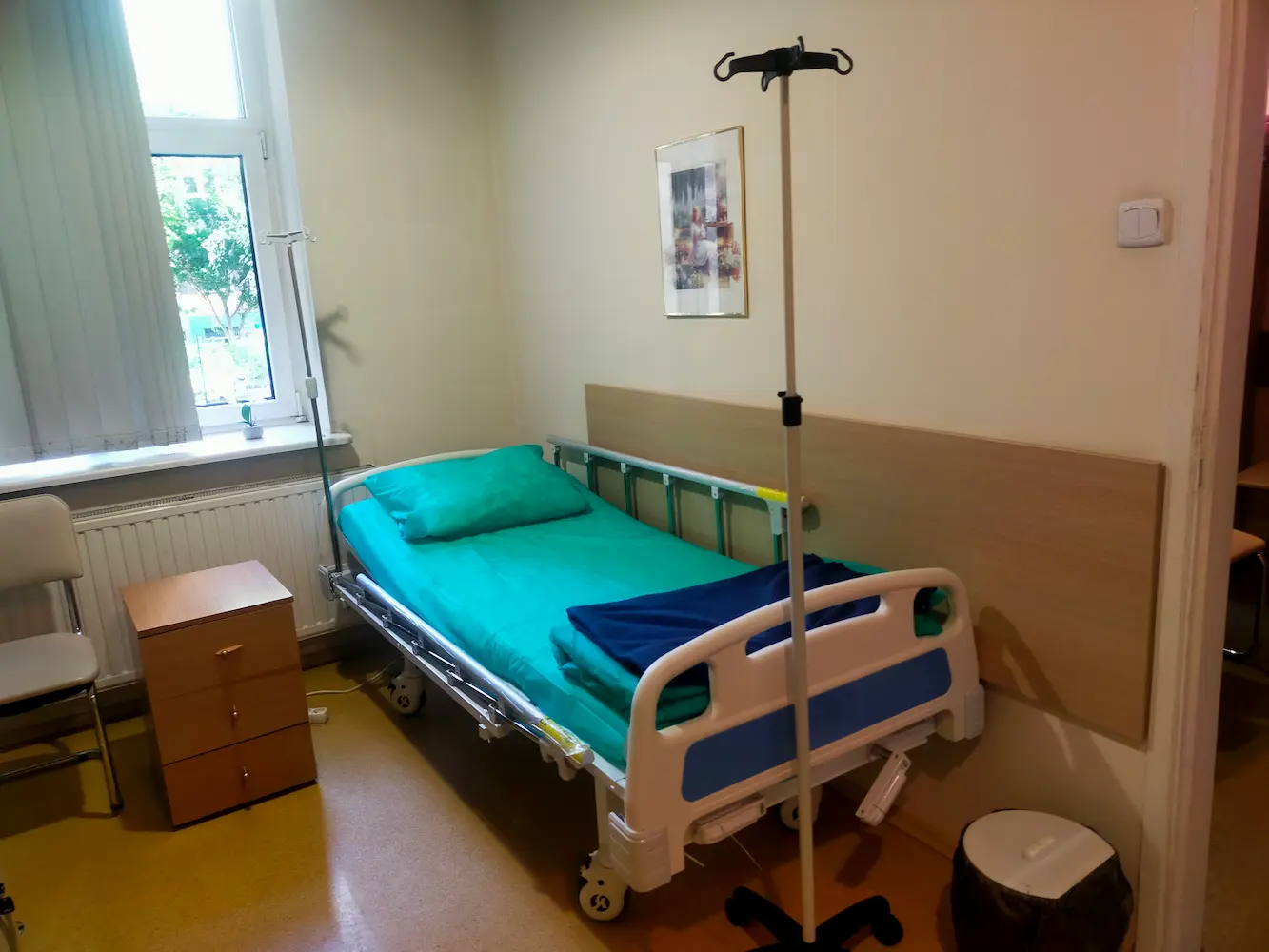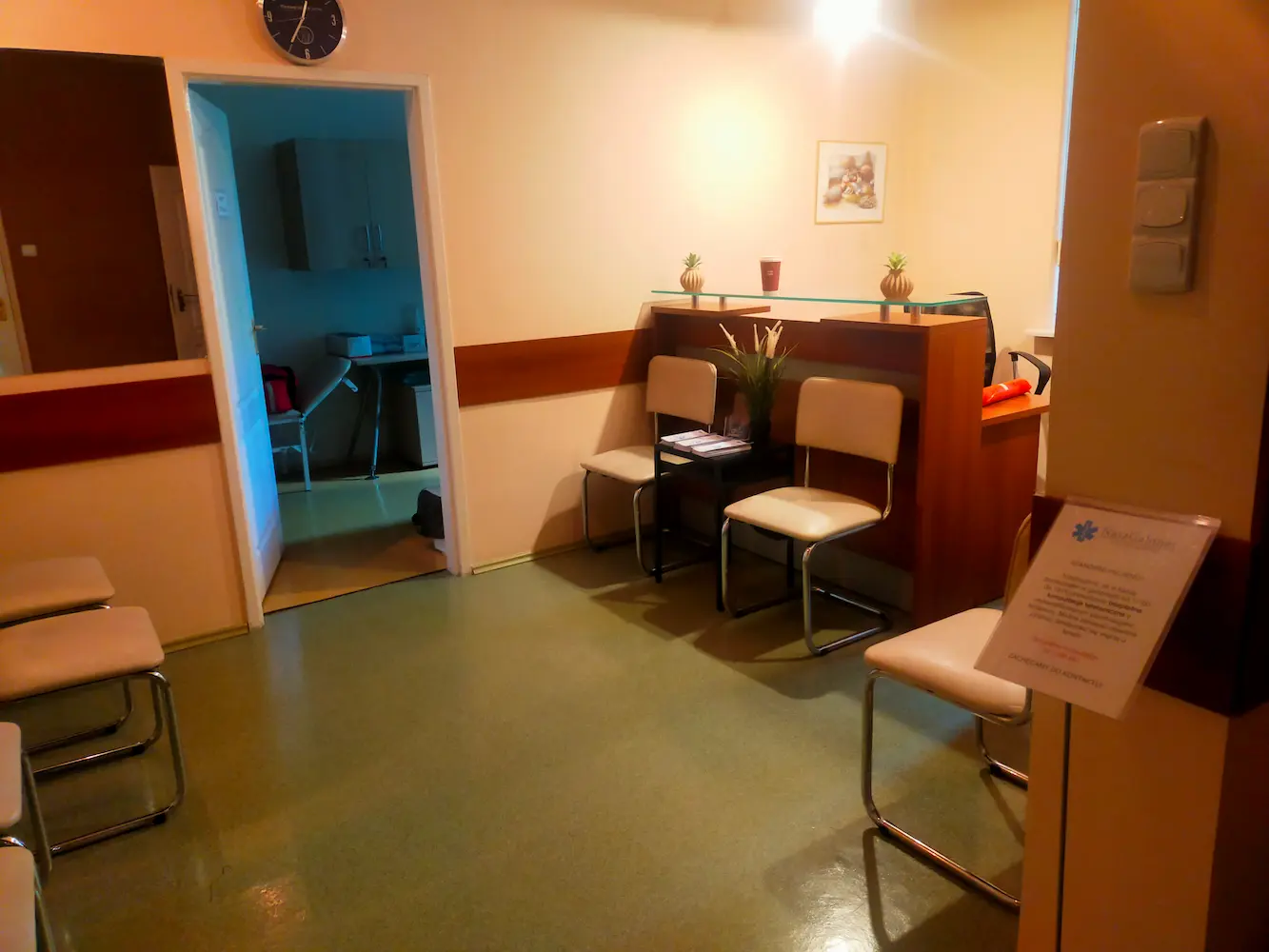


What is drug addiction treatment in Bydgoszcz?
Drug addiction treatment is planned help spread over months, meant to bring an addicted person to lasting abstinence and a return to ordinary life: work, home, relationships with those close to them. It is not about merely stopping the drug, but about changing the situation that led to using in the first place, which is why we work with the whole patient and not only with the addiction.
The most common misunderstanding is confusing treatment with detox. Detox, the cleansing of the body, interrupts the drug's action and is usually the first step, but it does not change what pushed the patient towards reaching for the substance. That is why proper treatment only begins after detoxification. The course of withdrawal itself and the symptoms of the first days we describe separately, on the page about drug detox in Bydgoszcz.
We build the plan individually, after a consultation and an assessment of health, and we run it entirely privately, without a contract with the National Health Fund.
Why is a decision alone not enough?
Someone close says: just stop taking it. It sounds simple, but for an addicted person that sentence does not carry the weight it should. Why? Because addiction is not a matter of character or a lack of willpower. It is a disorder that doctors describe as a brain disease, in the same way that diabetes or hypertension is treated as a condition requiring treatment rather than a moral judgement.
To understand what is happening, it is worth looking at the reward mechanism. The brain releases dopamine when we do something important for survival: we eat a warm meal when we are hungry, we come home after a long, tiring day. It is a natural system that teaches us to repeat good decisions. A drug switches on the same system, only far more strongly than anything natural. Over time the brain begins to treat the substance as something more important than food, sleep or the people close to us.
Why a decision is not enough
With regular use the brain retunes itself. Its own receptors grow quieter, so ordinary things stop bringing pleasure and the substance is now needed just to feel normal. On top of this, the work of the prefrontal cortex, the part of the brain responsible for planning and holding back impulses, weakens, while the urge itself grows stronger. That is why a decision alone, even a sincere one, has nothing to lean on: the control mechanism is already impaired.
On top of this comes the memory of associations. The brain links use with specific situations: returning to an old place, evening boredom when nothing is happening. Those situations alone can trigger a strong urge to reach for the substance before a person even consciously thinks about it. That is why a relapse does not mean weak will, but a natural reaction of an overtrained brain.
The good news is that this is a chronic condition, but one that can be brought under control, just as with other illnesses that stay with a person for years. Treatment is not about mustering more willpower, but about rebuilding the reward system step by step and teaching the brain new responses to old signals.
Can you cure the addiction first and the depression later?
Most people arrive with a ready idea about the order. Some want to stop using first and deal with depression or anxiety later, once their head clears. Others the other way round: let the psychiatrist set everything up first, and let quitting wait until there is strength for it. Both versions start from the same assumption, that the problems stand in a queue and can be dealt with one at a time. With two diagnoses that assumption is the most common reason the whole thing falls apart.
Treating only one side usually does not hold. Putting the other off for later does not make room for it, it just leaves an open matter that returns at the least convenient moment. That is why both sides are run in parallel from the start, which does not mean everything happens at once and with the same intensity.
Psychotherapy and psychiatry do different things here and do not replace each other. Psychotherapy works on the pattern of reaching for a substance: it identifies the situations that precede it and builds a different response; we describe how it runs on the page about addiction therapy in Bydgoszcz. It does not, however, treat depression or psychosis and does not decide about medication, because that belongs to the psychiatrist. The claim that therapy alone or medication alone is enough with two diagnoses sounds good and usually does not work out.
With two diagnoses, what has to be stabilised first in Bydgoszcz?
Since both sides run in parallel, the question is not which to choose but what to secure first so the rest can move at all. This is a decision made at the start, with the individual patient, not a fixed rule. It is settled by whatever is most unstable at the moment.
If someone has not slept for weeks, has thoughts of giving up or shows psychotic symptoms, that state is set first, because without a minimum of safety and sleep no therapeutic work will hold. If active, daily use organises the whole day, the starting point tends to be withdrawal and medical stabilisation. When the state requires round-the-clock supervision, inpatient care is more appropriate, described on the page about the addiction treatment centre in Bydgoszcz. The order follows from the clinical picture, not from a rule set in advance, and it sometimes reverses along the way.
What the treatment plan consists of
The plan itself always has the same parts: contact and diagnosis, stabilisation, psychotherapy proper and a long period of maintaining the change. With two diagnoses their list does not change, only which part is, in a given week, the threshold for the next. We do not give an honest number of months in advance, because it depends on how quickly we can reach a state in which both threads can be run at once; the prices of individual consultations and visits are collected in the price list.
Once the patient is stable, some sessions can be held online over video, so that travelling does not become a reason to drop out. The first appointment and the work during the hardest weeks happen in person.
What does a relapse look like when a mental illness is in the background?
With two diagnoses a relapse is rarely a clean return to using. More often it is a signal that the side we considered reasonably stable has slipped below the level agreed at the start. That is why after a relapse we do not begin by piling on therapy sessions alone, but check which floor gave way.
If the mental state has settled, merely multiplying sessions about using will hold nothing, and another psychiatric consultation is needed. If the mental state is holding, we return to the part of the plan that deals with trigger situations. Work done earlier is not lost in either case and no one starts from zero. A relapse therefore changes not so much the intensity of treatment as which floor has to be propped up at a given moment so the other can rest on it.
Where does the family's role end in a dual problem in Bydgoszcz?
In a dual diagnosis the family is sometimes the only source of information the patient will not provide themselves: earlier psychiatric diagnoses, treatment attempts from years back, what they once took on prescription and how they tolerated it. At the first diagnosis this carries real weight, because it shortens the way to establishing what we are dealing with. It is worth bringing as specifics rather than a general impression that someone was always nervous.
Beyond that begins a boundary it is better to know about at once. The family is not there to watch over medication, assess the mental state or stand in for the therapist; taking on any of these roles usually ends in the relative's exhaustion and a second person who needs help. Towards an adult there is also no legal lever to force them into treatment. What remains is less spectacular but works: clear terms of living together, consequences stated plainly, and holding to them for longer than a week.
What the social assistance data in Bydgoszcz show
How many Bydgoszcz families this concerns can be seen only in the social assistance register, and that shows less than it seems. In 2024, assistance on grounds of drug addiction was granted to 47 families in Bydgoszcz, compared with 59 in smaller Toruń, the second large city of the same subregion; per resident, Toruń has over twice as many. The Bydgoszcz figure held around thirty for most of the last decade and only in the last two years reached the forties. It is not a count of addicted people. The register shows where families reach for institutional help and where addiction goes hand in hand with poverty, not how many people in the city use.
What do the statistics say about drugs in Bydgoszcz?
In drug statistics Bydgoszcz has a rare neighbour for comparison: Toruń, the second large city of the same Bydgoszcz-Toruń subregion, two thirds smaller. In 2024 the police recorded 812 offences under the Act on Counteracting Drug Addiction in Bydgoszcz and 490 in Toruń. Per hundred thousand residents the two figures are almost identical, around two hundred and fifty, even though Bydgoszcz is considerably larger. In the two rural districts lying between the cities the density drops several times over, to 73 and 144 per hundred thousand.
This means the register divides the area not by number of residents nor by which city is larger, but by where the services actually work, and that coincides with urbanity. The series for Bydgoszcz alone over the last five years, 757, 879, 748, 873 and 812, has no clear direction and jumps up and down from year to year; the subregion behaves similarly. We deliberately do not set the provincial figure for 2024 alongside these, because the way events are classified was changed that year and a comparison with earlier years would be misleading.
This number does not say how many residents of Bydgoszcz are addicted, and that is not why we give it. It shows where and how offences are counted, not where the health problem is; a person who wants treatment does not appear in this register at all. That is why we base the decision to treat on the picture of the individual patient, not on what shows up in district tables. A first consultation can be arranged through the contact page.