

Addiction treatment centre Bydgoszcz - what inpatient treatment is
The addiction treatment centre in Bydgoszcz treats addiction on an inpatient basis - the patient does not commute for single appointments but lives at the facility for several weeks and stays under the team's care around the clock. You will also hear the terms residential treatment or closed centre. The latter sounds harsh, but it simply means an orderly, protected stay away from everyday triggers, not holding someone against their will. The stay is voluntary and can be ended at any time.
We admit people addicted to alcohol, medication and drugs, to novel psychoactive substances, and also to gambling and other compulsive behaviours. Very different stories therefore meet under one roof; on an inpatient basis we provide, among other things, drug addiction treatment in Bydgoszcz and gambling addiction treatment in Bydgoszcz. The stay itself looks much the same regardless of what brought the patient to the centre - the point is to break an entrenched pattern and learn to function without the substance or the compulsive behaviour.
Three paths to treatment in Bydgoszcz - and how they differ
In Bydgoszcz addiction can be treated in three ways, and it is worth telling them apart before making a decision. The first is an outpatient addiction clinic - help that is free under the public health service and available without a referral, but based on visits between which the patient is left alone with their surroundings. The second is a round-the-clock addiction ward funded by the public health service; such a ward does operate in the city, but it involves a referral or admission procedure, a limited number of places and a wait that can drag on for weeks. The third is a private inpatient centre such as ours: no referral and no queue, with the length of stay matched to the individual's situation.
What sets the centre apart from outpatient alcohol addiction treatment in Bydgoszcz is above all how much room therapy takes up in life. At a clinic the patient comes to a session and goes back to work and home; with us, for several weeks therapy becomes the main occupation of the day, and the old surroundings stay outside. Neither path is better in advance - the choice depends on how deep the addiction runs and on whether home helps to keep sobriety or rather pulls the person back in.
What a stay at the centre in Bydgoszcz looks like - from admission to discharge
Fear of the unknown is a common reason someone puts off the decision to come in. So we say plainly how treatment looks from the inside: from the first phone call, through admission, to an ordinary day at the centre.
Before the patient arrives: assessment and detox
It all starts with a phone call - the addicted person can call themselves, or someone close to them can. At the assessment we ask about the history of drinking or use, earlier attempts at treatment, chronic illnesses and medication taken, and on that basis we decide whether an inpatient stay is the right step and where to begin. We admit the patient sober, so the last twenty-four hours before admission must be kept free of alcohol. If the body is still burdened by the substance or withdrawal symptoms appear, the stay is preceded by alcohol detox in Bydgoszcz, that is, medically supervised detoxification. The first day is deliberately calm: the patient gets to know the centre, the rules and their therapist, without being thrown in at the deep end.
What an ordinary day looks like
The day at the centre has a steady rhythm and you know in advance what follows what - for someone who has lived for months in the chaos of addiction, that predictability alone can be a relief. We set aside up to 8 hours a day for therapy. The morning opens with a short community meeting where we plan the day; the late morning is usually group therapy, the afternoon an individual session with the lead therapist plus educational classes on the mechanisms of addiction and on relapse. The evening stays quieter: rest, one's own matters and getting used to a sober day, which after discharge will have to be run on one's own. Contact with loved ones is possible, though in the first days it can be limited so that the patient focuses on themselves at the start.
What to bring
Packing the day before takes a lot of tension out of the first hours of the stay. It is worth preparing:
- personal items and comfortable clothes for several weeks;
- any regularly taken medication together with information on the dosage;
- an ID document and, if the patient has them, discharge notes or test results;
- a clear head about home matters - settled in advance so they do not hang over the stay.
Clear rules apply on site: an absolute ban on bringing in alcohol and substances, respect for other patients' privacy and taking part in the scheduled classes.
Four weeks or eight
We offer two lengths of stay. The shorter, four-week one focuses on what is most urgent: breaking the cycle, stabilising the body and the first ways of coping without the substance. The longer, eight-week one covers all of that and, in addition, leaves time to reach the causes of the addiction and calmly prepare the patient for the hard moments after the return home. Which length to choose we decide together at the assessment - it cannot be settled from behind a desk, because it depends on how long the addiction has lasted, the state of health and the life the patient will return to.
The therapeutic programme in Bydgoszcz: individual and group therapy
The programme at the centre stands on two legs - individual work and work in a group - held together by a single lead therapist. These are not classes to fill the time but a planned whole in which every element has its task, and together they lead the patient from breaking the addiction to the skill of keeping sober over the longer term.
A permanent therapist who knows the whole story
Every patient has an assigned lead therapist who knows their history and is responsible for the course of the whole treatment. Thanks to this there is no need to tell everything from scratch to one person after another, and the therapist catches the signals of change early - a drop in mood, mounting tension, the warning of an approaching crisis. Individual meetings are the place for matters too personal or too difficult to speak about in front of the whole group.
Why group therapy
The group is often the hardest part of the stay at first, and in time turns out to be the one that heals most strongly. When someone next to you tells a story strikingly similar to your own, it is harder to keep treating the addiction as a personal failure and a shameful secret. The group also gives something that a conversation with the therapist alone cannot replace - the immediate, honest reaction of people going through the same thing, who are not taken in by the excuses they know themselves.
What the patient learns in therapy
Therapy at the centre is not listening to lectures on the harm of addiction but practising concrete skills. The patient learns to recognise craving and the early signs that the risk of reaching for the substance is rising, and to cope with tension, anger or sleeplessness without drinking and using. We devote a good deal of work to a plan for high-risk situations - parties, conflicts, difficult anniversaries - and to defusing the thoughts that have kept the addiction going for years. It is precisely these skills, not the stay away from home itself, that the patient takes with them after discharge.
Monthly supervision
Once a month the therapeutic team meets for supervision and discusses ongoing cases with an experienced supervisor from outside the current work with the patient. This is the standard of sound addiction therapy in Bydgoszcz: it lets the team notice in time that some direction is not working and correct it before the patient gets stuck. For the patient it means that not one person but a whole team watches over their treatment.
Who the closed centre in Bydgoszcz is for - indications, assessment and loved ones
An inpatient stay is not the first solution for everyone - it is an answer to specific situations. It is worth considering when outpatient treatment has brought no effect or quickly ended in relapse, when the addiction has lasted long and badly disrupts life, when attempts to keep sober at home break down again and again, or when the surroundings themselves pull the person back into addiction.
Who an inpatient stay really helps
In short: it helps those for whom home has stopped being a place where sobriety can hold. Sometimes it is the severity of the addiction that decides, sometimes the fact that the same people and the same occasions are still at hand, and sometimes plain exhaustion with one failed attempt after another. It also happens that tension, anxiety or a low mood go alongside the addiction - and then a few weeks in an orderly, safe place give the space that simply is not there in the daily rush.
Codependency - when a loved one needs treatment too
Addiction never concerns one person alone. A developing addiction gradually unsettles the functioning of the whole family: those close begin to arrange their day around someone else's drinking or use, take over duties, hide the problem from others and explain away one situation after another, until their own needs, boundaries and often their health slip into the background. This state has a name - codependency.
The most important thing we want to say here: codependency is a separate problem and is treated separately. A loved one of an addicted person is not just a helper in someone else's therapy - they can be a patient in their own right, with the right to take care of themselves regardless of whether the addicted person decides to seek treatment. So there is no need to wait with one's own therapy until the other person is ready to change; outpatient addiction therapy in Bydgoszcz can help here, and the family can use it alongside the patient's stay at the centre or entirely on their own.
A separate thread is the adult children of addicted parents, who grew up in a home marked by addiction and carry lasting patterns out of it; for them, too, there is targeted help. We therefore treat loved ones as part of the recovery, not its spectators - with a clear boundary that no one is responsible for someone else's decisions and they cannot be made on another's behalf.
What we settle at the assessment
Whether the centre is the right step does not have to be decided alone - that is what the assessment is for. At it we check the duration and severity of the addiction, the state of health and the course of earlier attempts at treatment. The assessment works both ways: if we see that a better first step would be outpatient treatment or - where the health problems are more serious - a medical consultation first, we say so plainly. The term closed centre is in any case misleading; it is not about shutting someone in against their will but about a conscious cutting off, for the duration of treatment, from the places and people that push towards addiction.
Safety, the team and discretion at the centre in Bydgoszcz
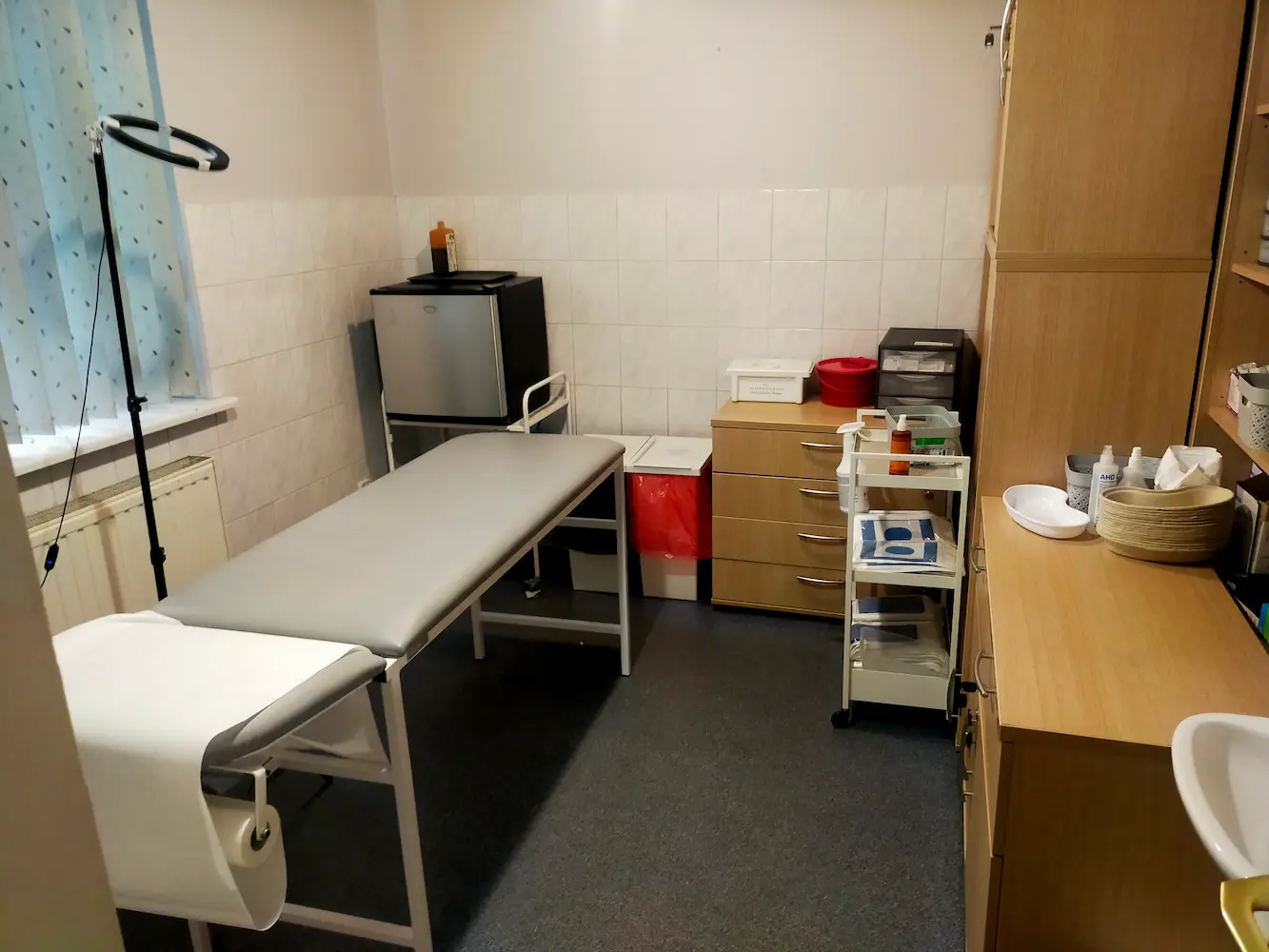
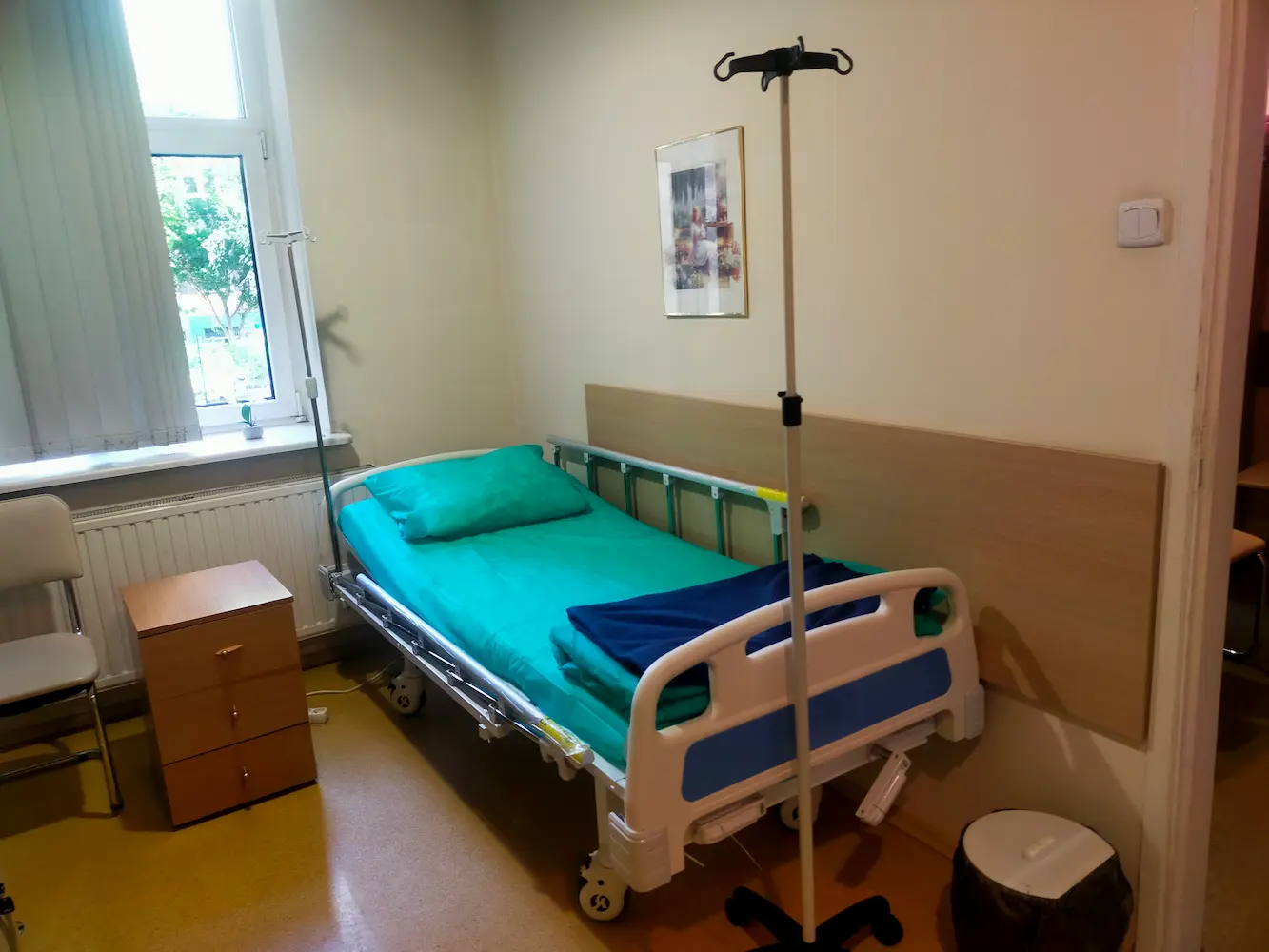
Without a sense of safety, inpatient treatment has no way to work - the patient must know they are cared for before they begin to truly work on the addiction. That is why staff are on site at any hour, therapy is led by addiction therapists, and the usually hardest stage of detoxification takes place under medical supervision.
Round-the-clock care in practice
Round-the-clock care is not a slogan from a leaflet but something concrete: at any hour there is someone who responds when a worse moment, a strong craving or trouble sleeping appears. A steady rhythm of the day, clear rules and no access to substances make up an environment in which it is easier to regain balance than in the previous surroundings. Responsibility is spread across the whole team - and that can be one of the centre's greater advantages over facing addiction alone, at home, where almost everything is a reminder of the substance.
Who leads the therapy
The patient is not left alone with their illness: day to day they work with the lead therapist and the whole team, and where a health need arises they are assured medical care. This division of tasks among specialists means no one carries the whole treatment alone - neither the patient nor a single therapist.
Discretion and documentation
Patients ask about anonymity most often, so it is worth separating two things: discretion and the absence of documentation. Discretion we provide in full - confidentiality applies, and we pass information about the stay to no one without the patient's consent. This does not mean, however, that treatment leaves no trace: like any medical facility we keep documentation, because both the law and the safety of the treatment itself require it. These two things do not clash - one can be treated discreetly and at the same time soundly.
What we do not promise
In fairness we must also say where the limits are. A stay at the centre is treatment for addiction, not help in a sudden threat to health or life - with acute withdrawal complications, for example high fever, seizures or suicidal thoughts, urgent medical help or hospital treatment is needed first, and inpatient therapy only afterwards. Nor do we promise that the stay closes the subject once and for all: addiction is a relapsing illness, and the centre gives a strong start and tools the patient then uses for a long time. Every case is different, and the result depends on many factors, including what happens after leaving.
Packages, prices and how to start treatment at the centre in Bydgoszcz
We settle the stay in two packages matched to the length of treatment. The Intensive Start package covers four weeks and costs 13 000 PLN - concentrated work on breaking the addiction, stabilising sobriety and the first tools for a sober life. The Full Process of Transformation package is eight weeks for 25 000 PLN; it covers everything in the shorter option and, on top of that, time to work with the causes of the addiction and with preventing relapse.
The price includes the whole programme: a round-the-clock stay with meals, the team's care and therapy - individual with the lead therapist and group. The only thing left outside it is detox, should it prove necessary, since its scope depends on the patient's condition. We do not add hidden charges; the amounts given are for information, and we confirm the final sum after the assessment, once we know the length of stay and whether detoxification will be needed.
What happens after the stay ends
Discharge is not the end of treatment but a passage to its next stage - now in everyday life. The first weeks after the return tend to be the hardest, when the old triggers come back, so the patient leaves with a plan for that time, and further work can be carried on an outpatient basis, for example within alcohol addiction treatment in Bydgoszcz or supportive therapy. A short stay can break the addiction, but what happens over the following months decides how lasting the effect is.
How to arrange an assessment in Bydgoszcz
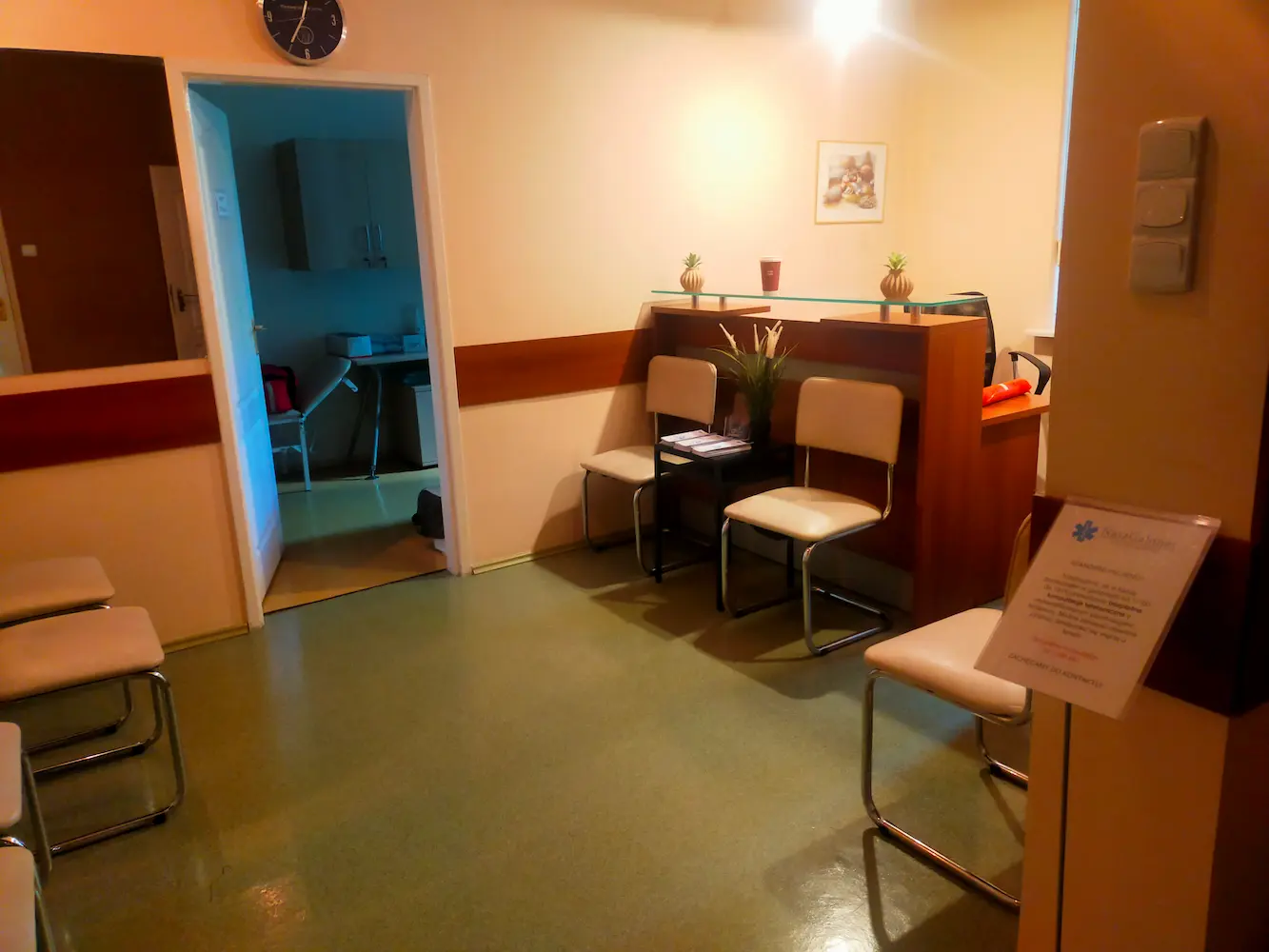
The first step is a single call to 880 808 880. This conversation serves to arrange the assessment and clear up the first doubts; because we work privately, without a referral and without a waiting list, there is no long wait for admission. The call commits you to nothing - it can be made both by the addicted person themselves and by a family member who wants to size up the situation first. The form and length of stay we settle only during the assessment.