

The symptoms of alcohol dependence and what drives them
In medicine alcoholism is a separate illness with a code of its own: F10.2 in ICD-10 and 6C40.2 in the newer ICD-11. The diagnosis is made by a doctor after taking a history, against criteria set out in the classification, and it is where the treatment plan begins.
Regular drinking changes the way the reward system and the stress response work. Alcohol becomes the body's fastest way to lower tension, so craving appears and control over the amount weakens. This mechanism works no matter how many times the patient has promised themselves a break.
The diagnosis rests on what has been visible over recent months: a craving for alcohol, loss of control over how much and when a person drinks, rising tolerance, drinking despite harm to health and to the family, and withdrawal symptoms after a break in drinking. The more of these occur together, the deeper the dependence.
The illness is chronic and relapsing, so deciding to stop drinking is rarely enough on its own. We plan treatment in months, and a return to drinking does not cancel out the work done so far or mean that everything has to start again.
How to tell harmful drinking from alcohol dependence
Medicine does not divide drinking into permitted and forbidden but distinguishes three situations: risky drinking, harmful drinking and dependence. There is no boundary between them expressed in litres, because according to the WHO position from 2023 there is no safe dose of alcohol. What counts is the harm the drinking has already done to health, to the family and to work.
The amount of alcohol says less about how far the problem has gone than the way the drinking is spread across the week. Two beers with dinner every day, drinking only at weekends but until memory goes, and binges lasting several days with breaks to sleep them off are three different patterns. Each of these patterns leads to harm by a different route and each needs a different approach to treatment.
Risky drinking has not caused harm yet, but it makes harm more likely. Harmful drinking has a separate ICD category, F10.1, because damage to health, family or work is already there, although the patient still controls the amount. Dependence, F10.2, begins where craving and loss of control set in. For an initial assessment of risk there is AUDIT, the WHO screening test with ten questions, and its short version AUDIT-C. A positive result is not a diagnosis yet, but it does mean it is worth booking a consultation.
An attempt to stop drinking tells you the most about how far the illness has gone. If shaking hands, sweating, restlessness or insomnia appear after two days without alcohol, the body has already adapted to a constant supply of alcohol, and stopping drinking should then be planned with a doctor rather than on your own.
How we plan alcoholism treatment in Gdynia
The first appointment is a medical consultation. We ask about the pattern of drinking and earlier attempts, assess general health and the risk of withdrawal, and decide whether we start with stabilisation or go straight to treatment itself. After that conversation we put together a plan for the coming weeks and set a date for the next appointment.
We run plans as monthly packages, from one month up to a year. The shorter package covers stabilising the patient's health and starting medication. The longer package adds regular sessions, medication reviews and an agreed response to the first break in abstinence, because these are the elements that decide whether the effect holds once the intensive stage ends.
Addiction psychotherapy is the foundation of treatment, and the procedure and the medication add to it. Medication and the implant help the patient hold abstinence for as long as the therapy needs to take effect. What the sessions look like and how many are needed we describe under addiction therapy in Gdynia.
We count the length of treatment in months. A month is enough to stop the drinking and set up the medication, changing habits takes longer.
Which setting of alcoholism treatment to choose in Gdynia
The setting of treatment is not decided by price. It is decided by the risk of withdrawal, how far the illness has gone, and whether the patient's home helps with abstinence or works against it.
What decides in favour of outpatient treatment in Gdynia
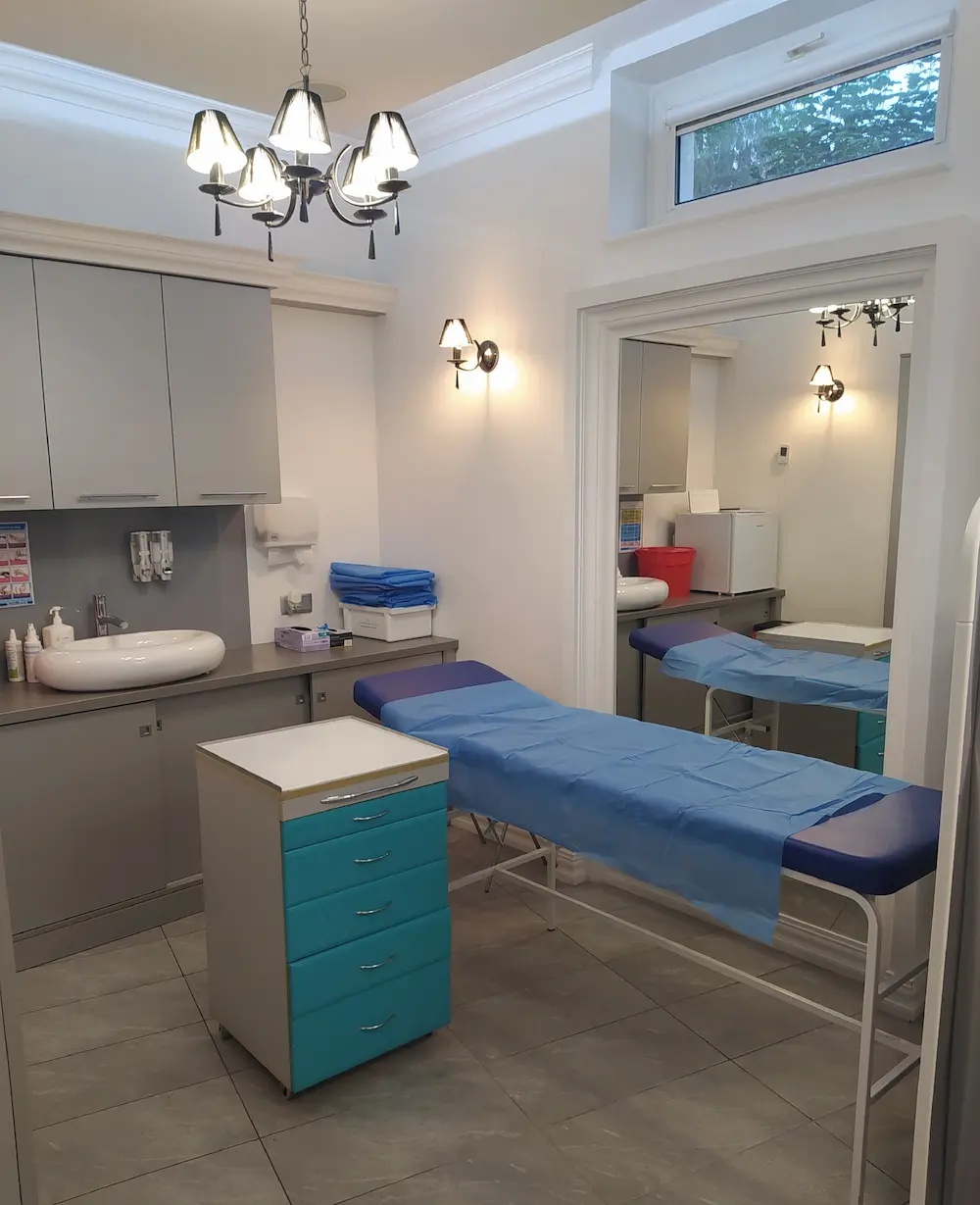
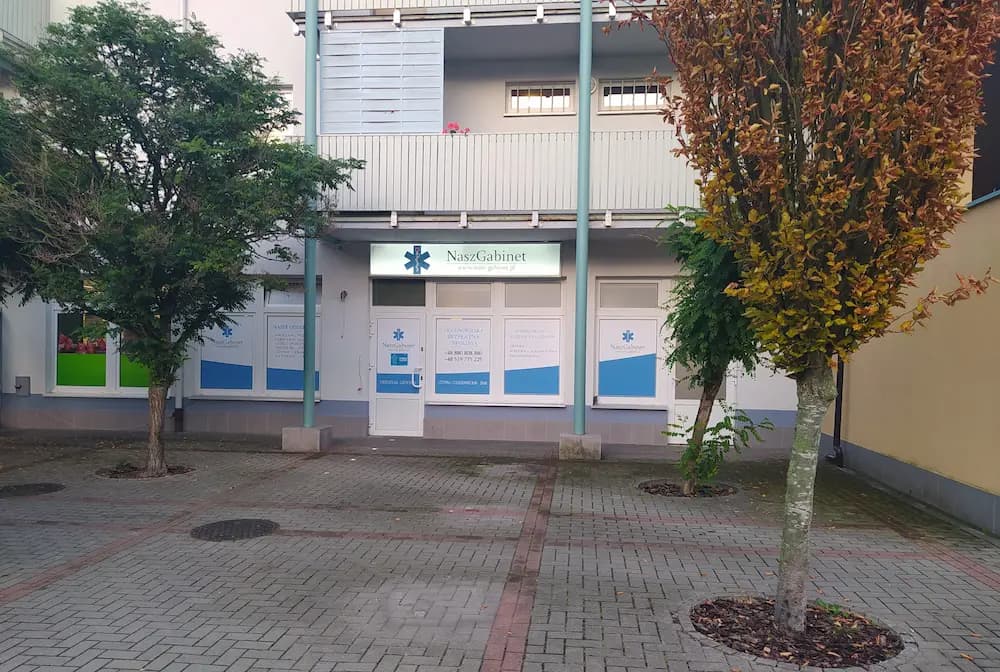
We treat patients on an outpatient basis when they work, have someone close on their side and have no serious medical complications. The practice at Franciszka Sokoła 28 is open seven days a week from 8 am to 8 pm, so an appointment can be booked before work, after work or at the weekend. This is how most of the people who come forward on their own begin.
Signs that make us suggest a residential stay
A stay, meaning treatment with accommodation and care around the clock, is indicated by binges lasting several days, serious coexisting illnesses, several failed outpatient attempts, and a situation where alcohol sits on a shelf at home and abstinence would not survive a week there. The rule is simple: we suggest the mildest setting that still has a chance of working. We describe what such a stay involves under residential treatment in Gdynia.
The limits of online treatment in alcohol dependence
We do not take anyone on for treatment remotely who has been drinking daily for weeks, because the severity of withdrawal symptoms cannot be assessed through a screen. Online we run maintenance sessions, pharmacotherapy reviews and consultations for patients from the other Tricity towns and from outside the region, including an e-prescription.
The Esperal implant, naltrexone and acamprosate, their role in treating alcoholism
The Esperal implant is a disulfiram implant placed under the skin. Disulfiram stops the breakdown of alcohol at the acetaldehyde stage, so a drink ends in a violent bodily reaction. The implant does not reduce the craving for alcohol and does not teach new habits, but it does give the patient time to change the way they live. A doctor checks that the patient is sober, assesses the heart and the liver and then decides whether the patient qualifies for the procedure. We describe the procedure under the Esperal implant in Gdynia.
Oral medication works differently. Naltrexone reduces the pleasure of drinking and the intensity of the craving for alcohol. Acamprosate calms the nervous system, which stays overexcited after a patient stops drinking, and that makes holding abstinence easier. Nalmefene is taken on days of increased risk, when the goal is to cut down on drinking. Disulfiram in tablets causes the same reaction to alcohol as the implant, only for a shorter time, and it is the patient who decides whether to swallow the tablet, so when motivation drops the tablets are easy to stop taking.
Which medicine goes into the plan is decided by the doctor after assessing coexisting illnesses, current medication and the goal for the coming months. Medication supports psychotherapy and does not replace it.
Why alcohol is not stopped alone after a heavy binge
Alcohol detox means carrying the patient safely through withdrawal, not cleansing the body of toxins. The body clears the alcohol itself within a dozen or so hours. The problem is the nervous system, which has spent weeks of drinking adjusting to a constant supply of alcohol and stays overexcited once it is gone.
After a long binge, stopping drinking on your own can be life-threatening, because withdrawal seizures and delirium tremens can develop, and both are emergencies that need medical help. That is why, when someone has been drinking daily for weeks, has been through severe withdrawals before or has heart disease, we manage the withdrawal under medical supervision, with medication and fluids. What such a detox looks like hour by hour we describe under alcohol detox in Gdynia.
Detox stops the drinking and brings the patient through the withdrawal symptoms, but on its own it does not treat alcohol dependence. The illness does not disappear after two days without symptoms, so we set the date of the first therapy session before the detox begins, not after it.
What public treatment offers and what a private appointment gives in Gdynia
Public treatment for addiction is free, but only what fits inside the basket of guaranteed benefits is free within it. The Esperal implant stays outside that basket and the patient pays for it in every facility in Poland.
Gdynia has no round-the-clock alcohol addiction therapy ward of its own. The nearest one operates in Gdańsk, 23 people are waiting for it with an average wait of 32 days, and across the Pomeranian Voivodeship more than 400 people are in the queues for such wards (National Health Fund data on treatment waiting times, 31 July 2026). During an ongoing binge a month of waiting decides whether the patient starts treatment at all, because readiness rarely lasts that long.
Privately, a patient pays above all for time and continuity: a consultation within a few days, the same team throughout the plan, and moving on to detox or a procedure right after the assessment. We run treatment on an outpatient basis, so it requires neither sick leave nor several weeks away.
Private treatment means discretion, not anonymity. We keep and store medical records as the law requires, and we do not pass information about a patient to their family or their employer without the patient's consent.
How we respond when a patient drinks again
If a patient drinks, we ask them to get in touch with us as soon as possible, and we do not expect explanations. The sooner we know that abstinence has been broken, the smaller the chance that one evening turns into a binge lasting several days, after which stabilisation has to start again.
We then check whether there is any danger to health, go back to the interrupted plan and work out what led to the drink. Usually it is a missed dose, a cancelled session, a conflict at home, or a day so calm that the patient stopped watching out.
A relapse does not prove that the treatment is not working. A relapse shows where the treatment plan was too weak, so after a relapse we improve that plan rather than start the treatment from the beginning. More frequent sessions for a few weeks, a change of medicine, sometimes an implant for a harder period are usually enough for the patient to return to abstinence.
Support after therapy, self-help groups and maintenance medication in Gdynia
The risk of going back to drinking is highest in the first months after a patient stops drinking, when they already feel well and support stops seeming necessary. That is why this stage has a plan of its own, not just a phone number for emergencies.
Together with the patient we write down the situations that push them towards a drink, from family parties to lonely evenings after a shift, and we agree a ready response to each of them. Pharmacotherapy with naltrexone or acamprosate continues for as long as it is needed. Reviews become less frequent, but we set the next date in advance, so that the patient's return does not depend on whether they can bring themselves to call during a bad week.
Gdynia also has free support available every day. The municipal sobriety club is open seven days a week and hosts ten self-help groups, among them AA, groups for relatives and for adult children of alcoholics. In 2025 an average of 593 participants a month were recorded there, counting group meetings and individual support. A group does not replace therapy, but it keeps the patient in contact with other people in the weeks without sessions.
What relatives of a person who drinks do in Gdynia
In Gdynia the relatives of someone who drinks have help of their own, and they use it more often than people usually assume. In 2025 the municipal team for the prevention and resolution of alcohol problems provided 711 consultations for 322 people close to someone dependent on alcohol. That is more than the 675 assessment and motivational consultations the same team held in that time with people who drink.
The reason is simple. Life next to someone's drinking changes the rhythm of the whole household: relatives take over duties, explain absences at work, pay off debts and learn to predict the evenings. This way of functioning is called codependency and it is treated separately, including when the person who drinks has not yet decided to start treatment. Adult children from such homes also come for help for themselves, sometimes twenty years after leaving the family home.
Clear boundaries help: relatives do not pay off the debts and do not explain absences at work. A shared position among everyone in the household helps too, and so does booking a consultation for yourself instead of waiting until the person who drinks decides to start treatment. Controlling the amounts, pouring alcohol away and forcing promises under pressure do harm, because they move responsibility for the drinking onto the family. Relatives have one more route: they can file an application with the municipal commission for the resolution of alcohol problems, which conducts the proceedings and sends the court an application to order treatment.
What a second psychiatric diagnosis changes in treatment
Depression, anxiety disorders and PTSD occur alongside alcohol dependence often enough that we ask about them at the first consultation.
The order of events varies. One patient drank to fall asleep or to get through anxiety at work. In another the symptoms appeared after years of drinking, as a result of the drinking itself. Sorting this out matters in practice, because treating only one of these problems rarely gives a lasting result: addiction therapy alone will not lift depression, and antidepressants will not reduce the craving for alcohol.
In such cases a psychiatrist and an addiction therapist run the plan in parallel, with one agreed goal and shared knowledge of what is happening with the patient. A psychiatric assessment looks different once a patient has stopped drinking than it does during drinking, so some diagnoses are made only after several weeks of abstinence, when it is clear what was caused by alcohol and what has remained.
How many conversations it takes before someone in Gdynia starts treatment
Municipal reporting for 2025 counts contacts in Gdynia, not patients. That is what makes it possible to see what the beginning of treatment really looks like. The municipal team for the prevention and resolution of alcohol problems held 675 consultations assessing the person's situation and motivating them towards abstinence for 359 people, and 479 conversations about changing their way of life with 278 people. On top of that came 112 planned and intervention visits diagnosing an addiction problem at people's homes, for 90 people, and 427 hours of systemic therapy for 62 people.
One thing follows from this: it takes several meetings per person, not one. Nobody goes from denial to a booked appointment in a single evening, and help with putting together the paperwork for a residential therapy stay is often a separate stage rather than a formality.
Two caveats about these figures. This is a record of what the municipal services did, not the number of people dependent on alcohol in Gdynia, and it does not include patients treated privately. The categories cannot be added up, because the same people come back for further consultations.
We draw a practical conclusion from this. We treat the first appointment as the start of a conversation, not as a test of motivation, and booking it does not mean that the patient has already decided on abstinence. For the first appointment it is enough that the patient comes and talks.