

Alcohol dependence in the classification of diseases
In the international classification of diseases ICD, alcohol dependence has its own code: 6C40.2 in ICD-11 and, earlier, F10.2 in ICD-10. This is not a formality: a code like this means that a doctor diagnoses alcohol dependence according to described criteria and treats it like any other chronic disease, instead of judging the patient's character. The diagnosis is made when several characteristic signs occur together over a longer period.
The most characteristic one is craving for alcohol, a compulsion to drink that comes back despite sincere resolutions not to drink. Tolerance rises, so the patient has to drink more and more alcohol to feel the same effect. After a break in drinking, withdrawal symptoms appear: trembling hands, sweating, anxiety, insomnia. Added to this is drinking despite harm the patient has already noticed, from worse test results to tension at home and trouble at work. The more of these signs a patient has at the same time, the deeper the dependence.
Behind these symptoms lies a change in how the brain works. Alcohol drunk regularly disturbs the reward system and the body's response to stress, so drinking stops being a choice and becomes a way of calming down for a moment. This is why a resolution not to drink is rarely enough on its own. Dependence is a chronic and relapsing disease, which has a practical meaning for the patient: a return to drinking after months of abstinence does not cancel out the treatment so far, it calls for a fast response.
When drinking becomes a medical problem
Medicine does not draw one clear line between social drinking and illness, it describes three different situations instead. Risky drinking has not yet caused harm, but it clearly increases the chance that harm will appear. Harmful drinking has its own entry in the ICD classification, F10.1, and means that damage to health or to the family has already occurred, although control over drinking is largely retained. Only the third degree is dependence, with the full set of features described above.
The AUDIT test developed by the World Health Organization is used for an initial assessment: ten questions about the amount, the frequency and the consequences of drinking. In the shortened AUDIT-C version the first three questions suffice, and studies carried out in primary care have shown that even this short version accurately points to people who drink to excess. A raised score is not a diagnosis and does not replace one, but it is reason enough to book a consultation before the problem settles in.
It is also worth knowing that contemporary medicine does not name a dose of alcohol that is fully safe for health. So when we assess the risk we ask not how much the patient drinks, but how much room drinking has already taken in their everyday life.
What alcohol addiction treatment in Kraków involves
Treatment of alcohol dependence takes months and consists of several stages, not one procedure. It starts with a medical consultation, where we assess the patient's health, the depth of the dependence and the risk of complications after stopping drinking, and then set the order of the steps. If the patient comes after a long binge, we start with detox. If not, we move straight to stabilisation and a plan for the coming weeks.
From there, treatment runs in parallel on several levels. Pharmacotherapy reduces craving for alcohol or protects against drinking on impulse. Addiction psychotherapy answers the question of what the patient was drinking for and what to put in place of drinking, because without psychotherapy the results of treatment rarely last. Regular consultations let us correct the treatment when something is not working. We run treatment in one-month, three-month, six-month and yearly packages, and we match the length of the package to the patient's situation.
To put it plainly: this kind of treatment cannot be wrapped up in a week. The realistic goal of the first month is safely stopping drinking and a stable plan, not a declaration of abstinence for the rest of your life. We provide individual and group psychotherapy as part of addiction therapy in Kraków.
Choosing the form of alcohol treatment in Kraków
Whether we treat on an outpatient basis, at a residential centre or remotely is not decided by convenience but by the patient's condition, the risk of complications after stopping drinking and whether abstinence can be kept at home. Below are the criteria we check during assessment.
Who will do well with outpatient visits?
People without severe complications, who have support from someone close and can come to appointments regularly. This form requires no break from work or study, and in Kraków and the surrounding municipalities getting to a session is rarely an obstacle. For most patients it is the natural starting point.
When is a residential stay needed?
When the dependence is advanced, other illnesses accompany it or the results of earlier treatment at home lasted only a few weeks. The environment matters too: if the patient returns every day to a place where the whole family or the whole group of friends drinks, willpower alone is usually not enough. We describe what such a stay looks like on the page of our addiction treatment centre in Kraków.
When does online treatment work?
When continuing treatment already started, when the distance to the clinic is large and when the patient does not want to explain regular absences at work. Remotely we run consultations, pharmacotherapy and maintenance sessions. We will not run detox or care for someone with severe withdrawal symptoms remotely, because they require examination and supervision on site. In those cases the medical team travels to the patient or we admit them at the facility.
Esperal and oral medication in alcohol treatment in Kraków
Medication is part of the treatment plan and on its own it will not cure alcohol dependence. The medicines differ in how they work, so the choice of medicine depends on whether the patient is aiming for full abstinence or first for drinking less, and on their state of health.
Naltrexone blocks opioid receptors, so alcohol gives a weaker effect and the urge to have another drink is smaller. Acamprosate calms the excitatory system in the brain, which makes it easier to keep abstinence after stopping drinking. Nalmefene is taken on single days when the patient expects temptation, and the goal is to drink less alcohol. Disulfiram works in a completely different way, because it blocks the breakdown of alcohol at the acetaldehyde stage and triggers a violent reaction in the body after drinking. Reviews of clinical trials consistently point to naltrexone and acamprosate as first-choice medicines, but always together with psychotherapy, never instead of it.
The alcohol implant is disulfiram in implant form, and it is what patients ask about most often. The implant does not block drinking physically. As long as disulfiram remains in the body, drinking alcohol triggers a severe reaction, and that holds people back from reaching for a drink on the spur of the moment. That is its advantage: it gives the patient the time needed to start therapy. The implant does not reduce craving for alcohol and on its own it does not treat dependence. Before the procedure the patient has to stop drinking for several dozen hours, and a doctor checks for contraindications and decides whether the procedure can go ahead. We describe the procedure and the full list of contraindications on the page about the Esperal implant in Kraków.
When detox is needed before therapy
Detox is needed when stopping drinking threatens a severe withdrawal syndrome: after a long binge, with high tolerance, in people who have previously had seizures or delirium. Not every course of treatment has to start with it, and many patients begin with a consultation and pharmacotherapy.
It is worth clearing up here the most common myth repeated in advertising. Detox is not about cleansing the body of toxins, because the body breaks alcohol down and removes it by itself. Detox is about carrying the patient safely through the withdrawal symptoms, and about rehydration and correcting deficiencies of electrolytes and vitamins. Stopping suddenly after a heavy binge can be life-threatening, and seizures and alcohol delirium are medical emergencies, which is why detox is carried out under medical supervision, at the facility or at the patient's home with a team travelling there, never on your own. We describe how detox goes and whom we offer it to on the page about alcohol detox in Kraków.
Alcohol treatment in Kraków, public health service or private care
The choice between free and private treatment is rarely settled on price. It is settled on when treatment starts and what it covers.
The basket of guaranteed benefits does not include the Esperal implant, so a patient who wants to start with it pays for the procedure even when the rest of the treatment runs at a public clinic.
The average wait for the round-the-clock addiction therapy ward in Kraków is 44 days, and for the second ward in the Malopolska region, in Andrychow, 140 days, with more than 200 people in the queue (National Health Fund data on treatment waiting times, 31 July 2026). A decision to seek treatment rarely survives dates like these, because a patient who made up their mind on Monday can change it by Friday.
At Nasz Gabinet Kraków we schedule a consultation within a few days, and the same doctor leads the patient through the whole course of treatment. We treat on an outpatient basis, so there is no need for sick leave or for several weeks away on a ward. A public clinic works well later on, for long-term psychotherapy and follow-up care.
Relapse during treatment and after it
Relapse happens in a chronic disease and it does not mean that the treatment so far was wasted. In practice it rarely looks like a sudden decision. It is usually preceded by a series of small changes: skipped sessions, a return to the company the patient used to drink with, rising tension, the belief that this time drinking can be kept under control.
The rule is simple, following it is harder: get in touch quickly, ideally within a few days rather than after further weeks of drinking. With early contact, a correction of the treatment is usually enough, for example a change of medication or more frequent sessions. Putting off contact with us ends with a return to the starting point and the need to repeat detox. For patients who come back after a break, we do not start treatment from scratch, we start by establishing what exactly failed last time.
Care after the intensive stage is over
The risk of returning to drinking is highest in the first months after stopping drinking, which is why the maintenance stage counts as much as the beginning of treatment. It consists of three elements.
The first is learning to prevent relapse: the patient recognises the situations that push them towards drinking, from specific places and people to their own emotions, and has a rehearsed plan for them. The second is pharmacotherapy continued for as long as it is needed, because medicines that support abstinence have to be taken also after the therapy sessions have ended. The third is social support, meaning self-help groups and relatives who know how to react.
On top of that comes the option of quick contact with the doctor in charge when things get harder for the patient. A short consultation in a week when the patient feels craving building up costs incomparably less than a return to treatment after a binge lasting several months.
The role of the family in alcohol treatment in Kraków
The family usually asks for help earlier than the person who drinks, and most courses of treatment start with relatives. It shows in the data of the municipal committee for solving alcohol problems: in 2024 it handled 651 cases, and in 363 of them, more than half, the Blue Card procedure had already been started. There was violence in those homes before anyone began talking about therapy.
With alcohol, relatives have a tool that other addictions do not offer: a notice to the municipal committee, which can apply to the court for an obligation to undergo treatment. That, however, is a last resort. Before it comes to that, a change in the behaviour of the family itself does more.
Co-dependency means that the household's life organises itself around drinking: hiding it from others, paying off debts, explaining absences at work. Every such act of covering up pushes away the moment when the ill person feels the consequences of their own drinking, and so it pushes away the decision to seek treatment. Therapy for relatives teaches how to stop covering up in this way, and it helps adult children of alcoholics recognise the patterns they brought out of the family home. It makes sense even when the person who drinks still refuses treatment.
When depression or anxiety comes with the drinking
Depression, anxiety disorders and the consequences of traumatic experiences co-occur with alcohol dependence often enough that we ask about them at every assessment. The relationship runs both ways: some people drink to suppress anxiety or to lift their mood, and in others it is chronic drinking that deepens the symptoms. What came first matters less; what matters more is treating both problems, not just one of them.
International guidelines recommend treating both disorders in parallel rather than one after the other, although the authors of research reviews admit that there is still little evidence that this approach is better. The practical conclusion for the patient is clear: the results of treating the drinking alone while depression goes untreated rarely last, because in the first bad week the old way of coping comes back, and that way is alcohol. In such cases a psychiatrist and a therapist run the care together, and the treatment plan takes both diagnoses into account from the start, not only after a relapse.
Alcohol in Kraków, what the city data shows
Kraków was the first large Polish city to restrict the night-time sale of alcohol. Since 1 July 2023 alcohol cannot be bought in any shop within the city between midnight and 5:30, and the ban does not cover restaurants and bars. The effect can be measured: the number of police interventions connected with drinking alcohol fell in July from 287 in 2022 to 87 in 2025, that is by almost 70 percent. In the second year of the resolution the municipal guard recorded 776 night-time interventions against 1174 a year earlier.
These figures mean less, however, than they seem to at first glance. Restricting availability reduces the number of one-off incidents: brawls, accidents and night-time interventions after alcohol bought on the spur of the moment. It does not treat dependence, because an ill person does not stop drinking just because the shop closes at midnight, they stock up earlier instead. The rules on alcohol sales solve a different problem from treating dependence.
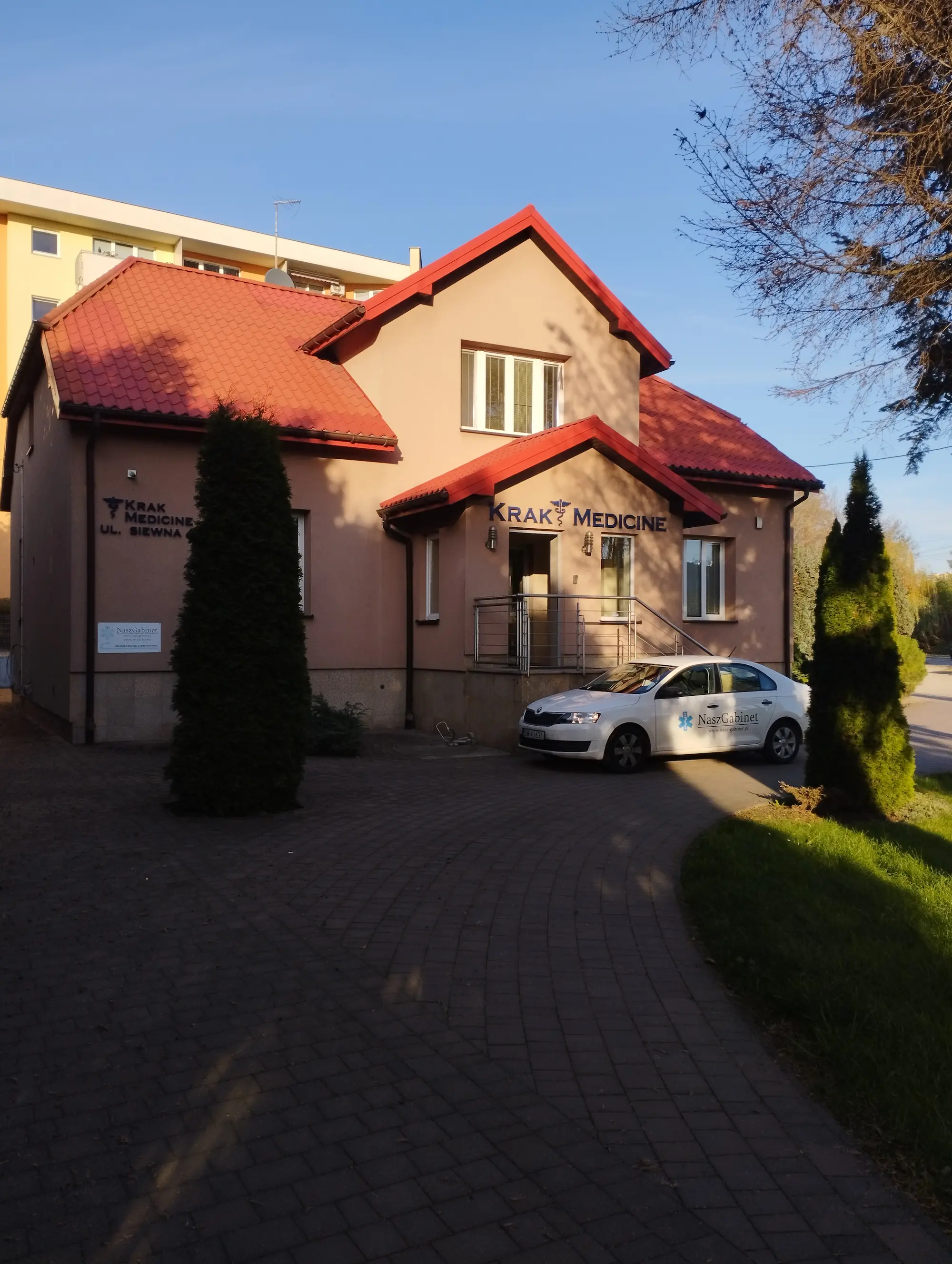
For the patient the conclusion is simple: many people in Kraków ask for help with an alcohol problem, and there are several ways out, from a free public clinic to private care. Nasz Gabinet Kraków sees patients at Siewna 4/5 in the Prądnik Biały district, and treatment starts with a consultation where we set the order of the steps.