

Addiction treatment centre in Kraków - what residential treatment is and why addiction rarely stands alone
An addiction treatment centre in Kraków is a facility where therapy is delivered on a residential basis - throughout the programme the patient lives on site, under round-the-clock care from the therapy and medical team. Instead of returning home each evening, they step away for several weeks from the surroundings in which the addiction took hold. This model is sometimes called residential treatment, and the facility itself a closed centre, though that term describes a protected, ordered stay rather than confinement against one's will. Treatment is entirely voluntary, and the patient can withdraw from it at any time.
We help people addicted to alcohol, medicines, drugs and legal highs, as well as those with behavioural addictions such as gambling. In each of these cases the stay serves the same purpose: to break an entrenched pattern and learn to live without the substance or the compulsive behaviour.
Why addiction rarely stands alone
For most people who come to the centre, the addiction is not the only problem. Underneath it there is often anxiety, low mood or chronic insomnia - sometimes these pushed someone towards alcohol or medicines, sometimes they only grew worse through use. These difficulties feed one another, so it is hard to untangle them separately, on the run, between work and home. This is where a residential stay has the edge: in one place and at one time you can work both on the addiction itself and on what keeps it going. It is often these difficulties that decide whether someone needs a centre or whether outpatient treatment is enough.
Residential versus outpatient treatment
What separates the two forms above all is how much room therapy takes up in a person's life. Outpatient treatment - for example alcohol treatment in Kraków - lets someone get help without giving up work and daily duties; the patient comes in for sessions and goes home. A stay at a centre reverses that proportion: for several weeks therapy becomes everyday life, while home, work and familiar surroundings are left outside. Neither path is better as a rule - what counts is what the particular person needs, especially when emotional difficulties appear alongside the addiction.
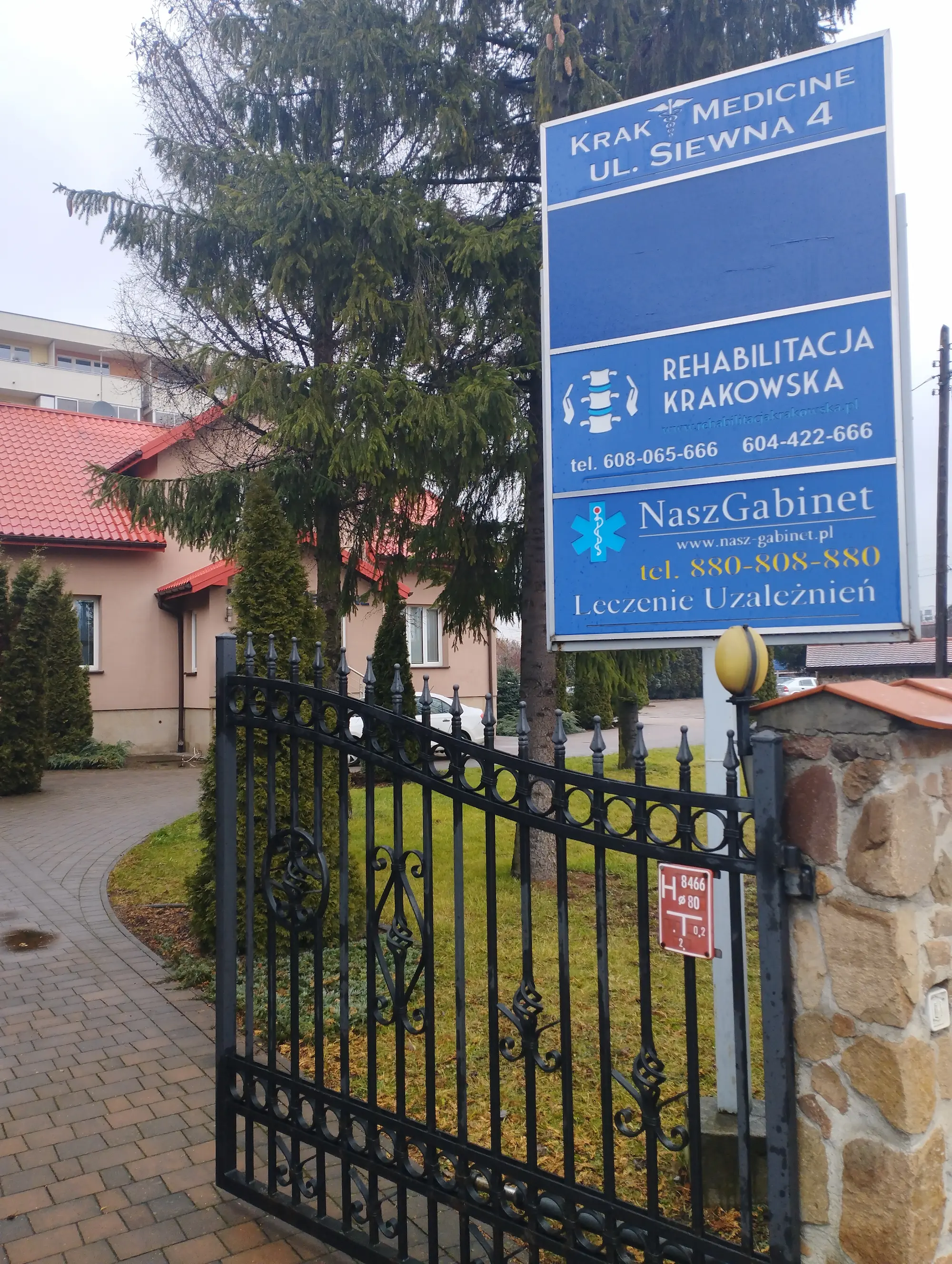
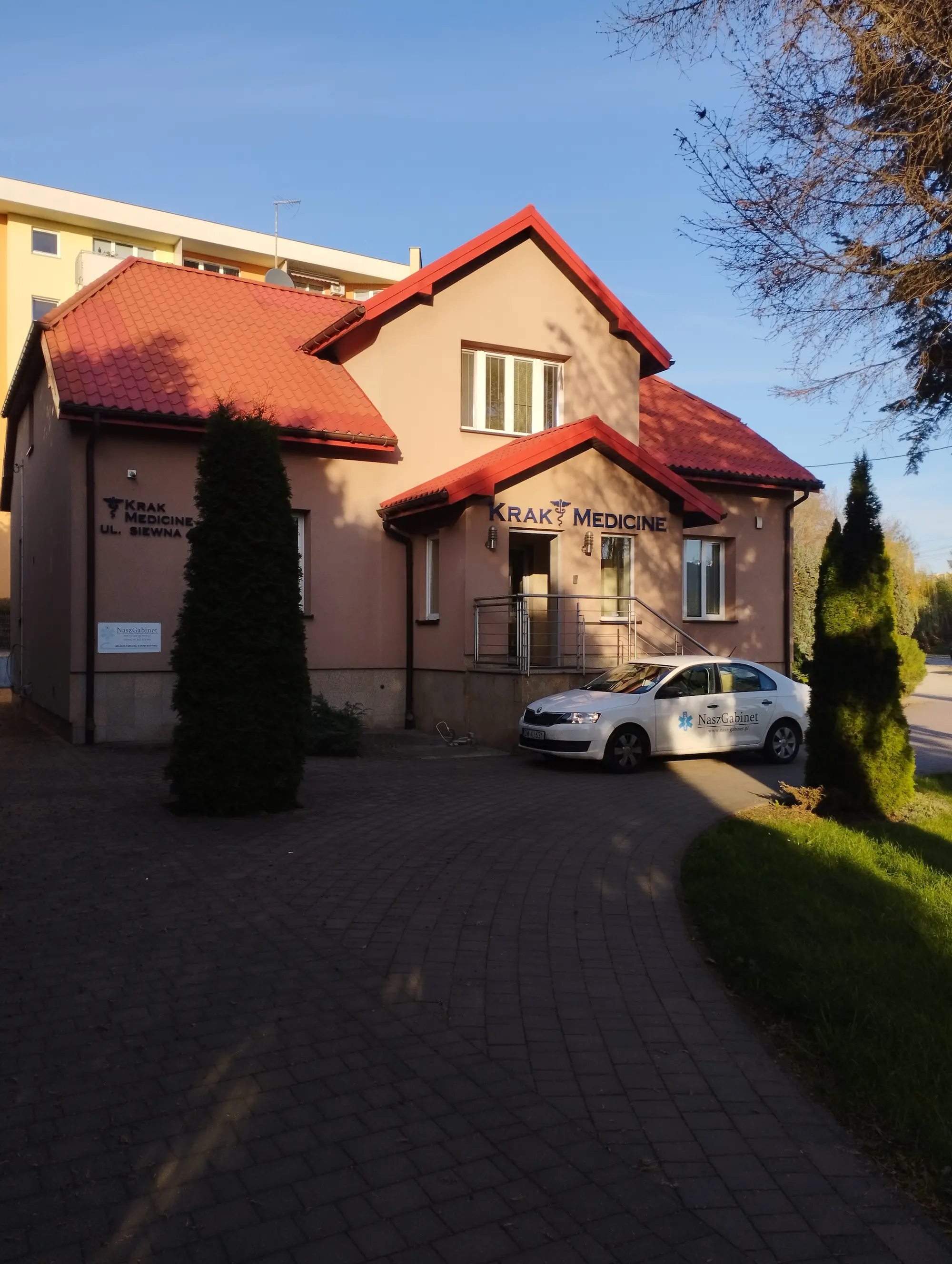
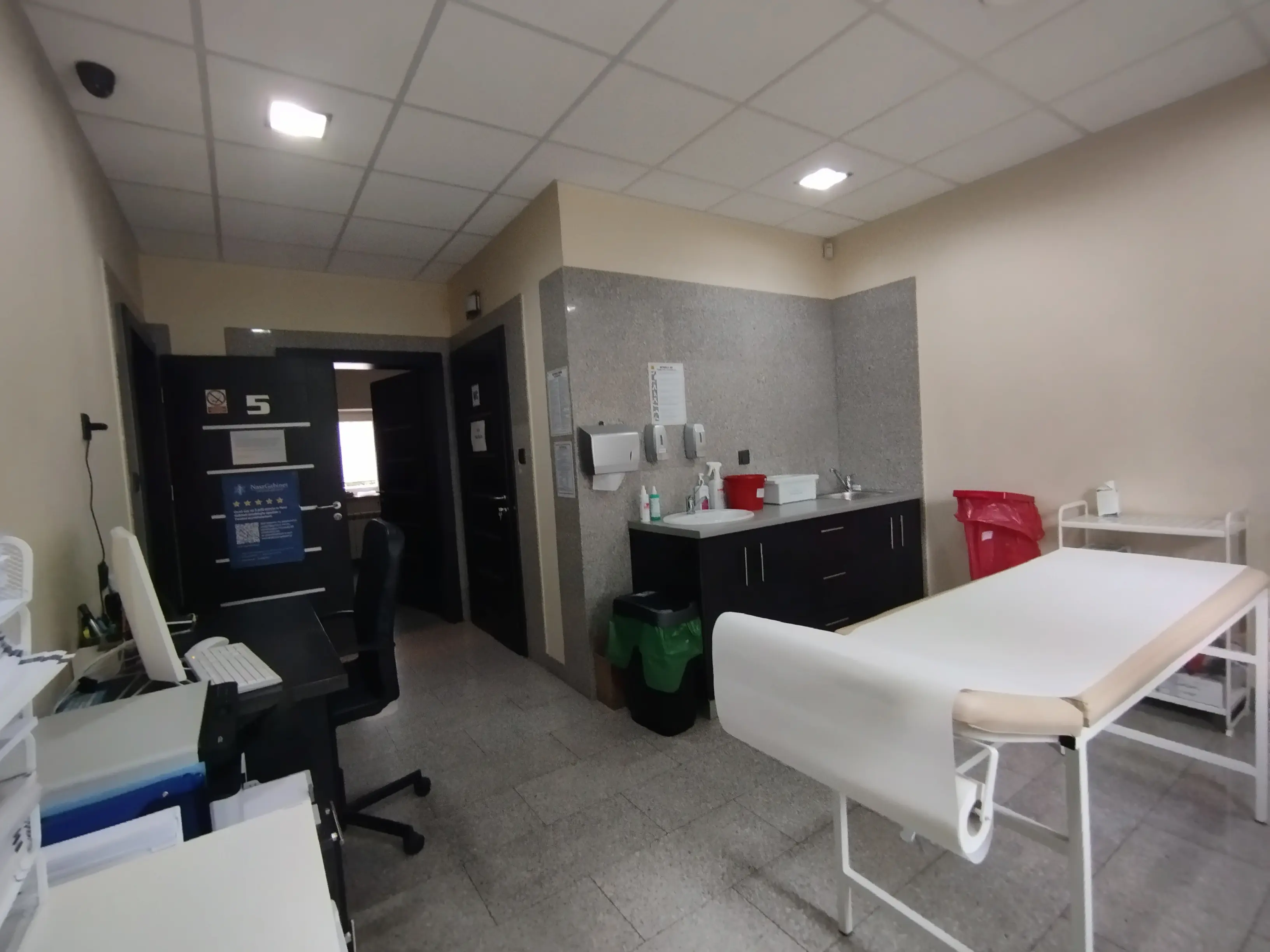
Assessment and the first conversation take place at the Nasz Gabinet clinic in Kraków at ul. Siewna 4/5 - a registered addiction treatment facility, where we agree the form, length and date of the stay. People choose treatment with us not only from Kraków itself but also from further across the Małopolska region, for whom simply leaving their usual surroundings is already part of the change.
What a stay at the centre in Kraków involves - the course of residential treatment step by step
Both the patient and their family usually want to know the same thing: what exactly will happen once the decision to stay has been made. Knowing the steps that come next takes away most of the tension, which is why we describe the course of treatment without vague generalities - from the first phone call to the day of discharge.
Before therapy begins: the phone call, assessment, detox
It all starts with a phone conversation; the call can be made by the person with the addiction or by someone close to them. The next step is assessment - we ask about the history of drinking or use, earlier attempts at treatment, current health and medication, and separately about what is happening around the addiction: sleep, mood, levels of anxiety. The information gathered this way lets the team judge whether a residential stay really fits the situation and where treatment should begin. When someone comes to us mid-binge or with withdrawal symptoms, treatment opens with alcohol detox in Kraków, supervised medical detoxification that prepares the body for therapy proper. The first day of the stay itself is deliberately gentle - given over to getting to know the centre, the rules and the lead therapist, without throwing the patient into intensive work from the doorstep.
The rhythm of the day at the centre in Kraków
A day at the centre is ordered, and it is clear in advance what follows what. We set aside up to 8 hours a day for therapy, dividing that time between individual sessions with the lead therapist and group work; the rest is taken up by meals, rest and a moment for one's own affairs. Group work can be the hardest part at first and, in time, turns out to be what heals most - when someone else tells a story strikingly like our own, it becomes easier to stop treating addiction as a personal failing and a shameful secret. Evenings are noticeably calmer and leave room to catch one's breath and get used to a sober day, the kind that will have to be lived independently after leaving. A predictable plan matters especially for people struggling, alongside the addiction, with anxiety or insomnia - the routine itself and the absence of any access to substances have a stabilising effect.
Four or eight weeks - and what treatment standards say
There are two paths to choose from. Four weeks is the concentrated option: that is usually enough to come out of a binge, establish abstinence and gain the first concrete tools - a sensible choice for someone who already has some treatment behind them and a reasonably settled situation. Eight weeks gives room for what a shorter stay cannot do: work on the deeper causes, on relapses and on what co-occurs with the addiction. Here an important detail appears - low mood or anxiety can be both a reason for reaching for a substance and a temporary effect of withdrawing from it, and telling one from the other takes several weeks of abstinence. A longer stay of around eight weeks also matches what has come to be regarded in Poland as a full residential treatment programme. Which path to take we settle together after assessment; no number of weeks resolves the matter once and for all, because addiction cannot be measured out in advance in days - a stay is a strong beginning to recovery, which then continues outside the centre.
The therapeutic programme in Kraków: integrated treatment, a lead therapist and supervision
A stay at the centre is only the frame; what truly changes the situation is the therapeutic programme that fills it. Its core is addiction therapy in Kraków delivered on two tracks in parallel - individual and group - under the care of a single therapist assigned to the patient for the whole stay. What sets our approach apart, though, is its scope: from the outset the programme covers not only the addiction but also what usually goes hand in hand with it.
Integrated treatment, not one thing after another
Addiction and the difficulties that accompany it - anxiety, low mood, insomnia - used to be treated in sequence: first the withdrawal, only then the rest. In practice such postponement often fails, because untreated anxiety or a long-lasting low mood are among the most common routes back to drinking. That is why we work in an integrated model - on the addiction and on what sustains it at the same time, within a single therapy plan. Where it is warranted, the plan also includes pharmacological support, decided on by a doctor. The integrated approach has its limit, however: the centre does not replace psychiatric treatment of acute disorders, and it deals with what accompanies addiction at a stable level of severity.
The lead therapist and one-to-one work
Each patient is looked after by one assigned lead therapist, who takes responsibility for the whole of treatment. They draw up the individual plan, work with the patient face to face and check as they go what is having an effect and what needs changing - so therapy is not diluted among random people, and responsibility for it stays clear. The one-to-one model makes it possible to fit the pace and content of the sessions to the particular person: you guide someone after a first crisis differently from a patient after another relapse, whose addiction is bound up with years of anxiety. Individual sessions are complemented by group work, in which the patient learns to talk about themselves and receives honest reactions from people with similar experiences.
Team supervision as quality control
Every month the whole team sits down to supervision - an experienced supervisor, who does not work day to day with our patients, reviews the cases being handled. For the patient this is not a formality but real quality control: the assessment of a situation no longer depends on one person's view, and the treatment plan can be corrected before therapy stalls or before a rising risk of relapse is missed. With co-occurring difficulties this second pair of eyes is especially valuable - it is easier to separate what calls for a change in the therapy itself from what a doctor should assess.
In this programme we treat relapse as a risk that can be anticipated and met with a plan, not as the cancelling-out of the work done so far; where it is possible and needed, we bring loved ones into therapy, because addiction rarely affects only one person.
Who a closed centre in Kraków is for - indications, co-occurrence and assessment
Not everyone who contacts us needs a stay at the centre - and we say so plainly. Many people recover on an outpatient basis, without interrupting work and family life. Residential treatment shows its advantage where the addiction is already deeply entrenched, where the everyday environment makes staying sober harder, and where something else comes on top of it that is hard to manage alone - co-occurring emotional difficulties.
When a residential stay has the advantage
A closed centre helps most where the addiction is already rooted and home alone is no longer enough: the drinking or use has gone on for years and is intensifying, repeated attempts to stop at home end in a return to the habit, and the immediate surroundings - the availability of alcohol, family tensions, a lack of support - supply triggers of their own. For our patients, one more thing usually joins this picture: co-occurring emotional difficulties that need to be looked at separately, because it is most often these that tip the balance towards a residential stay.
What most often accompanies addiction - and how a stay helps
Three difficulties come up in assessment conversations more often than others, and a residential stay makes it possible to address each of them alongside the addiction:
- Anxiety and tension. Alcohol or medicines can become a home-grown way of dampening anxiety; after withdrawal it returns twice as strong. A round-the-clock structure and work with a therapist make it possible to learn to lower tension without reaching for a substance.
- Low mood. Depression can be both a cause and an effect of the addiction, and telling one from the other takes several weeks of abstinence - a stay provides that time and makes it possible to choose the right support.
- Insomnia. Sleep is among the first things to break and the slowest to return; a steady daily rhythm, the absence of substances and calm evenings all work in its favour.
Where it is warranted, therapy is supplemented by pharmacological support, the introduction of which is always decided by a doctor; what it involves and when it makes sense we describe on the page about pharmacotherapy for addiction. A stay is not, however, psychiatric treatment in place of addiction therapy - the point is to look at the whole: at the addiction itself and at what drives it.
Closed versus open form with co-occurring difficulties
When intensified anxiety or mood swings appear alongside the addiction, the first weeks tend to be the most unsteady - and it is precisely then that a more protected, closed form of stay has the advantage. Limited contact with the environment in which the drinking grew, together with the constant presence of the team, reduces the number of situations in which a weaker moment ends in a return to the substance. An open centre, with more freedom to come and go, works better at a later stage, once the patient's condition has had time to stabilise. Which form to choose, and for how long, we also settle during assessment.
Assessment in Kraków - and when we advise against a stay
Admission is not a formality. During assessment we settle two things together with the patient: whether a residential stay is needed at all and, if so, whether it has to be a closed form or whether a gentler mode is enough. When we can see that a centre is not the best way forward right now, we say so plainly and point to a better-fitting path, outpatient treatment among them. The decision is the patient's - our job is to make sure they can take it with full awareness.
The limits of treatment, safety and staff - when a stay at the centre is not enough on its own
The most honest thing we can say about treatment at a centre concerns its limits - what a stay does not cover and when, on its own, it is not enough. We speak about this openly, because finding the right form of help matters more than admitting everyone who calls.
When a stay at the centre is not enough on its own
We work on the addiction and on what usually accompanies it - anxiety, low mood, insomnia. There are, however, states that call for other help first: an acute mental health crisis, suicidal thoughts, psychosis or a severe, unstable psychiatric disorder are situations in which what is needed above all is psychiatric stabilisation, and only then addiction therapy. If we see such a picture during assessment, we say so plainly and help direct the patient to where they will receive the right support. The integrated treatment we provide concerns co-occurring difficulties at a stable level of severity - it does not replace psychiatric treatment of acute states.
Round-the-clock supervision and safe conditions
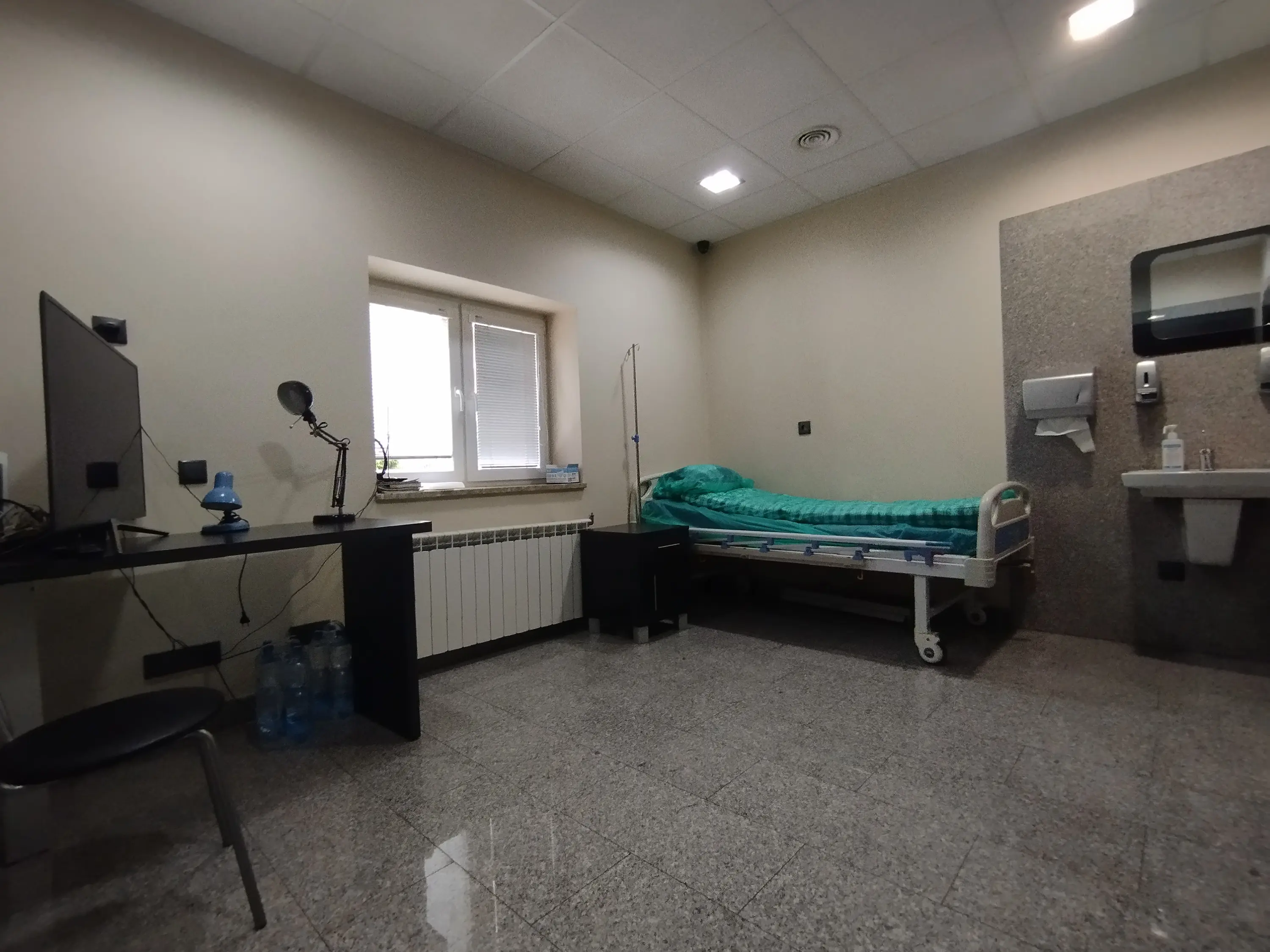
The first days usually cost the most, especially when they follow withdrawal from a substance. The patient does not go through them alone - the team watches over their condition and provides medical support where needed. A repeating daily rhythm, predictability and the presence of others in a similar situation make this most fragile beginning easier to get through.
Staff and quality control
Therapy is delivered by specialists who work with addiction day to day, supported on matters of physical health by medical consultation. Quality is watched over by monthly supervision, and the course of treatment is documented. It is worth distinguishing two things that are often confused: a stay is discreet and protected by confidentiality, but discretion does not mean an absence of medical records - we keep them like any facility, in line with data protection law, and the decision to treat always belongs to the patient.
And finally, the thing we do not promise: that therapy will work the same way for everyone. The course and the outcomes depend on the individual situation, on commitment and on many factors that no centre fully controls. A stay does not replace medical consultation on matters outside addiction, nor urgent help in a life-threatening emergency. What we can provide is therapy delivered with care, safe conditions and a team that takes the patient's recovery seriously.
Packages, prices and how to start treatment at the centre in Kraków
You should know the price before you call - which is why we give it directly, instead of leaving you to ask for it over the phone. There are two packages to choose from, differing chiefly in the length of the stay and the depth of the therapeutic work.
- Intensive Start - 4 weeks - 13 000 PLN. A shorter, tightly focused path: individual and group therapy, a constant lead therapist and round-the-clock care. It is most often chosen by people who already have some treatment behind them and need above all to come out of a binge and establish abstinence.
- Full Process of Transformation - 8 weeks - 25 000 PLN. A longer stay designed with co-occurrence in mind: when anxiety, low mood or insomnia accompany the addiction, or when a string of relapses trails behind the patient. These eight weeks give time to tell one from the other, reach the causes and consolidate the change before returning home.
The price includes the stay, accommodation, meals and the whole programme described above. We decide the length together after assessment, guided by the patient's situation rather than the other way round - without stretching it out for good measure and without cutting it short where time is genuinely needed.
Treatment is private, so it requires no referral and no waiting in a queue - we set the admission date as soon as possible after assessment. That can matter, because a person's readiness for treatment can be short-lived, and it is a pity to lose it to waiting.
After leaving the centre - how to hold on to the change
What happens after discharge decides how lasting the results will be, which is why the final days of the stay go towards preparing the return to ordinary life. We agree something concrete with the patient: where to continue therapy, how to protect abstinence and how to recognise the early signs of relapse. If anxiety or low mood accompanied the addiction, we make sure their treatment does not break off when the stay ends. For many people the next step is alcohol treatment in Kraków on an outpatient basis - now without living at the centre.
How to arrange assessment in Kraków
For first contact a phone call to 880 808 880 is all it takes, and you do not need to have already decided on treatment. First we listen, then we answer questions, get a rough picture of the situation and propose a date for the assessment. The person with the addiction can get in touch themselves, or those close to them who are looking for help on their behalf - and everything said in that conversation stays between us.