

What is drug addiction treatment in Kraków?
Drug addiction treatment is planned help spread over months, meant to bring the addicted person to lasting abstinence and back to ordinary life: work, home, relationships with those close to them. It is not about stopping the drug alone, but about changing the situation that led to using in the first place, which is why we work with the whole patient rather than with the addiction on its own.
The most common misunderstanding is confusing treatment with detox. Detox, the detoxification of the body, interrupts the drug's action and is usually the first step, but it does not change what was pushing the patient towards the substance. That is why the actual treatment only begins after detoxification. The course of withdrawal itself and the symptoms of the first days we describe separately, on the page about drug detox in Kraków.
We build the plan individually, after a consultation and an assessment of health, and we run it entirely privately, without a contract with the National Health Fund.
Why relapse is not a matter of character
When someone returns to using after months of sobriety, the easiest thing is to say they lacked character. The truth is different. Relapse has its explanation in how the brain works, not in how strong someone's will is. Addiction is a brain disorder, treated in medicine much like diabetes or high blood pressure, so a relapse is closer to a swing in blood sugar than to a moral failing.
The brain rewards us with dopamine for things that matter for survival, for example closeness to another person or finishing a difficult task. A drug switches on the same reward mechanism, only with a force that no natural situation provides. After a while the brain begins to treat the substance as more important than relationships with people or everyday duties, and this is written in deeply, not only in the mind but also in the body's habits.
Where the force of relapse comes from
With regular use the brain adjusts to the substance and quietens its own reward receptors. Ordinary things stop being enjoyable, and the areas responsible for control and planning grow weaker while the drive itself grows stronger. On top of this comes the memory of associations: the old surroundings in which someone used, or an argument that once ended in reaching for the substance, can trigger craving on their own, without any conscious decision.
This is exactly why returning to an old place or an ordinary argument with a close person can set off a relapse, despite sincere resolutions and months of sobriety. It does not mean that someone did not try hard enough. It means the brain reacted exactly as it was taught to react.
A relapse is therefore not a verdict or proof of failure. It is a signal that treatment needs to be resumed and the brain given more time to rebuild and to learn new responses to old cues, just as with any other chronic disease.
Why did the previous treatment not hold?
Patients who come to us a second time rarely say the therapy was bad. They say that after a while it stopped having any support in the way their week actually looked. So we start by reconstructing the point at which the previous plan was cut short.
Where the plan breaks off most often
Most often it breaks off right after withdrawal. The patient leaves clean after a few days, feels well and decides the rest is unnecessary, even though what disappeared were the symptoms, while the reasons for reaching for the substance stayed. Second on the list is the return to the same flat, the same friends and the same number in the phone. Without changing at least some of those things, the plan rests on willpower alone.
The third cause is the hardest to notice, because it concerns a diagnosis nobody made. Untreated depression or an anxiety disorder come back faster than craving does, and they are usually what opens the relapse. Finally, therapy sometimes ends at the moment the patient feels best, which is precisely when they are more exposed than they think.
None of these reasons invalidates the previous treatment. Each of them, however, points to a specific place where the second attempt has to look different.
What to do once a relapse has happened
Relapse belongs to the course of addiction; it is not proof of failure on the part of the patient or the therapist. The practical difference between someone who returns to treatment and someone who drops out of it usually comes down to how much time passed between the first day back on the substance and the first phone call.
Contact within a few days usually means adjusting the plan: more frequent sessions, a change of format, sometimes a psychiatric consultation. Contact after several months means starting from medical stabilisation, because by then the doses and the health consequences have had time to return.
Signals that come before the relapse
The signals usually appear before anyone actually reaches for a substance: contacts the patient had been avoiding come back, sleep shifts into the night hours, sessions start being dropped because of work, small matters get hidden from those closest. At that point a single conversation is enough.
One thing calls for medical caution: after a longer break tolerance drops, so going back to the dose used before treatment is dangerous. We write about this in more detail on the page about detox.
What looks different on a second attempt?
The plan keeps the same skeleton - contact and assessment, stabilisation, psychotherapy itself, maintaining the change - but with a patient after a relapse each of these stages gets different proportions.
- The assessment covers the previous attempt. We ask what worked back then, and about the circumstances of the last few days before the return to using. That is often more useful than a history of substances alone.
- We verify the second diagnosis. If depressive or anxiety symptoms were never treated separately, a psychiatrist leads the plan together with the therapist.
- We plan a longer maintenance stage. Follow-ups do not stop the moment someone feels better, because that is not a safe moment.
- We agree on a scenario for another relapse. A specific one: who calls, on which number and at what point, rather than a general commitment that this time it will work out.
If outpatient care has already been tried once and was not enough, we discuss inpatient treatment in Kraków as a next step worth considering earlier rather than at the last moment.
What does psychotherapy do that medication will not?
Supporting pharmacotherapy takes the symptoms away and makes the hardest weeks survivable. What it does not change is what the patient does on a Thursday evening when they are tired and alone. That is the job of psychotherapy, which is why it is the backbone of the whole treatment.
Therapeutic work covers recognising the situations that precede reaching for a substance, coping with strain without one, rebuilding relationships damaged during the period of use, and a specific plan for high-risk situations. How individual and group therapy run is described separately on the page about addiction therapy in Kraków.
On a second attempt we usually suggest changing one of the conditions: a different therapist, a different session format, or adding group work if the previous course was individual only. Recreating an arrangement that already failed to hold rarely ends differently.
Once the patient is stable, some sessions can be held online over video, so that travelling does not become a reason to drop out. The first appointment and the work during the hardest weeks happen in person.
How to come back to treatment after a break in Kraków
The most common barrier to coming back has little to do with logistics. The patient assumes they first have to reach some sort of state under their own steam before it is even acceptable to get in touch. That is not the case: you come to a consultation as you are on the day, including after an episode a few hours earlier.
For the first appointment we ask for discharge summaries from the previous treatment, a list of medicines currently taken and, if there are any, recent test results. That shortens the first appointment and avoids repeating diagnoses that have already been made.
The appointment can be arranged by the patient or by a relative who books the slot - but treating an adult requires their consent, so the assessment interview takes place with them. We set a date through contact, usually within a few working days. If the picture points to addiction to prescription medicines rather than to illegal substances, we handle it as treatment for prescription drug addiction, under a different regime.
Can an adult be forced into drug addiction treatment?
They cannot, and this is the most common misunderstanding families call about. With alcohol there is a route in which a municipal committee refers the case to a district court, and the court imposes an obligation to undergo addiction treatment (Articles 24-26 of the Polish Act on Upbringing in Sobriety). For drugs, no equivalent of that route exists.
The Act on Counteracting Drug Addiction provides for treatment without consent only for a person under eighteen, ordered by a family court for a period of up to two years (Article 30). For an adult, only the criminal route remains: for some offences a prosecutor may suspend proceedings for the duration of treatment (Articles 71-72). Legal incapacitation is an institution with a very high threshold and is not a drug-related route.
What the statistics show and what they do not
Police statistics for Kraków, which families sometimes reach for in these conversations, describe how law enforcement responds rather than how many people are addicted: the district recorded 1 647 offences under the Act on Counteracting Drug Addiction in 2020 and 1 018 in 2024, that is between 206 and 126 per 100 thousand inhabitants. The year 2023, with 4 106, stands out from the whole series, because the first quarter alone accounts for 3 167 of them, which reflects the closing of a single large investigation rather than a jump in the phenomenon (GUS Bank Danych Lokalnych, the Polish statistical office's local data bank, city district of Kraków, data for 2020-2024).
Criminal proceedings can therefore be the circumstance that pushes someone towards starting treatment, but a family cannot reach for them as a tool.
What can a family in Kraków realistically do?
A family has no legal lever over an adult, but it does have influence over the conditions in which that adult lives. The most practical of these is a limit stated plainly: what those close to the person will do, and what they stop doing, for as long as there is no treatment. A limit that is set and held for several months works differently from one that disappears after a week. A separate and often underrated part is therapy for co-dependency for the relatives themselves, because change on their side usually comes earlier than any conversation with the addicted person.
The number of families in Kraków facing this problem is growing, with no sign of that direction reversing. In 2019, social services in the city granted assistance because of drug addiction to 53 families, in 2021 to 101, and in 2024 to 116. Over six years the figure more than doubled (GUS Bank Danych Lokalnych, city district of Kraków).
On a second attempt at treatment, the role of those close to the patient changes in one respect. Previously it was usually about persuading them to start. Now it is about not treating a relapse as the end, and about not putting the patient in a position where admitting to it costs more than hiding it.
Where is drug addiction treated in Kraków?
Kraków has an extensive network of addiction services, but it is not spread evenly between alcohol and drugs. According to the assessment in the municipal programme for the prevention of drug addiction, describing the situation in 2021, there were 13 addiction treatment clinics operating in the city, 4 of which handled therapy for addiction to psychoactive substances other than alcohol. On top of that, one clinic for children and adolescents and one rehabilitation ward for people with a dual diagnosis.
For a patient returning to treatment this means that the choice of facility in the public sector is narrower than the overall number of clinics suggests, and in the case of a ward for people with a co-occurring mental disorder, it comes down to a single one. The public route is the right choice for many people; the problem is usually the waiting time, because a second attempt at treatment copes badly with a break of several months spent waiting.
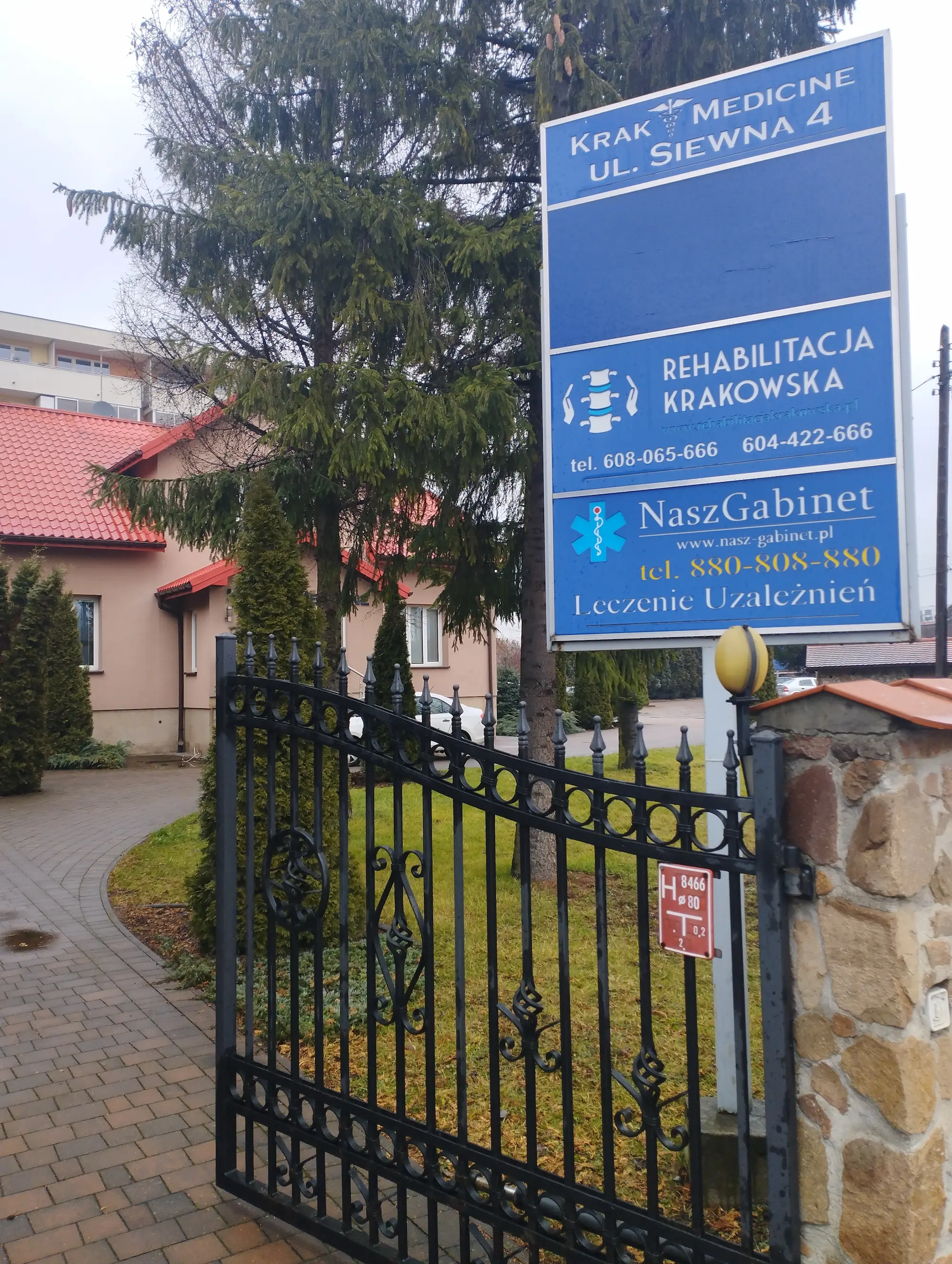
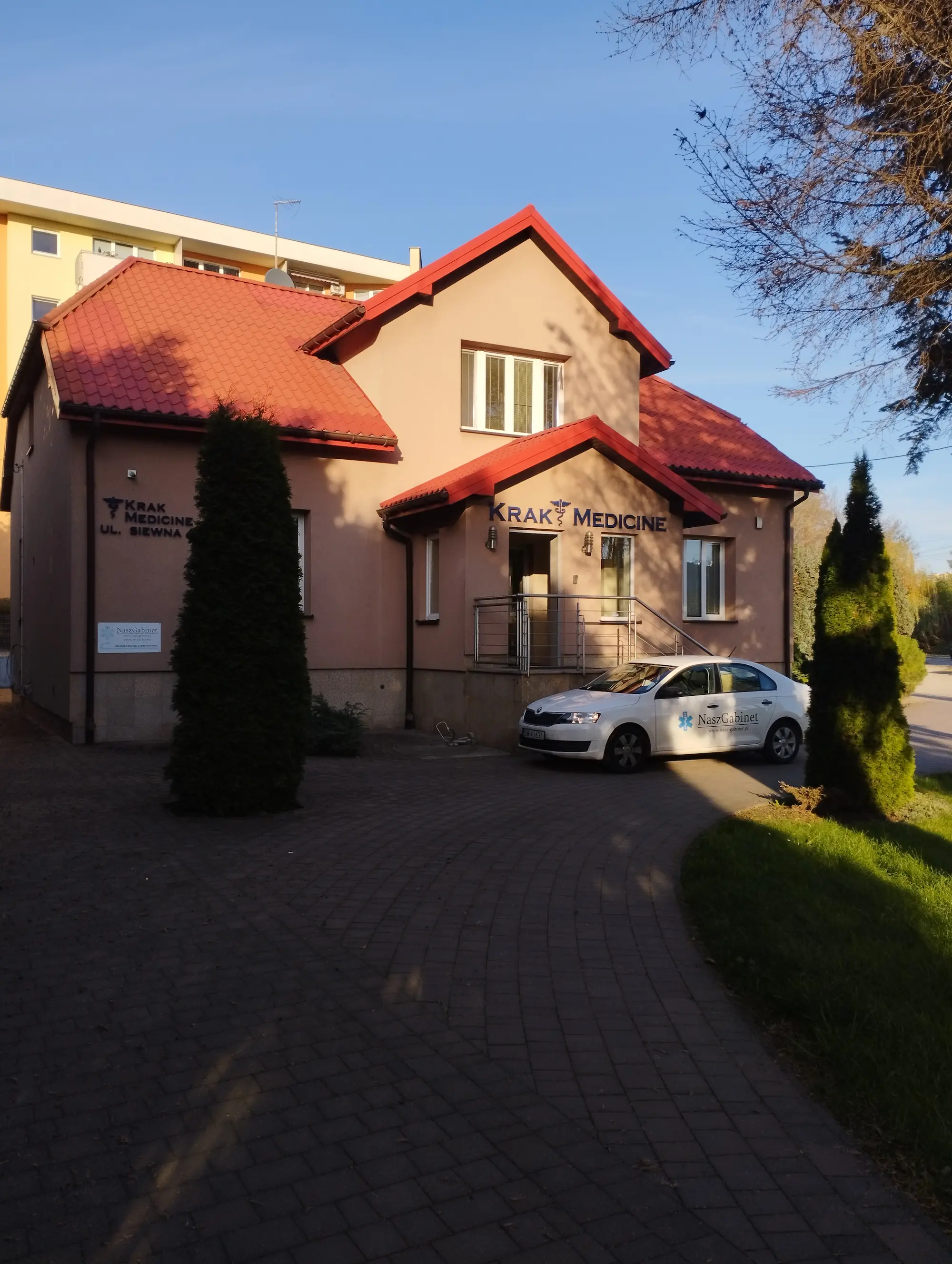
Nasz Gabinet in Kraków sees patients at Siewna 4/5 in the Prądnik Biały district. Booking a consultation and questions about our scope of care go through contact, and the rates for individual services are in the price list.