

What is drug addiction treatment in Katowice?
Drug addiction treatment is planned help spread over months, meant to bring the addicted person to lasting abstinence and back to ordinary life: work, home, relationships with those close to them. It is not about stopping the drug alone, but about changing the situation that led to use in the first place, which is why we work with the whole patient and not only with the addiction.
The most common misunderstanding is confusing treatment with detox. Detox, the clearing of the drug from the body, interrupts the drug's action and is usually the first step, but it does not change what pushed the patient to reach for the substance. That is why the actual treatment only begins after detox. The course of withdrawal itself and the symptoms of the first days are described separately, on the page about drug detox in Katowice.
We build the plan individually, after a consultation and an assessment of health, and we run it entirely privately, without a contract with the National Health Fund.
Why isn't wanting to quit drugs enough on its own?
Many people think that wanting to is enough to stop using. The resolve matters, but it is only the beginning. Between wanting and being able stands the brain, which over months or years learned something entirely different. Addiction is not a weakness of character but a disorder of how the brain works, one that medicine treats as seriously as diabetes or high blood pressure. A person can hold a firm resolution and still return to the habit, because the problem lies deeper than the decision itself.
It is worth looking at what happens in the head when a hungry person finally eats a proper meal or meets a loved one after a long time apart. The brain rewards us then with dopamine, because these are behaviours that matter for survival. A drug switches on the same mechanism with far greater force, so after a while the brain begins to treat the substance as something more important than food, sleep or closeness to another person.
When the decision alone stops being enough
With regular use the brain adjusts and quietens some of its own receptors. Ordinary pleasures stop being enjoyable, and more and more of the substance is needed to feel normal. The work of the areas responsible for planning and holding back impulses weakens, while the drive itself grows stronger. That is why a resolution that seems obvious in a calm moment suddenly loses its force at the moment of temptation.
On top of this comes the memory of associations. A particular place where someone used, or stress from work or home, can trigger the craving for the substance on their own, without any conscious thought. Returning to old surroundings often ends in relapse, regardless of how strong the earlier resolution was. This is not proof of weak will, but the result of how the brain remembers cues.
It is a condition that can be brought under control, just as with other chronic diseases. Treatment is not about adding more willpower, but about giving the brain time to rebuild and to learn new responses to old cues.
Why do patients stop drug addiction treatment in Katowice?
When treatment is spread over months, the risk shifts from the first week to the third month. By then the initial drive has worn off, the ordinary timetable is back, and it turns out that the plan requires turning up in one place regularly for longer than anyone counted on at the start. In the Katowice conurbation there is geography on top of that: provision above the level of an outpatient clinic is scarce here, so a patient who needs something more intensive usually has to travel outside the city where they live to get it.
- The journey, which is a trifle for a single visit and becomes a real reason to drop out by the fortieth.
- Shift work and rosters drawn up a month ahead, which can make a fixed appointment slot impossible to keep.
- The gap between stages of treatment, when a patient finishes one form of care and waits to be admitted to the next.
- A change of therapist partway through, after which the whole story has to be told again, which some patients simply will not repeat.
Each of these can be answered in advance, while the plan is being set, rather than once the patient has already stopped coming. That is why at the first conversation we ask about the work roster and the distance to the clinic before we agree how often to meet.
NFZ or private in Katowice, if treatment is going to last months?
The public route is free and it is real. Addiction treatment clinics admit patients under contract, and for addiction to substances other than alcohol there is no catchment area rule, so you can apply to a clinic of your choice rather than only the one nearest your registered address. What you pay is time: the date of the first appointment, and whatever happens to the patient's motivation in the weeks between the decision and the start.
The private route costs money, but in return gives you an appointment within days and continuity: the same doctor and the same therapist throughout, with no handing the patient between facilities at successive stages. Confidentiality comes with it.
Is drug addiction treatment anonymous?
Confidentiality is not the same as anonymity, and we do not call the treatment anonymous, because we keep and store medical records like any other facility, in line with the regulations. The difference lies in who has access to them, and information about the treatment does not leave the practice. Prices of consultations and of the individual parts of treatment are collected in the price list.
Where to start in Katowice once the decision has been made?
Privately you need no referral and no document other than an ID, and the first appointment is there to set the plan. The appointment can be booked by the person concerned or by a relative, but it is the patient who has to attend the consultation, because without them there is nothing to plan.
- A phone conversation in which we establish whether the situation calls for an urgent medical consultation or whether it can start with an unhurried appointment at the clinic.
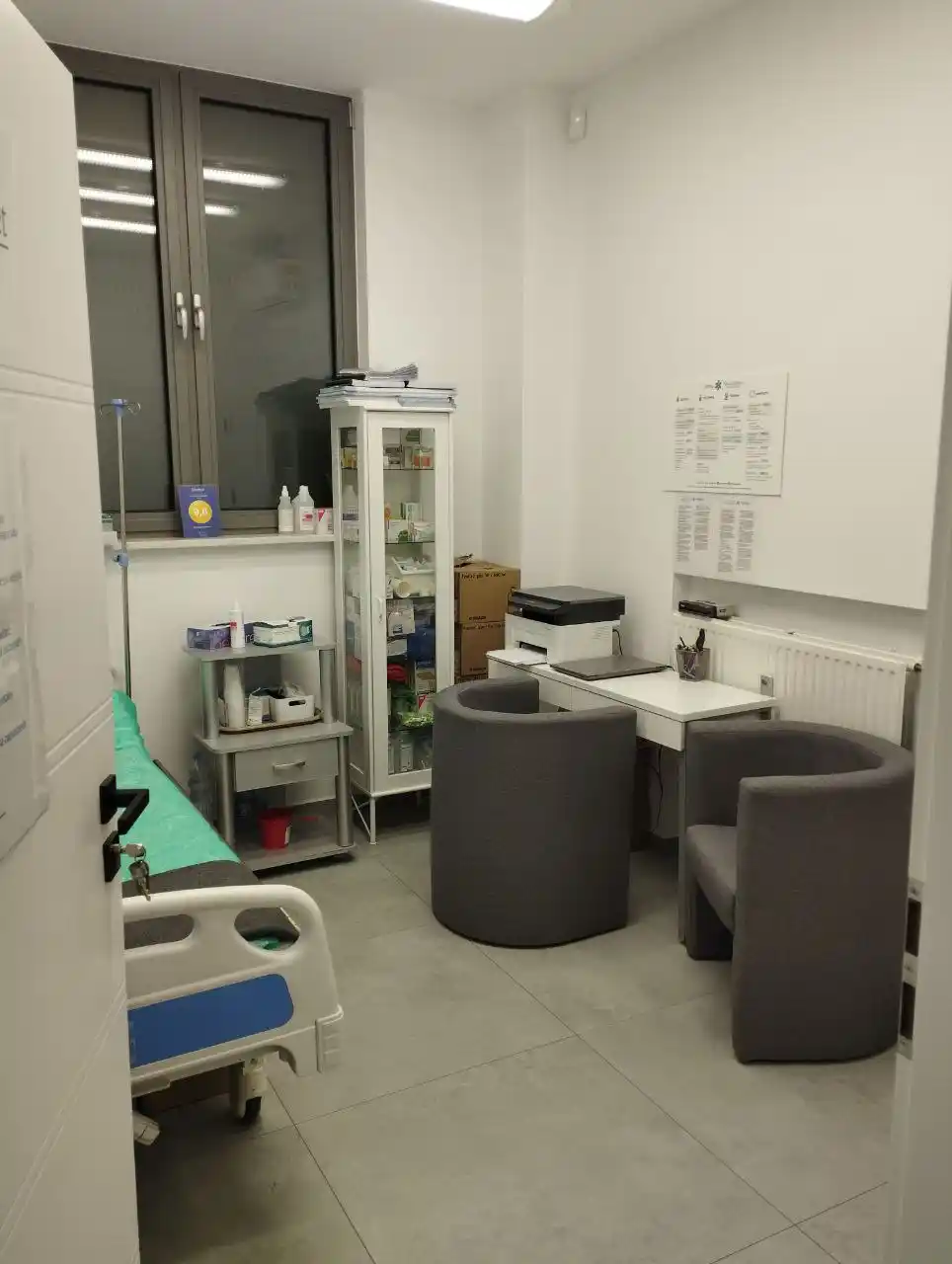
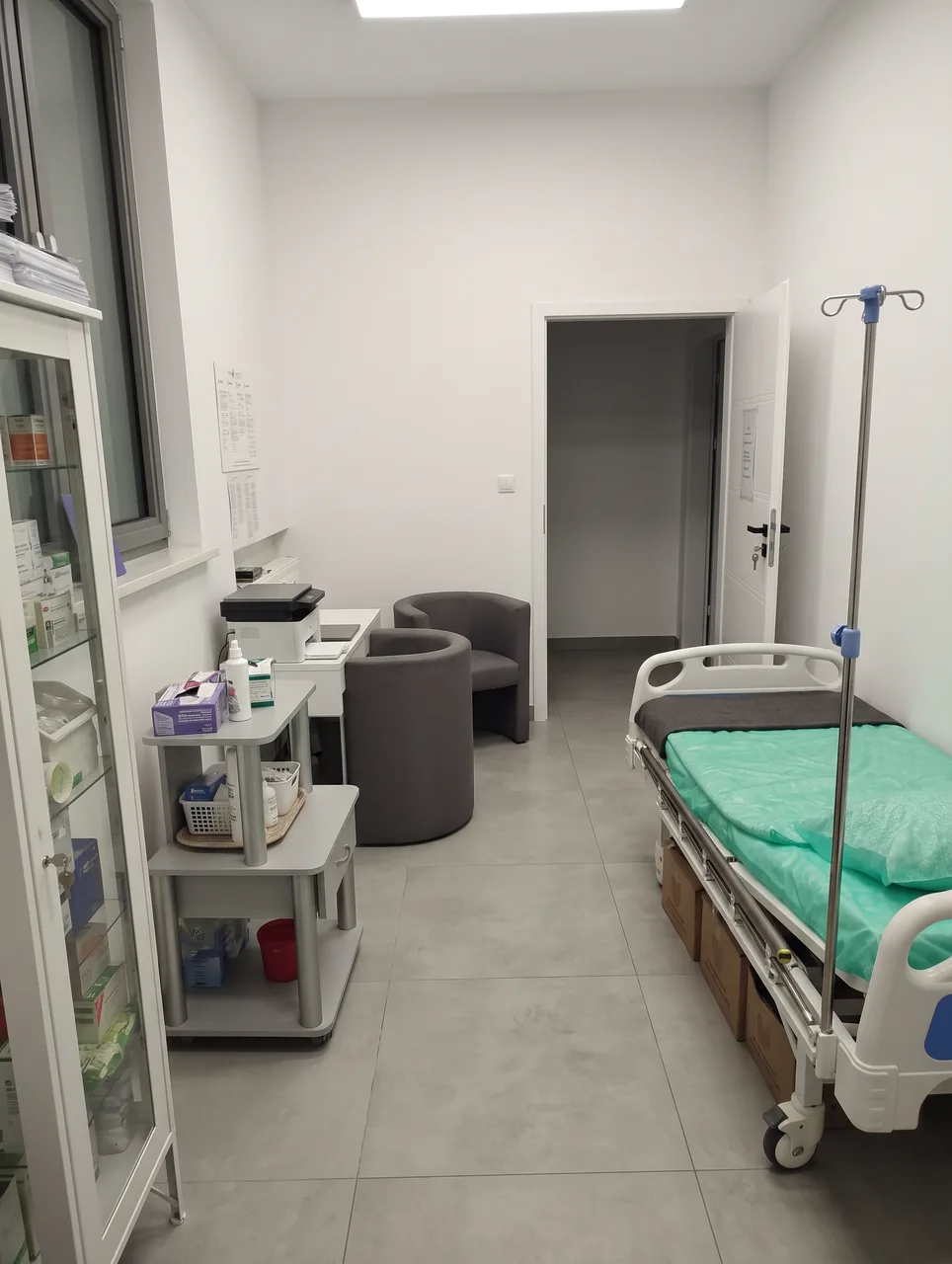
- The consultation at Józefowska 76: an interview about the substance, how long it has been used, earlier attempts at treatment and coexisting conditions, ending with a proposed plan.
- Agreeing how often to meet and setting dates for the coming weeks, taking account of the patient's work roster and the journey to the clinic.
If the interview shows that round the clock care is needed, we will say so and point you in the right direction rather than running something on an outpatient basis that will not work on an outpatient basis. What a residential stay involves and when it makes sense is explained on the page about the addiction treatment centre in Katowice. The phone number and opening hours are on the contact page.
What does a treatment plan spread over months look like in Katowice?
The plan has four stretches and they differ in pace. The first is diagnosis and stabilisation: establishing what we are dealing with, bringing under control whatever needs medical intervention, and getting the patient to a state in which a therapeutic conversation makes any sense at all. That stretch can be short, while the second one, psychotherapy proper, is the longest and it is what decides the outcome.
The third stretch is maintaining the change, the period in which the patient is already living normally and sessions thin out, serving to catch warning signs. The fourth has no clear end: contact remains available even once treatment has formally closed.
What makes treatment longer
We do not hand out a calendar in advance, because the length depends on things that only become visible along the way. What makes treatment longer: a coexisting psychiatric disorder, a return to the same environment and the same people, having nobody at home on the patient's side, and earlier interrupted attempts, after which trust in treatment itself has to be rebuilt first. Where the problem concerns prescription medicines, the plan is run differently and is described on the page about treatment of medication addiction in Katowice.
What does addiction psychotherapy do, and how often do you have to come?
Psychotherapy deals with what stopping the substance leaves untouched: recognising the situations in which reaching for it is predictable, working out a response to craving, rebuilding relationships strained during the years of use, and the plain question of what to fill the time with that was previously taken up by obtaining and using. It is concrete work, even if it sometimes leads to a conversation about childhood.
Frequency matters more here than the length of a single session, and on this point it meets what we wrote about continuity. At the start, sessions are close together, because that is when the risk is highest and every week without contact makes a visible difference. Later the rhythm thins out, but it does not disappear. This is exactly why we ask about the journey and the roster when setting the plan: weekly therapy that the patient reaches after an hour's travel each way following a shift looks fine on paper and does not survive the third month. Forms of therapeutic work, individual and group, are described on the page about addiction therapy in Katowice.
Once the patient is stable, some sessions can be held online over video, so that travelling does not become a reason to drop out. The first appointment and the work during the hardest weeks happen in person.
A relapse after months of abstinence: what happens to the plan?
Relapse belongs to the course of addiction and is not proof that the treatment was worthless or that the patient failed. We treat it as an event to be analysed: what was happening in the days before, which signals were visible earlier, and which part of the plan did not hold. The answers to those questions are only useful while they are fresh, which is why the one thing we really care about after a relapse is prompt contact.
The most common scenario is not a spectacular return to daily use, but a single instance of reaching for the substance in a situation the plan did not anticipate, followed by a week of silence. That silence does more damage than the use itself, because over that week the patient has time to conclude that everything is lost. We usually go back to the same plan, fixing whatever broke in it and bringing sessions closer together for a few weeks.
What role does the family have, given there is no legal leverage over an adult?
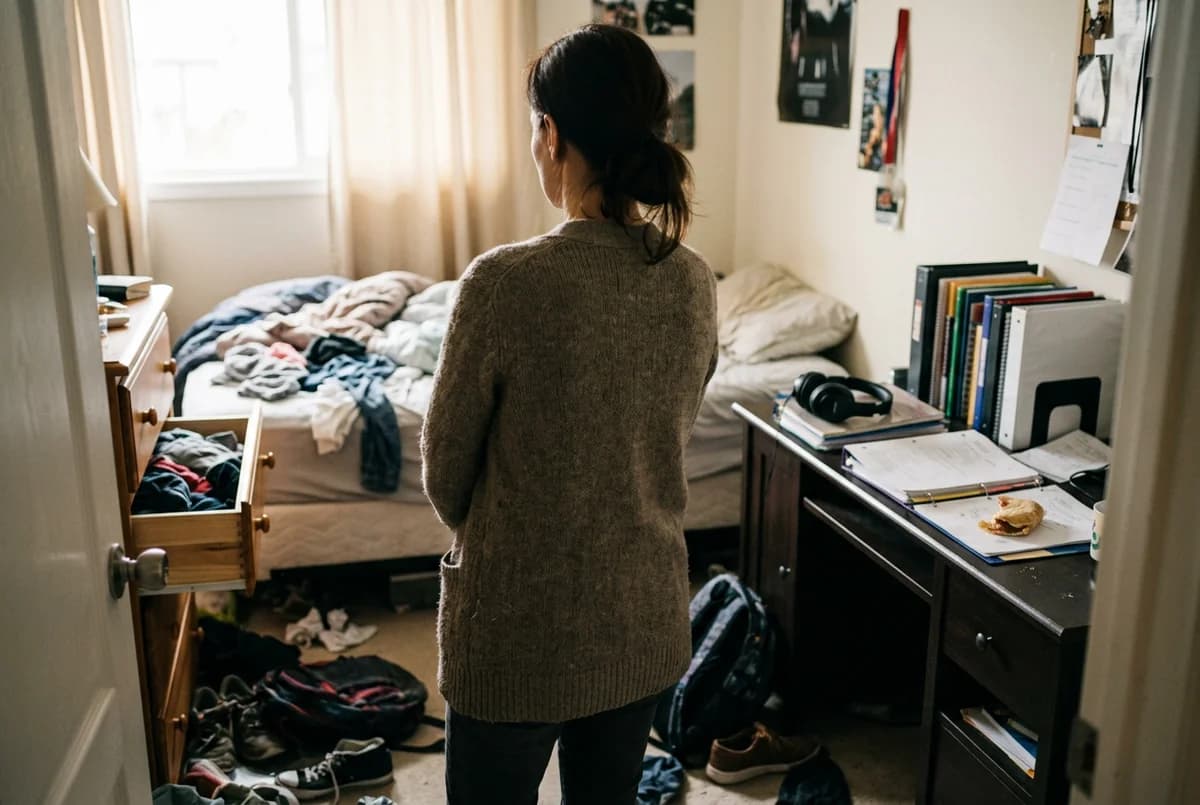
The family has no legal lever, and it is better to know that at once, before someone loses months searching for a procedure that does not exist for drugs. What it does have is real tools: consistent conditions instead of threats repeated without follow-through, refusing to fund drug use, readiness to come along to the first appointment, and therapy of its own, because living alongside a person with an addiction leaves a mark on relatives too.
Little of this shows up in the statistics. In the Katowice subregion, that is Katowice together with five neighbouring cities, 69 families received social assistance on grounds of drug addiction in 2024, 20 of them in Katowice itself. Throughout the previous decade the figure stayed between 60 and 100, with no clear direction, against roughly 630 families reported in the same year on grounds of alcohol (data from Statistics Poland, Local Data Bank).
These numbers say how many families came forward and qualified for social assistance, not how many families have a problem. A family coping on its own or seeking help privately does not appear in that register at all. There is no point waiting until the situation is grave enough to enter the statistics. A conversation about what can be done makes sense much earlier.
What does the map of addiction treatment look like in the Katowice conurbation?
Katowice sits in the middle of an area that Statistics Poland treats as a single subregion: six neighbouring cities with county rights, grown together in built-up terms and linked by daily commuting. The administrative boundary therefore describes neither where the patient lives nor where they can be treated.
In July 2026 the National Health Fund (NFZ) had 16 contracted addiction treatment units in this subregion. Fourteen of them deal with alcohol. For people addicted to substances other than alcohol there are two outpatient clinics, one in Katowice and one in a neighbouring city. Of the forms more intensive than an outpatient clinic, that is day units, hospital wards and rehabilitation centres for people addicted to drugs, there is not a single one in the whole subregion.
Across the province such provision does exist: Silesia has three day units and six wards or rehabilitation centres. All of them lie outside the conurbation, in other cities of the province (data from the National Health Fund treatment waiting time search, as at July 2026; private facilities and non-governmental organisations also operate outside the contract and are not covered by that list).
What this means for a patient from Katowice
For a patient from Katowice this means a concrete choice. If outpatient care is enough, treatment can be run locally. If a more intensive form is needed, you have to reckon with travel or a stay outside the city, and in that case you should plan straight away for what happens afterwards, because that is the moment that most often tears continuity of care apart. Our role sits in the outpatient part: a medical consultation and therapy in the same place, at Józefowska 76, plus contact between appointments when craving appears. When round the clock care is needed, we say so openly and help plan the return to outpatient treatment afterwards.