

What medicine calls alcohol addiction
Alcohol addiction has its own number in the international classification of diseases. In the current ICD-11 it is 6C40.2, in the older ICD-10 it is F10.2, described as dependence syndrome. The diagnosis is made by a doctor on the basis of symptoms, not on the basis of how much alcohol someone drinks or what other people think about it.
The causes of this disease lie in changes in the way the brain works. Regular drinking changes the way the brain works, above all the reward system and the stress response. This is where alcohol craving comes from, meaning the compulsion to drink that appears regardless of any resolution, along with a weakening control over how much and when a person drinks.
A diagnosis is made up of several symptoms occurring together: a strong need to drink, loss of control over how much alcohol is drunk, tolerance, that is the need for ever larger doses for the same effect, drinking despite harm to health, family and work, and withdrawal symptoms after a break in drinking. The more of them occur together, the deeper the addiction.
The disease is chronic and relapsing. That is why a resolution alone rarely suffices and treatment is counted in months. A return to drinking happens often enough during treatment that we agree with the patient in advance what to do if it comes, instead of treating such an episode as the end of treatment.
The AUDIT test and the line between harmful drinking and addiction
Medicine separates three situations that everyday language merges into one. Risky drinking has not yet caused harm, but it raises the probability of harm. Harmful drinking has its own entry in the classification, F10.1, and means that damage to health or family life is already there while control over drinking has not yet been lost. In addiction, that is F10.2, alcohol craving, rising tolerance and symptoms after stopping alcohol appear on top of that.
The AUDIT screening test developed by the World Health Organization serves for an initial assessment of which of these three situations applies. The full version has ten questions about the frequency of drinking, the amount of alcohol drunk, episodes of intoxication and the harm done, and the shortened AUDIT-C version has only three questions. A positive result is not a diagnosis, only a signal to come for a consultation and establish whether this is risky drinking, harmful drinking or addiction.
There is no dose of alcohol that is safe for health, and the World Health Organization has said so plainly since 2023. The line that matters in practice does not run at a particular number of glasses. It is set by how much room alcohol takes up in the patient's daily decisions and by the harm to health, family life or work that it has already done.
What alcoholism treatment in Katowice consists of
Treatment starts with a medical consultation at which the doctor settles two questions: whether this is addiction or harmful drinking, and whether the patient can move straight into therapy or first needs medical stabilisation after a drinking bout.
A plan is then built from several elements. Alcohol detox, if it is needed. Oral pharmacotherapy or the Esperal implant as protection for the period in which alcohol craving is strongest. Addiction psychotherapy as the actual work on the causes of drinking. Finally maintenance care, which makes the effect of treatment last longer.
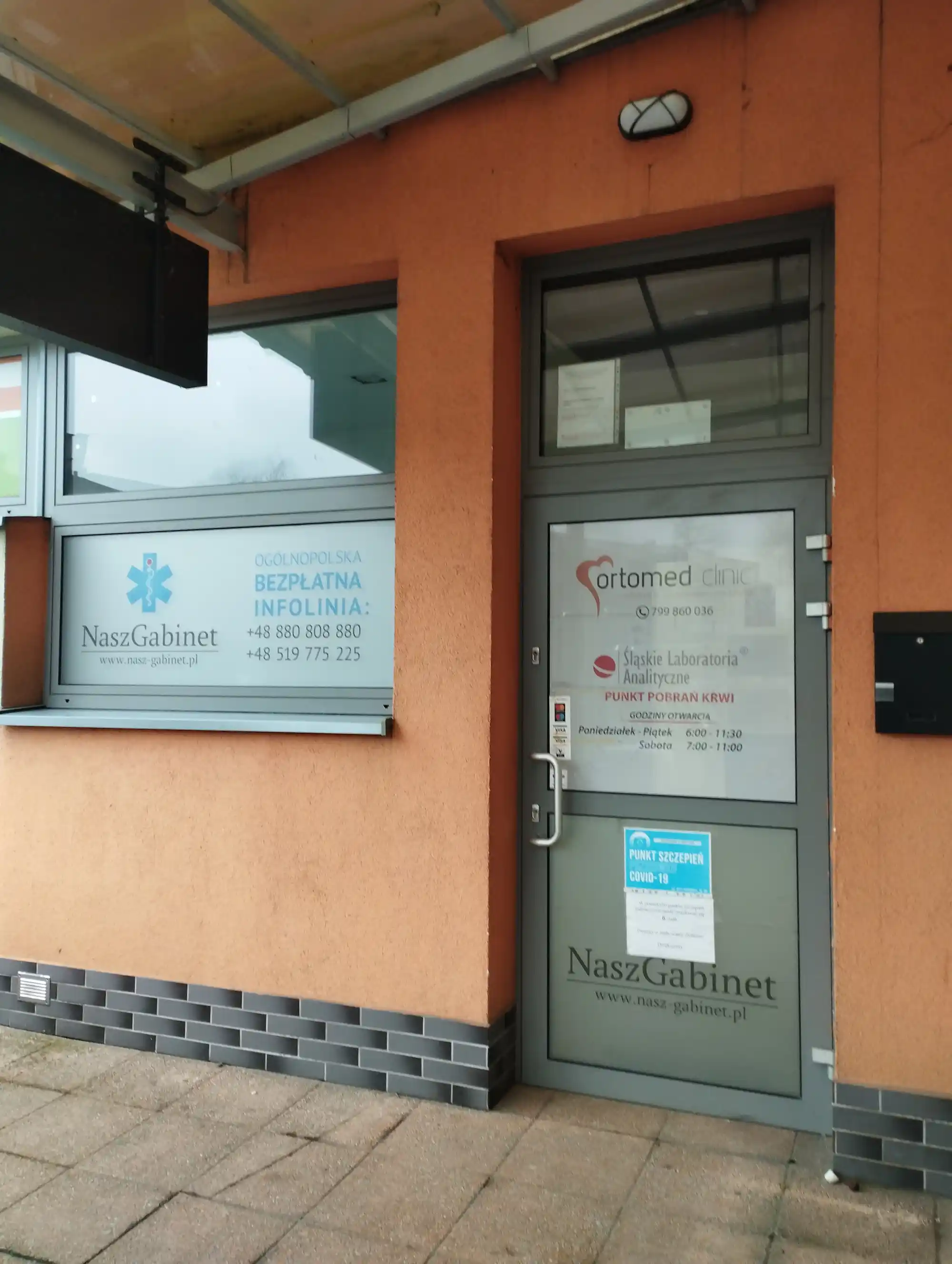
At Nasz Gabinet Katowice we run this privately, in plans written for one, three, six or twelve months. A shorter plan makes sense with an early diagnosis and a stable home situation. With years of drinking and unsuccessful earlier attempts at treatment the patient has to reckon with more than a year, because that is how long it takes for abstinence to become firmly established.
It is also worth saying what treatment is not. It is not a one-off procedure and it is not a way of removing alcohol from the body. A drip or an implant without further therapy ends in a return to drinking at the moment the protection stops working.
Which form of treatment suits the patient in Katowice
The choice between outpatient, residential and online treatment is not a matter of convenience. It is settled by how safely the patient can stop drinking, by the depth of the addiction and by the home situation the patient returns to after the appointment.
Whom we treat on an outpatient basis in Katowice
We treat patients on an outpatient basis when their life situation is stable, their home is free of alcohol and relatives are ready to help, and there are no severe physical complications. Appointments at the practice on Józefowska are then arranged around work, without sick leave and without leaving the city. This is how we treat most of the people who come to us on their own.
What speaks in favour of round the clock care
Residential care is considered in advanced addiction, with serious coexisting illnesses, after several unsuccessful attempts at outpatient treatment, and when drinking at home is an everyday matter and abstinence would not survive there even a week. Among the forms of treatment that are still effective in a given case, we choose the one that interferes least with the patient's life. The conditions of a stay are described separately under residential treatment in Katowice.
What online treatment is not suitable for
Remotely we run the continuation of therapy, pharmacotherapy checks and consultations for people from outside the city. Remotely we do not manage a patient with an acute withdrawal syndrome, and we do not carry out the first assessment for treatment when a patient has been drinking daily for weeks. An examination and supervision on site are needed then.
What medication is for in the treatment of alcohol addiction
Medication does not treat addiction on its own. Its task is to weaken alcohol craving enough for psychotherapy to have a chance of starting, because in the first weeks of abstinence the compulsion to drink is stronger than any resolution.
The Esperal implant contains disulfiram. The substance stops the breakdown of alcohol at the acetaldehyde stage, so after drinking a reaction follows with flushing, palpitations, a drop in blood pressure and vomiting. This mechanism discourages drinking, but it does not reduce alcohol craving and it does not treat the addiction by itself. The procedure requires prior abstinence and assessment by a doctor, because the reaction after drinking alcohol can be dangerous to the patient's health, especially in heart disease. The course and the contraindications are described under the Esperal implant in Katowice.
Oral medicines work differently and each of them is used in a different situation. With naltrexone a drink no longer gives the patient what they were reaching for, and the urge to have another one comes less often. Acamprosate calms the nervous system, which stays unsettled after years of drinking, and makes it easier to go without alcohol. The patient takes nalmefene before a situation in which they usually reach for alcohol, so as to drink less. Disulfiram in tablet form triggers the same reaction after alcohol as the implant.
The choice of medicine belongs to the doctor and depends on the condition of the liver, coexisting illnesses, the other medicines the patient takes and the goal the patient sets for the coming months. None of these medicines replaces therapy.
When treatment in Katowice has to start with alcohol detox
Detox is needed when a patient breaks off a long drinking bout and withdrawal symptoms are expected. Its purpose is to carry the patient safely through the withdrawal syndrome, which means controlling tremor, sweating, insomnia, rising blood pressure and anxiety, and preventing complications. It is not a cleansing of the body from toxins, because the body removes alcohol by itself, and that is why we do not use such a term.
Stopping alcohol can be life-threatening. Withdrawal seizures and alcoholic delirium are emergencies, and the risk rises in people who have been drinking daily for a long time and in those who have already been through such an episode. That is why after a heavy drinking bout we carry out detox under medical supervision, not by home remedies. The course and the options are described under alcohol detox in Katowice.
Detox prepares the patient for the treatment of addiction, but it does not replace it. It does not reduce alcohol craving and it does not change drinking habits. If therapy does not follow it, drinking usually returns within a few weeks.
A public addiction clinic and private treatment in Katowice
Treatment for alcohol dependence under the NFZ is free, so the difference only begins where the basket of guaranteed benefits ends. It does not include the Esperal implant, which is paid for in every facility in Poland.
The second difference is the date and the place. 169 people are waiting for round-the-clock addiction therapy wards in the Silesian Voivodeship; in Katowice the queue is short, but in Rybnik the average wait is over three months, and where a patient ends up is decided by a free place rather than by their timetable (National Health Fund data on treatment waiting times, 31 July 2026).
Privately you pay above all for time and continuity: an appointment within a few days, the same team from the consultation through to follow-up care, and hours arranged around work. What you do not pay for is anonymity, and no facility can promise it, because medical records are kept and stored as the regulations require. Confidentiality is what the patient is entitled to: their data does not reach their family or their employer without consent.
The first glass after a break and what comes next
A return to drinking happens often in the treatment of addiction and it does not invalidate the work done so far. Whether it ends with a single evening or the old way of drinking comes back is decided by how quickly the patient contacts the therapist.
The practical rule is simple. After an episode of drinking we arrange an appointment at the earliest possible date, instead of waiting for the next scheduled one or for the moment the patient feels ready. The doctor then checks whether short medical stabilisation is needed, and the therapist establishes with the patient what preceded the drinking.
A return to drinking is usually preceded by a specific chain of events: a medicine stopped, therapy sessions broken off, a conflict at home or a return to company where people always drink. We write each of these situations into the treatment plan together with the response the patient has agreed on in advance. The hardest thing to get past is shame, because it is shame that makes the patient put off calling the clinic.
Relapse prevention in the first months after treatment
The risk of a return to drinking is highest in the first months after stopping alcohol, and it is those months that decide whether abstinence will hold. That is why we do not end the intensive stage of treatment from one day to the next, but move gradually to less frequent follow-up visits.
What matters most at this stage is relapse prevention, that is practising concrete responses to situations that carry a risk of drinking, rather than the resolution not to drink. The patient names the situations that trigger drinking in their case and has a rehearsed answer to them. This concerns predictable events such as a wedding or a business trip as much as the inner states in which they used to reach for alcohol.
The second element is extended pharmacotherapy. The patient takes naltrexone or acamprosate for as long as the doctor considers it necessary, and not only until the first packet runs out. The third element is group support, that is meetings of self-help communities or a therapy group, which give contact with people in the same situation between appointments.
Relatives of a drinking person and their own treatment in Katowice
The family of an addicted person bears the consequences of that person's drinking and needs help of its own. Co-dependency has its own entry in treatment statistics, and the figures show how many people it concerns. In the Silesian Voivodeship in 2024, 2,560 people received outpatient treatment for that reason, of whom 2,163 were women. Therapy for relatives does not require the drinking person to be in treatment as well.
Work with the family usually concerns three matters: telling help apart from taking over the consequences of drinking, setting boundaries that can be held, and regaining a life of one's own after years of being subordinated to someone else's drinking. A separate subject is adult children of alcoholics, in whom the effects are visible many years after the drinking at home came to an end.
With alcohol the family has one legal option that is not available with other addictions. It can file a notification with the municipal commission for solving alcohol related problems, which conducts proceedings and submits a motion to the court for an obligation to undergo treatment. The path is long and offers no guarantee of the outcome, so it is rarely the first step, but it exists.
Addiction and mental disorders treated in parallel
In some patients depression, anxiety disorders or the consequences of trauma occur alongside addiction. Alcohol then becomes a way of damping down the symptoms, and the symptoms intensify the drinking, so treating only one of these problems rarely gives a lasting result.
Deciding what came first is usually not possible at the first appointment. Some depressive and anxiety symptoms subside after a few weeks of abstinence, others remain and require psychiatric treatment. That is why the assessment is repeated once abstinence is stable, instead of diagnosing depression in the middle of a drinking bout.
The best results come from treating both problems in parallel, by one team. The psychiatrist runs the pharmacotherapy and assesses mental state, the addiction therapist works on the drinking, and both specialists exchange information about how the treatment is going. Sending a patient first for psychiatric treatment and only then for addiction treatment ends with the patient not reaching the second stage.
Who enters addiction treatment in Katowice
The data from outpatient psychiatric care clinics in Katowice says a good deal about the course of this disease. In 2024 clinics in Katowice treated 1,303 people diagnosed with disorders caused by alcohol use. One hundred of them came for the first time in their lives.
Across the whole Silesian Voivodeship the proportion of patients coming for the first time looks the same. There were 21,293 people in treatment, and 1,632 came for the first time, which is fewer than eight in a hundred. The rest are patients who had been in treatment before. The number of people treated has held at a similar level for five years, while first-time arrivals are becoming fewer, because in 2021 3,784 people came for the first time and three years later fewer than half that many.
The data also shows who is being treated. In 2024 among those treated in the voivodeship there were 15,474 men and 5,819 women, and 17,861 people were aged between 30 and 64. Addiction emerges from these figures as a disease of working age, diagnosed most often after years of drinking rather than at the start of the problem.
The figures call for two reservations. The statistics describe people in treatment and not people who are ill, so they say how many reached the system rather than how many need it. The data is collected by the location of the facility and not by the patient's place of residence, so the number of patients at clinics in Katowice also covers people travelling in from neighbouring cities. For the patient one practical conclusion follows from these figures. Few people come for treatment and they usually come late, while most patients arrive at a clinic for another time, which in a chronic disease is normal and is not proof that treatment does not work. If drinking starts to cost health or work, that is a reason to come forward earlier than most of the people in these statistics did. We provide such treatment as part of addiction therapy in Katowice.