

What the anti-alcohol injection is and how naltrexone works
People who reach for the anti-alcohol injection usually fall into two groups: those who want to stop drinking, and their loved ones looking for real help for someone. To both we explain at the outset that two different medicines circulate online under the same label. The injection we are describing is extended-release naltrexone, known under the name Vivitrol, and not disulfiram, which is implanted under the skin. This difference shapes the course of treatment.
How naltrexone quiets alcohol craving
Naltrexone is an opioid receptor antagonist, so it occupies the sites in the brain through which alcohol releases pleasure and relief. When drinking stops bringing its former reward, the alcohol craving, that persistent thought of a glass which pushes towards the next one, weakens over time. The medicine sets off no violent reaction after drinking and it is not addictive. The implant works in exactly the opposite way, deterring from alcohol with the threat of poisoning.
Why a single naltrexone dose lasts a month
The injection working for about a month comes from the make-up of the medicine: here naltrexone is sealed in tiny microspheres and releases from them slowly, day after day. For a family watching a loved one battle temptation every day, this has a practical meaning. There is no tablet to supervise and no single hard decision to make each morning. The monthly rhythm lifts that weight from the shoulders of the patient and the household.
The naltrexone injection as part of treatment, not a single jab
Naltrexone is not a standalone course and no product information promises that. It works best when it is one of the elements of a wider plan: alongside therapy, the support of loved ones and work on the causes of drinking. That is why a conversation with a family asking about an injection for a husband, a wife or an adult child starts with an honest reservation. A single administration does not close the subject of addiction, it only gives the patient an advantage that has to be used in therapy.
Medical assessment before the anti-alcohol injection in Katowice
The treatment path begins not with the needle but with assessment, and often the first call is made by someone in the family. That is fine: a relative can book the visit and come to it together with the person who is addicted. Naltrexone, however, has real contraindications, so without an interview we will not give it to anyone, however pressing the timing.
What the doctor asks before giving naltrexone
The doctor gathers the drinking history, earlier attempts at treatment, chronic illnesses and the full list of medicines being taken. One question matters most: whether the patient takes any opioids at all. Naltrexone and opioids rule each other out, and this also covers painkillers and cough medicines that contain opioids, as well as substitution treatment. Mood is assessed separately, because an alcohol problem often goes hand in hand with depression that the family does not always know about.
Why the patient signs informed consent to naltrexone
Before the decision we go over the alternatives, the limits of the medicine and the most serious risk, namely the loss of opioid tolerance. This is also the moment for the family's questions, including the difficult ones. The informed consent, however, is signed by the patient themselves, because treatment cannot be forced on anyone, and naltrexone works only when the patient wants to use it.
When the injection has to be postponed
If the addicted person is in the middle of a drinking binge or in active withdrawal, they first have to be safely detoxed. We then start with alcohol detox in Katowice, and we return to assessment for the injection once the body has been cleared.
The day of the injection, the four-week rhythm and how long treatment lasts
The procedure itself takes only a moment, but the most common question is what the day of administration looks like and how long the treatment has to last. I will describe each in turn.
How the naltrexone injection is given
The visit begins with a short check, not with the needle. The doctor makes sure the patient has not reached for opioids recently, has no withdrawal symptoms or jaundice, and is not planning a procedure that would call for opioid painkillers. In parallel the preparation is made ready, because once taken out of the fridge it has to come up to room temperature. The 380 mg dose is given as a deep intramuscular injection into the buttock, with a needle matched to the body build so that the medicine reaches the muscle and not the skin. Successive doses are given alternately, once in one buttock, once in the other.
How many weeks one injection works
A single dose releases over roughly 4 weeks, which is why the next administrations are planned every month. Towards the end of the cycle the medicine's effect weakens, and that is an added reason not to be late with the next injection. If the date slips, the next dose is given as soon as possible, but no sooner than 4 weeks after the previous one and no larger than 380 mg.
How long treatment with injections lasts and what studies say
The honest answer is: it depends. The product information sets neither a lower nor an upper limit on the length of therapy, and scientific societies most often speak of a period no shorter than six months. The length is decided by the course, that is, whether the patient keeps abstinence and how they tolerate the successive doses. Numbers from studies are worth reading with care. The one most often cited is Garbutt's study in JAMA from 2005: in the group receiving 380 mg, the number of heavy drinking days fell by about 25 percent more than after placebo. A pooled analysis of seven studies from 2022, in turn, indicated that therapy lasting more than three months brings a clearer improvement, though its authors immediately caution that the data reach at most six months. This is a hint as to direction, not a promise, because naltrexone works best paired with therapy.
The safety of naltrexone: opioid risk and contraindications
Naltrexone has been part of medicine for decades and is well understood, which does not mean it is harmless. It carries risks that the patient and the family should hear about before the first administration, because they are what marks the line beyond which the medicine must not be given.
Loss of opioid tolerance, the most important naltrexone warning
Let me begin with the matter that weighs most with this medicine. Naltrexone blocks opioid receptors, so while it is working the body gets used to being without opioids and loses its tolerance to them, and this state persists even after treatment ends. If someone then tries to break through the blockade with a larger dose of an opioid, or simply goes back to the dose from before therapy, they risk respiratory arrest and, in the extreme, death. For this reason all opioid medicines are stopped for at least 30 days from the last injection, and we advise the patient to carry information about the treatment, so that in the event of an accident or an operation the doctor knows about it before giving anything.
Side effects: injection site, the liver and mood
Most adverse effects are mild and pass: nausea, headache, fatigue, muscle and joint aches. At the injection site there can be pain, hardening or swelling, and quite exceptionally a change that needs a surgeon. Two things we watch especially closely. The first is the liver, so jaundice, dark urine or abdominal pain are a signal to contact a doctor urgently. The second is mood, because in people who drink the risk of it dropping is raised anyway, and loved ones often notice the change earlier than the patient does.
Who cannot receive the injection
There are situations in which we do not give the medicine at all. The injection will not be given to a person who:
- takes opioids in any form, including painkillers and substitution therapy,
- is in active withdrawal,
- is pregnant,
- has acute hepatitis or severe liver failure,
- is allergic to naltrexone.
Caution is also needed with a planned procedure that would call for opioid painkillers. This list is precisely why assessment is not a formality with us.
Injection, implant or tablets: three pharmacotherapy methods in Katowice
Almost every family that calls us already knows the implant, because that is what is talked about most in Poland. The naltrexone injection and the tablets are sometimes new to them. Instead of listing the methods one next to another, I will show how they differ in everyday use, because that usually settles the choice.
The implant frightens, naltrexone fades the urge to drink
The deepest difference is in what the medicine does at the moment of drinking. The disulfiram in the implant frightens: after alcohol it provokes violent, dangerous symptoms, so a person does not drink out of fear of the reaction. The naltrexone in the injection does nothing of the kind. It causes no unpleasant effects after a drink, it only makes drinking lose its former pleasure, and the craving weakens over the weeks. Some are held more firmly by fear, others are closer to a calm fading of the urge. This is the first thing worth talking through in the family.
How much daily attention the injection, implant and tablet need
The second difference is rhythm and involvement. The disulfiram implant is placed surgically and renewed roughly every eight months, so between procedures no one thinks about it. Naltrexone in tablets is cheap and available on the spot, but it has to be swallowed every day, and on a worse day a dose is easiest to skip, often exactly when it is most needed. The naltrexone injection sits in between: a single shot every 4 weeks works for the whole month, regardless of mood, and it lifts from the family the role of supervising tablets every day.
Who ultimately chooses the treatment method
There is no method that is good for everyone, and the choice belongs neither to the family nor to advertising. It depends on the drinking history, coexisting illnesses, the medicines being taken and what matters most to the patient. Someone who will not hear of a surgical procedure will look at the injection differently from a person seeking one strong jolt of fear. That is why the method is chosen by the doctor together with the patient at assessment. Anyone leaning towards the aversive solution will find the details on the page about the alcohol implant in Katowice.
Katowice treatment realities and where to book the injection
The scale of the alcohol problem in Katowice can be seen clearly in the money the city sets aside each year for its effects. These are figures from an official report, not from estimates.
How much Katowice spends on fighting alcoholism
In 2024 Katowice allocated more than 12.5 million zloty to its municipal programme for the prevention and solving of alcohol problems and for countering drug addiction, of which more than 7.6 million went to countering alcoholism alone. This money does not come from residents' taxes but from the fees the city collects from sellers for alcohol sales permits, and by statute it has to return to easing the harm that alcohol causes. The data come from the report of the Mayor of Katowice, adopted by a City Council resolution in June 2025.
What the Katowice commission data say about treatment
The figures from the Addiction Treatment Team, which works alongside the municipal commission for solving alcohol problems, are even more telling. In 2024 it invited 239 people with an alcohol problem for the first time, and 106 came forward, fewer than half. In the same year 181 applications for the compulsory treatment procedure were submitted, of which 86 went to court. Behind these numbers there are most often families who no longer know how to persuade a loved one into therapy.
Where the naltrexone injection fits in this situation
The injection cannot be given against the patient's will and it is not the means of coercion that desperate relatives are looking for. It can, however, be the missing link where the addicted person is already ready to try but is afraid of the implant or does not trust their own willpower with daily tablets. Naltrexone quiets the craving enough to make it easier to hold on until the first effects of therapy. Vivitrol is not, at that, a service from the NFZ basket, so it is used privately.
How to book assessment for the injection in Katowice
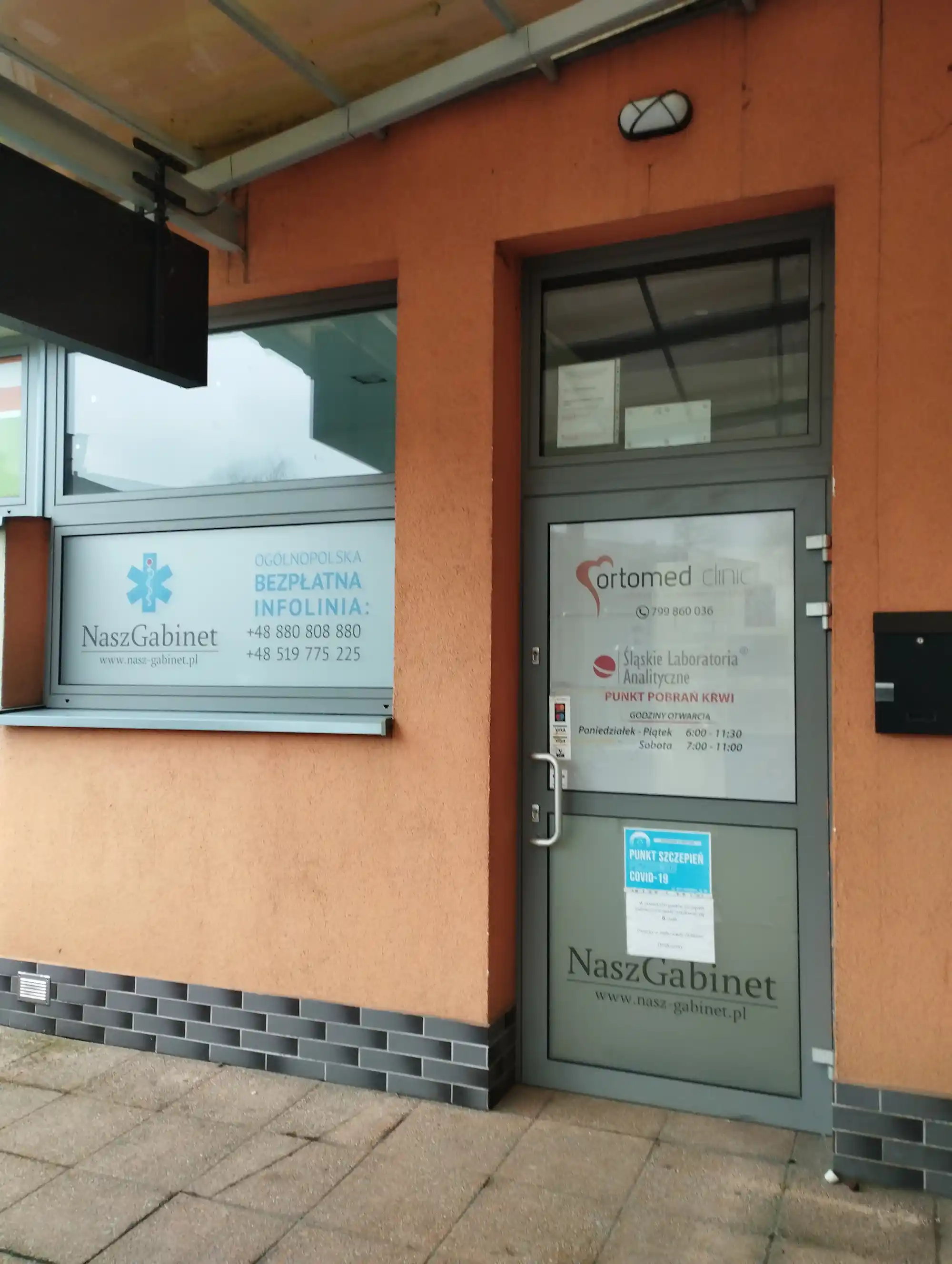
The first step is a phone call to 880 808 880 and booking an assessment at our clinic on Józefowska 76. The injection is rarely the whole answer, which is why from the start we propose it together with addiction therapy in Katowice, and when the situation calls for it, also with broader alcoholism treatment in Katowice. We only talk about the price after the visit, and not out of contrariness: it is made up of several separate items, namely the consultation, the cost of the medicine and its administration. Until we know the patient's situation, any figure given upfront would be guesswork.