

Symptoms of alcohol addiction and the brain changes behind them
The ICD classification of diseases gives alcohol addiction a code of its own: 6C40.2 in ICD-11 and F10.2 in the older ICD-10. A doctor makes the diagnosis after examining the patient and taking a history, based on the criteria described in that classification. Relatives do not make it, even though they are the first to see what the drinking does.
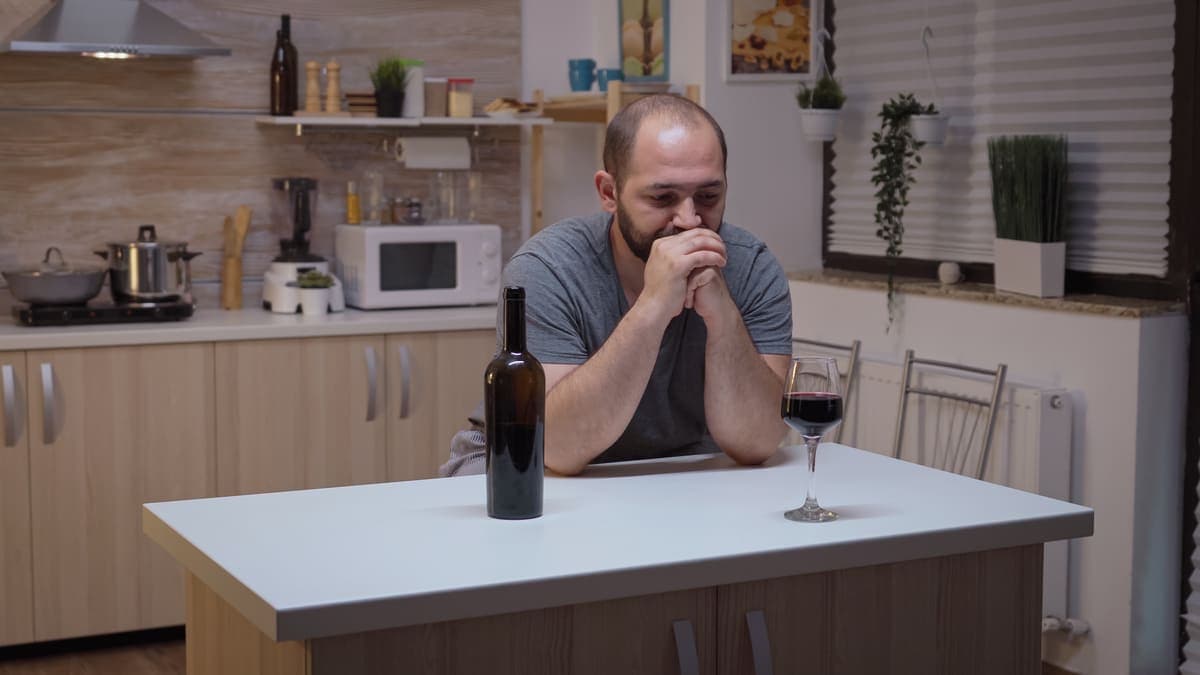
Drinking alcohol regularly over the years changes how the reward system works and how the body responds to stress. Tension that used to pass by itself now eases only after a drink. That is how alcohol craving arises, and control over drinking weakens even though the patient wants to drink less.
The diagnosis rests on several criteria occurring together. The doctor asks about withdrawal symptoms after a break in drinking: trembling hands, sweating and anxiety. The next question concerns tolerance, because over time it takes more and more alcohol to reach the same effect. The doctor also checks whether the patient can stop drinking at a planned moment, whether they drink despite worsening health and trouble at work, and whether alcohol craving keeps returning. The more of these criteria are present, and the longer they persist, the more severe the alcohol addiction.
The illness runs a chronic and relapsing course. We therefore plan treatment over months, monitor the patient's condition also when they are not drinking, and teach them to recognise the moment when the risk of reaching for alcohol rises.
When drinking needs a consultation before addiction develops
The ICD classification also describes a stage that comes before addiction: harmful drinking, code F10.1. At this stage alcohol already harms health or family relationships, but the patient has not lost control over drinking and has no withdrawal symptoms. The stage before that is risky drinking: the consequences are not visible yet, though at such amounts of alcohol hypertension and fatty liver appear in a large proportion of people. Alcohol addiction, F10.2, is the most severe of these three states.
The AUDIT questionnaire, developed by the World Health Organization, is used for an initial assessment. The patient can fill it in on their own before the appointment: we publish the AUDIT test on our site, and the score is worth bringing to the consultation. Points are not a diagnosis, yet they help structure the first conversation, because the doctor knows at once how much and how often the patient drinks.
In 2023 the WHO stated that no dose of alcohol can be considered safe for health. When we assess drinking we therefore ask why the patient reaches for alcohol, whether they stop at the amount of alcohol they planned, and how they cope with days without drinking.
Alcoholism treatment in Słupsk from consultation to supportive care
Treatment starts with a medical consultation at the practice on Marszałka Józefa Piłsudskiego 2. The doctor takes a history of how the patient drinks and of earlier attempts at treatment, examines them and assesses whether withdrawing alcohol requires medical supervision. That assessment decides whether treatment begins with detox or straight away with psychotherapy and medication.
From there we run treatment in three areas. Medical stabilisation covers alcohol detox along with restoring fluid balance and correcting deficiencies. Pharmacotherapy or the Esperal implant lowers the risk of an impulsive drink in the first weeks. In addiction psychotherapy the patient works on the situations and emotions that push them towards drinking, and we describe how it proceeds on the page about addiction therapy in Słupsk.
We schedule care in monthly, three-month, six-month and yearly packages. One month covers stopping the drinking, setting up medication and the first therapy sessions; longer packages also cover changing habits and monitoring health in the months that follow.
We treat privately, so we usually give the first appointment within a few days. A private appointment is not an anonymous one. Every medical facility has a statutory duty to keep medical records, so instead of anonymity we offer discretion: the patient's data is known to the team treating them, and we release it to third parties only on their written authorisation.
Who we treat in the practice, who in a centre and who remotely
We decide the treatment setting at the first consultation, qualifying the patient for the practice, for a residential centre or for remote appointments. The doctor assesses the risk of complications after alcohol withdrawal, how advanced the addiction is, coexisting illnesses and whether the patient's home supports abstinence or works against it.
Outpatient alcoholism treatment in Słupsk
We treat patients on an outpatient basis when they have no severe somatic complications and travel in for appointments at agreed times. The patient then keeps working and stays at home. The requirement is a mild course of alcohol withdrawal, which the doctor assesses during the examination.
Alcoholism treatment in a residential centre in Słupsk
We propose a round-the-clock stay for advanced alcohol addiction, for serious accompanying illnesses, or when outpatient treatment has already broken down. We also refer patients whose home always has alcohol in it or where another household member is still drinking. We describe the conditions of the stay on the page about the addiction treatment centre in Słupsk.
Online alcoholism treatment and e-prescriptions in Słupsk
Remotely we hold follow-up visits and part of the therapy sessions, and we issue e-prescriptions. We schedule remote appointments above all for patients from outside Słupsk and for those whose work takes them away on business trips. A screen will not show us how severe the withdrawal symptoms are, so we ask a patient in acute alcohol withdrawal to come to the practice, or we refer them to hospital.
How the medicines used in alcohol addiction differ from one another
The medicines used in alcoholism treatment serve different goals. Some help maintain complete abstinence, others reduce the amount of alcohol drunk by a patient who is not ready to give up drinking yet.
Naltrexone blocks the brain receptors through which alcohol brings relief and relaxation. A patient taking it does not feel the expected relief after a glass, so alcohol craving weakens as well. Acamprosate lowers the overactivity of the nervous system that lasts for many weeks after alcohol is withdrawn, which makes the first weeks without drinking easier to bear. Nalmefene is taken as needed, on a day when the patient expects an occasion to drink, so that they drink less alcohol that day.
Disulfiram, contained in the Esperal implant and in tablets, produces the disulfiram reaction after a drink: the skin flushes, the heart starts pounding, blood pressure drops and vomiting follows. The reaction itself discourages drinking, but disulfiram does not treat alcohol addiction and does not reduce alcohol craving. We describe the course of the procedure and the contraindications on the page about the Esperal implant in Słupsk.
The doctor chooses the medicine. They take into account liver test results, chronic illnesses, the other medicines the patient takes and whether the patient is aiming at abstinence or, for now, at drinking less. Pharmacotherapy does not replace psychotherapy, because none of these medicines teaches the patient how to cope without alcohol.
Who needs detox once a drinking binge is broken off
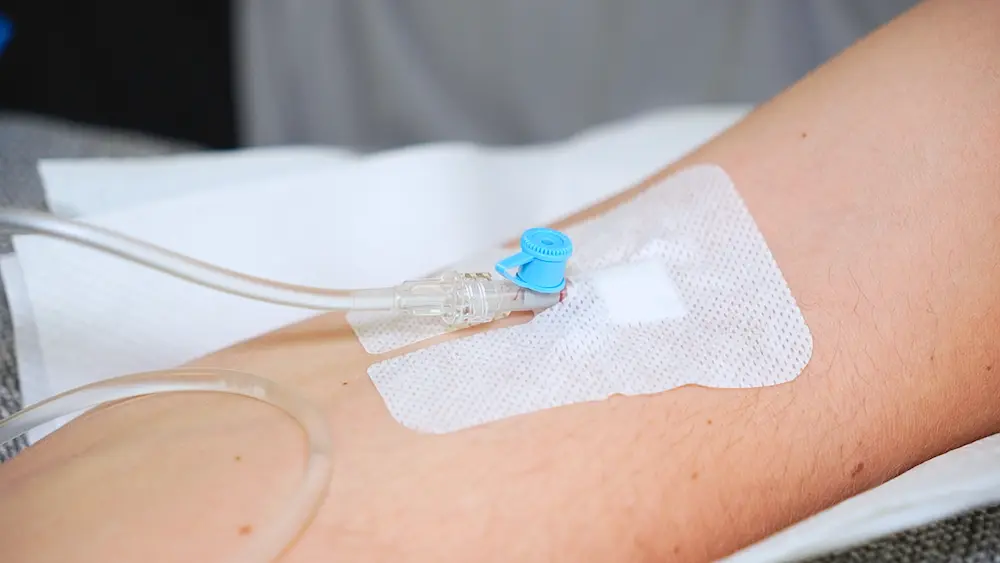
We begin treatment with alcohol detox when the patient drinks in a binge lasting several days or longer, when they drink large amounts of alcohol every day, when an earlier withdrawal caused seizures or delirium tremens, and also in chronic illness and in older patients. Through the first days the medical staff monitor pulse, blood pressure and the severity of withdrawal symptoms, give fluids with electrolytes, vitamin B1 and medicines that calm trembling hands and anxiety.
Stopping drinking abruptly after a long binge risks seizures and delirium tremens. Both of these states require immediate medical help, so a patient with such a history goes to detox first, and we set the date of the first therapy session only once the detox is over.
Detox ends at the moment the withdrawal symptoms subside. Alcohol craving and the reasons the patient drank remain, so we arrange the next appointment while the detox is still going on. We describe tests before detox, the course of the first day and the conditions of the stay on the page about alcohol detox in Słupsk.
How much time a patient has to react after drinking alcohol
A return to drinking happens to many patients during alcoholism treatment, and its consequences depend on how quickly the patient contacts us. After a single evening with alcohol, the drinking can usually be stopped without a repeat detox. A few days of drinking rebuilds tolerance and brings withdrawal symptoms back, so treatment has to start from medical stabilisation again.
At the appointment after a relapse we examine the patient's physical condition, establish whether they were taking the prescribed medicines, and reconstruct the circumstances that came before the drink. Most often it is a medicine stopped without consulting the doctor, a break in sessions, insomnia coming back or a work trip of several weeks away from home. Depending on what we find, we change the pharmacotherapy, arrange more frequent sessions or propose the Esperal implant.
After a relapse the patient does not start treatment from the beginning. We set the earliest possible follow-up date, and the situation that led to the drink becomes the subject of the next sessions.
Supportive care, medication and support groups after treatment
Once the intensive part of treatment ends, appointments become less frequent, but each one has a specific focus. A return to drinking happens most often in the first months without alcohol, so we do not stop follow-up the moment the patient starts to feel well.
At this stage relapse prevention takes priority. The therapist practises specific scenarios with the patient: the phone call they will make instead of going out to the shop, leaving a party before the toast, the sentence they use to refuse a host who is pouring them a glass.
Pharmacotherapy lasts longer than the intensive part of treatment. The patient takes naltrexone or acamprosate for further months, and the doctor decides when to stop it at a follow-up visit, after assessing the patient's health and the course of their abstinence. Alongside this, there are free self-help groups. The meetings take place at fixed hours, so the patient has contact with people who share the same diagnosis also between appointments at the practice.
What happens in a family when one of the parents drinks
When someone in the family drinks, family life starts to revolve around alcohol: relatives check how much is left in the bottle, explain absences at work, pay off debts and smooth over rows. We call this way of functioning codependency and we treat it separately, whether or not the person who drinks comes to the practice. Children from such homes enter adulthood with fixed patterns of behaviour, which we describe in the questions at the bottom of this page. For these patients we use the abbreviation DDA, from dorosłe dzieci alkoholików (adult children of alcoholics), and we run separate therapy for them.
Sometimes it takes the family's own work to bring the person who drinks into treatment. Family assistants from the miejski ośrodek pomocy rodzinie (the municipal family support centre) in Słupsk worked with 93 families in 2023, with 115 in 2024 and with 128 in 2025. At least one parent took up addiction treatment in 9, 4 and 13 of those families respectively. These are selected families: most of them are referred to an assistant by a court order or at the request of a social worker, so the figures do not describe every family in Słupsk with an alcohol problem.
The family has a formal route: they can file an application with the miejska komisja rozwiązywania problemów alkoholowych (the municipal commission for solving alcohol problems) for an addicted person to be obliged to undergo addiction treatment. The commission then conducts proceedings and can refer the application to the district court, and we describe the course of that procedure in the questions below.
Who leads the treatment when depression comes with alcohol addiction
Some patients have two diagnoses: alongside alcohol addiction, depression, an anxiety disorder or post-traumatic stress disorder. Which of them came first can rarely be settled at the first appointment, because depressive and anxiety symptoms also occur as a consequence of years of drinking.
Depression left untreated comes back after addiction therapy as insomnia, lack of energy and anxiety, and alcohol is then the quickest source of relief for the patient. That is why we make the psychiatric diagnosis in the first weeks of treatment.
We manage both disorders within one team. The psychiatrist selects the medication and checks which symptoms subside along with abstinence, while the addiction therapist works with the patient on the drinking. The patient then does not have to reconcile two separate treatment plans or carry information between specialists, because the psychiatrist and the therapist agree it between themselves.
Who in Słupsk applies for treatment of a person who drinks
Miejska Komisja Rozwiązywania Problemów Alkoholowych in Słupsk examined 93 applications for an obligation to undergo addiction treatment in 2025. Of those applications, 58 were filed by families of people who drink, 16 by the police, 8 by court probation officers and 6 by the municipal family support centre. Applications concerning men numbered 74, those concerning women 19. The Słupsk sobering-up centre admitted 1,232 people the same year, 220 more than a year earlier, and 81 people had a therapeutic and motivational talk there.
Social assistance on grounds of alcoholism went to 417 families in Słupsk in 2025, 19 more than the year before. All these figures describe situations in which someone other than the patient is already speaking about the problem, so they do not measure the scale of the illness in the city. What they do show is who looks for help first, and it matches what we hear at the practice: the first phone call comes from a wife, a mother or an adult child. We also give such a person a consultation when the person who drinks has not made up their mind yet.