

What inpatient treatment at a centre is
Inpatient treatment is therapy delivered around the clock - for several weeks the patient stays at the centre full time: this is where they sleep, eat and work on leaving the addiction behind. That is the basic difference from an outpatient clinic, where you come in for a single session and then go back to the same four walls and the same temptations. For the length of the stay the patient is cut off from them, and the whole day is built around therapy.
At the centre on Piłsudskiego Street in Słupsk we treat addiction to alcohol, to sedatives and sleeping pills, to drugs and new psychoactive substances, and also behavioural addictions - gambling above all. If the problem concerns a single substance or one behaviour, you can begin with a narrower path, for example drug addiction treatment in Słupsk or gambling addiction treatment in Słupsk.
In practice, addictions rarely come on their own. Sleeping pills often follow alcohol, and gambling tends to go together with drinking - which is why, at the assessment, we ask about the whole picture rather than only the problem that is obvious at first glance. The mechanism of addiction itself works in much the same way regardless of what triggers it, and that is what therapy addresses.
What sets a private stay apart from public, NFZ-funded treatment in Słupsk
Słupsk has public care for people with addictions, and for many it is a good place to start. The addiction therapy clinic admits patients without a referral and free of charge, with sessions spread out over time and a commute from home. There is also a day ward and a round-the-clock addiction therapy ward - the latter admits on a doctor's referral, on condition of at least two weeks of prior abstinence; the programme lasts about eight weeks, and there is usually a wait for a place.
Our centre is a private, voluntary path. We require neither a referral nor sustained abstinence before you get in touch - if a substance is still in the body, we carry out withdrawal on site. We set the admission date right after the assessment call, with no queue. Choosing between the two routes comes down mainly to how urgent the situation is and how long the patient can afford to wait.
People come to the Słupsk centre from the city and the whole of Pomerania, but also from further afield. With a round-the-clock stay, distance from home can be an advantage - it cuts a person off from the places and people that drinking or using was bound up with. The length of the addiction and the patients' ages vary widely, from people who lost control recently to those with several attempts at treatment behind them. Some have already tried to get help closer to home and come back for something stronger - a stay away from their usual habits and temptations.
What the stay at the centre looks like
Before a patient arrives at the centre, we talk - usually by phone. The purpose of this assessment call is to learn the type and history of the addiction and the patient's current state, and to match the length of the stay and the admission date to that. One firm rule applies here: on the day of admission the patient must be sober. When alcohol or another substance is still in the body, safe withdrawal comes first - alcohol detox in Słupsk helps with that, and only afterwards does the actual therapy begin.
The first days at the centre
The beginning is a time to look around and find the rhythm. The patient gets to know the therapists and the group, goes through an initial health assessment and, together with the lead therapist, draws up their therapy plan. For anyone who has just gone through withdrawal, the first days are calmer - the body is recovering, and the sessions build up gradually. It is worth bringing personal belongings for several weeks, any regularly taken medication along with a note from the doctor, and an ID document.
An ordinary patient's day
Later the day settles into a fixed plan. Therapy itself takes up to 8 hours: group sessions and one-to-one conversations with the lead therapist. The rest of the day is meals at set times, time to rest, individual tasks and sleep. For many patients this return to a simple, predictable rhythm is the first real change after months in which everything revolved around the substance. Weekends are lighter, with more room to rest and to reflect on the week that has passed.
The centre provides full board: accommodation, meals and round-the-clock care. Contact with loved ones by phone is possible, but within set limits, so that it does not distract attention during the hardest first weeks.
Four weeks or eight
The stay comes in two lengths, and they differ in the depth of the work, not in the standard of care. The four-week option covers what matters most at the start: easing off the substance, learning to recognise cravings and the first ways of coping without it. Eight weeks adds the time that a shorter stay simply lacks - to reach the causes of the addiction and to practise new habits long enough for them to start to take hold. We usually suggest the longer stay to people with a years-long addiction or after earlier attempts that failed. The choice is made at the assessment, together with the patient.
The therapy programme: individual and group work
At the heart of the programme is the work with the lead therapist. Each patient has one assigned specialist who accompanies them throughout the stay - from the assessment to the final day - and is responsible for the direction of therapy. This arrangement spares the patient from explaining their story from scratch at every session and means that progress, and slips, do not escape anyone's notice.
What one-to-one work gives
Individual sessions are the space for what is hardest to say in a group. Together with the therapist, the patient looks at their own story: where the addiction came from, what purpose it served and which mechanisms still keep it in place. The therapist matches the pace and the subjects to one person, and the conclusions from these conversations carry over later into the group sessions.
Why group therapy
The second part of the programme is work in a group. Being among people with similar experience has a concrete value: someone else's addiction is easier to see than your own, and other people's honesty takes away the illusion that you are entirely alone with your problem. The group also gives the kind of feedback that is hard to expect at home. Some of the sessions are psychoeducation, that is, concrete knowledge of how addiction affects the brain and behaviour; other meetings are themed - on emotions, relationships and coping with cravings. The groups are small, so everyone has the time and room to speak. A simple rule applies in them: what is said in a session stays among the participants, because without that sense of safety it is hard to talk honestly about yourself.
Monthly supervision
The therapists' work is supervised regularly. Once a month the team sits down with an external, experienced specialist and discusses the therapies under way - so as to look at them from a distance and catch what can be invisible up close. This habit keeps the quality of treatment in check and guards against the direction of therapy depending on the judgement of a single person.
Who a closed centre is for - indications and eligibility
Not everyone needs a stay at a centre, and we do not hide that. The inpatient mode makes sense above all when lighter forms have already failed: when therapy at a clinic did not hold for long, when cravings are too strong to manage alone between weekly visits, or when the surroundings themselves - home, friends, everyday situations - keep pushing towards the addiction. It can also be a way out when low mood, anxiety or a disrupted sleep pattern are added to the addiction; we take these difficulties into account when planning therapy.
Who most often comes to the centre
It is hard to point to a typical patient, because people of different ages and with very different histories of addiction get in touch. Some were convinced for years that they had drinking or using under control, until that control fell apart. Others return to treatment after earlier therapy that did not hold up against everyday life.
A sizeable share of enquiries come not from the people concerned but from those close to them - a partner, a parent, an adult child who have run out of their own ideas and are looking for a place with real help. What links these stories is neither age nor the type of substance, but the moment at which the old ways stopped being enough.
What we look at during the assessment
The assessment call has one aim: to see the real picture of the situation, not to fill a place at the centre. If we see that the patient will manage with outpatient treatment - for example through addiction therapy in Słupsk or alcoholism treatment in Słupsk - or that they first need a doctor's consultation, we say so plainly and do not press for a stay. There is no need to prepare specially for the call itself; it is enough to describe honestly what is going on.
A closed centre versus an open one
In private treatment the term closed centre means simply that the patient stays at the facility full time and does not leave it during therapy, while contact with the outside world is limited for that time - in order to protect the process of recovery. It has nothing to do with coercion: both admission and the end of the stay are entirely voluntary. In a day-care or open-at-night model you go home, which gives more freedom but also easier access to substances - so with a severe addiction a round-the-clock stay is more often the choice.
Safety, the team and discretion
Safety begins with the fact that someone is always at the centre - at night and at weekends too. The team is made up of addiction therapists, and when the situation calls for it we bring in a doctor and a psychiatric consultation; this is needed especially in the first days, when the body is finding its balance after a substance has been withdrawn. For the patient, the constant presence of staff means that at a harder moment there is someone to turn to, at any hour.
Predictability as part of treatment
The second pillar of safety is clarity of rules. From the start the patient knows the framework of the stay - their daily plan, the person leading them, and the stage they are at. Important matters, such as the length of therapy or the moment of preparing to leave, we discuss with them rather than presenting them with faits accomplis. For someone who has lived for months in the chaos of addiction, even this orderly daily routine can be a relief. The patient does not have to guess what comes next, or negotiate the rules each day - the framework is clear from the start and the same for everyone.
Is treatment anonymous
Patients often ask about anonymity. The stay is discreet - it is the patient alone who decides that they are being treated, and only they choose whom to tell. That, however, is not the same as having no records: like any medical facility, we keep and secure treatment records in line with the regulations on the protection of health data. The patient has full access to them - discretion protects them on the outside, rather than cutting them off from knowledge of their own therapy.
What the stay does not replace
Good care also means being honest about its limits. Therapy at the centre is work spread over weeks and is not emergency help - if health or life is in immediate danger, urgent medical assistance comes first, and treatment of the addiction can only begin later. The stay also does not replace diagnosis or psychiatric treatment where these are necessary; in such cases we run therapy alongside a doctor's care, not instead of it.
Packages, prices and how to start treatment
The price of the stay depends solely on its length. The shorter, four-week Intensive Start package costs 13 000 PLN, and the eight-week Full Process of Transformation - 25 000 PLN. In both options the amount covers everything: accommodation, meals, full individual and group therapy, the team's care and the monthly supervision that keeps the quality of treatment in check. We do not add separate charges for single sessions, so the cost is known up front. Among private centres in Pomerania these are upper-bracket rates - they come not from hotel extras but from the number of hours of therapy the patient receives each day, and from working with one lead therapist throughout the stay.
How to start treatment in Słupsk
The first step is a single call to 880 808 880. We then arrange the assessment call, choose the length of the stay and set the admission date. Very often it is not the person who is addicted who calls but a family member - that is just as good a start. The call itself commits you to nothing and is confidential; you can ask about anything in it before any decision about a stay is even made.
Who makes the decision to treat - and can someone be forced into it
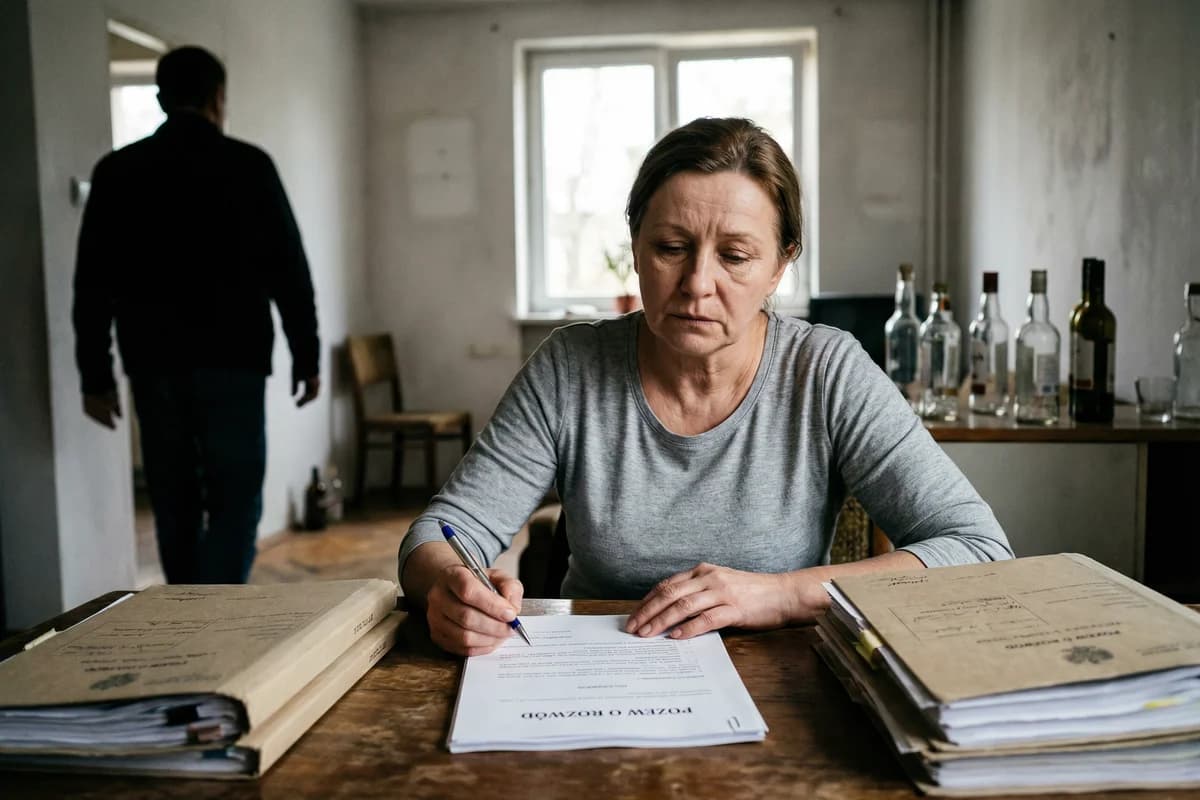
The decision to begin treatment rests with the patient - and that is always the case with us, because we admit on a voluntary basis only. This is a frequent question from families: whether a loved one can be sent to therapy against their will. Polish law does provide for such a route, but it is separate from private treatment and runs through public institutions. Court-ordered addiction treatment is decided by the district court - on the motion of the municipal commission for solving alcohol-related problems or of a prosecutor - and it can last no longer than two years. It is applied when drinking entails serious consequences, such as:
- the breakdown of family life;
- the corruption of minors;
- evading work;
- persistent disturbance of public peace or order.
In practice, even a court order does not force anyone into real work on themselves - without one's own decision to change, the effectiveness of such treatment is low and relapses are frequent. That is why our role is not to force a stay but to help with making the decision. And here is the important thing: you do not have to be a hundred per cent certain in order to start. It is enough to accept that the old ways have failed and to see what treatment can offer. The rest - certainty, motivation, readiness - most often matures during therapy itself.