

Alcoholism as a disease with its own diagnosis
In medicine, alcoholism is not a general term for drinking too much. It has its own number in the international classification of diseases, F10.2 in ICD-10 and 6C40.2 in the newer ICD-11, and behind that number sits a set of criteria that have to be met before a diagnosis is made. That formality matters to the patient in practical terms. The diagnosis follows from an examination and a medical history, treatment has defined standards, and its course is documented like that of any other chronic illness.
The disease develops in the brain. Alcohol stimulates the reward system harder and faster than natural stimuli, and with regular drinking that system starts to respond mainly to alcohol and less and less to food, exercise or time with other people. The response to stress changes along with it, so tension that used to pass on its own now eases only after a drink. The result is alcohol craving, a compulsion to drink that appears regardless of what the patient resolved the evening before.
A diagnosis rests on several features that have to occur together and persist over time, not on a single episode. What patients usually notice first is that they feel unwell once they stop. Hands shake, sweating, restlessness and insomnia appear. It is also plain that reaching the same effect takes larger and larger amounts of alcohol. The two remaining features are harder to spot, because they call for a detached look at one's own behaviour: weakening control over how much and when one drinks, and continued drinking despite damage to health, home life or work. The more of these features occur together, the smaller the chance that resolve alone will be enough to stop drinking. Addiction is a chronic and relapsing illness, which is why treatment is counted in months, and why a return to drinking after a period of abstinence does not cancel out the work already done.
Risky drinking, harmful drinking and addiction, where the line runs
There is no single clear line between social drinking and illness. Medicine describes three different states. With risky drinking, harm has not occurred yet, but the likelihood of it clearly rises. Harmful drinking has its own entry in the ICD classification, F10.1, and means that harm has already occurred while control over drinking remains largely intact. The third stage is addiction, F10.2, where craving, tolerance and withdrawal symptoms are added to the picture.
It is hard to judge for yourself which of these stages you are at, because the usual yardstick is friends and family who drink just as much. This is why screening questionnaires are used. The most widely applied is AUDIT from the World Health Organization, ten questions covering not only the amount and frequency but also the consequences of drinking. The shortened AUDIT-C version keeps the first three questions and serves mainly as a quick screen. An elevated score means it is worth coming for a consultation, but on its own it does not settle the diagnosis.
There is no dose at which alcohol remains neutral for health, a position the World Health Organization confirmed in 2023. The line that matters in practice therefore does not run at a given number of drinks, but where alcohol starts to decide the plans for the day and causes harm to health or to relationships.
How alcoholism treatment works in Łódź
The starting point is a medical consultation. It establishes how deep the addiction runs, which health complications have already appeared, and whether stopping alcohol requires pharmacological cover. Only then does a plan take shape, because the same methods fall into a different order for two different patients.
The plan combines several elements that add to one another rather than replace one another. We begin with medical stabilisation if the drinking has been long and heavy. Then we add medication that lowers alcohol craving or makes drinking unappealing. We also provide addiction psychotherapy in Łódź, because without work on what the patient was drinking for, medication alone gives no lasting effect. Finally we run maintenance care spread over the following months.
At Nasz Gabinet Łódź we run treatment in monthly, three-month, six-month and annual plans. A month is enough to stop drinking and to begin therapy, but a lasting effect is built over the months that follow and that stage cannot be shortened. We work privately, alongside the public pathway described below.
Outpatient, residential or online in Łódź, what decides the choice
Who can be treated as an outpatient?
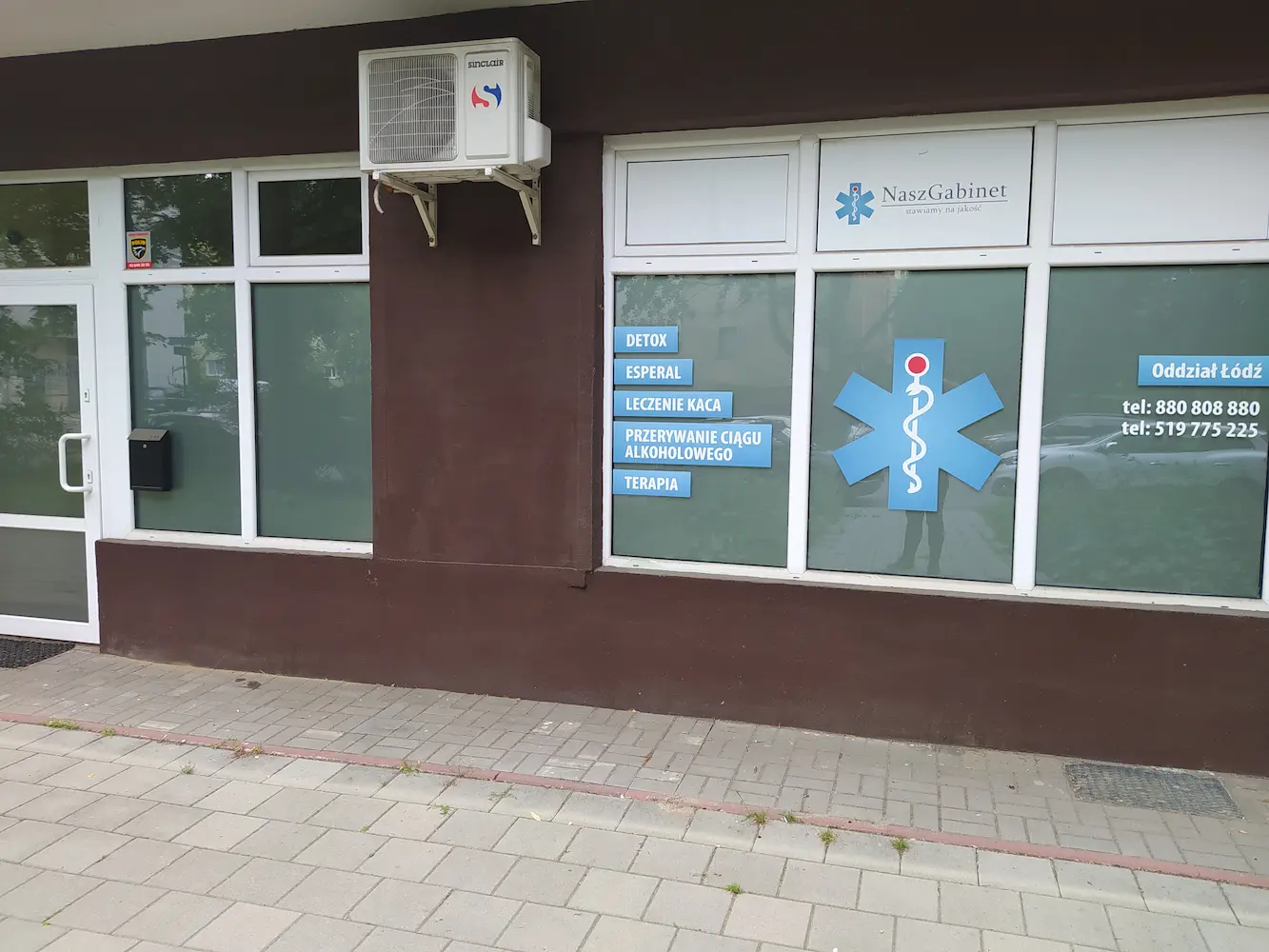
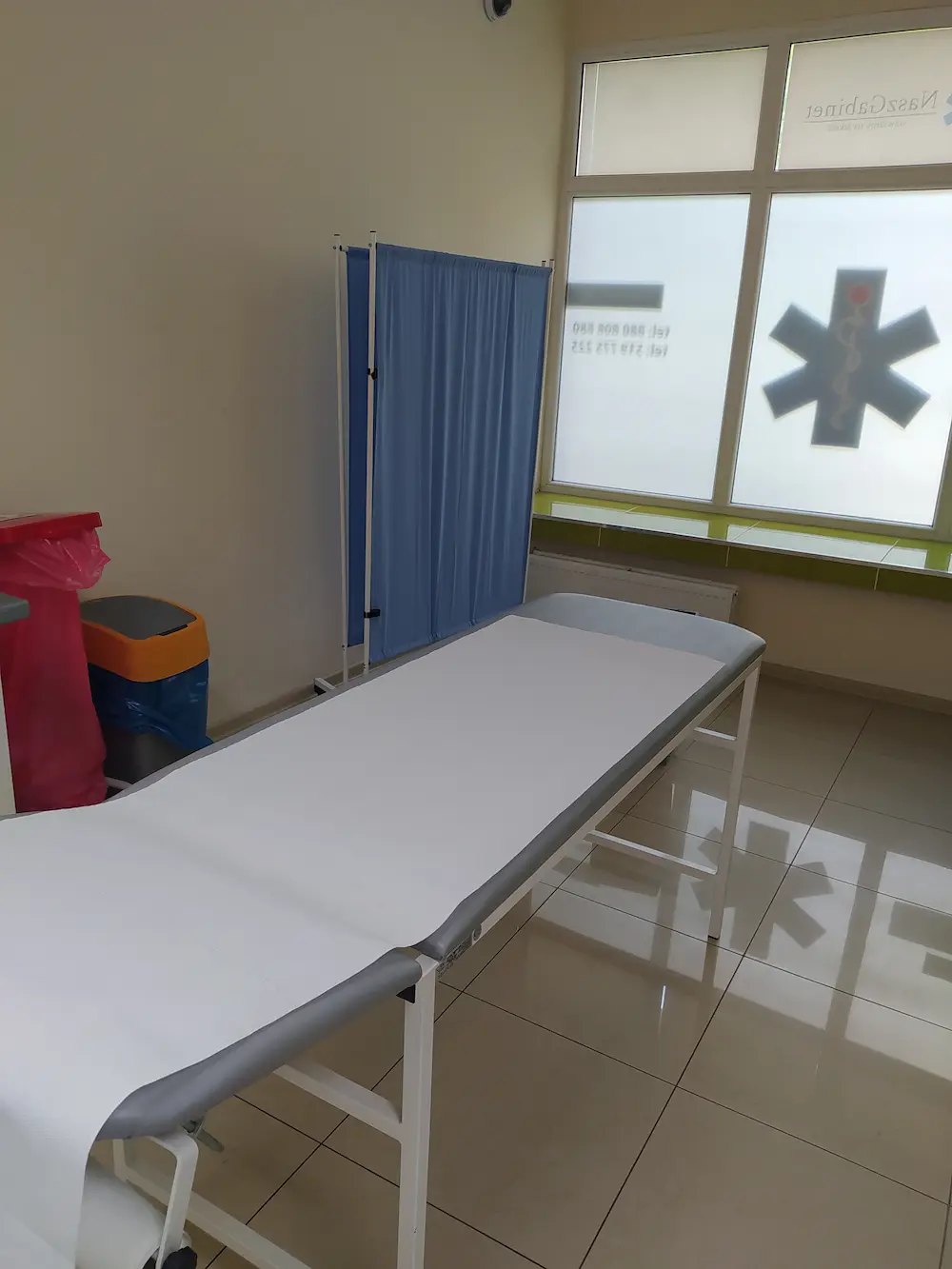
Someone who has a stable home and the support of people close to them, who has no severe physical complications and in whom withdrawal from alcohol is mild. Treatment can then run without interrupting work, and we fit appointments at the practice on Rogozińskiego around the patient's working hours. This is the first-choice format, because the patient learns to live without alcohol in their own everyday surroundings.
When is a residential stay needed?
When the addiction is advanced, when serious physical illness goes with it, or when earlier outpatient attempts ended in a return to drinking after a few days. The second indication is an environment in which staying sober is unworkable, for instance sharing a flat with someone who drinks. An addiction treatment centre in Łódź with round-the-clock care makes more sense then.
Who does the online format suit?
It works for patients continuing treatment already under way, for people who travel for work or live outside the city, and for anyone for whom commuting to every session would be a reason to give up. A video consultation also allows an e-prescription to be issued. What cannot be treated online is acute alcohol withdrawal, because in that state the patient has to stay under observation on site.
The Esperal implant and medication supporting abstinence in Łódź
Esperal is a disulfiram implant placed under the skin. The substance halts the breakdown of alcohol at the acetaldehyde stage, so drinking triggers a sharp bodily reaction. The implant does not physically remove the ability to drink and does not treat the addiction on its own. It discourages drinking, and that gives therapy a few calm months at the start of treatment, which is why we treat it as one element of the plan rather than as the whole course of treatment. The procedure requires prior abstinence and a separate medical assessment, while its course, contraindications and duration are covered on the page about the alcohol implant in Łódź.
Alongside the implant we use four oral medicines, and each of them works differently. Naltrexone means that drinking no longer brings the relief the patient expects from it, and alcohol craving is weaker. Acamprosate eases the restlessness and irritability that drag on long after a patient stops drinking, which is why we use it in the longer stage of treatment. Nalmefene is taken as needed, on days of heightened drinking risk, and serves to reduce the amount of alcohol drunk rather than to achieve full abstinence. Disulfiram in tablets works in the same way as the implant, only for a shorter time, and the patient decides each day whether to take it.
The choice of medicine rests with the doctor and depends on the goal the patient sets for the coming months, on liver function, on coexisting conditions and on other medicines being taken. None of these drugs replaces psychotherapy. Medication lowers tension and alcohol craving enough for psychotherapy to bring results.
Alcohol detox in Łódź, when it is necessary and when it is risky
Detox is not about cleansing the body of toxins, contrary to how it is often described. It is about carrying the patient safely through withdrawal, that is through the body's reaction to the sudden absence of alcohol, which we ease with medication, fluids and replacement of vitamin and electrolyte deficiencies. It is indicated after a long binge and whenever previous attempts to stop drinking ended in tremor, vomiting, severe restlessness or insomnia.
Stopping drinking on one's own after a heavy binge can be life-threatening, because it can bring on withdrawal seizures and alcohol-induced delirium. These are emergencies requiring medical supervision, and that is why detox is not something to plan by oneself. In Łódź we carry it out both at the practice and with a visit to the patient's home, depending on their condition and the length of the binge. The details of the procedure are covered on the page about alcohol detox in Łódź. Detox itself is only the beginning of treatment, and without the stages that follow it does not change the course of the illness.
Alcohol treatment in Łódź under public healthcare and privately: what really separates the two routes
Public healthcare treats alcohol dependence free of charge, so the difference between it and private treatment does not come down to price. Three other things decide: the scope of benefits, the mode of treatment and who sets the date.
Guaranteed benefits cover detoxification, addiction psychotherapy at an outpatient clinic and a stay on a ward. They do not cover the Esperal implant, which brings the largest group of our patients to us, because that procedure is paid for in every facility in Poland.
Public addiction therapy takes the form of a programme with fixed hours, and treatment on a round-the-clock ward means several weeks away from home and from work. Some patients cannot afford that and put treatment off for years. We run it on an outpatient basis, in the evenings or online, with no sick leave and no explaining yourself at work.
Admission to a ward is decided by the queue and by the patient's condition, not by their calendar and plans. According to National Health Fund data on treatment waiting times, as of 31 July 2026, 120 people are waiting for the only round-the-clock alcohol addiction therapy ward in the Łódź Voivodeship, with an average wait of 33 days, and the ward itself operates outside Łódź. A month of delay is a risk of its own in addiction, because readiness for treatment rarely lasts that long. It is worth registering with a public clinic in parallel and using it later, as follow-up care after treatment with us.
A return to drinking during treatment
A return to drinking happens to many patients during treatment and does not cancel out the results achieved so far. What decides the further course of treatment is what the patient does right after such an episode. A single drink after which the patient goes straight back to the treatment plan ends differently from a week without contact and cancelled appointments, because then one episode turns into a binge lasting several days.
What to do after a relapse comes down to four things, none of them easy. Get in touch at once, even when shame says otherwise. Return to sessions at once, without waiting for the sense of failure to pass. Check with the doctor whether the medication still fits the situation, because a return to drinking can be a signal that the dose or the medicine itself no longer fits. Go through with the therapist whatever preceded the drinking, so that the same set of circumstances does not take effect again.
What holds the results together after therapy ends
The risk of returning to drinking is highest in the first months after a patient stops drinking, which is why we run maintenance care as a separate stage of treatment. Its core is relapse prevention. The patient identifies the situations that set off the urge to drink, from places and times of day to emotional states, and works out a plan for each of them in advance, instead of looking for a solution at the moment of tension.
On top of that comes medication continued beyond the intensive stage of treatment. We use naltrexone or acamprosate for the months that follow if the doctor judges that the risk of returning to drinking is still high. A separate element is group support, in self-help groups or in maintenance therapy, where contact with people in a similar position by itself reduces the sense of isolation. This stage determines whether the work of the preceding months holds.
Family facing a loved one's drinking
Those close to a person who drinks tend to spend years organising their lives around someone else's drinking. They explain away absences from work, pay off debts, hide the situation from relatives, learn to predict moods. That arrangement is called codependency, and it wears out the family regardless of whether the person drinking takes up treatment. Adult children of alcoholics carry patterns out of it that surface in their own relationships much later.
Change at home usually starts with the relatives rather than with the person drinking. It means no longer softening the consequences of drinking, without breaking off contact in the process. When a family stops covering for absences at work, it is not punishing anyone, it is letting the person who drinks bear the natural consequences of their own drinking. We hold consultations for families regardless of whether the person who drinks decides to seek treatment.
There is also a formal route. Polish law on sobriety allows a court to require a person with an addiction to undergo treatment, on application from the municipal commission for solving alcohol problems or from a prosecutor, which is covered in more detail in the questions below.
Drinking alongside depression, anxiety or PTSD
Depression, anxiety disorders and PTSD occur alongside alcohol addiction often enough that treatment planning assumes the possibility rather than ruling it out. It is not always clear which came first. Sometimes drinking begins as a way of suppressing symptoms, sometimes it is prolonged drinking that deepens low mood and anxiety. More important than settling which came first is that treating only one of these problems rarely produces a lasting result.
Treatment follows an integrated model. A psychiatrist assesses the patient's mental state and treats the coexisting disorder, an addiction therapist works on the drinking, and the two exchange information instead of running two courses of treatment independently of each other. A psychiatric consultation is a separate service here, which we propose when the patient's condition calls for it and not routinely to every patient.
How many families in Łódź live with an alcohol problem
The scale of the phenomenon shows up in social assistance statistics. According to Statistics Poland data for the city district of Łódź, alcoholism was the reason for granting assistance to 1,099 families in 2024. A decade earlier, in 2014, there were 1,162 of them, in other words practically the same number.
That stability only stands out when set against the other reasons. Over the same decade the number of Łódź families receiving assistance because of poverty fell from 14,055 to 3,080, because of unemployment from 15,486 to 4,059, and because of difficulties with childcare and running a household from 4,447 to 1,272. In each of these categories the number of families fell by seventy-odd per cent. Among the large categories of social assistance, alcoholism is the only one in which the number of families did not fall, because after dropping to 873 families in 2020 it went back to 1,113 in 2023.
These figures describe families granted a benefit by decision, with alcoholism recorded as the reason, rather than how many people in the city are addicted. The real number is higher, because most people who drink never reach social assistance at all. For anyone weighing up treatment, one practical observation follows. The improving material situation of the city's residents did not reduce the number of families with an alcohol problem, because addiction develops by a mechanism of its own and needs treatment of its own.