

Addiction treatment centre Łódź - what inpatient treatment is and who it helps
An addiction treatment centre in Łódź is a place where treatment happens on site - the patient does not come in for single appointments but lives in the facility for several weeks and stays under the team's care around the clock. You will also hear the terms residential treatment or closed facility; the latter sounds harsh, but it simply means a protected, orderly stay away from everyday temptations, not confinement against one's will. The stay is voluntary and can be ended at any time.
We treat addiction to alcohol, medication and drugs, to new psychoactive substances, and behavioural addictions, gambling first among them. Specific addictions have their own pages - for instance drug addiction treatment in Łódź or gambling addiction treatment in Łódź - but the stay itself looks much the same whatever brought the patient here: the point is to break a fixed pattern and learn to live without the substance or the compulsive behaviour.
How this differs from treatment at home
The clearest difference is how much room therapy takes up in your life. With outpatient treatment - such as alcoholism treatment in Łódź - the patient comes for sessions and goes back to their work, errands and home. At a centre it is the other way round: for several weeks therapy becomes the main business of the day, while home and the usual surroundings stay outside. Neither path is better by definition - the choice depends on how deep the addiction runs and on whether the home environment helps or pulls you back in. As it happens, the first call about this is often made not by the patient but by a family member.
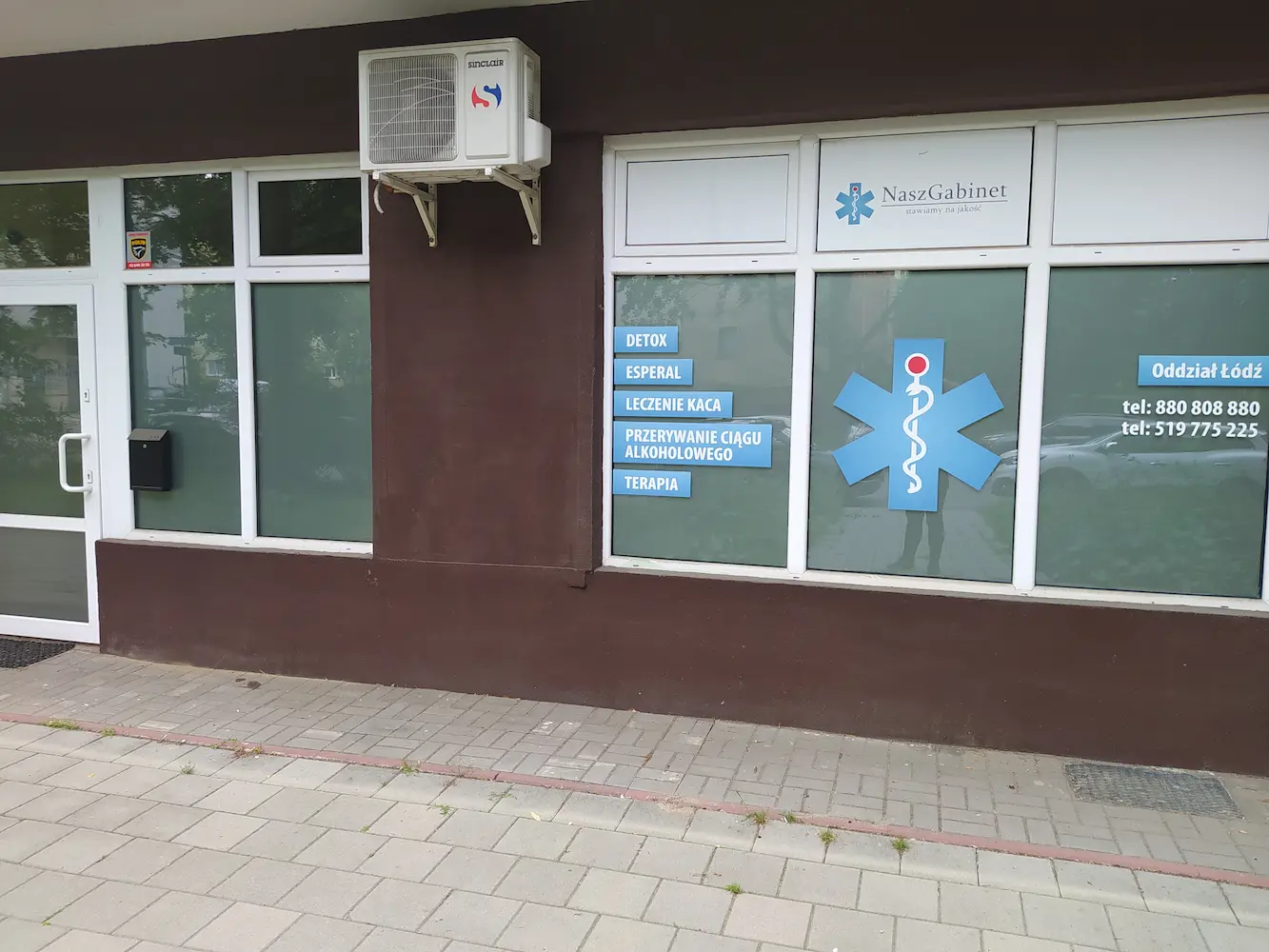
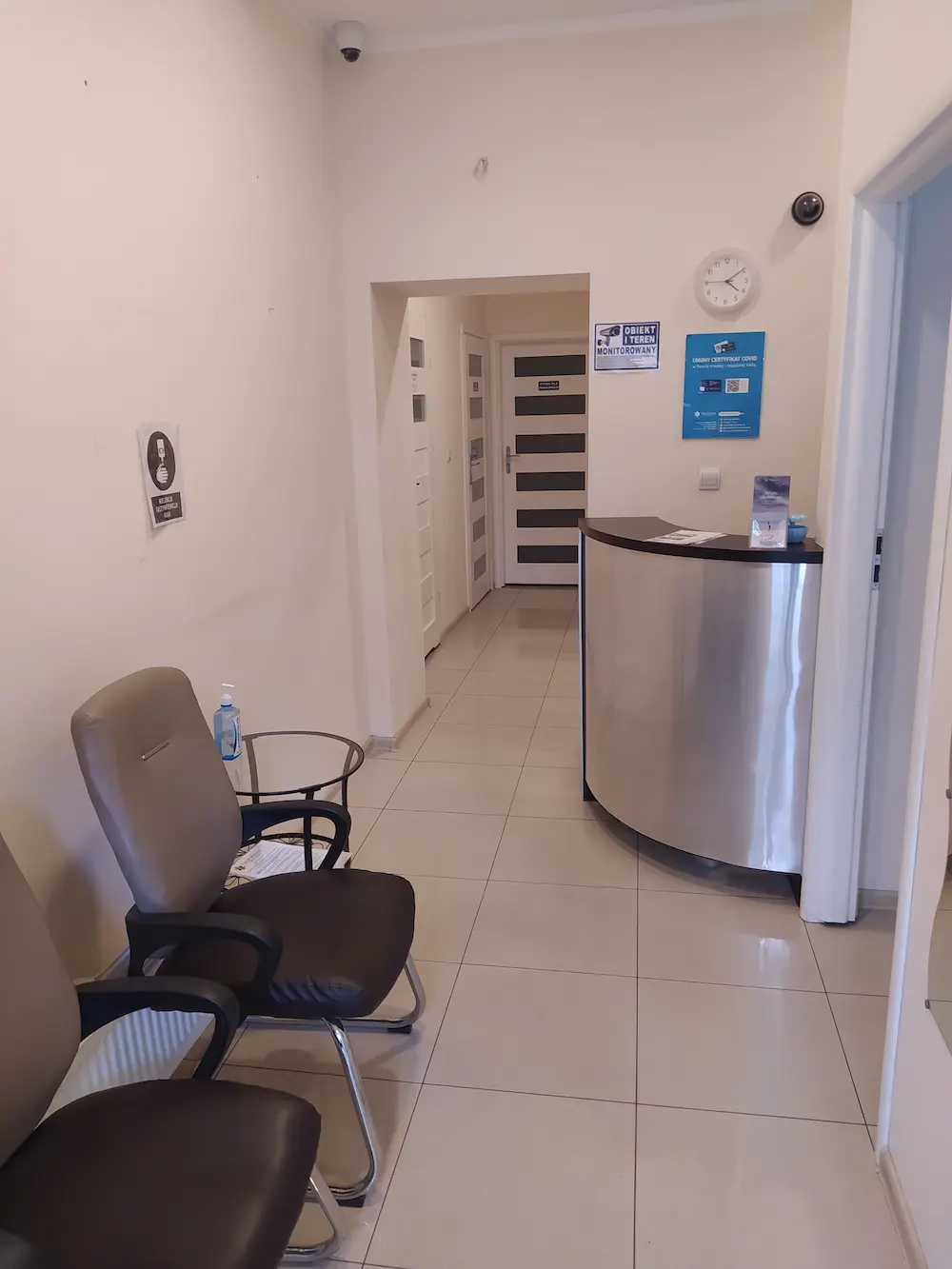
We hold the first conversation and the assessment at the Nasz Gabinet clinic in Łódź at ul. Rogozińskiego 23 - a registered addiction treatment facility where we settle the form, length and date of the stay. People come to us both from Łódź and from the surrounding area, for whom simply leaving their own town is already part of the treatment.
What a stay at the centre in Łódź looks like - day by day, from admission to discharge
What worries people most is what they don't yet know. So before anyone decides on a stay, we explain it without vague phrases - what happens on the first day, what an ordinary day looks like and what to expect right through to discharge.
Admission: the call, the assessment and detox if needed
It starts with a phone call - it can be made by the addicted person or by someone close to them. Then comes the assessment: we ask about the history of drinking or using, earlier attempts at treatment, chronic illnesses and any medication. On that basis we decide whether an inpatient stay is the right step and where to begin. We admit patients sober, so the last twenty-four hours before admission must be kept free of alcohol; if the body is still under the influence of a substance or withdrawal symptoms appear, the stay is preceded by alcohol detox in Łódź, that is, a medically supervised cleansing of the body. The first day is deliberately calm - getting to know the centre, the rules and the lead therapist, with no being thrown in at the deep end.
A typical day at the centre
The day has a steady rhythm and you know in advance what follows what - for someone who has spent months living in chaos, that predictability alone is soothing. We set aside up to 8 hours a day for therapy, and a sample plan looks like this:
- Morning - waking up, breakfast and a short community meeting where we map out the day's plan.
- Late morning - group therapy: working together on the mechanisms of addiction and on spotting the situations that push you towards drinking or using.
- Afternoon - an individual session with the lead therapist and educational classes about addiction and relapse.
- Evening - a quieter time: rest, your own matters and getting used to a sober day, which after discharge you will have to run on your own.
Contact with family is possible, though in the first days it tends to be limited - the idea is for the patient to focus on themselves and on therapy at the start. As things progress, it opens up more widely.
What to bring and what rules apply
It is worth bringing above all personal things for a few weeks and any regular medication along with dosage details. Clear rules apply on site: an absolute ban on bringing in alcohol and other substances, respect for the privacy of other patients and taking part in the scheduled activities. Family usually helps with the preparations - and rightly so, because packing calmly and settling household matters before admission takes some of the tension out of the first days.
How long the stay lasts - four or eight weeks
We offer two lengths. The shorter, four-week stay concentrates on the most urgent things: breaking the cycle, stabilising the body and learning the first ways of coping without a substance. It can be enough for someone who comes for help relatively early or already has some treatment behind them. The eight-week stay covers all of that and, on top of it, leaves time to reach deeper - to the causes that set the addiction off and to preparing the patient for the risky moments after returning home. We make the decision together with the patient at the assessment stage, because the length of treatment cannot be settled from behind a desk - it depends on how long the addiction has lasted, on health, and on the life the patient will go back to.
The therapeutic programme in Łódź: lead therapist, individual and group therapy
The programme at the centre rests on two pillars - individual work and work in a group - held together by a single lead therapist. These are not loose activities to fill the time but a planned whole: each part has its job, and together they carry the patient from breaking the addiction to the ability to stay sober.
The lead therapist - one person from start to finish
Every patient has their own lead therapist, who knows their story and is responsible for the course of the whole treatment. This means you don't have to tell everything from scratch to one new person after another, and the therapist notices early what is changing - a drop in mood, rising tension, the first signs of an approaching crisis. Individual meetings are the place for matters too personal or too hard to raise in front of the whole group.
What group therapy is for
The group is often the hardest part of the stay at first, and in time turns out to be the one that heals the most. When the person next to you tells a story strikingly like your own, it gets harder to keep treating addiction as a private failure and a shameful secret. The group also gives something that a conversation with the therapist alone cannot - an immediate, honest reaction from people going through the same thing, who don't fall for the excuses they know all too well.
What the patient learns in therapy
Therapy at the centre is not about listening to lectures on how harmful addiction is, but the practical learning of specific skills. The patient learns to recognise craving and the early signals that the risk of reaching for a substance is approaching, and to handle tension, anger or sleeplessness without drinking or using. An important part of the work is a plan for high-risk situations - parties, conflicts, difficult anniversaries - and dismantling the thoughts that have kept the addiction going for years. It is these skills, rather than the stay away from home itself, that the patient takes with them after discharge.
Supervision, or a second pair of eyes over the treatment
Once a month the therapeutic team meets for supervision - discussing ongoing cases with an experienced supervisor from outside the current work with the patient. This is standard in sound addiction therapy: it lets the team notice in good time that a given plan is not working and correct it before the patient gets stuck. For the patient it means that not one person but a whole team watches over their treatment.
Who a closed facility in Łódź is for - indications and the role of family
A residential centre is not the first solution for everyone - it is an answer to specific situations. A stay is worth considering when outpatient treatment has brought no result or quickly ended in relapse, when the addiction has lasted a long time and badly disrupts life, when attempts to keep abstinence at home break down again and again, or when the home environment itself pulls you back into the addiction. Other difficulties often go hand in hand with addiction - chronic stress, anxiety, low mood - and then a safe, orderly stay gives the space that simply isn't there in the daily rush.
You don't have to decide on your own whether a centre is the right step - that is what the assessment is for. In the conversation we check, among other things, how long the addiction has lasted and how severe it is, the state of health, and how earlier attempts at treatment went. Sometimes the conclusion is that a better first step would be outpatient treatment or - with more serious health problems - a medical consultation first; we say so plainly, because sending someone to a stay that won't help them would make no sense.
The term closed facility can be misleading. It is not about locking the patient up against their will, but about deliberately cutting themselves off, for the duration of treatment, from the places, people and situations that trigger reaching for a substance. Treatment can be stopped - it is held in place by the patient's decision, not by locked doors.
The role of family and close ones
Addiction never concerns one person alone - for years it weighs on the whole family. Those close usually try for a long time to control the drinking or using, to hide it from others and to rescue the situation, until little by little they start living to the rhythm of someone else's addiction; this is called co-addiction. That, too, is why the first call to a centre is so often made not by the patient but by a mother, a partner or an adult child.
Family has a real influence on whether someone takes up treatment at all - though they are not responsible for another person's decisions and cannot force them. What helps is a calm conversation about specifics rather than accusations, a readiness to help with the formalities, and a clear boundary that shielding the addiction is over. The environment the patient returns to after the stay largely decides how lasting the result is - which is why we think of the family as part of the recovery, not its audience.
It is also worth remembering that those close need support themselves, regardless of whether the addicted person takes up treatment. Addiction therapy in Łódź run on an outpatient basis can help, and the family can use it alongside the patient's stay at the centre.
Safety, staff and the limits of treatment at the centre in Łódź
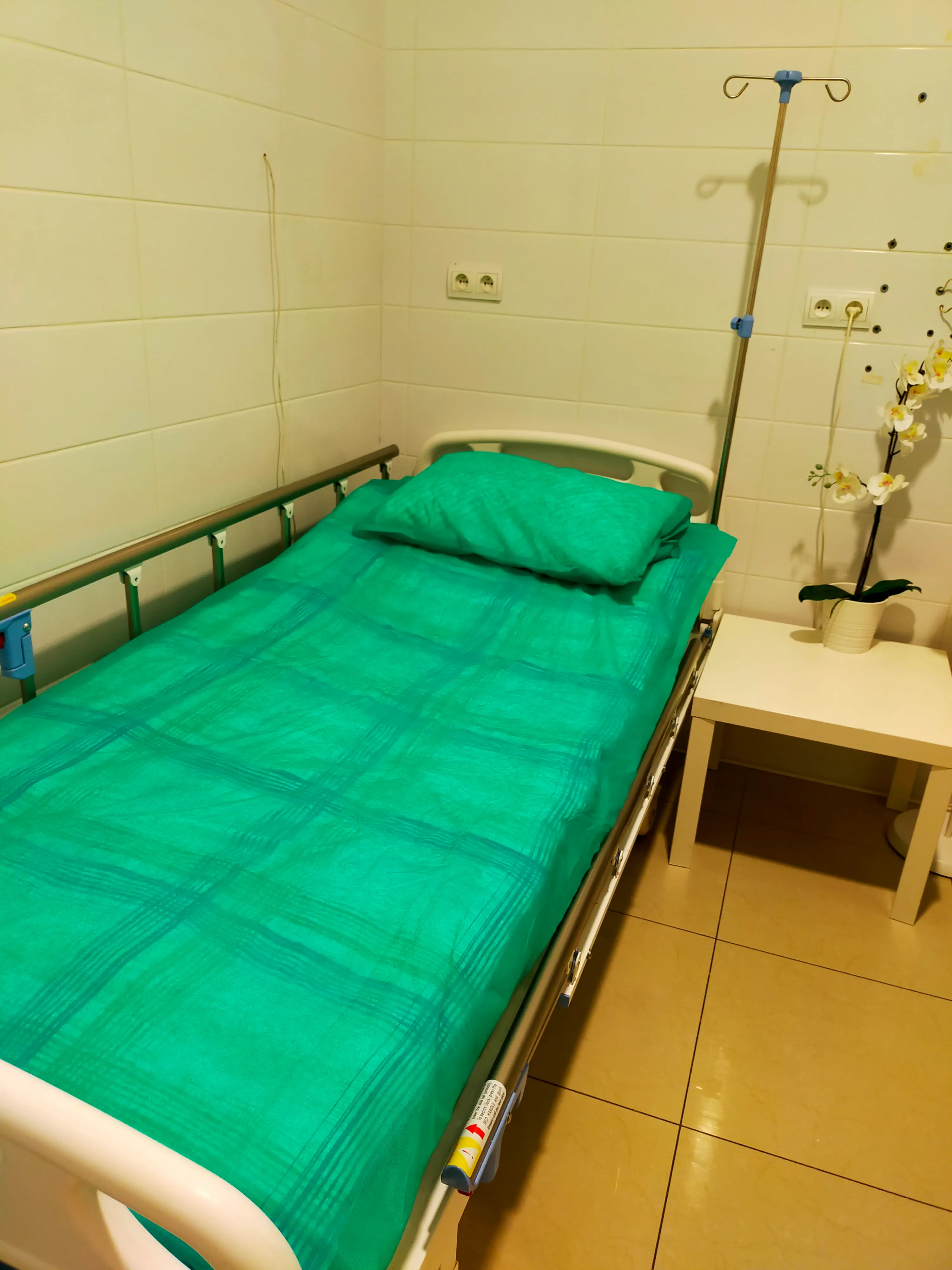
Inpatient treatment only makes sense when the patient feels safe at the centre. Staff are on site around the clock, and the programme is run by addiction therapists; during detox the patient stays under medical care, because that is when the body needs the most support. A steady daily rhythm, clear rules and no access to substances together make an environment in which it is easier to regain balance than in the previous surroundings.
The patient is not left alone with their illness: day to day they work with the lead therapist and the whole team, and if a health need arises, medical care is provided. Spreading the responsibility across a team of specialists is often one of the bigger advantages of a stay at a centre over trying to cope with addiction on your own, at home, where almost everything is a reminder of the substance.
Records and discretion
Patients often ask about anonymity. It is worth telling two things apart: discretion and the absence of records. Discretion we provide in full - confidentiality applies, and we pass information about the stay to no one without the patient's consent. This does not mean, however, that treatment happens without a trace: like any medical facility we keep records, because both the law and the safety of the treatment itself require it. The two do not rule each other out - you can be treated discreetly and thoroughly at the same time.
What the centre does not replace
Honestly, we should also say where the limits are. A stay at the centre is treatment for addiction, not help in a sudden threat to health or life - in acute states, for example withdrawal complications with a high fever, seizures or suicidal thoughts, what is needed first is urgent medical help or hospital treatment, and only then residential therapy. Nor do we promise that a stay closes the subject once and for all - addiction is a relapsing illness, and the centre gives a strong start and tools that the patient goes on using for a long time afterwards. Every case is different, and the results of treatment depend on many factors, including what happens after leaving.
Packages, prices and how to start treatment at the centre in Łódź
We settle a stay at the centre in two packages, matched to the length of treatment:
- Intensive Start - 4 weeks - 13 000 PLN. A focused stay: breaking the addiction, stabilising abstinence and the first tools for a sober life.
- Full Process of Transformation - 8 weeks - 25 000 PLN. Longer work, covering also the causes of the addiction and relapse prevention.
The price includes round-the-clock board and lodging, the team's care, individual therapy with the lead therapist and group therapy - everything that makes up the programme. Detox, if it is needed, we price separately after the assessment, because its scope depends on the patient's state. The amounts given are for information; we confirm the final cost after the conversation, once we know the length of the stay and any need for detox.
How to start treatment
The first step is a single phone call to 880 808 880. In that call we arrange the assessment, at which we settle the form and length of the stay and the admission date - and since we treat privately, with no referral and no queue, the date is usually close. The call can be made by the patient themselves or by someone close to them; it commits you to nothing and serves above all to work out what would be best in a given situation.
What happens after leaving
Discharge from the centre is not the end of treatment but a move to its next stage - now in everyday life. The first weeks after returning tend to be the hardest, which is why the patient gets a plan for that time, and further work can continue on an outpatient basis, for example as part of alcoholism treatment in Łódź or maintenance therapy. A supportive environment also helps the result last - and here again much depends on the family, who learn to live after the addiction together with the patient.