
Table of contents
After you quit smoking, nicotine cravings come in waves. A single craving, meaning a sudden, strong urge to smoke, usually lasts a few minutes (1), so you can wait it out if you know what to do in that time. The first four weeks are the hardest. In a UK study that followed former smokers for a year, cravings eased from week to week, but among the 66 people who had stayed smoke-free for six months, roughly one in eight still reported strong cravings (2).

In brief
- A nicotine craving usually lasts a few minutes. Changing where you are or what you are doing, breathing calmly and a short burst of physical activity help. Physical activity is the best studied of these.
- Cravings are most often triggered by situations in which you used to smoke: drinking coffee, a break at work, the end of a meal, drinking alcohol and being around smokers. In one study, the risk of smoking was highest when drinking alcohol, the presence of friends who smoke and a bad mood all came together.
- The strength of cravings decreases over the following weeks. In a small study of people quitting without medication, none of the 38 people who had not smoked for a year reported strong nicotine cravings, but one in three still had weaker cravings.
- If cravings are strong despite treatment, you need to discuss the medicine and its dose with a doctor. With nicotine replacement therapy (NRT), a higher-strength gum or a patch combined with gum or a lozenge can be considered. If cytisine treatment is not working, it should be stopped. The course can be repeated after 2-3 months.
What are the symptoms of nicotine cravings?
The main symptom of nicotine cravings is a strong urge to smoke. It is usually accompanied by thoughts circling around cigarettes, irritability, restlessness and difficulty focusing on anything else. The urge to smoke gets stronger in situations that for years went together with smoking.
Nicotine cravings are one of the symptoms of nicotine withdrawal syndrome. The others include low mood, insomnia, irritability, frustration or anger, restlessness, difficulty concentrating, impatience, a slower heart rate and increased appetite (3). Our guide to quitting smoking day by day shows how sleep, cough and appetite change in the first weeks.
How is background craving different from a sudden craving?
Researchers distinguish two types of nicotine craving (4). Background craving appears after you stop nicotine and changes slowly. Sudden cravings are intense and are triggered by cues associated with smoking, e.g. the smell of smoke, drinking coffee or a colleague who is smoking. According to the authors of the review, it is largely these sudden cravings that lead people back to smoking, although they can often be overcome if you plan in advance how to deal with them. A medicine taken regularly acts on background craving, but you need a separate plan for dealing with sudden cravings.
Nicotine cravings are also easy to confuse with ordinary hunger, because appetite increases after quitting smoking. Our article on how not to gain weight after quitting smoking explains how to avoid replacing cigarettes with snacking.
How long does a nicotine craving last, and what can you do in those few minutes?
A nicotine craving usually lasts a few minutes and fades even if you do not smoke. It is easiest to wait out if you have planned in advance what to do during a craving, rather than looking for a way only when the urge to smoke is at its strongest.
The following ways of coping with a craving come from guides by the UK's NHS and the US National Cancer Institute (5, 6). Just pick two or three that you can use in the place where your cravings usually come.
- Name what is happening. Look at your watch and tell yourself that this is a craving that will ease in a few minutes.
- Change where you are or what you are doing. Get up from the table, leave the room where you used to smoke, put your work aside for a moment.
- Breathe more slowly. The NHS suggests breathing in through your nose for 4 seconds, holding your breath for 5 seconds and breathing out through your mouth for 6 seconds. A simpler way is to take 10 calm breaths: breathe in through your nose and out through your mouth.
- Move. Go for a short walk or climb a few flights of stairs.
- Keep your mouth and hands busy. Drink some water, eat a carrot or a celery stick, chew ordinary sugar-free gum, turn something over in your fingers.
- Read your written reasons for quitting. The NHS advises writing them down and keeping them somewhere you can easily read them.
- Text or call someone who knows you are quitting.
Physical activity is the best studied of these. In a meta-analysis of experimental studies, a short bout of exercise, including moderate exercise, clearly reduced the urge to smoke in people who had not smoked for a while (7). In one of these studies, 15 people walked at their own pace for 15-20 minutes after 15 hours without a cigarette, and their cravings stayed weaker for 20 minutes after the walk, until the end of the measurement (8). These results concern the immediate effect and do not show whether physical activity helps people stay smoke-free over the following months.
What you think about during a craving also matters. In a 1996 study, people quitting smoking recorded in real time every moment when they wanted to smoke and every time they smoked again. At moments when they managed not to smoke, they used coping strategies 12 times more often than when they reached for a cigarette. Only thinking-based strategies proved effective, e.g. reminding yourself of your reasons for quitting (9). Later experiments confirmed the effect of physical activity, so it is best to combine activity with these strategies and, while out on a walk, remind yourself why you are quitting.
Nicotine gum or a lozenge when a craving hits
If your treatment plan includes nicotine replacement therapy in the form of gum, lozenges or a mouth spray, you use the product precisely when you have a strong urge to smoke. Nicorette gum is chewed slowly until the taste comes through, then parked between the gums and the cheek, and chewed again when the taste fades. This is repeated for 30 minutes, because that is how long it takes for all the nicotine to be released, and no more than 15 pieces can be used in a day (10).
The recommendations are different while you are taking cytisine (Desmoxan, Recigar, Tabex). Smoking or using other nicotine products during the course can make the side effects of nicotine worse, so when a craving hits, you do not use nicotine gum or a patch on top of it, and you do not use an e-cigarette (11, 12).
What should you avoid when a nicotine craving hits?
- Cigarettes within reach. In the 1996 study, people smoked again more often when cigarettes were easy to get, when smoking was allowed and when others nearby were smoking. It is therefore better not to carry a packet with you and not to keep cigarettes at home.
- One cigarette to take the edge off the craving. During treatment with Desmoxan capsules, Tabex or Recigar Active, you must not smoke even a single cigarette after quitting.
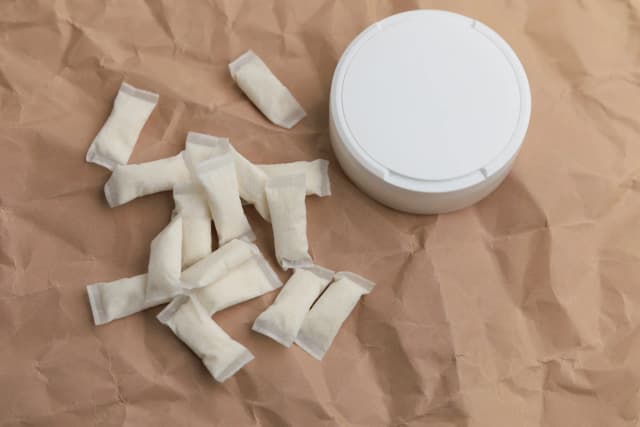
- Swapping cigarettes for an e-cigarette or nicotine pouches. An e-cigarette or a nicotine pouch delivers nicotine in place of a cigarette.
If you smoke a cigarette during a craving, it does not mean your attempt to quit has failed. Our article on smoking again after quitting explains what to do within the first day.
Why do nicotine cravings come back with coffee, after meals and with alcohol?
Nicotine cravings most often return in situations that for years went together with smoking: with your morning coffee, during a break at work, after a meal, while drinking alcohol and among smokers. In the first weeks, it helps to plan ahead how you will cope with cravings in each of these situations.
In a US study, 304 smokers recorded for a week the circumstances of every cigarette they smoked and what they were doing at randomly selected moments when they were not smoking. More than 21,000 such records were collected. Smoking was most strongly linked to the urge to smoke, and more weakly to drinking coffee, eating, the presence of other smokers and certain activities (13). The NHS guide also lists a break at work and the end of a meal among situations that trigger cravings, and points out that alcohol weakens self-control and makes cravings harder to manage. For the first 28 days, the NHS advises avoiding places and situations in which you want to smoke.
| Situation | What to change in the first weeks |
|---|---|
| Morning coffee | Drink your coffee somewhere other than usual, e.g. at the table instead of on the balcony; change the order of your morning routine; keep water and sugar-free gum to hand |
| Break at work | Do not go out with others for a cigarette; walk in a different direction or call someone during this time |
| End of a meal | Get up from the table straight after eating, brush your teeth or go for a short walk |
| Alcohol and parties | In the first weeks, cut down on alcohol or on outings where you used to drink and smoke; tell your friends that you do not smoke |
| Being around smokers | Ask the people close to you not to smoke around you and not to offer you cigarettes |
| Stress and arguments | Step away for a moment and do a breathing exercise before you decide to smoke |
| Driving | Remove the ashtray and lighter from the car; take water or sugar-free gum with you |
Several triggers of nicotine cravings can occur at the same time. In a study of 300 women who recorded their mood and behaviour for the first week after quitting, each of three factors, namely alcohol, the presence of smokers and a bad mood, was linked on its own to a stronger urge to smoke and a higher risk of smoking again. When all three factors occurred together, the cravings were strongest and the risk of smoking again was highest (14). If you have a beer after a difficult day with friends who smoke, all three factors come together. This is why, in the first weeks, it is better to put off such an outing or plan in advance how you will cope with cravings during it. We write about drinking alcohol while taking stop-smoking medicine separately in our article on cytisine and alcohol.
How do nicotine cravings ease over the following weeks?
Nicotine cravings are strongest in the first weeks after quitting, then gradually ease, and individual cravings come less often and are milder. Some people still have strong cravings six months later.
According to the NHS, cravings are hardest to manage in the first 28 days. Researchers in London looked more closely at how their intensity changes over time. They studied 452 smokers who were quitting with behavioural support but without medication, and asked those who were still not smoking about the strength of their cravings after 1, 2, 3 and 4 weeks, after six months and after a year (2). The strength of cravings fell fastest at the beginning and then more and more slowly.
| Time without cigarettes | What the sources show |
|---|---|
| First week | Anger, anxiety, low mood, insomnia and difficulty concentrating are at their strongest (15) |
| First 4 weeks | Cravings are hardest to manage (NHS); other withdrawal symptoms usually ease within 2-4 weeks (15) |
| 6 months | 13% of the 66 people who had stayed smoke-free still reported strong cravings (2) |
| 12 months | None of the 38 people who had stayed smoke-free reported strong cravings, but 34% had weaker cravings (2) |
Of the 452 people, 66 were still not smoking after six months and 38 after a year, so the percentages from the later measurements are based on small groups and are only approximate. Hughes's review did not assess nicotine cravings, only the other withdrawal symptoms. In Ussher's study, people with stronger cravings in the first four weeks usually also had stronger cravings six months later. If you still have strong cravings after a month, it is better to discuss them with a doctor than to wait for them to pass on their own. Do not end treatment on your own.
Cravings that come back after a few months, e.g. after the end of a course of treatment, are described in our article on when the urge to smoke stops.
When are nicotine cravings a sign that treatment needs to change?
Nicotine cravings are a sign that treatment needs to change if, despite medication, cravings end in smoking a cigarette, if cravings do not ease after a few weeks, or if a nicotine product used as needed has to be taken at the maximum daily dose. The doctor then assesses whether to change the dose, add a second form of nicotine product or choose a different medicine.
In an English study of 513 smokers who made an attempt to quit, stronger cravings on a day when they smoked as usual were linked to a lower chance of success, and this association was stronger than for the Fagerström test score (16). This is why it is worth telling your doctor how strong your cravings are when they choose your treatment.
When a patch alone is not enough to control cravings
A patch releases nicotine over many hours, so it eases background craving but protects less well against sudden cravings. In the review by Ferguson and Shiffman, medicines taken at a fixed dose, i.e. the patch, varenicline and bupropion, did not clearly protect against cravings triggered by cues. What did help was nicotine gum or a lozenge used straight after such a cue.
The Nicorette Invisipatch can be combined with gum, a lozenge or a mouth spray in people who are highly dependent, people who find it hard to control the urge to smoke and those who have gone back to smoking despite using one form of NRT. Only one of these products is combined with the patch in a given day: 2 mg gum, a 2 mg lozenge or a 1 mg/dose mouth spray. The gum or lozenge is used when a strong urge to smoke appears, up to 15 pieces a day. In a Cochrane review of 16 studies involving 12,169 people, more people in the group using such a combination were not smoking after at least six months than in the group using one form of NRT (RR 1.27, high-certainty evidence) (17). People who have recently had a heart attack or stroke, or who have unstable angina, severe heart rhythm disorders or uncontrolled high blood pressure, are advised to try quitting without medicines first, e.g. with the help of counselling. If this does not work, NRT can be considered, starting under close medical supervision.
When 2 mg nicotine gum is not enough to control cravings
4 mg Nicorette Classic gum is the starting strength for people who are highly dependent, meaning a Fagerström test score of at least 6 or smoking more than 20 cigarettes a day, and by people who did not manage to quit with 2 mg gum. Usually 8-12 pieces are used a day, no more than 15 a day, for at least 3 months, and the gum is then gradually tapered off. In the same Cochrane review, 4 mg gum increased the chances of quitting compared with 2 mg gum. Anyone using 2 mg gum who still has strong cravings despite using 15 pieces a day should discuss a change of dose with a doctor.
When cravings do not ease during a cytisine course
While taking Desmoxan, Recigar or Tabex, you need to stop smoking by day 5 of the course at the latest. If the course does not have a satisfactory effect, it should be stopped, and another one can be started after 2-3 months. Whether to repeat the course or choose a different medicine is decided with a doctor. The most common reasons for failure are described in our article on cytisine not working.
The choice of medicine and dose depends on how much you smoked, how soon after waking you reached for your first cigarette, what conditions you are being treated for and what medicines you take. As part of nicotine dependence treatment at Nasz Gabinet, the doctor takes this history and, once the treatment has been assessed as suitable, issues an e-prescription for the chosen medicine. The treatment plan lasts 3 months. The app reminds you to take your doses, counts your smoke-free days and includes a diary, and the plan can be supplemented with paid consultations with a psychologist.
When do nicotine cravings call for urgent help?
Irritability and lower mood in the first weeks are typical. Low mood can be a symptom of nicotine withdrawal, even in people who are not taking any medicine. It is rarely accompanied by suicidal thoughts and suicide attempts. If you have thoughts of taking your own life, you need to contact a doctor that same day and not deal with these thoughts alone. If the danger is immediate, you need emergency medical help straight away. Our article on nerves, anxiety and sadness after quitting smoking explains how to tell a drop in mood after quitting smoking from depression. This article does not replace a medical consultation.
Frequently asked questions
How long do nicotine cravings last?
A single nicotine craving usually lasts a few minutes. The first 4 weeks after quitting are the hardest, and during the day the strongest urge to smoke comes in situations in which you used to smoke. Over time, cravings come less often and are weaker. In a small study of people quitting without medication, 13% of those who had stayed smoke-free for six months still reported strong cravings. Among those who had stayed smoke-free for a year, no one reported strong cravings, but 34% still had weaker cravings.
What is the difference between physical and psychological nicotine cravings?
The division into physical and psychological nicotine cravings is popular, but researchers divide them differently: into background craving, which results from nicotine withdrawal, and sudden cravings triggered by situations associated with smoking. Background craving is eased by a medicine taken regularly. With sudden cravings, you also need to know how to wait out a strong urge to smoke, e.g. by going for a walk.
Do nicotine patches stop nicotine cravings?
Nicotine patches ease background nicotine craving, but they protect less well against sudden cravings while drinking coffee or alcohol. People who find it hard to control the urge to smoke can combine a patch with gum, a lozenge or a mouth spray. Such a combination is best agreed with a doctor, especially if you have heart disease.
Is it normal to still have nicotine cravings after a month?
Nicotine cravings after a month without cigarettes do not mean that quitting has failed. In a study that followed former smokers for a year, cravings kept easing for many months, and after a year one in three of those who had stayed smoke-free still had weaker cravings. However, people with strong cravings in the first month usually also had stronger cravings six months later. If strong cravings persist, it is worth discussing your medicine and its dose with a doctor.
Sources
- NHS Better Health. Understand your smoking triggers and cravings. nhs.uk
- Ussher M, Beard E, Abikoye G, Hajek P, West R. Urge to smoke over 52 weeks of abstinence. Psychopharmacology (Berl). 2013;226(1):83-89. PMID 23052572, DOI
- Charakterystyka Produktu Leczniczego Nicorette Invisipatch (zmiana tekstu 10.03.2026). Rejestr Produktów Leczniczych
- Ferguson SG, Shiffman S. The relevance and treatment of cue-induced cravings in tobacco dependence. J Subst Abuse Treat. 2009;36(3):235-243. PMID 18715743, DOI
- NHS Better Health. Managing nicotine withdrawal symptoms. nhs.uk
- National Cancer Institute, Smokefree.gov. How to Manage Cravings. smokefree.gov
- Haasova M, Warren FC, Ussher M et al. The acute effects of physical activity on cigarette cravings: systematic review and meta-analysis with individual participant data. Addiction. 2013;108(1):26-37. PMID 22861822, DOI
- Taylor AH, Katomeri M, Ussher M. Acute effects of self-paced walking on urges to smoke during temporary smoking abstinence. Psychopharmacology (Berl). 2005;181(1):1-7. PMID 15844010, DOI
- Shiffman S, Paty JA, Gnys M, Kassel JA, Hickcox M. First lapses to smoking: within-subjects analysis of real-time reports. J Consult Clin Psychol. 1996;64(2):366-379. PMID 8871421, DOI
- Charakterystyka Produktu Leczniczego Nicorette Classic Gum 2 mg i 4 mg (zmiana tekstu 31.10.2025). Rejestr Produktów Leczniczych
- Charakterystyka Produktu Leczniczego Desmoxan 1,5 mg, tabletki (zmiana tekstu 31.10.2025). Rejestr Produktów Leczniczych
- Charakterystyki Produktu Leczniczego Desmoxan 1,5 mg, kapsułki twarde, Recigar 1,5 mg, tabletki powlekane, Recigar Active 1,5 mg/dawkę i Tabex 1,5 mg, tabletki powlekane. Desmoxan kapsułki, Recigar, Recigar Active, Tabex
- Shiffman S, Gwaltney CJ, Balabanis MH et al. Immediate antecedents of cigarette smoking: an analysis from ecological momentary assessment. J Abnorm Psychol. 2002;111(4):531-545. PMID 12428767, DOI
- Lam CY, Businelle MS, Aigner CJ et al. Individual and combined effects of multiple high-risk triggers on postcessation smoking urge and lapse. Nicotine Tob Res. 2014;16(5):569-575. PMID 24323569, DOI
- Hughes JR. Effects of abstinence from tobacco: valid symptoms and time course. Nicotine Tob Res. 2007;9(3):315-327. PMID 17365764, DOI
- Fidler JA, Shahab L, West R. Strength of urges to smoke as a measure of severity of cigarette dependence: comparison with the Fagerström Test for Nicotine Dependence and its components. Addiction. 2011;106(3):631-638. PMID 21134020, DOI
- Theodoulou A, Chepkin SC, Ye W et al. Different doses, durations and modes of delivery of nicotine replacement therapy for smoking cessation. Cochrane Database Syst Rev. 2023;6(6):CD013308. PMID 37335995, DOI
Nicotine cravings not easing despite treatment?
In the Nasz Gabinet app, you can start a 3-month treatment plan with a medicine chosen after a medical interview. The diary in the app helps you record when nicotine cravings come.