
Table of contents
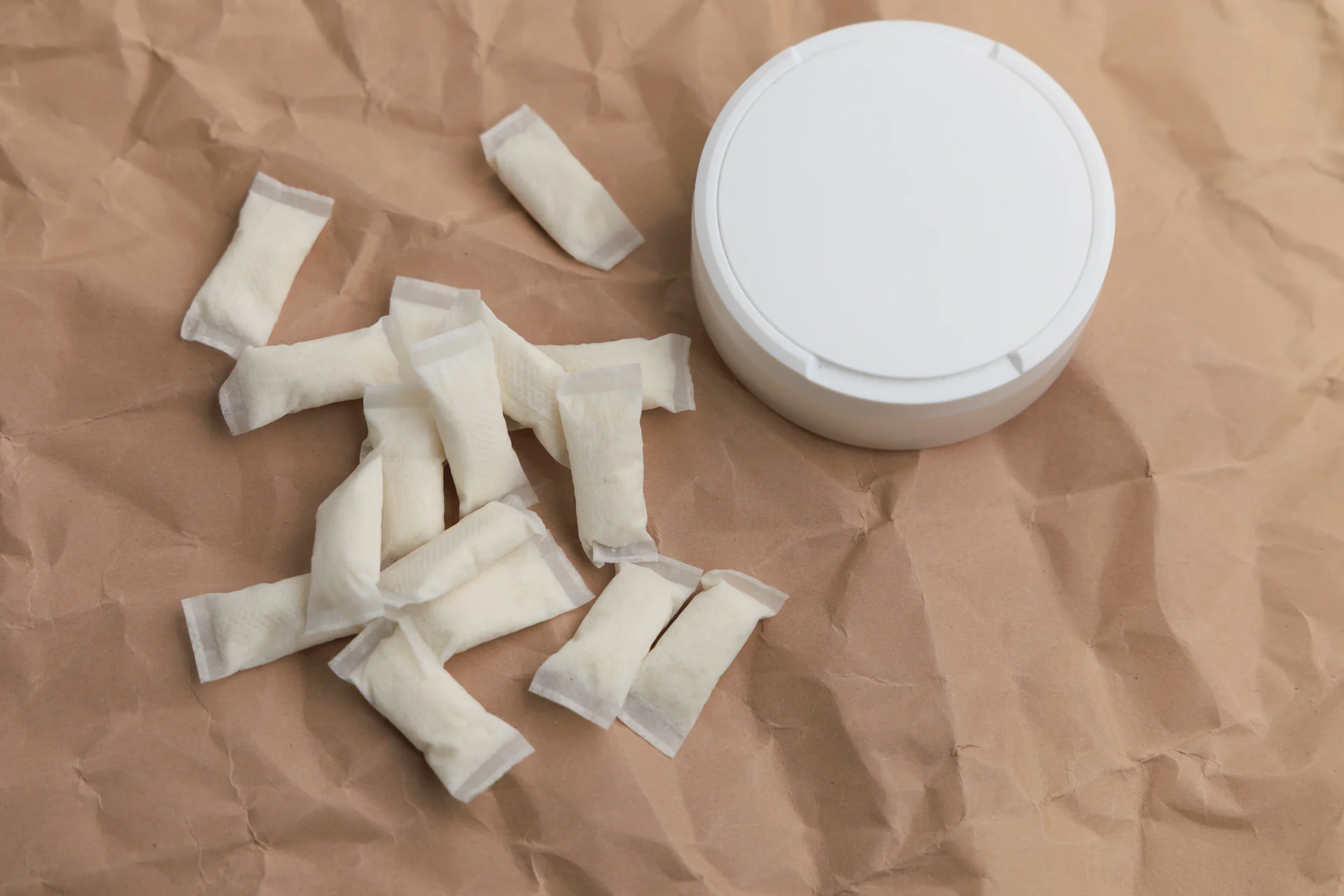
A nicotine pouch or a portion of snus is placed under the lip. No smoke is produced when you use them, so they may seem less harmful than cigarettes. However, they contain the same addictive nicotine, and stopping them brings similar symptoms: a strong urge to reach for a pouch, restlessness, trouble concentrating and increased appetite (1). The amount of nicotine you take in over the day determines whether a plan for stopping and support from a therapist will be enough, or whether a patch, a nicotine lozenge or a prescription medicine will also help. There is almost no research on stopping pouches alone, so the recommendations are based on studies of snus and on the summaries of product characteristics (SmPCs) of medicines authorised in Poland.
In brief
- Snus contains ground tobacco, while nicotine pouches contain nicotine alone, without tobacco leaf. In both cases, it is the nicotine that causes addiction, so the plan for stopping looks similar.
- To start, work out the nicotine content of one pouch, given in milligrams, how many pouches you use a day, how long after waking you use the first one and whether you use them at night. For pouches containing less than 6 mg of nicotine, starting treatment with a lower dose of the NiQuitin patch, 14 instead of 21 mg/24 h, is recommended.
- In studies of smokeless tobacco, more people stopped using it after sessions with a therapist or during treatment with varenicline or nicotine replacement therapy than without such help. There are no studies of cytisine in people who use snus or pouches, and whether to use it for pouches alone is up to the doctor.
- Nausea, vomiting, drooling and dizziness after a pouch are signs of too high a dose of nicotine. Pouches, including used ones, must be kept away from children, because even a small amount of nicotine is dangerous for them.
How is snus different from nicotine pouches?
Snus is ground tobacco packed in small pouches, while nicotine pouches, called white snus in Sweden, contain nicotine without tobacco leaf. In both cases, the nicotine is absorbed through the lining of the mouth and is equally addictive.
Germany's Federal Institute for Risk Assessment tested 44 types of pouches from 20 manufacturers. Nicotine content ranged from 1.79 to 47.5 mg per pouch, 29 packages lacked clear information on the amount of nicotine, and trace amounts of carcinogenic nitrosamines, typical of tobacco, were found in 26 products (2). According to a review by researchers from Sweden and Denmark, pouches deliver as much nicotine to the blood as traditional snus, or more, and there are not yet any results from long-term follow-up of their effects on the heart (3).
Where do you start when quitting nicotine pouches?
Before you stop using pouches, check the stated nicotine content of one pouch and write down how many you use a day, how long you keep each one under your lip and at what time you reach for the first one. On this basis, a pharmacist or doctor chooses the nicotine dose in a patch or lozenge, and a therapist helps you set the day you stop using pouches and prepare for the situations in which you usually reached for them.
For 2-3 days before you stop, it is worth noting down:
- the nicotine content given on the tin, in milligrams per pouch
- the number of pouches a day, and whether you sometimes keep two pouches under your lip at the same time or put in a new one before taking out the previous one
- how long you keep one pouch under your lip
- how many minutes after waking you put the first pouch under your lip
- whether you fall asleep with a pouch in or wake up at night to put one in
- the situations in which you reach for one most often: with coffee, in the car, at work, with alcohol, after a workout
- whether you also smoke or use an e-cigarette
How many milligrams of nicotine in a pouch is a lot?
The nicotine content in milligrams stated on the tin helps you estimate how much nicotine you take in, but it does not always match the actual content. In the German study cited above, the information on nicotine content on the packaging was ambiguous. The WHO points out that pouches are sold in versions for beginners, advanced users and experts, with labels stating as much as 150 mg of nicotine (4). According to a 2026 scoping review of studies, in adult smokers a pouch containing 6 mg of nicotine or more usually delivered more nicotine to the blood than a cigarette (5). The same nicotine content stated on the packaging of snus and of pouches also does not mean that they release the same amount of the substance: in a study co-authored by an employee of the manufacturer of the pouches tested, about 59% of the nicotine was released from a 6 mg pouch and about 32% from 8 mg snus (6).
Over time, some people switch to pouches with more nicotine or, as focus group participants described, keep several pouches under their lip and put in a new one without taking out the previous one (7).
The dose of the NiQuitin 24-hour patch and NiQuitin lozenges is matched to the nicotine content of the pouches you use:
| Nicotine content of the pouches you use | NiQuitin patch or lozenge dosage |
|---|---|
| less than 6 mg | 14 mg/24 h nicotine patch for 6 weeks, then 7 mg/24 h for 2 weeks |
| 6 mg or more | 21 mg/24 h nicotine patch for 6 weeks (the usual start of treatment), then 14 mg and 7 mg for 2 weeks each |
| less than 10 mg | 2 mg lozenges |
| more than 10 mg | 4 mg lozenges; when combined with the patch, the 4 mg oral form for the first 6 weeks |
For pouches containing exactly 10 mg of nicotine, the lozenge dose needs to be agreed with a pharmacist or doctor. Lozenges used without a patch should not be taken more than 15 times a day, and when combined with a patch, the number of 4 mg lozenges must not exceed 10 a day. For any other product, check the dosage in its leaflet; the final choice of nicotine dose is made by a pharmacist or doctor.
What does using pouches at night and straight after waking say about dependence?
In the Fagerström test, which is used to assess nicotine dependence, the first question is about how soon after waking you smoke your first cigarette. The most points go to a person who smokes within 5 minutes of waking (8). Snus is also often used early in the morning: in a study from Norway and Sweden, participants used it about 15 times a day on average, and about 80% had their first portion of snus within 30 minutes of waking (9).
Anyone who falls asleep with a pouch in also takes in nicotine at night and should tell the pharmacist or doctor choosing their treatment about this. A NiQuitin patch worn for 24 hours reduces the morning need to reach for a nicotine pouch, but it can also be removed before bed. Sleep disturbances, including nightmares, are very common side effects of the patch, so it is best to decide together with a pharmacist or doctor whether to wear the patch at night.
What are the withdrawal symptoms when you stop nicotine pouches?
After stopping nicotine pouches and snus, nicotine withdrawal symptoms appear. Typical ones are a strong urge to reach for a pouch, irritability, restlessness, difficulty concentrating, disturbed sleep and increased appetite.
In a small study by Hatsukami et al., 10 men who used moist snuff, which is held under the lip, stopped using it for 5 days. Compared with 10 men who continued to use it, they had a stronger urge to use tobacco, found it harder to concentrate, were more restless, felt hungry more often and ate more. Withdrawal symptoms also include low mood, nervousness, anxiety, mood swings, sleepiness and insomnia.
How long do symptoms last after stopping pouches?
Data on how long the symptoms last come from studies of smokers, not of people who use pouches. In smokers, irritability, restlessness, difficulty concentrating and insomnia are strongest in the first week and usually last 2-4 weeks (10). According to the US National Cancer Institute, the urge to reach for nicotine comes less and less often over time, but weaker cravings can still occur months or even years later (11). Our article on nicotine cravings explains what to do when such a craving hits.
Low mood, rarely with suicidal thoughts, can be a symptom of nicotine withdrawal, whether or not someone is taking a medicine. Nicotine withdrawal can also make an existing mental illness, such as depression, worse. If your mood keeps getting worse over the following weeks or you have thoughts of taking your own life, consult a doctor straight away, and in an emergency seek urgent help.
What medicines help you stop using nicotine pouches and snus?
In studies of snus and other smokeless tobacco, more people stopped using it after sessions with a therapist or during treatment with varenicline or nicotine replacement therapy than without such help. No benefit was shown for bupropion. There are no such studies for nicotine pouches alone, so the choice of treatment draws on these data and on the rules for using the medicines.
A 2025 Cochrane review covered 43 studies involving 20,346 people; tobacco-free pouches were not analysed separately (12). After at least 6 months, the results for stopping smokeless tobacco use were as follows:
- Sessions with a therapist or counsellor: an estimated 23-34 in 100 people stopped using smokeless tobacco, compared with 16 per hundred with minimal support (21 studies, moderate-certainty evidence).
- Nicotine replacement therapy: 29-36 in 100 people stopped using smokeless tobacco, compared with 27 per hundred with a placebo or no medicine (11 studies, low-certainty evidence).
- Varenicline: 36-56 in 100 people stopped using smokeless tobacco, compared with 33 per hundred with a placebo (2 studies, moderate-certainty evidence).
- Bupropion: 10-28 in 100 people stopped using smokeless tobacco, compared with 19 per hundred with a placebo; no benefit from bupropion treatment was shown (2 studies, low-certainty evidence).
Do nicotine patches and lozenges help you stop using pouches?
NiQuitin patches and lozenges are also indicated for people dependent on nicotine pouches. If you stop pouches abruptly, you stop using them before applying the first patch and do not go back to them during treatment, because during a quit attempt they can lead to a relapse. You can also stop pouches gradually: you use the 21 mg patch for 2-4 weeks while still using pouches, and then stop them completely. Anyone who has gone back to pouches despite using one nicotine replacement product, or who cannot cope with sudden nicotine cravings, can combine a patch with gum or a lozenge, following the schedule for such combined treatment.
Lozenges and gum deliver nicotine through the lining of the mouth, just like a pouch. In an older study in people who used smokeless tobacco, 2 mg gum eased withdrawal symptoms but did not increase the proportion of people who stopped using smokeless tobacco; the authors linked this to the similarity between gum and smokeless tobacco (13). With NiQuitin lozenges, nausea is very common, and hiccups and mouth irritation or ulcers are common. If you use an e-cigarette as well as pouches, you will find a separate plan in our article on how to quit vaping.
Does varenicline help you quit snus?
In the study by Fagerström et al., 431 adults from Norway and Sweden who used snus at least 8 times a day took varenicline or a placebo for 12 weeks. During the last 4 weeks of treatment, 59% of people in the varenicline group and 39% in the placebo group did not use tobacco, and over the whole period from week 9 to week 26, 45% and 34%, respectively. Nausea was reported by 35% of people taking varenicline and 6% of those taking the placebo. The study involved snus, not pouches. Varenicline is a prescription medicine, and the decision to use it is made by a doctor after assessing the patient's conditions and the other medicines they take.
Can cytisine be used by people who use nicotine pouches?
Desmoxan is authorised for smoking cessation in people who want to stop smoking, so in someone who does not smoke and uses only pouches, its use goes beyond the authorised indication. Recigar tablets have a broader indication, the treatment of nicotine dependence, but their course schedule was also designed for smokers (cigarettes are stopped by day 5 at the latest). The Cochrane review does not report results for cytisine in people who use smokeless tobacco, and there are no studies in people who use pouches. While you are taking either medicine, using nicotine products can make the side effects of nicotine worse. The doctor assesses whether using cytisine in someone who uses pouches is justified and how the course should go. We describe the 25-day course in our article on the cytisine course.
The choice of medicine and dose takes into account the amount of nicotine you take in from pouches, heart disease, blood pressure, pregnancy and other medicines you take. Our article on quitting smoking with a doctor or on your own explains when it is better to consult a doctor before using a pharmacy product. At Nasz Gabinet, nicotine dependence treatment lasts three months and starts with a medical interview and the choice of a medicine. Once the treatment has been assessed as suitable, the doctor issues an e-prescription for the chosen medicine, and the app provides dose reminders, a course day counter and a diary. Consultations with a psychologist can be added for an extra fee.
How do nicotine pouches and snus affect your gums and mouth?
Using snus is linked to gum recession and gingivitis, and lesions form on the lining of the mouth where the pouch is placed; they usually clear up after you stop using snus. Less is known about tobacco-free pouches. Short studies reported isolated cases of mouth irritation after using pouches (14), and there are no studies lasting many years.
A review of 26 studies found an association between using Swedish snus and gum recession, strongest for loose snus. Snus use was also linked to more frequent gingivitis, but not to periodontitis (15). An older Swedish study followed 29 people with mucosal lesions caused by loose snus. In all 20 who stopped using it, or switched to portion snus and changed where they placed it in the mouth, the lining of the mouth was healthy after 3-6 months, including under the microscope (16).
When should you see a dentist about a change in your mouth?
The UK's NHS recommends seeing a dentist or doctor if you have a mouth ulcer that has not healed for more than 3 weeks, a red or white patch, a lump in your mouth or on your lip, pain that does not go away, difficulty swallowing or speaking, or hoarseness that persists (17). Such a change does not necessarily mean cancer, but a dentist or doctor needs to look at it. At the appointment, it helps to say where you usually keep your pouch and for how many years you have been using pouches.
Are nausea and vomiting after a pouch a sign of nicotine overdose?
Nausea, vomiting, excessive salivation, abdominal pain, sweating, headache and dizziness after a pouch are typical symptoms of too high a dose of nicotine. Take the pouch out and do not put in another one. If the symptoms do not go away or are severe, contact a doctor. Shortness of breath, a weak or irregular pulse, collapse and seizures require immediate medical help.
Symptoms of nicotine overdose also include pallor, confusion, trembling, diarrhoea, vision and hearing disturbances and marked weakness. Overdose is a particular risk when someone takes in nicotine from several sources, e.g. does not reduce the number of pouches after applying a patch. Symptoms of too high a dose are then a signal to stop taking nicotine and agree a lower dose with a pharmacist or doctor. The same applies to pouches during a course of cytisine. A person who starts using a product with a higher nicotine content or keeps two pouches under their lip also takes in more nicotine.
Why are nicotine pouches dangerous for children?
Even small amounts of nicotine are dangerous for children and can cause death, and suspected nicotine poisoning in a child requires urgent medical help. The SmPC for Nicorette gum gives 40-60 mg of nicotine as the minimum lethal dose in children, but this refers to swallowed tobacco from cigarettes and does not translate directly to a pouch. A used pouch still contains nicotine: in the study by Lunell et al., about 59% of the nicotine was released from a 6 mg pouch, so the rest stayed in the pouch. Keep unused and used pouches in a closed tin out of the reach of children. This article does not replace a medical consultation.
Frequently asked questions
Can you quit nicotine pouches overnight?
You can stop using nicotine pouches overnight. The rules for using nicotine replacement therapy allow for both stopping abruptly and gradually cutting down on pouches. In the gradual schedule with the NiQuitin patch, pouches are still used for 2-4 weeks. It is not known which approach works better for people who use pouches. If you stop overnight, it helps to set a date and prepare for the first week, when withdrawal symptoms are usually strongest.
Do nicotine-free pouches help you give up nicotine pouches?
There are no studies on nicotine-free pouches as an aid to giving up nicotine pouches. A similar substitute was tested in a 2000 study by Hatsukami et al. (18), in which some of the 402 people who used smokeless tobacco were given a nicotine-free mint substitute. The substitute reduced nicotine cravings and withdrawal symptoms, but did not increase the proportion of people who stopped using tobacco. A nicotine-free pouch may therefore help someone who is used to having something under their lip, but it does not replace treatment.
Does switching from snus to nicotine pouches end nicotine addiction?
Switching from snus to nicotine pouches does not mean you stop taking in nicotine, because the addiction is to the same substance. Pouches deliver as much nicotine as snus, or more, and the authors of the 2026 Scandinavian review consider nicotine itself to be the main cause of the increased risk of heart disease in people who use snus.
Do nicotine pouches help you quit smoking?
It is not known whether nicotine pouches help people quit smoking, because there are few studies. The authors of the 2025 Cochrane review found 4 small studies involving 284 smokers and rated their results as very uncertain (14). According to a 2026 review, in short studies pouches reduced the number of cigarettes smoked, but participants usually continued to use both products instead of stopping smoking. There are authorised stop-smoking medicines with documented effects.
Sources
- Hatsukami D, Anton D, Keenan R, Callies A. Smokeless tobacco abstinence effects and nicotine gum dose. Psychopharmacology (Berl). 1992;106(1):60-66. PMID 1738794, DOI
- Mallock N, Schulz T, Malke S et al. Levels of nicotine and tobacco-specific nitrosamines in oral nicotine pouches. Tob Control. 2024;33(2):193-199. PMID 38378209, DOI
- Olsson M, Tønnesen H, Hedberg J et al. Snus, nicotine pouches and cardiovascular disease: Evidence, mechanisms, and the challenge of novel nicotine products. J Intern Med. 2026;300(5):541-552. PMID 42706592, DOI
- WHO. WHO warns nicotine pouch brands targeting youth as sales surge. 15.05.2026. who.int
- Travis N, Warner KE, Hartmann-Boyce J et al. Oral Nicotine Pouches and Public Health: Evidence from an Updated Scoping Review. Nicotine Tob Res. 2026. PMID 42702065, DOI
- Lunell E, Fagerström K, Hughes J, Pendrill R. Pharmacokinetic Comparison of a Novel Non-tobacco-Based Nicotine Pouch (ZYN) With Conventional, Tobacco-Based Swedish Snus and American Moist Snuff. Nicotine Tob Res. 2020;22(10):1757-1763. PMID 32319528, DOI
- Tomko PM, Curran H, Patterson JG et al. A qualitative assessment of oral nicotine pouch use topography. Nicotine Tob Res. 2026. PMID 42742193, DOI
- Medycyna Praktyczna. Interna, tabela 3.22-2: Kwestionariusz oceny uzależnienia od nikotyny wg Fagerströma. mp.pl
- Fagerström K, Gilljam H, Metcalfe M, Tonstad S, Messig M. Stopping smokeless tobacco with varenicline: randomised double blind placebo controlled trial. BMJ. 2010;341:c6549. PMID 21134997, DOI
- Hughes JR. Effects of abstinence from tobacco: valid symptoms and time course. Nicotine Tob Res. 2007;9(3):315-327. PMID 17365764, DOI
- National Cancer Institute. Handling Nicotine Withdrawal and Triggers When You Decide To Quit Tobacco. cancer.gov
- Livingstone-Banks J, Vidyasagaran AL, Croucher R et al. Interventions for smokeless tobacco use cessation. Cochrane Database Syst Rev. 2025;4(4):CD015314. PMID 40232040, DOI
- Hatsukami D, Jensen J, Allen S, Grillo M, Bliss R. Effects of behavioral and pharmacological treatment on smokeless tobacco users. J Consult Clin Psychol. 1996;64(1):153-161. PMID 8907095, DOI
- Hartmann-Boyce J, Tattan-Birch H, Brown J et al. Oral nicotine pouches for cessation or reduction of use of other tobacco or nicotine products. Cochrane Database Syst Rev. 2025;10(10):CD016220. PMID 41130602, DOI
- Bankvall M, Jontell M. Swedish smokeless tobacco and its impact on oral health: a systematic review. Acta Odontol Scand. 2026;85:84-95. PMID 41649495, DOI
- Larsson A, Axéll T, Andersson G. Reversibility of snuff dippers' lesion in Swedish moist snuff users: a clinical and histologic follow-up study. J Oral Pathol Med. 1991;20(6):258-264. PMID 1890661, DOI
- NHS. Mouth cancer: symptoms. nhs.uk
- Hatsukami DK, Grillo M, Boyle R et al. Treatment of spit tobacco users with transdermal nicotine system and mint snuff. J Consult Clin Psychol. 2000;68(2):241-249. PMID 10780124
- Charakterystyka Produktu Leczniczego NiQuitin Przezroczysty 21 mg/24 godz., system transdermalny. Rejestr Produktów Leczniczych
- Charakterystyka Produktu Leczniczego NiQuitin 4 mg, pastylki do ssania. Rejestr Produktów Leczniczych
- Charakterystyka Produktu Leczniczego Nicorette Classic Gum 2 mg i 4 mg, guma do żucia. Rejestr Produktów Leczniczych
- Charakterystyka Produktu Leczniczego Desmoxan 1,5 mg, tabletki. Rejestr Produktów Leczniczych
- Charakterystyka Produktu Leczniczego Recigar 1,5 mg, tabletki powlekane. Rejestr Produktów Leczniczych
Want to stop using nicotine pouches or snus?
In the Nasz Gabinet app, you can start a 3-month treatment plan. In the medical interview, you tell us how much nicotine you take in from pouches, what conditions you have and what medicines you take.