
Table of contents
Poznań is moving towards a city-wide night-time alcohol ban more slowly than any of the four largest Polish cities - district by district, with several years between decisions. The Old Town received its night-time retail alcohol ban in 2018, Łazarz and Wilda joined in July 2023, and the next two districts - Jeżyce and Ogrody - were voted in by the City Council in spring and summer 2025. Behind these decisions are hard numbers: the 2024 budget of the Municipal Programme for Prevention and Resolution of Alcohol Problems and Counteracting Drug Addiction (MPPiRPA) was PLN 25.5 million, and the planned revenue from alcohol licence fees for 2025 is PLN 27.7 million. Even outlays this large are only a fraction of the real costs alcohol generates at the city level.
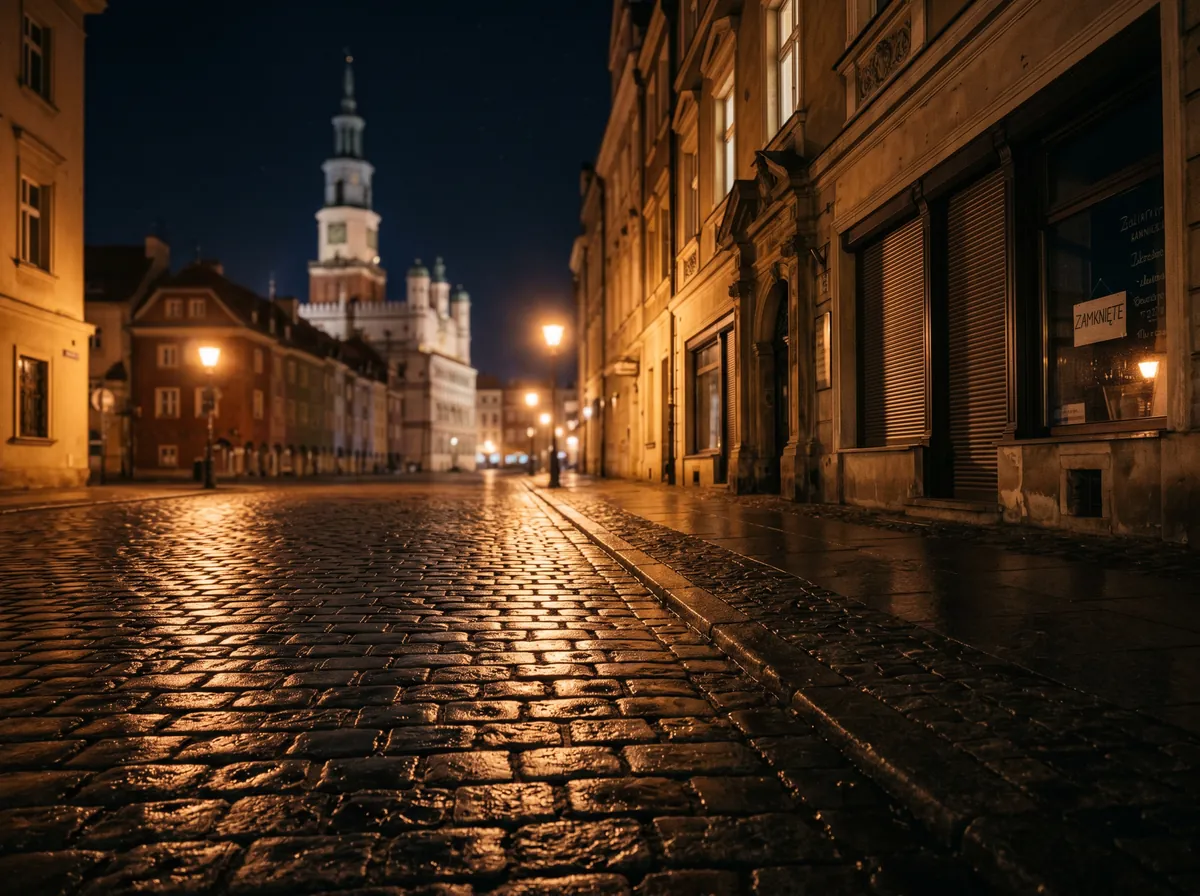
In brief
- MPPiRPA 2024 budget (resolution XCV/1832/VIII/2023 of 21 December 2023): PLN 25,500,000 split across 5 specific objectives - universal prevention (PLN 5.2 m), evidence-based programmes (PLN 7.59 m), specialist services (PLN 5.34 m), harm reduction (PLN 4.15 m), diagnostic system (PLN 3.21 m).
- 2025 alcohol revenue plan: PLN 27,700,000 (Poznań City Council resolution of 19 December 2024).
- Licence caps (resolution XXX/535/VIII/2020 of 23 June 2020): 5,390 in total - 1,870 for beverages up to 4.5%, 1,795 for 4.5-18% (excluding beer), 1,725 above 18%. Special caps for the Old Town total 280 licences.
- Night-time ban: Old Town (June 2018, resolution LXVI/1213/VII/2018 of 8 May 2018), Łazarz (July 2023), Wilda (27 July 2023), Jeżyce (4 April 2025), Ogrody (11 July 2025) - five districts in total, hours 22:00-6:00, retail shops and petrol stations excluding restaurants.
- MKRPA Poznań 2022: 233 motions for compulsory treatment (183 men, 50 women); commission budget for 2024 - PLN 430,000.
- Centre for Intoxicated Persons (28 places): 4,604 admissions in 2022 (4,041 men, 563 women, 7 minors, 1,584 homeless); 2024 funding - PLN 2.2 million.
- Blue Card procedures 2022: 1,504 cases initiated (199 more than in 2021), 3,472 people receiving specialist support.
- Poznań population: 513,676 registered residents (Statistical Office in Poznań, as of 31 December 2024); the actual number of people based on 2024 mobile data is 716,800.
MPPiRPA 2024 budget - PLN 25.5 m across five objectives
Every business selling alcohol in Poznań (shop, bar, restaurant, wholesaler) pays an annual licence fee. The amount depends on the alcohol category and the previous year's turnover - a new entrepreneur or a smaller business pays PLN 525 for beer and wine or PLN 2,100 for spirits over 18%. Higher turnover is settled as a percentage of sales value. In Poznań these fees feed in full into the Municipal Programme for Prevention and Resolution of Alcohol Problems and Counteracting Drug Addiction. The revenue plan for 2025 is PLN 27,700,000 (City Council budget resolution of 19 December 2024). The actual MPPiRPA spending budget for 2024 was set at PLN 25,500,000, broken down across five specific objectives.
| MPPiRPA 2024 specific objective | Budget | Beneficiaries |
|---|---|---|
| Objective 1 - Universal prevention and social skills | PLN 5,204,000 | 40,695 |
| Objective 2 - Evidence-based programmes (day-care centres, MOPR, NGOs) | PLN 7,593,043 | 4,392 |
| Objective 3 - Specialist services, MKRPA, MCIK, OLAZA | PLN 5,338,916 | 8,184 |
| Objective 4 - Harm reduction (Centre for Intoxicated Persons, police) | PLN 4,149,995 | 10,309 |
| Objective 5 - Diagnostic system and ŚWIT Prevention Centre | PLN 3,214,046 | 30 |
| Total MPPiRPA 2024 | PLN 25,499,000 | 63,610 |
Source: Annex to resolution no. XCV/1832/VIII/2023 of the Poznań City Council of 21 December 2023, tables 18-22.
Within Objective 2, the largest item is the network of day-care centres for children from families with an alcohol problem (PLN 3 m, 430 children) and the MOPR Specialist Support Programme (PLN 1,576,842, 3,000 families). Objective 3 funds, among others, the Franciszek Raszeja Municipal Hospital running the Centre for the Treatment of Alcohol Withdrawal Syndromes OLAZA (PLN 1 m), the "NA TRZEŹWO" programme of the Municipal Crisis Intervention Centre (PLN 1,337,536), PLN 80,000 for sober clubs and PLN 100,000 for FASD-related work. Objective 4 is mainly the Centre for Intoxicated Persons (PLN 2.2 m) and PLN 1 m for additional preventive patrols of the Municipal Police.
What the law says. Under Article 18² section 4 of the Act of 26 October 1982 on Upbringing in Sobriety and Counteracting Alcoholism, revenue from alcohol licence fees must be spent exclusively on the municipal alcohol prevention programme and the drug counteraction programme. The city cannot use these funds for anything else - though it may add money from the general budget if the needs are greater.
Night-time ban - from the Old Town to Ogrody, seven years of small steps
Poznań chose the most gradual route of any major Polish city. The Old Town received its night-time retail alcohol ban first - under resolution no. LXVI/1213/VII/2018 of the Poznań City Council of 8 May 2018, in the hours 22:00-6:00, following the 9 March 2018 amendment to the Sobriety Act, which gave municipalities the power to introduce such restrictions. The next districts came on much more slowly than in Kraków or Wrocław.
| District | Effective date | Ban hours |
|---|---|---|
| Old Town (Stare Miasto) | June 2018 (resolution LXVI/1213/VII/2018 of 8 May 2018) | 22:00-6:00 |
| Św. Łazarz | July 2023 | 22:00-6:00 |
| Wilda | 27 July 2023 | 22:00-6:00 |
| Jeżyce | 4 April 2025 | 22:00-6:00 |
| Ogrody | 11 July 2025 | 22:00-6:00 |
The ban applies only to retail outlets selling alcohol for off-premises consumption: grocery stores, supermarkets, hypermarkets, petrol stations and liquor shops. Restaurants, bars, pubs and clubs licensed for on-premises consumption operate without changes - you can still order a beer or a glass of wine after 22:00. In September 2025 the city ran a public consultation on extending the ban to the whole city: out of 42 district councils consulted, 36 took a position - 28 supported the regulation, 8 opposed it, 6 abstained.
Why didn't Poznań follow Kraków's approach?
Three large cities chose three models. From 1 July 2023, Kraków introduced a ban from 00:00 to 5:30 across the whole city at once - by July 2025, police interventions there had dropped by nearly 70% compared with July 2022. Wrocław extended the ban to the entire city only on 9 October 2025, after seven years of piloting it in the Old Town and eight central districts. Łódź restricted sales only in seven central districts from 17 October 2025. Poznań is taking the smallest possible steps - one district, one consultation, one resolution and one observation period at a time. This model is sometimes criticised for pushing the problem into neighbouring districts ("alcohol tourism"), but it requires local consent each time and, over a longer horizon, helps build wider consensus.
The alcohol market in Poznań - 5,390 licences in total
The maximum number of alcohol sales licences was set by resolution no. XXX/535/VIII/2020 of the Poznań City Council of 23 June 2020. The document defines three alcohol categories with separate caps for the whole city and for the Old Town.
| Alcohol category | Poznań total | Of which shops | Old Town - shops |
|---|---|---|---|
| Beer and beverages up to 4.5% | 1,870 | 870 | 95 |
| 4.5-18% (excluding beer) | 1,795 | 760 | 100 |
| Above 18% | 1,725 | 760 | 85 |
| Total | 5,390 | 2,390 | 280 |
Source: Resolution no. XXX/535/VIII/2020 of the Poznań City Council of 23 June 2020, table 1 of the annex to MPPiRPA 2024.
Licences are issued separately for each of the three categories, so a single outlet typically holds 2-3 licences. Off-premises retail outlets cannot be located closer than 50 metres from schools, juvenile institutions, children's homes, kindergartens, places of worship, military units or sports venues hosting mass events.
With 513,676 registered residents (Statistical Office in Poznań, as of 31 December 2024) and 5,390 licences, the theoretical ratio is one licence per 95 people, although some businesses hold several licences for the same premises. According to 2024 mobile data, the actual number of people spending most of their time in Poznań reaches 716,800, and an average of 942,700 people use the city's space each day (including 269,000 from outside the city).
MKRPA, OLAZA, Centre for Intoxicated Persons - the three main links
Three institutions absorb most of the specialist services budget: the Municipal Commission for Resolving Alcohol Problems handling motions for compulsory treatment, the Centre for the Treatment of Alcohol Withdrawal Syndromes OLAZA at the Franciszek Raszeja Municipal Hospital, and the Centre for Intoxicated Persons on Podolańska Street.
How does the Municipal Commission for Resolving Alcohol Problems in Poznań work?
MKRPA consists of 11 members, a chair, a secretary and two thematic teams. In 2024 its work is funded from the MPPiRPA budget at PLN 430,000 (with a planned reach of 700 people with an alcohol problem and their families). The number of motions to start compulsory treatment proceedings fluctuates from year to year:
| Year | Motions for compulsory treatment | Of which men | Of which women |
|---|---|---|---|
| 2020 | 235 | 193 | 42 |
| 2021 | 311 | 241 | 70 |
| 2022 | 233 | 183 | 50 |
The drop in motions in 2022 versus the record year 2021 does not reflect a smaller problem - it is more likely the effect of post-pandemic reporting thresholds and court backlogs. The commission can refer a motion to the court to compel treatment if the alcohol-dependent person meets one of the statutory grounds: family breakdown, demoralisation of minors, evasion of duties or systematic disturbance of public peace. We explain the procedure and the grounds in our article Compulsory treatment of an alcoholic - how to file a motion in court.
Centre for Intoxicated Persons - 4,600 people a year, including 1,584 homeless
The centre runs 28 places and admits 5-6 thousand people in a state of alcohol intoxication each year. The headcount has remained at a similar level for several years, but its structure is changing - in 2022 the number of homeless people doubled compared with 2020-2021.
| Year | Total | Men | Women | Minors | Homeless |
|---|---|---|---|---|---|
| 2020 | 4,661 | 4,244 | 407 | 10 | 750 |
| 2021 | 4,673 | 4,240 | 433 | 2 | 790 |
| 2022 | 4,604 | 4,041 | 563 | 7 | 1,584 |
The jump in homeless admissions from 790 to 1,584 (+100% year on year) is one of the strongest warning signals for the city's support system. The background includes inflation, the post-pandemic deterioration of family finances and overcrowded shelters. In 2022 the Municipal Police brought 954 people to the Centre (731 in 2020, 848 in 2021), and separately the number of people taken to hospital rose (from 32 to 65) and the number of people detained at home (from 14 to 43).
OLAZA - 2,410 services in 2022
Specialist treatment of alcohol withdrawal syndromes is provided by the Franciszek Raszeja Municipal Hospital running the Centre for the Treatment of Alcohol Withdrawal Syndromes. In 2022 the centre delivered 2,410 services (1,452 in 2020, 1,771 in 2021), of which 1,287 were therapeutic consultations, 719 medical consultations and 404 admissions to the 24-hour ward. The 36% increase over two years reflects both growing recognition of the centre and a post-pandemic wave of relapses. Assessment for inpatient treatment takes place at the Consultation Clinic operating at the centre.
Blue Card procedures and alcohol-related violence
The Interdisciplinary Team for Counteracting Domestic Violence operating at the Municipal Family Support Centre registered 1,504 Blue Card procedures initiated in 2022 (1,377 in 2020, 1,305 in 2021). The increase of 199 procedures versus 2021 is one of the strongest in recent years.
| Procedure initiated by | 2020 | 2021 | 2022 |
|---|---|---|---|
| Police | 1,202 | 1,136 | 1,286 |
| MOPR | 114 | 109 | 136 |
| Schools | 27 | 37 | 57 |
| Healthcare | 12 | 14 | 19 |
| Municipal Crisis Intervention Centre | 22 | 6 | 5 |
| MKRPA | 0 | 3 | 1 |
| Total | 1,377 | 1,305 | 1,504 |
Among 3,472 people receiving specialist support in 2022 there were 1,568 women, 1,533 men and 371 children. Polish research on domestic violence shows that in 45-82% of Blue Card interventions the perpetrator is under the influence of alcohol - in Poznań's case that translates to 677-1,233 procedures a year with direct alcohol involvement.
The scale of the problem in Poznań - 41,000 people in risk groups
In a 2019 diagnostic document prepared by the IPC Research Institute, adult Poznań residents were asked about how often they consume alcohol. 9% report drinking daily, 20% several times a week, 31% several times a month and 26% several times a year. Four in ten people therefore drink systematically. Using WHO estimates applied in Poznań's MPPiRPA, in a city of 513,676 residents the population with an alcohol problem and those around them can be estimated as follows:
| Group | WHO share | 2024 headcount |
|---|---|---|
| People with alcohol dependence | 2% | about 10,273 |
| Adults living with an alcoholic | 4% | about 20,547 |
| Children growing up in families with alcohol problems | 4% | about 20,547 |
| Harmful and risky drinkers | 5-7% | about 25,684 - 35,957 |
| Total in risk groups | - | over 41,000 |
Source: Table 11, MPPiRPA 2024, based on WHO recommendations and data from the Statistical Office in Poznań.
The picture is consistent across the country. In 2022, 431 families received support from the Municipal Family Support Centre due to an alcohol problem or another substance addiction (511 in 2020, 652 in 2021) - around 3% of all families receiving material support from MOPR. The figure varies sharply year on year, although the correlation with the number of Blue Card procedures and admissions to the Centre for Intoxicated Persons remains clear.
PLN 185 billion - the national context and Poznań's share
The most recent study by a team from the SGH Warsaw School of Economics, published in December 2024, estimates the total socioeconomic costs of excessive alcohol consumption in Poland in 2023 at PLN 185 billion. For comparison: the previous report by the State Agency for the Prevention of Alcohol-Related Problems from 2021 (data for 2020) put the figure at PLN 93.3 billion. The amount has doubled in three years.
Cost breakdown (source: SGH 2024, cited in OKO.press and dlahandlu.pl):
- PLN 145 billion - losses from premature deaths
- PLN 22 billion - annual cost of treating alcohol-related injuries and illnesses through the National Health Fund (NFZ)
- PLN 16 billion - total state revenue from alcohol excise, licence fees and the "monkey bottle" (małpkowa) levy
The state collects just over 8% of alcohol's real costs from its sale. The remainder is paid by families, employers, NFZ and the justice system. In 2021, the number of alcohol-related deaths in Poland reached a record 14,048 cases, 40% more than in 2020 (KCPU, "Addictions in Poland 2023" report). NFZ data for 2023 collected on ezdrowie.gov.pl show that 19,967 patients were hospitalised due to the toxic effect of alcohol (128 deaths) and another 25,560 people were hospitalised for alcohol-related liver disease (4,046 deaths).
What share of these costs falls on Poznań?
Poznań with 513,676 registered residents accounts for 1.35% of Poland's population. A cautious proportional extrapolation of the national PLN 185 billion gives about PLN 2.5 billion in annual social costs of alcohol at city level. That is roughly 100 times what Poznań spends on prevention. If we use the actual number of residents based on mobile data instead of GUS figures (716,800), the proportion rises to about PLN 3.4 billion a year. Whichever method is used, it is clear why no Polish municipality balances this account on its own.
In the Wielkopolska region, to which Poznań belongs, the number of intoxicated drivers stopped by police remains high. The national average of police interventions against drivers under the influence of alcohol in 2024 was 92,324 stops - roughly 252 per day and 3.5% fewer than in 2023. Drunk drivers caused 1,201 accidents, in which 151 people died and 1,428 were injured (National Police Headquarters data for 2024).
Children, FASD and ESPAD - generational costs
National estimates by the National Centre for Addiction Prevention (KCPU) suggest that around 1.5 million children in Poland grow up in families with an alcohol problem. At Poznań's scale this means more than 20,000 children - a number consistent with the WHO model adopted in MPPiRPA. KCPU estimates the prevalence of the full spectrum of foetal alcohol spectrum disorders (FASD) in Poland at 20 cases per 1,000 births, and of foetal alcohol syndrome (FAS) itself at 4 per 1,000 births. In 2024 Poznań earmarked PLN 100,000 for activities supporting children affected by FASD symptoms and PLN 311,380 for a programme supporting the psychophysical development of children from families with alcohol problems (the "Marcelinka" and "Marcelin" centres).
The European ESPAD survey conducted by the National Centre for Addiction Prevention in 2024 found that alcohol had been consumed at some point in their lives by 73% of Polish 15-16-year-old students and 91% of 17-18-year-old students. The local IPC Diagnosis for Poznań shows that among upper-secondary students only 21.8% have never drunk alcohol, while 38.3% drank in the week preceding the survey. Children's earliest contact with alcohol comes through beer - 19.3% of students tried it at age 9 or earlier. We discuss the adult consequences of growing up in an alcoholic family in the article Adult Children of Alcoholics - the ACoA syndrome.
Prevention, treatment, neglect - three levels of accounting
The city's accounting has three levels of completely different orders of magnitude. Poznań spends PLN 25.5 m a year on MPPiRPA, plus funding from other budget sources - the level at which money is meant to prevent problems before they erupt. The second level is treatment: a hospital admission for an alcohol-related condition costs an average of several thousand zlotys in Poland; a six-week stay on an NFZ addiction treatment ward is PLN 10,000-15,000. Nationwide, NFZ spends PLN 22 billion a year on treating alcohol-related injuries and illnesses. The third level is the bill for neglect - premature deaths, lost productivity, broken marriages, road accidents, domestic violence, children raised in chaos. Poland spends PLN 185 billion on it each year, and Poznań's proportional share is PLN 2.5-3.4 billion.
According to the WHO report "Global status report on alcohol and health 2018" and OECD analyses from 2021, every zloty spent on effective alcohol interventions (brief interventions, outpatient treatment, price regulation) returns several times over in lower hospitalisation costs, fewer accidents and reduced productivity losses. The catch is that prevention does not make headlines - the drama only begins when someone ends up in hospital or with the police.
Which treatment methods are evidence-based?
Patients in Poznań have several methods to choose from, which complement each other well:
- Alcohol detox in Poznań - outpatient drip detoxification under medical supervision in 3-hour, 6-hour or 12-hour variants, in the clinic at ul. Górki 17A or with home visit. The drip replaces electrolytes and B vitamins, while medication controls withdrawal symptoms.
- Esperal in Poznań (alcohol implant) - a disulfiram implant that triggers a strong aversive reaction after drinking alcohol. It requires a minimum 24 hours of complete abstinence before the procedure, and its effect lasts about 8 months, after which reimplantation is possible.
- Next-generation pharmacotherapy - naltrexone, acamprosate, nalmefene. They do not cause aversion but reduce alcohol craving and stabilise the nervous system after years of drinking.
- Addiction psychotherapy - individual, group, in cognitive-behavioural or motivational interviewing approaches. Without work on thinking patterns and emotional regulation, abstinence alone rarely lasts more than a few months.
We have collected all options on the page alcoholism treatment in Poznań. The choice of method depends on drinking history, health status, patient motivation and family situation. The first step should always be a consultation with a specialist, not self-purchased medication. We discuss how families can start a conversation with a person dependent on alcohol in the article How to deal with an alcoholic - guidance for the family.
Do you need help with alcoholism in Poznań?
The Nasz Gabinet team has been treating addictions since 2012. Detox, Esperal, pharmacotherapy and therapy at our clinic at ul. Górki 17A in Poznań.
Frequently asked questions
How much does Poznań spend on alcohol prevention in 2024?
The 2024 budget of the Municipal Programme for Prevention and Resolution of Alcohol Problems and Counteracting Drug Addiction (MPPiRPA) in Poznań was PLN 25,500,000, distributed across five specific objectives: PLN 5.2 m for universal prevention, PLN 7.59 m for evidence-based programmes (day-care centres, MOPR, NGOs), PLN 5.34 m for specialist services (MKRPA, OLAZA, MCIK), PLN 4.15 m for harm reduction (Centre for Intoxicated Persons, additional police patrols) and PLN 3.21 m for the diagnostic system and the ŚWIT Prevention Centre. The 2025 revenue plan from alcohol licence fees is PLN 27,700,000. Source: resolution no. XCV/1832/VIII/2023 of the Poznań City Council of 21 December 2023.
When did Poznań's night-time alcohol sales ban take effect?
The night-time ban in Poznań is being introduced gradually, district by district. The Old Town received the ban in 2018, Łazarz in July 2023, Wilda from 27 July 2023, Jeżyce from 4 April 2025, Ogrody from 11 July 2025. The ban applies in the hours 22:00-6:00 and only to retail outlets selling alcohol for off-premises consumption: grocery stores, supermarkets, hypermarkets, petrol stations and liquor shops. Restaurants, bars, pubs and clubs licensed for on-premises consumption operate without changes. In September 2025 the city ran a public consultation on extending the ban to the whole city - out of 42 district councils consulted, 36 took a position (28 in favour, 8 against, 6 without a position).
How many people end up in Poznań's Centre for Intoxicated Persons each year?
In 2022, 4,604 people were admitted to the Centre for Intoxicated Persons in Poznań (4,661 in 2020, 4,673 in 2021). Of these, 4,041 were men, 563 women, 7 minors and 1,584 were people experiencing homelessness (twice as many as in 2020). The centre has 28 places and is funded at PLN 2.2 m a year from the MPPiRPA budget. The Poznań Municipal Police carried out 954 interventions in 2022 resulting in an intoxicated person being transported to the Centre, to hospital or to their place of residence. Source: Tables 2-3 of the annex to MPPiRPA 2024.
When can MKRPA in Poznań apply for compulsory treatment?
The Municipal Commission for Resolving Alcohol Problems in Poznań can file a motion in court to compel an alcohol-dependent person to undergo treatment if that person meets one of the statutory grounds: family breakdown, demoralisation of minors, evasion of duties or systematic disturbance of public peace. The notification can be submitted by family members, MOPR, the police or a prosecutor. In 2022 MKRPA accepted 233 motions for compulsory treatment (235 in 2020, a record 311 in 2021), of which 183 concerned men and 50 women. The commission has 11 members and two thematic teams, operating within the Health and Social Affairs Department of the Poznań City Office. The commission's budget for 2024 is PLN 430,000.
Is Esperal reimbursed by NFZ in Poznań?
No. Disulfiram implantation (Esperal) is not in the NFZ basket of guaranteed services in Poland, so in Poznań it is performed only in private practices. NFZ does, however, finance addiction therapy - outpatient, day and inpatient - and pharmacotherapy in addiction clinics, including the Franciszek Raszeja Municipal Hospital with its OLAZA Centre for the Treatment of Alcohol Withdrawal Syndromes (1,287 therapeutic consultations and 404 ward admissions in 2022). The cost of a private implant in Poznań starts from a few hundred zlotys - details in the article Esperal - price and cost of the implant.
How does Poznań compare with Kraków, Wrocław and Łódź on alcohol policy?
Four large Polish cities have chosen four different paths. From 1 July 2023 Kraków introduced a night-time alcohol ban across the whole city at once and after two years police interventions in July fell by nearly 70% - we did the accounting in the article Costs of alcoholism in Kraków. Wrocław extended the ban to the entire city on 9 October 2025 after seven years of piloting, and Łódź restricted sales in seven central districts from 17 October 2025 - we describe their budgets in Costs of alcoholism in Wrocław and Costs of alcoholism in Łódź. Poznań chose the most gradual path - district by district, on a roughly two-year cycle. Each model produces different data, but all of them need several years - not several months - to be assessed.
Sources
- Resolution no. XCV/1832/VIII/2023 of the Poznań City Council of 21 December 2023 - Municipal Programme for Prevention and Resolution of Alcohol Problems and Counteracting Drug Addiction in Poznań for 2024 (44 pages, BIP UM Poznań).
- Resolution no. XXX/535/VIII/2020 of the Poznań City Council of 23 June 2020 on the maximum number of alcohol sales licences.
- Resolution no. XIII/236/IX/2024 of the Poznań City Council of 19 December 2024 - Poznań city budget for 2025 (Wielkopolska Voivodeship Official Journal of 2025, item 387).
- Descriptive report on the implementation of the Poznań city budget for 2024 - BIP UM Poznań.
- Diagnosis of the state of addiction problems in Poznań - IPC Research Institute, Wrocław 2019.
- Data of the Municipal Commission for Resolving Alcohol Problems in Poznań (tel. 61 646 33 44).
- Data of the Municipal Family Support Centre in Poznań - Blue Cards 2020-2022 (tables 6-8 of the annex to MPPiRPA 2024).
- Data of the Poznań Municipal Police - additional intervention patrols (tables 9-10 of the annex to MPPiRPA 2024).
- Statistical Office in Poznań - demographic data (as of 31 December 2024).
- KCPU, "Addictions in Poland 2023" report - deaths, ESPAD 2024, FASD programmes.
- SGH 2024 report "Socioeconomic costs of excessive alcohol consumption in Poland 2023".
- ezdrowie.gov.pl - NFZ data for 2023 on hospitalisations due to the toxic effect of alcohol and alcohol-related liver disease.
- National Police Headquarters - statistics on intoxicated drivers 2024.
- Communications of the Poznań City Office and District Councils on the night-time ban 2018-2025.
This article is for information only and does not replace medical or legal consultation. If you or someone close to you is struggling with addiction, contact a specialist.