


What are vitamin IV drips and how do they work?
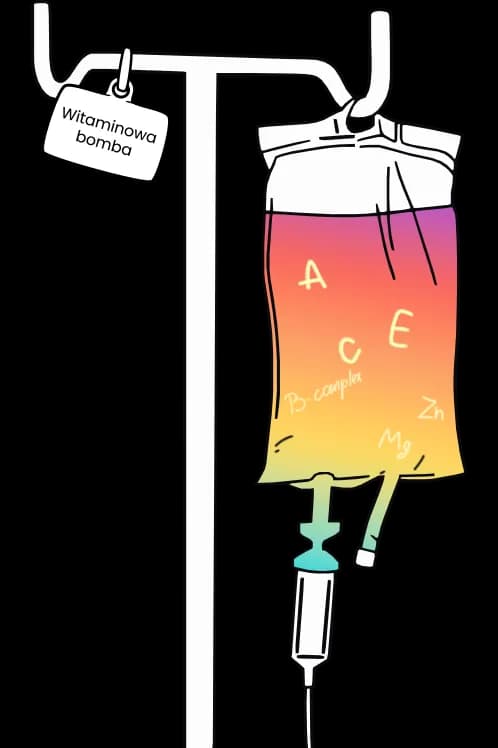
Vitamin IV drips (also known as vitamin infusions or infusion therapy) are a medical procedure involving the intravenous delivery of a solution containing vitamins, minerals, amino acids, and other nutrients directly into the patient's bloodstream. This is one of the most effective methods of replenishing deficiencies in the body, used for years in clinical medicine.
How does an intravenous infusion work?
A vitamin infusion is administered through a peripheral venous access (cannula) into a vein, most commonly in the forearm area. The infusion solution, prepared by medical staff, slowly enters the circulatory system, bypassing the digestive tract. As a result, the active ingredients are not broken down by digestive enzymes and stomach acids, ensuring their full utilisation by the body.
Why are IV drips more effective than tablets?
The key advantage of intravenous infusions over oral supplementation is bioavailability - the percentage of a substance that actually reaches the cells. While tablets and capsules deliver only a fraction of active ingredients (the rest is lost in the digestive process), an IV drip provides nearly 100% bioavailability. This means faster, stronger, and more predictable therapeutic effects.
Composition of vitamin infusions
Depending on the patient's needs, infusion therapy may include various combinations of ingredients:
- Vitamins - vitamin C (ascorbic acid), B vitamins (B1, B2, B3, B5, B6, B12), vitamin D, biotin
- Minerals - magnesium, zinc, selenium, calcium, iron
- Amino acids - taurine, L-carnitine, glutamine, arginine
- Antioxidants - glutathione, alpha-lipoic acid, coenzyme Q10
Every infusion at Nasz Gabinet Clinic is individually tailored after a medical consultation, taking into account the patient's health condition, test results, and needs.
Who are vitamin IV drips for?
Vitamin infusions are intended for a wide range of patients - both healthy individuals who want to strengthen their bodies and prioritise health prevention, as well as patients with specific conditions requiring intensive replenishment of nutrients.
Who most commonly uses vitamin IV drips?
- People with vitamin and mineral deficiencies - confirmed by laboratory tests, where oral supplementation is insufficient or poorly tolerated
- Patients recovering from illness and infections - convalescents after viral or bacterial infections, or after surgical procedures, who need rapid recovery
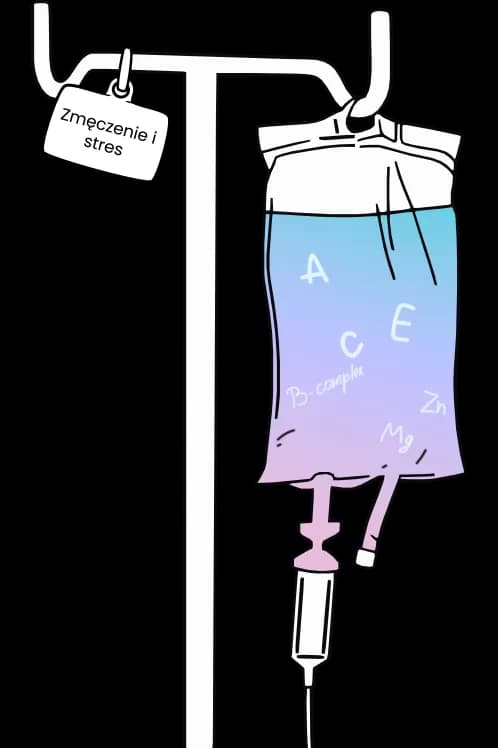
- People exposed to chronic stress - managers, entrepreneurs, shift workers, whose prolonged stress depletes B vitamin and magnesium reserves
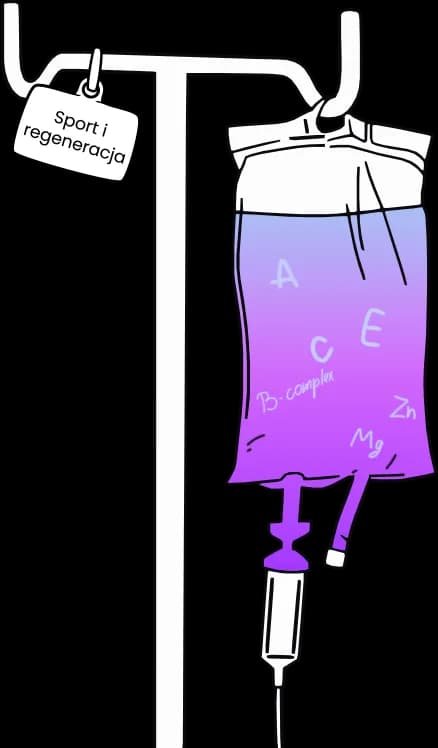
- Athletes and physically active individuals - requiring rapid recovery after intense training, replenishment of electrolytes and amino acids supporting muscles
- People in addiction treatment - patients after alcohol detox or drug detox, whose substance abuse has led to serious nutritional deficiencies
- Seniors - older adults whose absorption of nutrients from the digestive tract is impaired
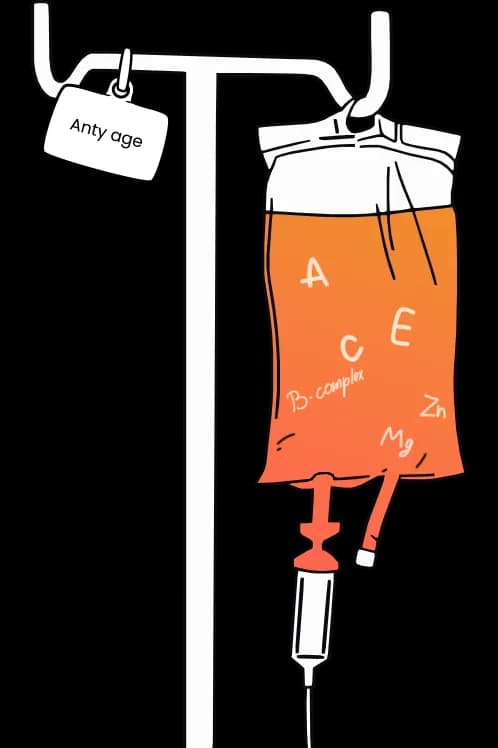
- People caring for their appearance and youthful look - seeking support in fighting ageing processes, improving skin, hair, and nail condition
Vitamin IV drips in the context of addiction treatment
As an Addiction Treatment Clinic, Nasz Gabinet particularly recommends IV drips for patients during or after alcohol addiction treatment. Chronic alcohol consumption leads to profound deficiencies in vitamin B1 (thiamine), B6, B12, folic acid, magnesium, and zinc. Vitamin infusions allow for rapid and effective correction of these deficiencies, supporting the recovery process.
What does a vitamin IV drip medical procedure look like?
A vitamin IV drip medical procedure is an outpatient medical procedure - it does not require hospitalisation or special preparation. The entire process, from arriving at the clinic to the end of the infusion, usually takes 60 to 90 minutes.
Step-by-step medical procedure
- Medical qualification - before the first infusion, medical staff conduct a medical interview, analyse test results (if available), and assess the patient's health. Based on this, the optimal vitamin infusion composition is selected.
- Solution preparation - medical staff prepare an individual blend of vitamins, minerals, and amino acids under sterile conditions, according to the medical staff's prescription.
- Cannula insertion - the nurse inserts an intravenous cannula, most commonly in the forearm area. The insertion is brief and comparable to a blood draw.
- Infusion delivery - the drip is administered slowly, over 30-60 minutes. During the medical procedure, the patient sits comfortably in a chair and can read, use their phone, or simply relax.
- Observation - after the infusion is complete, medical staff observe the patient for a few minutes to ensure there are no adverse reactions.
- Post-procedure recommendations - the patient receives information about recommended hydration and possible continuation of therapy.
Comfort during the medical procedure
Vitamin IV drips at Nasz Gabinet are performed in comfortable clinical conditions, in an atmosphere of calm and privacy. Patients can relax comfortably during the intravenous infusion. After the medical procedure, you can immediately return to daily activities - the infusion does not affect your ability to drive or your physical fitness.
Indications for vitamin IV drips
Infusion therapy with vitamin IV drips is used in many areas of medicine. Below we present the most common indications where vitamin infusions can provide effective therapeutic support.
Medical indications
- Confirmed vitamin and mineral deficiencies - when oral supplementation is ineffective or impossible (e.g. due to absorption disorders)
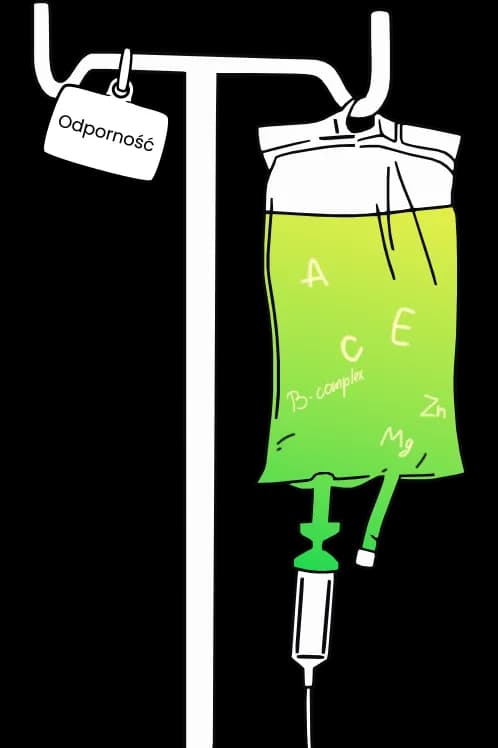
- Weakened immunity - recurrent infections, post-antibiotic therapy, periods of increased illness
- Convalescence - after infectious diseases, surgical procedures, prolonged pharmacotherapy
- Chronic fatigue - chronic fatigue syndrome, psychophysical exhaustion, sleep disorders
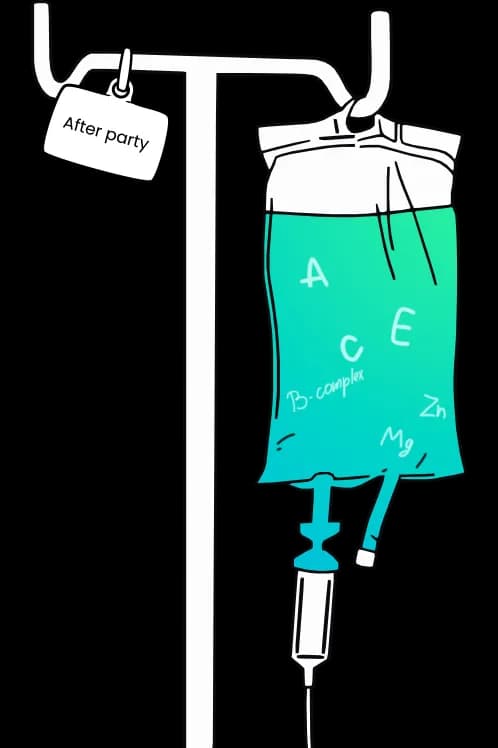
- Consequences of alcohol abuse - B vitamin deficiencies (especially thiamine), dehydration, electrolyte imbalances after alcohol detox
- Inflammatory conditions and musculoskeletal pain - supporting anti-inflammatory processes
- Absorption disorders - gastrointestinal diseases (coeliac disease, Crohn's disease, post-bowel resection)
Preventive and regenerative indications
- Athlete support - recovery after intense training, replenishment of electrolytes and amino acids
- Antioxidant support - protecting cells against oxidative stress, free radicals, and ageing processes
- Skin, hair, and nail improvement - supporting collagen production, biotin, zinc
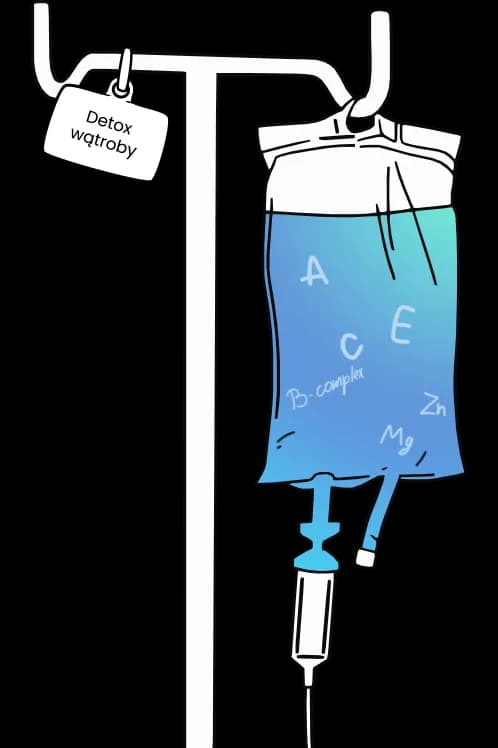
- Liver regeneration - supporting natural cleansing processes, hepatocyte regeneration
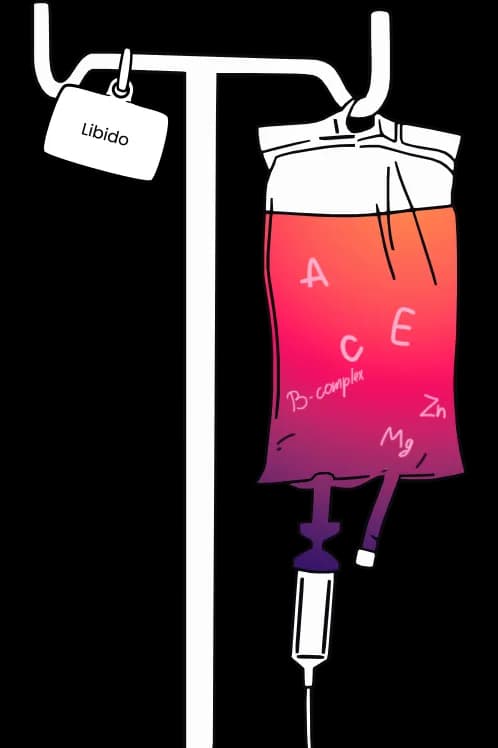
- Libido and vitality support - supporting hormonal functions, improving psychophysical condition
Each indication requires individual medical assessment. Vitamin IV drips at Nasz Gabinet are always preceded by a consultation, during which medical staff evaluate the appropriateness of infusion therapy and selects the optimal drip composition.
Contraindications for vitamin IV drips
Although vitamin IV drips are a safe and well-tolerated medical procedure, there are situations in which infusion therapy should not be used or requires particular caution. Every patient undergoes a medical qualification before an infusion to rule out contraindications.
Absolute contraindications
- Kidney failure - advanced chronic kidney disease (especially for infusions containing magnesium and potassium, whose elimination by the kidneys is impaired)
- Severe heart failure - risk of volume overload in the circulatory system when administering intravenous fluids
- Haemochromatosis - a condition involving excessive iron accumulation; infusions with iron or vitamin C (which increases iron absorption) are contraindicated
- Allergy to infusion components - known hypersensitivity to any component of the infusion solution
- Active infection at the injection site - phlebitis, abscess, or skin damage at the planned cannulation site
Relative contraindications
Conditions requiring particular caution and individual medical assessment:
- Pregnancy and breastfeeding - the safety of some components has not been confirmed in this patient group
- History of kidney stones - high doses of vitamin C may increase the risk of oxalate stone formation
- Autoimmune diseases - immunity-boosting infusions may intensify autoimmune reactions
- Chemotherapy treatment - interactions between infusion components and oncological drugs require consultation with an oncologist
- Blood clotting disorders - use of anticoagulant medications requires adjustments to the cannulation technique
That is why at Nasz Gabinet, every vitamin IV drip is preceded by a medical qualification - medical staff analyse the patient's health condition, medications, and any co-existing conditions to ensure the full safety of infusion therapy.
Bioavailability - why does an IV drip work better than tablets?
Bioavailability is a key concept that explains why intravenous infusions are many times more effective than orally administered supplements. This term describes the percentage of an administered active substance that actually reaches the bloodstream and is available to the body's cells.
Oral vs intravenous bioavailability
When we take a vitamin in tablet form, it must pass through:
- The stomach - hydrochloric acid and digestive enzymes break down part of the active substance
- The small intestine - absorption into the bloodstream is limited by the capacity of intestinal transporters
- The liver - the first-pass effect (hepatic metabolism) eliminates another portion of the substance before it reaches general circulation
As a result, the bioavailability of oral supplements is significantly lower. This means that of 1000 mg of vitamin C taken in a tablet, the body absorbs less than half the dose, and the excess is excreted by the kidneys (Levine et al., PNAS, 1996).
The advantage of intravenous infusions
An IV drip bypasses the entire digestive tract and liver, delivering active ingredients directly into the bloodstream. As a result:
- Bioavailability is nearly 100% - every milligram of the administered substance is available to the body
- The therapeutic effect is immediate - cells receive nutrients within minutes, not hours
- Higher doses can be administered - without the risk of gastrointestinal irritation (diarrhoea, nausea, abdominal pain) that occurs with high oral vitamin doses
- Precise dosing - medical staff has full control over the amount of administered ingredients
Examples of bioavailability differences
Vitamin C taken orally in doses above 200 mg reaches an absorption plateau - the body cannot absorb more, and the excess is excreted in urine. In contrast, several grams of vitamin C can be safely administered intravenously, achieving plasma concentrations many times higher than with any oral supplementation. This is why infusion therapy is gaining increasing recognition among physicians as an effective method of replenishing deficiencies.
Safety of vitamin IV drips and medical qualification
Vitamin IV drips performed in medical settings, under medical staff's supervision, are a safe medical procedure well-tolerated by the vast majority of patients. However, the key safety factor is proper medical qualification before the medical procedure - and this is precisely what distinguishes professional infusion therapy from the offerings of so-called drip bars or wellness salons.
Why is medical qualification essential?
Every body is different, and an improperly formulated vitamin infusion may not only fail to help but could even cause harm. Before the infusion, medical staff at Nasz Gabinet:
- Conducts a medical interview - asking about chronic diseases, medications, allergies, and past procedures
- Analyses test results - if the patient has blood count, ionogram, or kidney and liver function results
- Assesses contraindications - rules out conditions where the infusion could be dangerous
- Tailors the composition individually - based on the patient's needs and health condition, not from a fixed menu
Nasz Gabinet - the medical context of infusions
Nasz Gabinet is a registered Addiction Treatment Clinic operating since 2012 in 17 cities across Poland. Unlike wellness salons and drip bars, our vitamin IV drips are performed:
- in medical offices meeting sanitary requirements
- by qualified medical staff (doctors and nurses)
- using certified pharmaceutical preparations
- after individual medical qualification
- with medical documentation for every medical procedure
Possible side effects
Adverse effects after vitamin IV drips are rare and usually mild:
- Discomfort at the injection site - mild pain, redness, or bruising at the cannulation site
- Warm sensation or metallic taste - particularly with faster magnesium delivery
- Temporary fatigue - the body activates regenerative processes
- Allergic reactions - very rare, which is why medical qualification is so important
In the event of any adverse symptoms, medical staff are present and can respond immediately.