

What does nicotine dependence treatment in Gdynia involve?
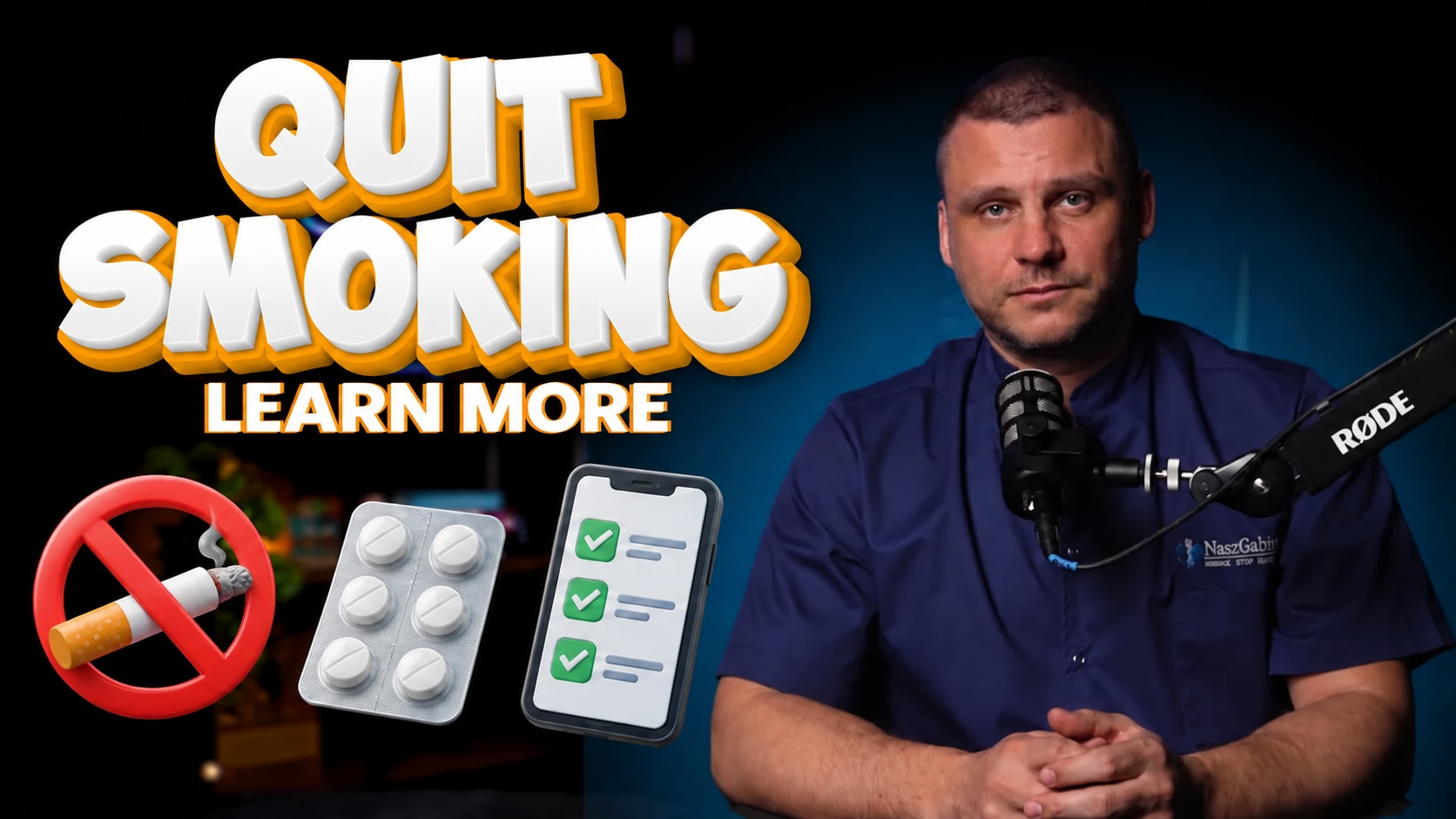
We see patients who want to quit smoking every day from 8:00 to 20:00 at Nasz Gabinet Gdynia at Franciszka Sokoła 28. Treatment consists of medical appointments, sessions with an addiction therapist and a medicine, if the doctor considers one necessary. The patient pays PLN 250 for the first appointment, whether it takes place at the practice or online, and does not need a referral. We also treat patients from Rumia, Reda, Wejherowo and Puck online, without them having to travel to Gdynia.
What do we talk about at the first appointment?
The doctor asks how many cigarettes the patient smokes a day, how many minutes after waking up they light the first one, and whether they also use an e-cigarette or nicotine pouches. Based on this, the doctor assesses how strong the dependence is and chooses the dose of the medicine. The doctor also asks about previous attempts to quit and about side effects of the medicines the patient took then.
Before choosing a medicine, the doctor checks whether the patient has heart disease and what medicines they take regularly, and asks women about pregnancy and pregnancy plans. Tobacco smoke speeds up the breakdown of some medicines, such as clozapine and ropinirole, so after quitting their blood levels may rise. A patient taking such a medicine tells the doctor who prescribed it about the quit date.
What happens after the first appointment?
The patient leaves with a treatment plan in which the doctor records the quit date and, if a medicine has been recommended, its name and doses. The addiction therapist meets the patient online, and one session costs PLN 250. In the sessions, the patient decides what they will do at the moments when they used to light up, for example during a break at work or after a meal. We book a follow-up appointment earlier than planned if the patient does not tolerate the medicine well or is still smoking despite it. For people who, besides cigarettes, have a problem with alcohol or other substances, we offer addiction therapy in Gdynia.
How can you tell that smoking has become a dependence?
Nicotine from cigarette smoke reaches the brain within a few seconds. There it stimulates nicotinic receptors and increases the release of dopamine, which the smoker feels as relief or pleasure. The brain of someone who smokes every day gets used to regular doses of nicotine, so a break from smoking causes cravings and withdrawal symptoms.
In its ICD-10 classification of diseases, the World Health Organization describes the features of dependence syndrome. For nicotine dependence, also called nicotine addiction, they include:
- a strong desire to smoke or a sense of compulsion to smoke;
- difficulty controlling when and how much you smoke;
- withdrawal symptoms after a break from smoking, or smoking to avoid them;
- tolerance, that is, needing more nicotine to get the effect a smaller amount used to give;
- putting smoking ahead of other activities and responsibilities;
- smoking despite harm the patient already notices, such as a cough or shortness of breath on exertion.
The doctor diagnoses dependence when at least 3 of these features have occurred together for some time during the past year. In the newer ICD-11 classification, nicotine dependence has the code 6C4A.2.
How is the strength of dependence assessed?
The doctor assesses how strong the dependence is mainly from two answers: how many minutes after waking up the patient lights the first cigarette and how many cigarettes they smoke a day. The sooner after waking up and the more someone smokes, the more strongly dependent they usually are.
The question about the first cigarette after waking up is especially important. In an analysis of data from 4 studies comparing medicines with placebo and from one international study, the answer to this question gave a better idea of the chances of quitting than any other single measure of dependence. The answers to these questions do not replace a diagnosis, but they help the doctor choose the dose of nicotine in a patch, gum or lozenge.
How do stop-smoking medicines differ and what side effects do they have?
A review of 319 studies involving more than 157,000 adults compared the effectiveness and safety of stop-smoking medicines. Serious side effects were rare, occurring on average in 3 percent of participants. It was not shown that serious side effects occurred clearly more often with cytisine, varenicline or nicotine than in people taking placebo or no medicine. The certainty of this result was, however, rated as low. With bupropion, they may affect 1 more person in 100, although this result is not certain either. Milder and more common symptoms usually appear at the start of treatment. Some of them are caused by quitting smoking itself, not by the medicine.
In the Cochrane review, effectiveness was assessed on the basis of not smoking after at least six months. The differences given come from comparing treatment with placebo or no medicine.
What symptoms can cytisine cause?
In Desmoxan, Tabex and Recigar, the active substance is cytisine, now also called cytisinicline. It stimulates nicotinic receptors more weakly than nicotine, so it eases cravings. In this review, 7 more people in 100 quit smoking with cytisine than in groups without medication. Treatment lasts 25 days, and a pack for the whole course cost about PLN 40 to 78 in online pharmacies in September 2026. Most products are available without a prescription.
According to the manufacturer of Desmoxan, at least 1 in 10 people have nausea, dry mouth, heartburn, abdominal pain, constipation or diarrhoea. Insomnia, unusual dreams, headaches, irritability, a fast heartbeat and raised blood pressure are just as common. The manufacturer notes that these symptoms occur mainly at the start of treatment, ease during it and may also be caused by quitting smoking itself. Pregnancy and breastfeeding, as well as a recent heart attack or stroke, are contraindications to cytisine.
What should you watch out for with a nicotine patch?
NiQuitin Przezroczysty is worn for 24 hours, and Nicorette Invisipatch for 16 hours, from waking up to going to bed. Nicotine from the patch is absorbed through the skin and reaches a lower blood level than after a cigarette. A patch alone increased the number of people who quit by 2 in 100. According to the manufacturer of NiQuitin patches, combining a patch with gum or lozenges may work better than a patch alone. Patches are available without a prescription. In September 2026, the patient paid about PLN 606 to 930 for 10 weeks of treatment with 24-hour patches.
The most common side effect of patches is a skin reaction where the patch is applied. It is usually mild and goes away quickly after the patch is removed. Each new patch is put on a different place, and a new patch can go on the same spot after a week at the earliest. Severe redness, itching or swelling lasting more than 4 days, or a rash or hives all over the body, are reasons to stop using the patch and talk to a doctor. With NiQuitin patches, nightmares and insomnia, headaches and dizziness, palpitations and nausea are also very common.
Do gum, spray and lozenges irritate the mouth?
They can, especially at the start of treatment. The patient reaches for Nicorette Classic Gum, Nicorette Spray or NiQuitin MINI lozenges when they feel like smoking. The nicotine is absorbed in the mouth. In a summary of studies given by the manufacturer of Nicorette gum, 16.4 percent of participants reported hiccups after nicotine taken by mouth, compared with 2.3 percent in placebo groups. Hiccups were more common in studies of the spray. Throat irritation was reported by 11.8 percent of people compared with 4.4 percent on placebo, and nausea by 10.4 percent compared with 5.8 percent.
According to the manufacturer of the spray, the most common symptoms appear within the first 2 to 3 weeks and then start to ease. These forms of nicotine increased the number of people who quit by 3 in 100. None of them requires a prescription. In online pharmacies in September 2026, a pack of 105 pieces of 4 mg gum cost PLN 78 to 100, and a spray with 150 doses PLN 62 to 85.
What side effects do varenicline and bupropion have?
Varenicline, found in Champix, partly stimulates nicotinic receptors, like cytisine. It increased the number of people who quit by 8 in 100. Its most common side effect is nausea. In studies in which patients took 1 mg twice a day, 28.6 percent of them had it. It usually appeared at the start of treatment, was mild or moderate and rarely led to stopping treatment. Insomnia, unusual dreams and headaches are also very common. Champix requires a prescription, and in September 2026 it was not available in the pharmacies we checked.
Bupropion, the active substance in Zyban, does not contain nicotine. It increased the number of people who quit by 3 in 100, and insomnia is a very common side effect. Rarely, in about 1 person in 1,000, it causes seizures, so it is not used in people who have or have had seizures. The marketing authorisation for Zyban expired in December 2023.
How does the body react to the lack of nicotine in the first weeks?
After the last cigarette, nicotine withdrawal symptoms appear. A review of research on tobacco withdrawal lists anger, anxiety, low mood, difficulty concentrating, impatience, insomnia and restlessness among them. They peak in the first week, and the whole period of symptoms usually lasts 2 to 4 weeks. The author of the review also considered constipation, coughing, dizziness, more frequent dreams and mouth ulcers as possible effects of withdrawal.
A stop-smoking medicine eases these symptoms, but the urge to smoke can also come back later, in situations in which the patient used to light up, for example with coffee or alcohol. In online sessions, the addiction therapist practises with the patient how to get through such a moment without a cigarette.
Why do people sleep worse after quitting smoking?
In a German study, the sleep of 33 smokers was tested in a sleep laboratory at three points: while smoking, 24 to 36 hours after the last cigarette and 3 months after quitting. After 24 to 36 hours without nicotine, participants woke up more often and lay awake for longer than while smoking. People who later went back to smoking were more strongly dependent than those who stayed off cigarettes and rated their sleep during withdrawal as worse. The authors concluded that sleep problems during this period may contribute to relapse.
Some stop-smoking medicines also affect sleep. The manufacturer of NiQuitin patches allows the patch to be removed before bed, but notes that a patch worn for 24 hours is better at reducing the urge to smoke after waking up. From day 4 of treatment, bupropion is taken twice a day at least 8 hours apart, and the manufacturer advises taking the second tablet earlier rather than just before bed to reduce the risk of insomnia. With cytisine, the intervals between tablets are set by the treatment schedule, so a patient who is sleeping badly does not change them on their own but tells the doctor.
When does low mood need urgent help?
The manufacturer of Desmoxan describes low mood as a possible symptom of nicotine withdrawal. Rarely, it is accompanied by suicidal thoughts or a suicide attempt, including in people quitting without medication. Quitting smoking can also make depression or another mental illness the patient had before worse. If their mood clearly worsens, the patient calls the clinic rather than waiting for the booked appointment. Suicidal thoughts need immediate medical help.
How can you quit smoking during pregnancy or before a planned pregnancy?
Smoking during pregnancy increases the risk of miscarriage, premature birth, low birth weight and stillbirth. The sooner a woman stops smoking, the better. An observational study from New Zealand and Australia included 2,504 women in their first pregnancy. Women who quit smoking before week 15 of pregnancy had spontaneous premature births as often as non-smokers, in 4 percent of cases. Ten percent of them had a baby that was small for gestational age, the same as among non-smokers. Among women who kept smoking, these figures were 10 and 17 percent.
Smoking also makes it harder to get pregnant. According to the manufacturer of Nicorette Invisipatch, it delays conception, reduces the success of in vitro fertilisation and increases the risk of infertility. A woman taking cytisine must use effective contraception during treatment. With systemic hormonal contraception, the manufacturer of Desmoxan also recommends a barrier method. We discuss a planned pregnancy with the patient before choosing a medicine.
Can stop-smoking medicines be taken during pregnancy?
Cytisine is not used during pregnancy or breastfeeding. The manufacturers of nicotine patches recommend that pregnant women quit smoking without nicotine from medicines. If a woman cannot do this, a doctor may recommend nicotine replacement therapy, and a pregnant woman starts using Nicorette Invisipatch only after consulting a doctor. According to the manufacturer of NiQuitin, the decision to use nicotine replacement therapy should be made as early as possible in pregnancy, with a course planned to last 2 to 3 months. According to the same manufacturer, gum and lozenges usually deliver less nicotine over a day than a patch, while a patch may suit a woman who has nausea.
A review of 9 studies involving 2,336 pregnant women found that nicotine replacement therapy may increase the number of women not smoking in late pregnancy, but the certainty of this result was low, and in placebo-controlled studies the difference was not clear. No differences were shown in the numbers of miscarriages, stillbirths or premature births, or in the babies' birth weight.
The evidence for talking to a specialist is stronger. A 2026 review covered 32 studies involving 12,920 pregnant women. Among women who had sessions with a counsellor, 51 percent more were not smoking at the end of pregnancy than among women receiving usual care, and the authors rated the certainty of this result as moderate. That is why, for a pregnant woman, treatment is based on sessions with an addiction therapist, and the doctor decides on nicotine from medicines.
How does the Nasz Gabinet app remind you about medicines and let you confirm you have taken them?
The doctor records every dose of medicine in the treatment plan, and the Nasz Gabinet app sends a reminder at the time it is due, so that the patient does not interrupt treatment. The patient confirms most doses in the app with a single tap. Once a day, the app picks one dose at random, and the patient records a video of themselves taking it on their phone, which medical staff then watch.
The patient discusses insomnia, nausea or other symptoms during treatment with a doctor in an e-consultation by chat, which is available as part of the programme. The doctor decides on any change of dose. The app is free to download, and you pay for access to the treatment programme. Visit Nasz Gabinet Gdynia or give us a call. We will help you buy access to the programme, install the app and set up the treatment plan in it.
Which stop-smoking methods do we not use?
- We do not prescribe naltrexone for quitting smoking. We use it to treat alcohol dependence, but in a review of 8 studies involving more than 1,200 smokers, naltrexone did not increase the number of people who quit, either on its own or together with nicotine replacement therapy.
- We do not implant a stop-smoking medicine. The disulfiram alcohol implant we provide in Gdynia causes unpleasant symptoms only after drinking alcohol and is not a treatment for nicotine dependence.
Why start nicotine dependence treatment in Gdynia?
Smoking also affects attendance at work. In an analysis of 29 studies of employees, smokers were absent from work an average of 2.7 days a year longer than non-smokers. Former smokers missed work less often than people who kept smoking. According to the WHO, quitting smoking also reduces the risk of impotence and difficulty getting pregnant, and in pregnant women the risk of premature birth, miscarriage and low birth weight.
In Gdynia, the patient has support at every stage of treatment. The doctor assesses how strong the dependence is and chooses a medicine, and if the patient does not tolerate it well, changes the treatment plan. The addiction therapist helps the patient get through the first weeks without cigarettes, and the app sends reminders about doses. If the urge to smoke or side effects are more troublesome than the patient expected, they do not wait for the date in the plan, but book an earlier appointment or session, including online. The clinic at Franciszka Sokoła 28 sees patients every day from 8:00 to 20:00, without a referral.