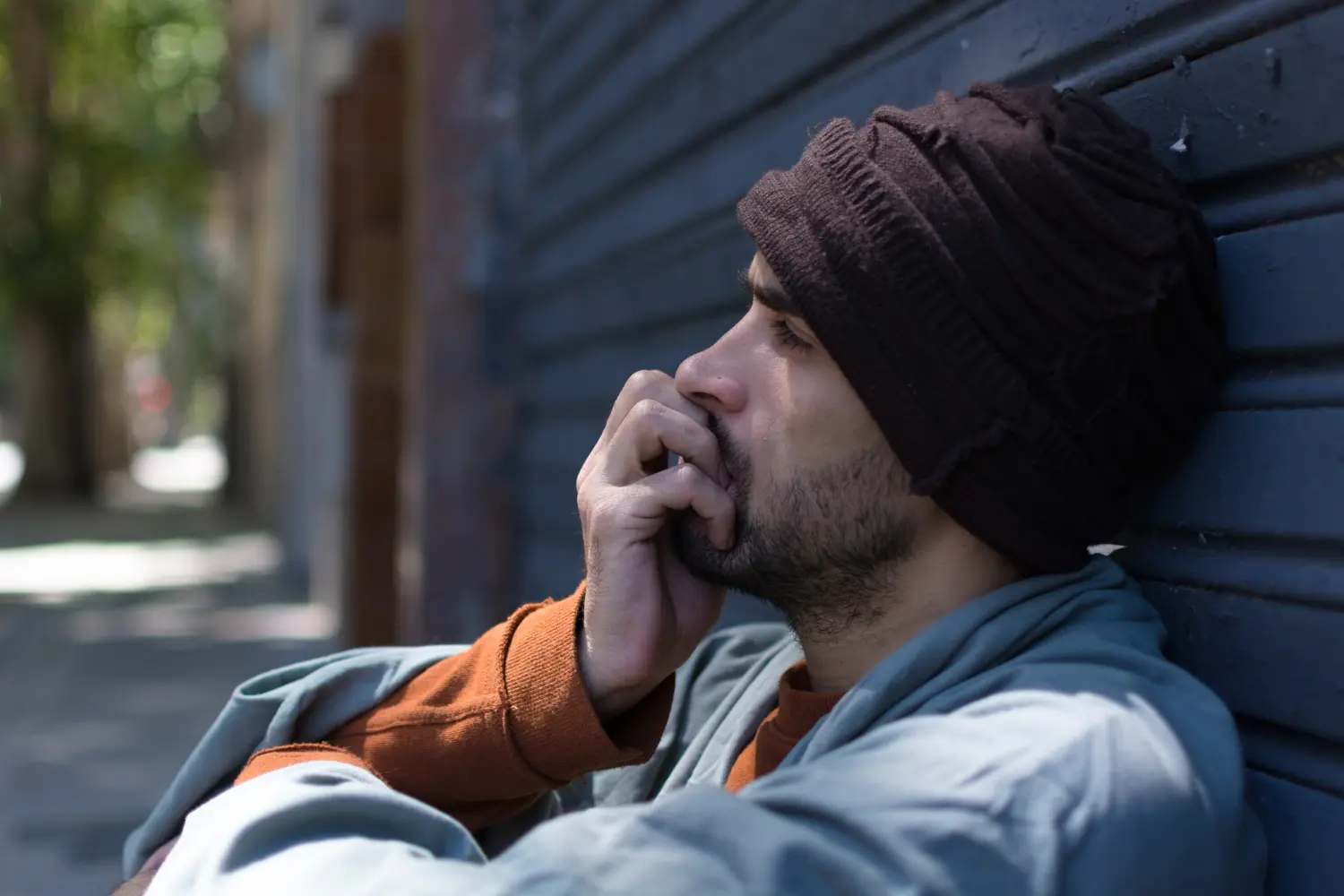


What is drug addiction treatment in Wrocław?
Drug addiction treatment is planned help spread over months, meant to bring an addicted person to lasting abstinence and back to an ordinary life: work, home, relationships with those close to them. It is not about stopping the drug alone, but about changing the situation that led to using in the first place, which is why we work with the whole patient and not only with the addiction.
The most common misunderstanding is confusing treatment with detox. Detox, the clearing of the substance from the body, interrupts the drug's action and is usually the first step, but it does not change what pushed the patient towards the substance. That is why real treatment only begins once detox is over. The course of withdrawal itself and the symptoms of the first days are described separately, on the page about drug detox in Wrocław.
We draw up the plan individually, after a consultation and an assessment of health, and we run it entirely privately, with no contract with the National Health Fund.
What addiction to drugs actually is
It is worth starting with what addiction actually is, because without that the rest makes no sense. It is not weakness of character or a lack of willpower, though from the outside it looks exactly like that. It is a brain disease, a well-studied one, and its mechanism is what explains why "just stop" fails and why treatment takes months, not days.
Each of us has a reward system in the brain. It releases dopamine when we do something that serves survival: eat when hungry, get close to someone, finish something hard. Dopamine is the brain saying "that was good, keep doing it". A drug hits the same system, only not gently: it pushes dopamine several or a dozen times higher than anything natural does. To the brain that reads as something more important than food, sleep and another person put together.
The brain starts to defend itself. It cuts back its own dopamine and shuts down some of the sites that receive it. Two things then happen at once. Ordinary pleasures - a meal, seeing a friend, a walk - stop giving anything, because the whole system is dampened. And it takes a bigger and bigger dose to get where you used to, until the drug is taken not to feel good but to stop feeling bad. That is tolerance, and it is what turns using from a choice into a necessity.
Why willpower alone is not enough
The worst of it happens a floor up, where the brain makes decisions and holds impulses back. After a while, reaching for the substance bypasses conscious thought and switches on by itself, on a specific trigger: the same place, the same person, a time of day, tension, a row. That is why someone addicted can truly not want to use and use anyway - the hand is quicker than the thought. It is not about character, but about a mechanism older and faster than the will having taken the wheel.
The rest follows from that. Addiction is a chronic illness, like diabetes or high blood pressure - it can be controlled and kept in check, but it does not vanish after one decision or one procedure. Treatment gives the brain time to rebuild and teaches a person to spot those triggers and answer them with something other than using. It cannot be done in a week, and that is why every honest plan is measured in months.
How to make first contact with the clinic in Wrocław
The first appointment needs no preparation and no tests. It needs one decision: whether the person using comes in, or someone from the family. Both are a sensible beginning and each leads to a different first step.
When the patient comes, the consultation is there to establish how the day ends: which substances, for how long, how many attempts to stop there have been, what interrupted them. On that basis we decide whether to begin with medical stabilisation or go straight to therapy, and whether a psychiatric consultation is needed. It helps to bring hospital discharge summaries and a list of current medicines, if there are any, because it shortens the fact-finding.
When the family comes without the patient, the consultation is about something else: what to say, when, and what not to say so the conversation does not close for another year. That meeting has value of its own even if the relative never comes in. If you want a rough sense of the scale of use before calling anyone, the DUDIT screening test helps, though its result does not replace a conversation with a therapist.
We arrange appointments by phone on 880 808 880 or through the contact form; the Wrocław clinic is at Dworcowa 11b.
How long does treatment in Wrocław take and what stretches it out?
It is counted in months rather than weeks, and no one honest will give you a finishing date in advance. The plan has four stages that follow one another in this order, though the boundaries between them are not always sharp.
The first stage is assessment and stabilisation: getting the state after stopping the substance under control, evaluating physical and mental health, establishing whether there is a disorder in the background that has to be treated in parallel. The second stage is psychotherapy itself, the longest part, counted in months of regular sessions. The third is maintaining the change: recognising high-risk situations and working on relapse before it happens. The fourth is support after therapy ends, less frequent contacts that keep the continuity.
What most often stretches treatment out
What most often stretches the process out is a co-occurring mental disorder that nobody diagnosed, because the symptoms were put down to the substance. A lack of support at home works the same way, meaning a situation where the patient goes back from a session into conflict, as does returning to an environment where using was the norm and access to substances is one phone call away. That last factor is sometimes an argument for inpatient rather than outpatient treatment.
What we do not promise is a cure in the sense of the problem permanently disappearing. Addiction is a chronic illness, and the aim of treatment is to maintain the change, not to issue a certificate that it is final.
What psychotherapy does that medication cannot
Medicines can take the edge off withdrawal symptoms, lower anxiety and settle sleep. What they do not change is what triggers reaching for a substance: the reaction to strain, boredom, conflict or the sight of a particular place. That is the job of psychotherapy, and it is why psychotherapy rather than pharmacotherapy is the main element of treatment across months.
In practice the work covers recognising high-risk situations, what to do in the first minutes of craving, and rebuilding the things that using pushed out of a person's life: work, relationships, sleep, movement. Some patients use individual therapy, some group therapy, and many use both, because a group offers something a consulting room cannot, namely being faced with people in the same position.
What the various approaches look like, how long a session lasts and how individual work differs from group work is described on the page about addiction therapy in Wrocław. If depression, an anxiety disorder or psychotic symptoms occur alongside the addiction, therapy on its own is usually not enough and parallel psychiatric care is needed.
A separate situation applies to people whose problem is prescription medicines, taken as directed to begin with. The route there looks different and we describe it under treatment for prescription drug addiction.
Once the patient is stable, some sessions can be held online over video, so that travelling does not become a reason to drop out. The first appointment and the work during the hardest weeks happen in person.
What to do when a relapse comes after months of abstinence
Call within a day, not after three weeks. That is the one practical piece of advice worth remembering from this whole section, because the difference between a single episode and a return to regular use is decided in those few days.
Relapse belongs to the course of addiction and it does not erase the work already done. Months of therapy do not vanish because someone used once; you pick the plan up where you left it, not at the beginning. The mechanism that usually drags an episode out is less obvious: not craving itself, but the shame of telling the therapist and the family about it. Silence buys more days of use, and those build the feeling that everything is lost.
After a longer break from using, tolerance drops, so a dose that used to be ordinary becomes dangerous. This applies to opioids in particular and is a real reason why the first use after a break can be riskier than daily use before treatment.
In practice, after a relapse we start by reconstructing the week that led up to it, because the answer usually lies there. We also check whether depressive symptoms had been building in the background and whether the patient was left alone with a decision to stop medicines prescribed by a psychiatrist.
Can an adult be forced into drug addiction treatment?
They cannot, and this is the most common misunderstanding families call about. The Polish Act on Counteracting Drug Addiction provides for treatment without consent only for a person under eighteen: a family court orders it, on application from a legal guardian or another entitled person, for up to two years (Article 30). For an adult, that route does not exist in this act.
Where does the mistake come from? With alcohol there is a route to compel treatment: a municipal committee for solving alcohol-related problems or a prosecutor files an application with a district court, and the court imposes an obligation to undergo addiction treatment (Articles 24-26 of the Polish Act on Upbringing in Sobriety). A family that knows this procedure from a neighbour's story or from an online forum assumes there is a drug equivalent and loses weeks looking for a committee that was never set up.
The second myth is the criminal court as a way into therapy. Suspending proceedings for the duration of treatment is indeed possible, but only for an addicted person suspected of an offence carrying up to five years, and it is the prosecutor who decides, not the family (Articles 71-72 of the same act). Contact with the law is common enough in Wrocław: police recorded 2,234 offences under the Act on Counteracting Drug Addiction here in 2024, against 1,677 in 2020, with 97.6 percent of offenders identified (GUS Bank Danych Lokalnych, the Polish statistical office's local data bank, city district of Wrocław). Being arrested therefore sometimes becomes the moment when someone first sees a therapist, but that is a coincidence rather than a lever relatives can pull.
That leaves legal incapacitation and admission to a psychiatric hospital without consent under the Polish Mental Health Protection Act. The threshold there is very high and concerns a person's mental state, not drug use as such. Treating it as a drug route usually ends with the application being dismissed and the ill person's trust lost.
So one option remains for the family, uncomfortable but real: treating an adult starts with their consent, however shaky and however much circumstances pushed them towards it. The work that can be done beforehand is precisely the work of getting there.
What can a family actually do when there is no legal compulsion?
No legal lever does not mean no influence, although the tools that remain are harder than filing a court application. The most important of them is limits: stop covering the consequences of use, which means the debts, the lost phones, the excuses for missed work. As long as someone else carries the cost, the reason to change stays theoretical.
The second tool is a conversation held while the person is sober, short and specific, without going back over the list of grievances. The third gets skipped because it seems beside the point: therapy for yourself. After a few years, relatives of an addicted person usually have symptoms of their own, from insomnia to withdrawing from contact, and monitoring someone else's use becomes a permanent occupation. A session for the family is not an add-on to the patient's treatment but a separate reason to come in.
The scale of the problem in Wrocław
The scale of that burden has been counted in Wrocław. In 2024, social services here supported 104 families because of drug addiction, against 83 the year before and 88 in 2022, which came to 1.9 percent of all 5,364 families receiving assistance in the city (Gminny Program Profilaktyki i Rozwiązywania Problemów Alkoholowych oraz Przeciwdziałania Narkomanii dla Wrocławia na lata 2026-2029, the city's municipal prevention programme, table 6; GUS Bank Danych Lokalnych points the same way). It counts families that reached the threshold of an institution, so there are more households with this problem in the city. More telling than the scale is when those families come forward: help reaches them only once their finances have already collapsed, far later than the problem began.
If there is someone under eighteen at home, the legal situation differs from the one described above and an application to the family court makes sense. With an adult child, a partner or a parent, what remains is the work of getting them to want to come.
When is it worth waiting for the NFZ in Wrocław and when paying for an earlier date?
Addiction treatment under the NFZ is free and covers the full route: outpatient clinics, day wards, inpatient treatment. It is not worse in substance and there is no reason to steer anyone away from it. It has one price that is not expressed in zloty, and that price is the waiting time and being assigned to a particular facility.
That price can be steep in a very concrete sense. Readiness for treatment in an addicted person is short-lived; someone who agrees to therapy on Monday usually no longer sees a problem by Friday. If an appointment several weeks away sits between the two, the decision falls apart on its own, with no ill will from anyone.
Paying privately therefore buys, above all, an appointment counted in days, and beyond that continuity of care from the same team and discretion, understood as information not circulating outside the treating team. Discretion is not anonymity, though: medical records are created in a private clinic exactly as they are in a public facility, because the regulations require it.
A mixed solution: NFZ and a private appointment
A mixed solution is often the most sensible one and nobody suggests it outright. You can start privately in the week when consent appeared and join the queue for reimbursed services at the same time, handing care over later. Current rates for our consultations are in the price list.
What help is available for addicted people in Wrocław?
Wrocław does more than fund therapy, and that changes the arithmetic of the options available. The municipal programme reports 144 places in hostels and readaptation flats for people who have finished treatment, plus 15 street and outreach work programmes, which reached 3,480 recipients between 2022 and 2024 (Gminny Program dla Wrocławia na lata 2026-2029, the city's municipal programme, table 17).
The two figures relate to different moments in the illness. Outreach work reaches people who do not yet want treatment, and its job is to keep them alive and in contact, not to bring them to abstinence. Readaptation flats solve the problem of what happens when treatment ends: a patient finishes therapy and goes back to the same address where they used. For some people that is the single factor that decides whether the change holds, which is why we ask about where someone will live after therapy at the planning stage rather than at the end.
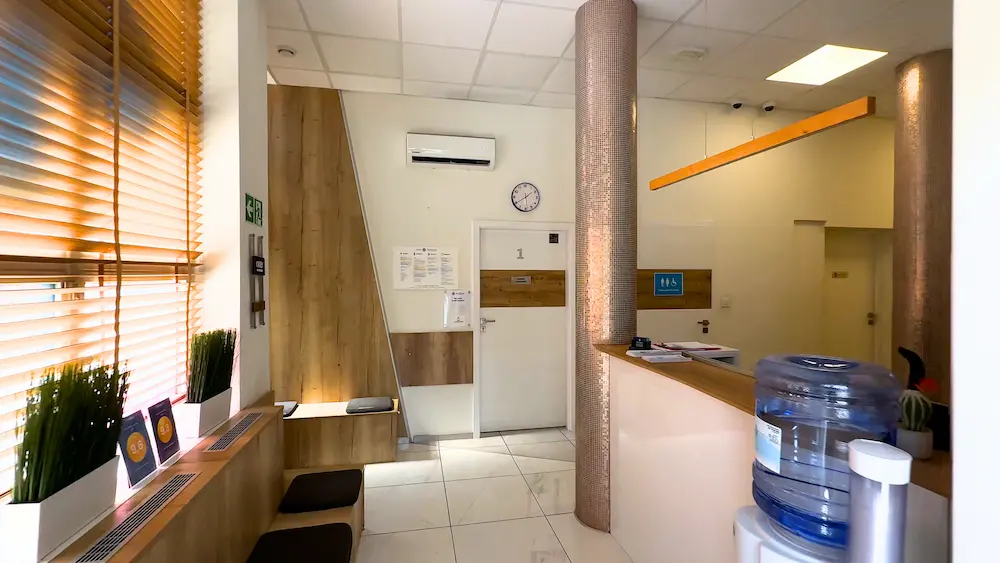
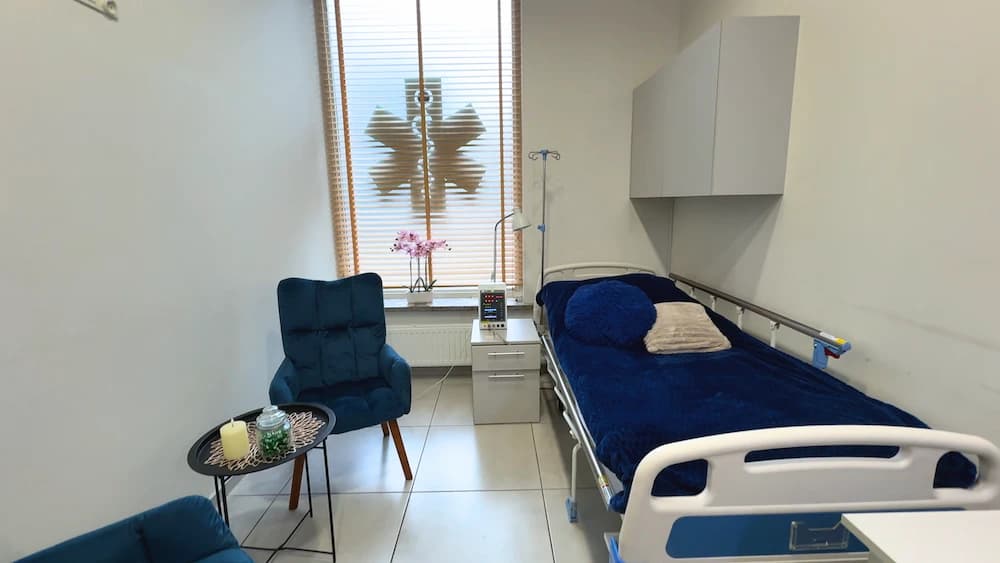
Our Wrocław clinic is at Dworcowa 11b, within reach of public transport from the main railway station, so travelling in from the districts around the city does not require a car. We provide consultations, assessment, supporting pharmacotherapy and psychotherapy on an outpatient basis. We do not run substitution treatment or a round-the-clock ward, and when a patient needs either, we say so at the first appointment and point to where to look.