Addiction treatment in Radom - what to know before your first visit
Addiction is not a matter of weak character - it is a disease that changes brain chemistry and makes leaving the habit on one's own very hard. At Nasz Gabinet Radom we treat it the same way we treat any other chronic condition: we make a diagnosis, draw up a treatment plan, monitor progress. We help patients struggling with:
- alcoholism - from first attempts to stop drinking to long-term sobriety,
- drug addiction - cocaine, amphetamine, marijuana, opioids, synthetic substances,
- medication addiction - benzodiazepines, sleeping pills, painkillers,
- gambling addiction and other behavioural addictions.
The first consultation - no pressure, no judgment
The meeting begins with a conversation. The doctor asks about the history of drinking or substance use, general health, family and work situation. On this basis specific steps are proposed - sometimes detox, sometimes pharmacotherapy right away, sometimes a series of therapeutic consultations first. The patient decides what they are ready for.
What we do not promise
There is no one-time procedure that will cure addiction forever. Esperal, detox, medications - these are tools supporting sobriety, but the foundation of recovery remains a change in thinking and habits. That is why every pharmacological package at Nasz Gabinet Radom is combined with the option of psychotherapy.
Complete care in one place - what you find at Mireckiego 10
Outpatient detox
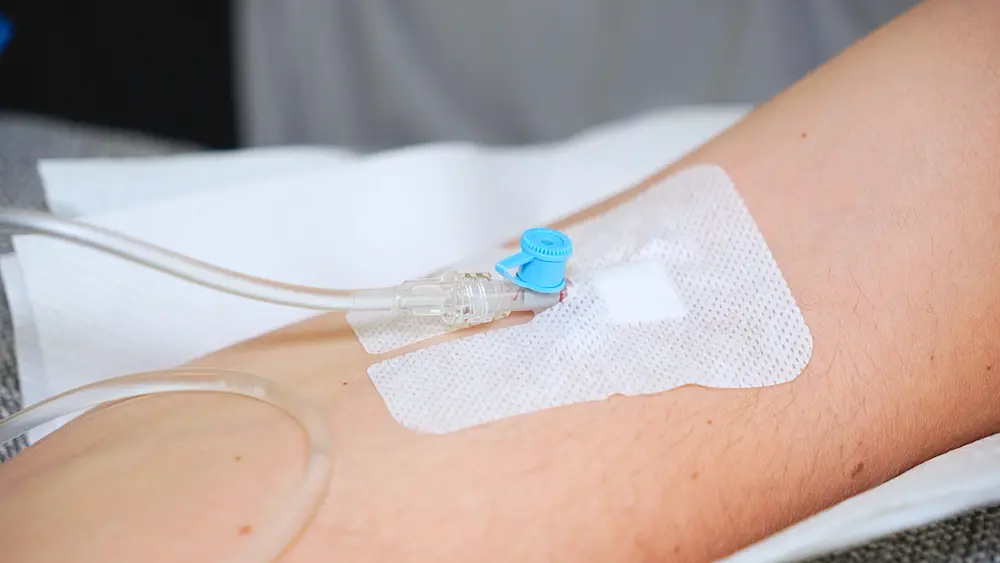
Safe detoxification of the body after an alcohol or drug binge. The patient stays at the clinic from 3 to 12 hours (the doctor selects a shorter or longer procedure after the interview), receives hydrating drips, medications easing withdrawal symptoms and remains under continuous care of a doctor and nurse. After the procedure they return home the same day. The full course of the procedure is described on the alcohol detox in Radom page.
Home detox - doctor visits the patient
An option for people who cannot or do not want to come to the clinic - the doctor travels to the indicated address in Radom and the surrounding area (Pionki, Kozienice, Iłża, Białobrzegi, Zwoleń) with full detox equipment and vital parameter monitoring. The whole procedure takes place at the patient's home, discreetly, without having to explain anything to neighbours or colleagues.
Esperal alcohol implant
An implant with disulfiram placed under the skin in the buttock area. It works for 8-12 months, causing a strong aversive reaction to alcohol. It provides pharmacological protection during the first months of abstinence - the most critical for maintaining sobriety. The full procedure, contraindications and price list are described on the Esperal in Radom page.
Pharmacotherapy of addiction
Oral medications reducing alcohol craving or blocking the euphoria after drinking: Naltrexone, Acamprosate (Campral), Nalmefene, Anticol. The doctor matches the preparation to the patient's profile and issues an e-prescription.
Addiction psychotherapy
Individual and group sessions led by certified therapists. We work in the cognitive-behavioural approach - effective for relapsing addictions. Sessions can be booked for late afternoons, so they do not interfere with work.
Psychiatric consultations and e-prescriptions
Many patients with addiction also struggle with depression, anxiety disorders or insomnia. The psychiatrist at Nasz Gabinet Radom diagnoses coexisting problems and issues e-prescriptions for antidepressants or anxiolytics.
When to come to the clinic - signs not worth ignoring
Early intervention increases the chance of lasting sobriety. The longer the addiction lasts, the greater the damage to the brain, internal organs and relationships. The most common signals that bring patients to the clinic in Radom:
- morning drinking or taking sedatives,
- shaking hands, sweating, anxiety after a few hours without alcohol,
- memory gaps after drinking evenings (blackouts),
- arguments with loved ones over the amount of alcohol drunk or money lost in gambling,
- absences at work, drop in performance, warnings from the employer,
- attempts to limit drinking or use that end with returning to the habit,
- growing health problems - hypertension, liver issues, insomnia.
Patients often come in only after years of hiding the problem. It is understandable, but costly - a decision made a year earlier saves the patient and family many crises. At Nasz Gabinet Radom we consult without a referral, anonymously, with no record in social insurance.
Outpatient or inpatient treatment - what to choose in Radom
Closed centres are the classic path of addiction treatment - several weeks of stay away from home, intensive group therapy, separation from triggers. This model works well for severe addictions with multiple relapses or family crisis situations.
Most of our patients from Radom, however, choose the outpatient mode. The reasons are practical:
- no need to take leave or sick days,
- therapy takes place in the patient's real life - new habits are tested immediately,
- family and loved ones can take part in the recovery process,
- the whole treatment costs visibly less than a stay in a private closed centre.
When outpatient is enough
When the patient has a stable home environment, no alcoholic psychosis or seizures, is motivated to undergo treatment and wants to keep their job. At Nasz Gabinet Radom we have been running this model for over a decade - outpatient detox, pharmacotherapy, psychotherapy. It is the path for those who want to solve the problem without putting their whole life on hold.
When a closed centre is a better choice
After severe relapses with alcohol seizures or delirium tremens, with coexisting psychoses, in situations of domestic violence. In such cases we refer the patient to an appropriate facility - it is better to start with inpatient than to pretend that outpatient will be enough.
The role of family in addiction treatment - how to support a loved one
Addiction is a disease that hurts not only the person drinking or using - it affects the whole family system. Partners, children, parents learn for years to live next to the problem, often falling into the codependency mechanism: hiding, lying, taking responsibility for the deeds of the loved one.
What helps and what hurts
Helps: a calm conversation about specific behaviours (instead of accusations), setting boundaries (e.g. I do not let a drunk person into the house), showing consequences (e.g. I do not lie at work about his absences), supporting the treatment process without controlling.
Hurts: counting every drop of alcohol, emotional blackmail, taking over excessive responsibility (paying gambling debts, picking up the drunk from parties), isolating oneself with the problem.
Family consultations in Radom
At Nasz Gabinet Radom we also see relatives alone - without the patient. Sometimes they are the first to seek help, trying to understand how to act. Sessions allow them to plan a strategy, learn to recognise manipulation, take care of their own mental health. Meetings can be booked by phone at 880 808 880.
After treatment - the long-term plan
The first months of sobriety are the hardest. A brain addicted for years still recalls the taste of alcohol or the quick reward from gambling - and needs time to build new reward pathways.
What to expect
- First 3 months - high relapse risk, intense alcohol craving, mood swings.
- 3-12 months - emotional stabilisation, rebuilding relationships, sometimes depressive episodes that require pharmacological treatment.
- After a year - consolidating the new lifestyle, further therapeutic work on the original causes of addiction.
Follow-up visits at Nasz Gabinet Radom
After intensive treatment we propose follow-up meetings every 4-8 weeks. The doctor monitors the patient's condition, modifies pharmacotherapy if needed, the therapist supports difficult moments. These are short visits - 30 minutes is enough to keep the course.
Community support
We also recommend attending AA (Alcoholics Anonymous) groups operating in Radom - meetings are free, anonymous, in the evenings. Combining individual therapy at the clinic with a peer group gives the best long-term results.