What the anti-alcohol injection is and how naltrexone works
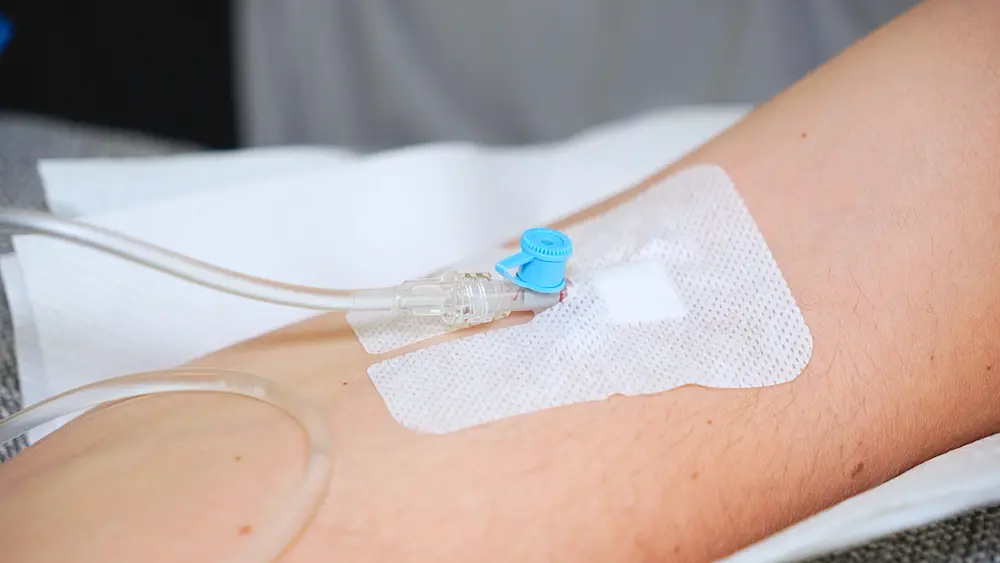
The anti-alcohol injection is the name that stands for extended-release naltrexone, known from the packaging as Vivitrol. It is a single 380 mg injection that the doctor gives deep into the gluteal muscle and repeats every 4 weeks. Throughout that whole month the medicine works evenly, with no daily reminder about a tablet, and it is exactly this regularity that often makes families ask about it in the first place.
How naltrexone quiets the craving for alcohol
Naltrexone blocks the opioid receptors through which alcohol brings relief and a sense of reward. When those receptors are occupied, drinking no longer brings the payoff people are after, so the craving fades and it becomes easier not to reach for a second glass after the first. The medicine does not act on whether someone is sober at a given moment, but on the very mechanism of losing control. It is not addictive and does not alter consciousness.
Why the anti-alcohol injection is not the implant
This distinction is worth drawing right away, because in search engines the anti-alcohol injection gets confused with the implant. The Esperal implant contains disulfiram and works by deterrence: after a drink it sets off a violent, dangerous reaction in the body. Naltrexone stands on the opposite side of that logic. After it is given, alcohol causes no unpleasant effects, it simply stops being so tempting. These are two different medicines and two different conversations worth having with a doctor before any decision is made.
Injection, implant or tablets: what to choose for a loved one
When the idea of treatment comes up at home, the first question is usually: which method. In the pharmacological treatment of alcohol dependence, three options are used in Radom, and none is best by definition, because what helps one person will be contraindicated in another.
- Anti-alcohol injection (naltrexone depot): a single injection every 4 weeks. It suppresses the craving and the rewarding effect of alcohol, and because once given it works regardless of mood, it protects on a worse day too.
- Esperal implant (disulfiram): an implant placed under the skin in a short procedure, lasting several months. It relies on the fear of a reaction after alcohol. We describe it separately on the page about the alcohol implant in Radom.
- Naltrexone in tablets: the same substance as in the injection, only taken daily. Registered in Poland and cheap, but it demands discipline every morning.
When the naltrexone injection wins on convenience
The greatest advantage of the injection is that it does not depend on goodwill on a given day. A tablet is easy to skip exactly when the craving is strongest, whereas a medicine given once every 4 weeks works regardless of momentary motivation. For someone who has already tried to get a loved one into treatment and watched each new resolution dissolve, this independence from a daily decision is often what matters most. The choice is still decided by health and contraindications, which is why everything starts with a conversation with a doctor, not with a ready-made prescription.
The treatment path: from the first phone call to a rhythm of every 4 weeks
The anti-alcohol injection is not given on the spot. It is a short but orderly path, along which we lead the patient from start to finish, so that at no stage is anyone left alone with the paperwork. If a relative sets things in motion, we explain every step so that it can be calmly talked over at home.
The four stages of the naltrexone path
- Contact and assessment: we book a visit at which the doctor decides whether naltrexone depot is safe for the particular person.
- Tests: a full set of results confirms that assessment or shows what has to be put right first.
- Bringing in the medicine: Vivitrol is not on the pharmacy shelf, so we order it via targeted import (import docelowy).
- The first administration: with the date of the next one, in 4 weeks, entered in the calendar straight away.
The two middle steps take their time, which is why we do not promise an injection right now. From assessment to the first administration usually takes from a few to a dozen or so days, and we tell the family this plainly, so that no one counts on an overnight effect.
What the patient gains from the monthly rhythm
The whole path comes down to one thing: instead of thirty daily decisions about swallowing a tablet, there is one visit a month. How much does that really give? In Murphy's meta-analysis (Addiction 2022, 7 randomised trials) naltrexone depot meant on average two fewer drinking days a month, and with treatment lasting longer than 3 months the days of heavy drinking fell as well. The authors themselves set the limits: the observations reach half a year, and the result is driven mainly by two large trials. That is why we call the injection a support that improves the odds, not a guarantee that the problem will vanish on its own.
Assessment and tests before the anti-alcohol injection
The assessment visit is not a box to tick but a safety filter. Naltrexone depot is a serious medicine and it is prescription-only, so the doctor first takes a history and rules out risk instead of giving it on request. This is also where the patient's own consent comes in, because without it we do not move ahead; a relative can help persuade someone to have this one conversation, but the decision is made by the person being treated.
What the doctor asks about before the naltrexone injection
The doctor asks about the drinking history and earlier attempts at treatment, about the medicines being taken (especially opioid painkillers and cough medicines), about chronic illnesses and about mental state: mood, thoughts of giving up, the risk of relapse. The date of the last drink matters, as does whether there are any withdrawal symptoms. Anyone in an active withdrawal syndrome first goes to preparation for treatment, for example alcohol detox in Radom, and we come back to the injection only afterwards.
Which tests we order before administration
The set of tests is there so that the doctor does not work blind. We check a blood count, liver function tests and carrier status for hepatitis B, hepatitis C and HIV; in women of childbearing age we add a pregnancy test, and when there is doubt about opioids, a urine test. The liver gets the most attention, because it is the liver that metabolises naltrexone, and the safety of the dose depends on its condition. The doctor sets the date of the first injection only with a full set of results on the desk, not before.
Safety, contraindications and the doctor's supervision
Naltrexone is a well-studied medicine, but not a harmless one. That is why in our clinic every administration is led by a doctor and every one is preceded by a short check. It is not a vending machine handing out an injection on request, and it is good for the family to know this too, as they sometimes expect action overnight.
The most important warning: lowered tolerance to opioids
As long as naltrexone is working, opioids will not act as usual, because the medicine keeps the receptors occupied. Trying to break through this with a larger dose is a straight road to respiratory arrest. There is also a second, less obvious trap: when the cycle ends and the medicine wears off, tolerance to opioids is already lowered, so a dose once tolerated well may turn out to be fatal. Hence the iron rule that for at least 30 days from the last injection no opioid medicines are taken without the doctor's knowledge. It is also worth carrying information about the treatment on you, in case of surgery or an accident when someone has to give a strong painkiller quickly.
When we do not give the injection
There are situations in which naltrexone must not be given: when the patient is taking opioids or is in substitution treatment, when an active withdrawal syndrome is under way, in acute inflammation and severe liver failure, in pregnancy and in the case of an allergy to the medicine's ingredients. We also take a more cautious approach with someone facing a procedure on strong painkillers. Among the more common side effects are nausea, headache, fatigue and a reaction at the injection site. The monthly visit serves precisely to catch this: the doctor looks at the injection site, asks about wellbeing and mood, and checks the liver if needed.
Targeted import: the legal route to Vivitrol in Poland
The lack of Polish registration sounds alarming, but it does not mean illegality. Vivitrol is brought in for a specific patient under the targeted import (import docelowy) procedure, and that is a procedure spelled out directly in the regulations, not any grey area. And this is where the line runs that is worth asking about: the "disulfiram injections" advertised online in injectable form have no legal circulation, whereas naltrexone depot from targeted import does.
How we bring the medicine in for a patient from Radom
We take the paperwork on ourselves. The doctor files an electronic request, a consultant in the relevant field of medicine has 7 days to confirm it, and the approval is granted by the Minister of Health; in the out-of-hospital setting an ordinary pharmacy dispenses the medicine. After that, two deadlines matter: the request is valid for 60 days from confirmation, and a prescription for targeted import must be filled within 120 days. We keep an eye on these dates for the patient, so that no gap opens up between the first and the second dose, because it is in such breaks that relapse comes most easily.
How much the medicine costs and whether it is reimbursed
The dosing and storage conditions are described in the manufacturer's product information enclosed with the packaging. The answer to the question of reimbursement is, unfortunately, short: an application may be filed, but the AOTMiT Transparency Council judged reimbursement of Vivitrol in the alcohol indication to be unjustified. In practice the patient pays for the medicine, and it is its price, not the consultation or the administration, that weighs the most in the whole bill.
Addiction treatment in Radom: when one person drinks and the whole family is treated
Addiction almost never touches only one person. This is clear in the Radom figures. Between 2019 and 2021, treatment in the city covered 3,359 people dependent on alcohol, but alongside them 1,049 co-dependent people sought help, that is wives, husbands, parents and adult children. In that time Radom clinics provided more than 9,000 sessions aimed precisely at relatives (9,036 to be exact), because one household member's drinking throws off the rhythm of the whole home.
Why it is usually the family that asks for help
The largest group of those in treatment in Radom were people between the ages of 31 and 50, that is 4,153 out of 6,200 patients, in other words people in the middle of their working and family lives. At this age the problem hits the partner, the children and work all at once, which is why the first phone call about treatment is often made by someone other than the person drinking. We qualify and treat the patient, because it cannot be done without their consent, but a relative does not leave with nothing: they get clear information on what the path looks like and what to realistically expect.
How the steady rhythm of the injection relieves the home
In a family with an alcohol problem, most of the energy is eaten up by the daily watching over whether today will go well. The anti-alcohol injection shifts the burden from this daily control to one administration every 4 weeks and one date in the calendar, which gives loved ones a little breathing room. The city thinks about families more broadly and runs day support centres where children from homes affected by alcohol receive sociotherapy. Our clinic at ul. Józefa Mireckiego 10 adds the medical link to this: assessment for naltrexone and monthly administrations. The injection combines best with addiction therapy in Radom and with broader alcoholism treatment in Radom, because the medicine quiets the craving while therapy deals with what lies beneath it.
Price and booking the anti-alcohol injection in Radom
There is no single price for the injection, because it is not one cost but several: the assessment consultation, the tests, bringing the medicine in via targeted import, and the administration and care at the following visits. The most variable is the price of the medicine itself, because it depends on being brought in from abroad. That is why we give the figure individually, only after assessment, once it is clear what the treatment is to look like.
How to book the anti-alcohol injection in Radom
The first step is a consultation at which the doctor decides whether naltrexone depot is suitable and safe. You can book a visit by phone on 880 808 880 or through the online booking form, including when you are calling about a loved one and want to ask about the details first. The clinic at ul. Józefa Mireckiego 10 sees patients all week, from 8:00 to 20:00, and the conversation about treatment stays between the patient and the doctor. If after assessment it turns out that a better start is a different route, such as the alcohol implant in Radom, we will say so plainly.