

What is the anti-alcohol injection and how does it work?
The anti-alcohol injection is the everyday name for treatment with extended-release naltrexone. The active ingredient is naltrexone, a single injection contains a dose of 380 mg, and the product is sold under the trade name Vivitrol. Medical staff administer it deep into the gluteal muscle, once every 4 weeks.
How naltrexone changes drinking
Naltrexone is an opioid receptor antagonist. That sounds technical, but it simply means the drug blocks the receptors through which alcohol produces a sense of reward in the brain, rather than stimulating them. The effect is gradual: first a drink stops delivering what the person was reaching for, and once drinking has failed to bring relief a few times, the craving for alcohol itself weakens. Naltrexone is not psychoactive and is not addictive; apart from the response to alcohol, it does not alter mood or the way you think.
How long one injection lasts
The drug is released from tiny beads, called microspheres, over roughly 4 weeks. Its blood concentration rises quickly, peaks after about 2 hours and again after 2-3 days, and from around day 14 it slowly begins to fall. Traces of the drug can remain detectable for longer than a month, but the manufacturer notes that its effect wanes towards the end of the cycle. That is precisely why the next dose is given every 4 weeks: a gap means the return of the alcohol craving the patient came in with.
What does the alcohol problem look like in Wrocław?
Wrocław knows the scale of its own alcohol problem, because the city prepares a diagnosis for its municipal programme for the prevention and resolution of alcohol problems. In the document for 2026-2029, the figures gathered show two things at once: people drink more, but more of them also seek treatment.
- In 2021 the average adult resident of Wrocław drank 5.41 litres of pure alcohol, compared with 4.25 litres in 2015.
- In 2024 Wrocław's addiction treatment clinics admitted 873 people, including 545 for the first time. Two years earlier the figure was 613.
- Between 2022 and 2024 the municipal committee for resolving alcohol problems received 972 applications for compulsory addiction treatment.
- In 2024 the police and municipal guard took 4,651 people to the Wrocław Centre for Help for Intoxicated Persons.
What these figures mean for someone who wants to stop drinking
A rising number of clinic patients need not mean there are more people with addiction. It may also mean that more Wrocław residents decide to reach for help. Either way leads to the same question: what to do when the decision to stop drinking is not enough on its own, because the craving returns after a few days.
The anti-alcohol injection is one of the options a doctor may then consider. It does not replace addiction therapy in Wrocław; it works alongside it, easing the craving so it is easier to hold on between sessions. The procedure itself is part of broader alcoholism treatment in Wrocław, which begins with a conversation with a doctor, not with an injection.
The figures cited above come from the diagnosis prepared for the municipal programme for the prevention and resolution of alcohol problems and the prevention of drug addiction for Wrocław for 2026-2029.
What does the medical assessment for the injection in Wrocław involve?
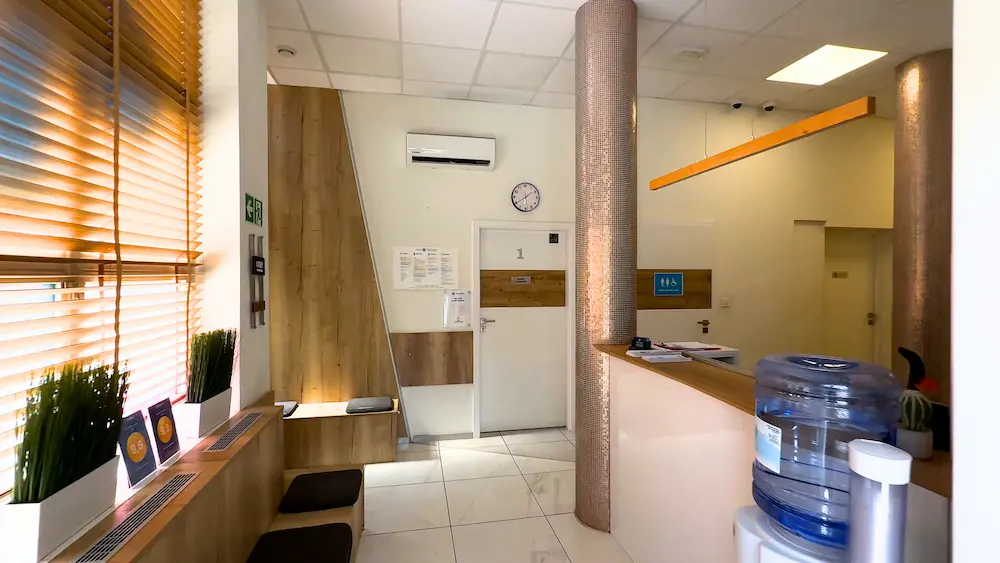
Here in Wrocław the first appointment is not an injection but a conversation. At our practice on ul. Dworcowa 11b the doctor decides whether naltrexone is safe for a given patient and whether it is worth using at all.
The interview before the anti-alcohol injection
The conversation covers the history of drinking and earlier attempts to break the habit, the date of the last drink, the medicines being taken, painkillers and opioids in particular, chronic illnesses and what the patient hopes to gain. The doctor also assesses mood and the risk of relapse, examines the planned injection site and checks for signs of liver disease.
The opioid question and naltrexone safety
The most important part of the interview concerns opioids, because naltrexone blocks their action. The doctor asks about painkillers, cough medicines and substitution treatment, as well as any planned procedures that might call for strong pain relief. When someone is still drinking or has only just stopped, we begin with preparation, for example with alcohol detox in Wrocław. The injection cannot be given while withdrawal symptoms are present.
What does giving the injection at our Wrocław practice involve?
On the day of administration the injection is given by a nurse or a doctor, never by the patient. Before that happens, the team again makes sure nothing has changed: that the patient has not taken opioids, has no withdrawal symptoms, is not pregnant and is not about to undergo a procedure that would call for strong painkillers.
How the injection is given
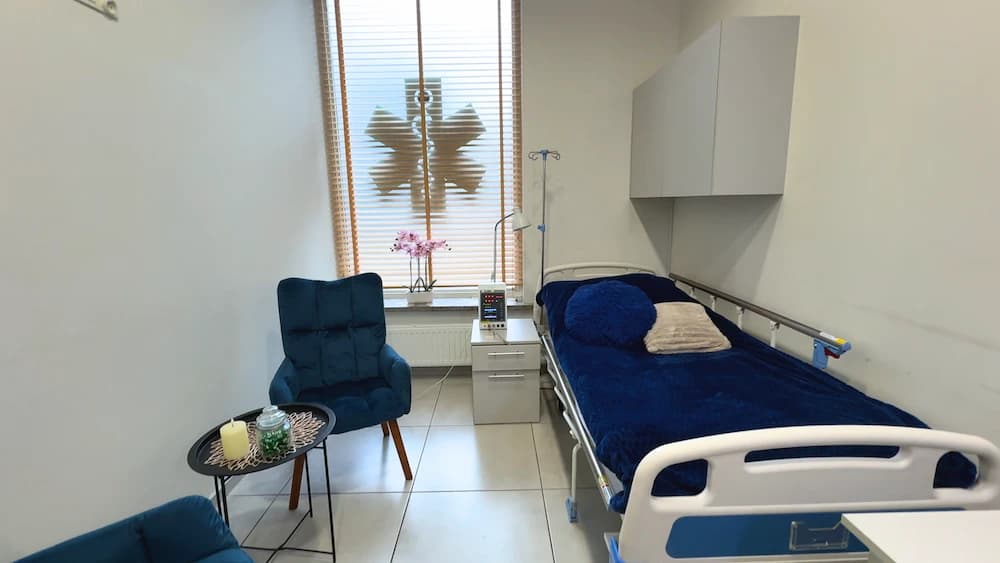
The product waits in the fridge at 2-8°C, and we take it out about 45 minutes beforehand so it warms to room temperature. We mix the suspension just before the injection and give it deep into the gluteal muscle, alternating sides, the right one time and the left the next; never into a vein or under the skin. The injection takes only a moment, after which the patient stays a while longer for observation.
Appointments every 4 weeks
The next injection falls due after roughly a month, and we keep watch over the schedule of doses and orders so that no gap opens up. At each visit the doctor checks two things: whether the treatment is working, that is how abstinence, craving and engagement in therapy look, and whether it is safe, that is the injection site, the liver, mood and any new medicines. A late dose we make up as soon as possible, but no sooner than 4 weeks after the previous one and in no amount greater than 380 mg.
How long treatment with the injections lasts
There is no fixed end set in advance. The manufacturer's drug information gives neither a shortest nor a longest duration of therapy. SAMHSA suggests treating alcohol addiction for at least six months to a year, and adds that the optimal length is not known, while the VA/DoD guidelines advise stopping the drug if there is no improvement within 3 months. The length of therapy is decided by the doctor together with the patient, looking at what the successive months bring. After the last dose the effect does not sustain itself, which is why the end of treatment is planned too.
Is the anti-alcohol injection safe? Contraindications
Naltrexone has been used in addiction treatment for years and, with careful assessment, is regarded as a well-understood drug. Side effects do occur, most often mild ones: nausea, headache, fatigue, muscle and joint pain, and a reaction at the injection site.
Naltrexone and opioids: the most important warning
During treatment and after it ends, tolerance to opioids is reduced. Trying to override the block with a large dose of an opioid, or returning to pre-treatment doses, risks respiratory arrest and death. The danger rises especially towards the end of the 4-week cycle, after a missed dose and after stopping the drug, which is why for at least 30 days from the last injection no opioid medicines of any kind may be taken. The patient receives an information card about the therapy and carries it, because in the event of injury or surgery every doctor must know about the naltrexone.
When the injection must not be given
Some contraindications concern what the patient is taking or has recently used:
- opioids in any form, including painkillers, cough and anti-diarrhoeal medicines and substitution treatment;
- an active withdrawal syndrome, that is withdrawal in progress;
- a procedure planned soon in which pain is managed with opioids.
The rest stem from the state of the body: acute hepatitis or severe liver failure, pregnancy, and an allergy to naltrexone or to components of the suspension. Many of these obstacles are temporary, so once withdrawal is complete or an acute liver condition has resolved, treatment can begin. Jaundice, dark urine and abdominal pain call for urgent consultation; a worsening reaction at the injection site and a marked drop in mood should also be reported.
Injection or implant? What to choose in Wrocław
In Wrocław, typing "anti-alcohol injection" into a search engine most often leads to offers for the implant. It is worth distinguishing three methods before a patient decides which to reach for, because they work in completely different ways.
- The naltrexone injection takes the reward away from alcohol and dampens the craving. Nothing bad happens after a drink, and the drug is given into a muscle every 4 weeks.
- The disulfiram implant works the other way round, through fear: after alcohol it triggers strong, unpleasant symptoms. It is placed under the skin in a short procedure, described on our page about the Esperal alcohol implant in Wrocław.
- Naltrexone tablets contain the same substance as the injection, but they are taken every day.
It is hard to name one method as better in advance. One deters through fear, another dampens the craving, the third demands daily discipline. Which option to choose is settled by the doctor and the patient during assessment, taking into account the history of drinking, illnesses and expectations.
Where the belief that the anti-alcohol injection was withdrawn comes from
This is a confusion of two different drugs. The aversive disulfiram injection genuinely is not available in Poland or the European Union, and it is this that the pages most searchers land on describe. The injection we offer contains naltrexone and has an entirely different mechanism of action.
How much does the anti-alcohol injection cost in Wrocław and how do you book?
No single figure can be given, because the cost of treatment is made up of several parts, and some depend on the individual patient:
- the assessment consultation with the doctor;
- the drug itself, prescribed after assessment;
- each administration of the injection and the care that follows, returning every 4 weeks.
Because the treatment is cyclical, it is better to view it as an expense spread over the months. We give a specific quote after assessment, once it is clear what rhythm of injections will be needed.
How to book an assessment in Wrocław
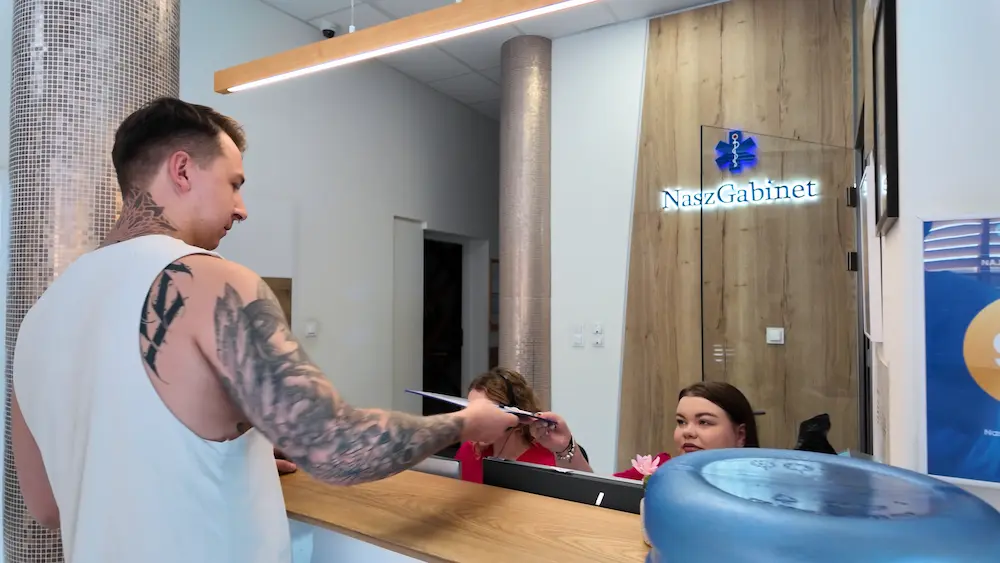
The practice is at ul. Dworcowa 11b. You can choose a date in the online booking on this page or by phone on 880 808 880. No referral is needed, as this is a private appointment. During it the doctor takes a history and, if nothing stands in the way, prescribes the drug and sets a date for the first injection.
The injection is part of the treatment, not the whole of it. The drug makes it easier to refrain from drinking, but new habits are learned in therapy and loved ones help to keep them up, which is why we combine it with addiction therapy in Wrocław.