

What an addiction treatment centre in Zielona Góra is
An addiction treatment centre is a facility where the patient lives for the whole course of therapy, with the team close by at any hour of the day or night. This is what sets it apart from an outpatient clinic, where you come in for individual sessions and go back home. In Zielona Góra, at al. Wojska Polskiego 11, we provide inpatient treatment for people addicted to alcohol, to sedative and sleep medication, to drugs and legal highs, and also to gambling, a behavioural addiction without a substance. We describe drug addiction treatment in Zielona Góra separately, but in the centre different addictions come together within a single stay.
A full stay offers what single visits cannot: a scale of work that is unattainable with once-a-week sessions, and physical distance from the place where the addiction took hold. The patient has up to 8 hours of therapy a day and spends several weeks away from home, work and the company that until now supplied the reasons to drink or use. That time goes into what cannot be done between one visit and the next - into breaking the addiction down into parts that can be recognised and changed. It is also easier not to reach for alcohol or medication where you do not have to refuse every few minutes and where it is not within reach. The same applies to gambling: there is no substance to withdraw from, but the pattern of losing control and coming back despite losses is similar enough that the work follows the same course.
How a stay differs from an outpatient clinic
Addiction treatment has several levels. An outpatient clinic is the ambulatory mode - visits once or several times a week, returning home after each one. A day ward is therapy for most of the day with nights spent at home. A round-the-clock centre is a full stay on site for the entire treatment period. In Zielona Góra, NFZ-funded care is provided mainly on an outpatient and day-ward basis; full round-the-clock treatment in our region takes place in wards outside the city and involves a referral and a wait. We work privately, with no referral and no queue. Alcohol treatment in Zielona Góra in the outpatient mode is described separately; here the focus is the round-the-clock stay. We carry out the assessment on site, in Zielona Góra; we are reached by residents of the city and the surrounding area, as well as people from further afield in the Lubuskie Voivodeship, for whom a full round-the-clock stay used to mean travelling to a ward in another part of the region.
What a stay involves - from first contact to coming home
Not much time usually passes between the decision and admission. It starts with a call to 880 808 880 - we ask about the history of drinking or using, about general health and about the situation the patient is in. We ask about the whole picture, not a single symptom, because that determines how to arrange the stay. On this basis we propose a date and an initial plan; there is no board to convene and no weeks of waiting.
The first days: assessment and detox
The stay opens with an initial assessment. A doctor and a therapist check general health, previous attempts at treatment and whether the body is already free of the substance or whether a detox in Zielona Góra is needed first. You enter the therapy itself sober - and this is a condition, not a formality, because you cannot work on an addiction while the body is still dealing with withdrawal. So the first days are about safety first and the mind only afterwards. Along the way we settle the practical things: what medication the patient takes, what conditions they have and what interrupted earlier attempts - the more is known at the start, the calmer the beginning can be.
What the day is made of
Once the patient settles into a rhythm, the day has a fixed frame: waking, meals, individual and group sessions, educational classes, time for their own tasks and rest - up to 8 hours of therapy a day in total. This order is not decoration. In active addiction the whole day revolves around the substance; an ordered day teaches anew that it can be arranged differently, and slowly hands back the sense of control over one's own time. For many people it is the first stretch in a long while in which they do not have to face temptation alone every morning.
How long the stay lasts and what it depends on
There are two lengths to choose from. Four weeks is a condensed entry into treatment - recognising the problem, the first tools and a plan for coming home; it is enough when someone reacts early and has no serious complications. Eight weeks gives the time that a deep, long-standing addiction usually requires: consolidating the change, working on relapses and what triggers them, and a calmer preparation for leaving. Which length to choose is settled at the assessment - the severity of the problem decides, not the calendar. Most people who hesitate between the packages know, after the qualifying interview, which one genuinely fits their situation.
The therapeutic programme - individual and group therapy
The stay is only the frame - it is the programme that fills it, and the programme is what truly changes the situation. It stands on two legs, individual and group, held together by one therapist assigned to the patient for the whole course of treatment. We describe the method more fully under addiction therapy in Zielona Góra.
The patient and their lead therapist
Each patient has one lead therapist who knows their history and is responsible for the course of the whole stay. They draw up the plan, hold the one-to-one conversations and adjust direction when something is not working. As a result, the therapy does not fall apart into loose sessions with random people - it has a single direction and someone who is responsible for that direction. It also allows the pace and tone of meetings to be matched to the person: one approach for someone arriving at the centre for the first time, another for someone returning after a relapse.
Why group therapy matters
The second pillar is the group. It is there that you see the problem is not a personal exception - that others are going through exactly the same thing, and that relapse can be spoken about openly, as something to understand rather than to hide. The group meets daily and works on specifics: someone describes a situation in which they came close to reaching for the substance, the rest relate it to themselves, and the therapist helps draw a lesson for the future. To this is added psychoeducation - knowledge of how cravings work, where relapses come from and what to do about them before they take control. Sometimes someone hears their own story from a stranger's lips for the first time and only then recognises it - a conversation with the therapist alone cannot replace that.
Each month the team submits its work for supervision
Once a month the whole team goes through supervision - discussing the cases it is handling with an experienced supervisor from outside the centre. The patient never sees it, and that is exactly what safeguards quality: therapeutic decisions do not depend on one person's routine but are regularly checked from the outside. In sound addiction therapy this is the standard, not an extra.
Who inpatient treatment is for - and whether you must wait for the worst
A stay at the centre is not the first step for everyone. Some people recover through outpatient treatment - without taking time off work or being pulled away from family - and for them a full stay would be a step beyond what is needed. That is why we begin with an assessment: it is meant to settle honestly which level of treatment fits the situation, rather than directing everyone to the longest stay from the outset.
A stay is not a last resort for the most severe cases
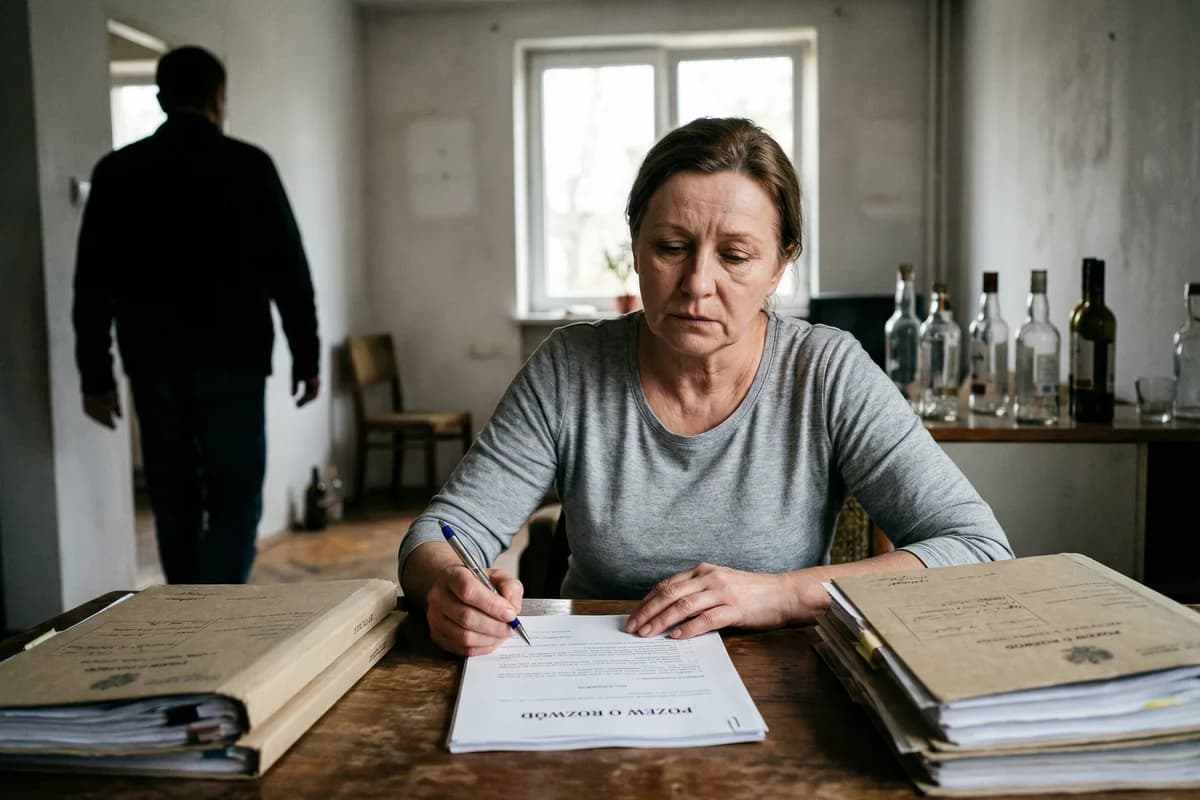
One myth has grown up around inpatient treatment: that it is something for people who have already lost everything - their job, their family, their health. In practice, the indication is not decided by how low someone has fallen, but by whether treatment without leaving home has anything to build on. You can have a job, a family and an appearance of order and still fail to keep sober where everything is a reminder of the addiction. The reverse also happens - not everyone with a long history of drinking needs a centre straight away. Putting off the decision until things are truly bad usually only raises the price later paid in health and relationships.
The indication for a stay is most often decided not by a single symptom but by a combination of several things that together say the outpatient mode has no conditions in which to work:
- Earlier treatment did not hold up outside the consulting room. Therapy at a clinic or previous attempts brought improvement for a while, but everything came back once daily life resumed.
- There is nothing to build on at home. This is not about ill will from loved ones - simply that within the same walls, with the same tension and the same occasions, sobriety has no support.
- Stopping on your own can be risky. Attempts to stop bring on symptoms that should not be gone through without supervision; this is an argument for a place where someone keeps watch.
- There is something alongside the addiction. A low mood, anxiety or disrupted sleep - matters that a once-a-week visit will not resolve.
The assessment works both ways. If we see that outpatient treatment or a day ward is enough, we say so plainly and suggest where to begin - rather than admitting someone for a stay they do not need. People sometimes speak of a closed centre, but the stay is entirely voluntary, and the word closed here means a protected and ordered setting, not holding anyone against their will. Where there is anxiety or a lowered mood alongside the addiction, in justified cases the therapy is supported by pharmacotherapy, which a doctor always decides on.
Safety, staff and the discretion of the stay
The most honest way to talk about a centre is from the side of safety, because it is safety - not the number of therapy hours - that decides whether the hardest beginning can be got through without harm. Round the clock, the patient has the team close by: therapists and, when needed, contact with a doctor and nursing care.
The team's presence, at night too
The first days, just after stopping, are usually the most costly, when the body is regulating itself and cravings are at their strongest. Round-the-clock care means in practice that the patient does not go through this alone: at any hour, including at night, someone is on site who observes their condition and responds. If the situation calls for it, we contact a doctor straight away rather than waiting until morning. It is precisely this presence that makes the fragile start something that can be got through safely, rather than a risk to health taken alone.
Who is responsible for the treatment
The therapy is delivered by addiction treatment specialists and instructors - it is they, not chance staff, who work with the patient day to day. On matters of physical health they are supported by a medical consultation, and the whole is overseen by the monthly supervision described above. The entire course of treatment is documented; this is worth stating plainly, because it is a source of misunderstanding. We arrange the rota so that on every shift there is someone who knows the patients and can respond, rather than someone who happens to be on watch.
What stays between the patient and the team
The stay is discreet: without the patient's consent we tell no one outside about the treatment - neither an employer nor family - and the staff are bound by confidentiality. At the same time, discretion must be kept apart from documentation. Like any medical facility we keep records, because without them therapy and medication cannot be safely chosen; they are protected by data protection rules, and only the patient and their treating team have access. Treatment stays a private matter, but it does not take place beyond any records.
What a stay will not resolve
What remains is what no honest centre will promise: that the addiction will certainly not return. Addiction is a relapsing illness, and how lasting the effect is also depends on what the patient does after leaving. A stay does not replace treatment for physical illnesses or help in a sudden threat to health - that is what doctors and hospitals are for. What we genuinely provide is a safe, intensive few weeks and concrete tools for life without the substance.
Packages, prices and how to arrange a stay
We state the price plainly, without your having to ask. The stay has two lengths and two prices, known in advance. The shorter, four-week Intensive Start is 13,000 PLN; the longer, eight-week Full Process of Transformation is 25,000 PLN. Which one makes sense follows from the same thing as the assessment: the severity of the problem, not the budget or the calendar.
In both packages you pay for one thing - the whole stay. It covers accommodation and meals, daily individual and group sessions, the constant presence of the team at any hour and a lead therapist. We add nothing along the way: the assessment, admission and individual classes are not charged separately. We do not hide that these are prices at the higher end of the market - except that the difference does not go into the standard of the room, but into how many hours a day the patient genuinely works with a therapist and whether a team stands beside them rather than service staff.
How we safeguard the return home
Leaving the centre does not end the treatment - it only changes its mode. We devote the last days of the stay to preparing the return: we agree with the patient where to continue outpatient therapy, how to keep sober day to day and how to tell when the risk of relapse is rising. For many people support groups are also a natural next step, helping to maintain the change long after discharge. We talk about this part before the patient leaves - so that coming home is not a leap into the deep end.
Where to start
It starts with a call to 880 808 880. This is still only a conversation - you can describe the situation, find out whether a round-the-clock stay is right in your case, and only then decide. If treatment is to begin, we set a date straight away, with no referral and no queue. Some of the calls are made by the addicted people themselves, some by someone close who does not know where to start. Either is a good beginning.